Past Papers UK: Where to Find Them and How to Use Them for Better Grades
When it comes to preparing for exams in the UK, nothing beats working through past papers, actual exam questions from previous years used by universities and exam boards to assess student knowledge. Also known as previous exam papers, they’re not just practice—they’re a direct window into what your exam will look like. If you’re studying for A-levels, GCSEs, or a university degree, past papers give you the exact format, timing, and style of questions you’ll face. They’re not optional—they’re essential.
Using past papers effectively means more than just answering questions. It’s about understanding how examiners think. For example, a past paper in Economics might ask you to evaluate policy impacts using specific terminology. If you’ve seen that question before, you won’t waste time guessing what they want. You’ll know to use terms like "marginal utility" or "opportunity cost" the way they expect. That’s the difference between a pass and a distinction. And it’s not just about content—it’s about timing. Most students run out of time in real exams because they’ve never practiced under pressure. Past papers force you to manage your clock, just like the real thing.
Where do you find them? Your university or school portal usually has a library of past papers, especially for degree courses. For GCSEs and A-levels, exam boards like AQA, Edexcel, OCR, and WJEC publish them for free on their websites. Some students rely on third-party sites, but stick to official sources to avoid outdated or incorrect answers. And don’t just download them—use them. Set a timer. Sit at a desk. No phone. No distractions. Mark them yourself using the official mark schemes. Then, write down where you lost marks. Was it misreading the question? Running out of time? Forgetting a key formula? That’s your revision checklist right there.
You’ll also find that past papers reveal patterns. In Biology, for instance, you’ll see the same type of graph interpretation question every year. In Law, essay structures repeat. In Maths, certain problem types always show up in Section B. Once you spot those, you’re not just memorizing—you’re predicting. And that’s how top students stay ahead. They don’t study everything. They study what matters.
And here’s the thing: past papers aren’t just for last-minute cramming. They’re your best tool for spaced repetition. Do one paper a week. Review the mistakes. Do another. Repeat. Over time, you’ll build confidence, not just knowledge. You’ll stop fearing the exam and start feeling ready.
Below, you’ll find real guides from UK students who’ve used past papers to turn weak subjects into strengths—from managing revision schedules to decoding tricky mark schemes. Whether you’re studying in London, Manchester, or Glasgow, these tips work the same. No fluff. Just what actually helps you pass.
Published on Dec 4
0 Comments
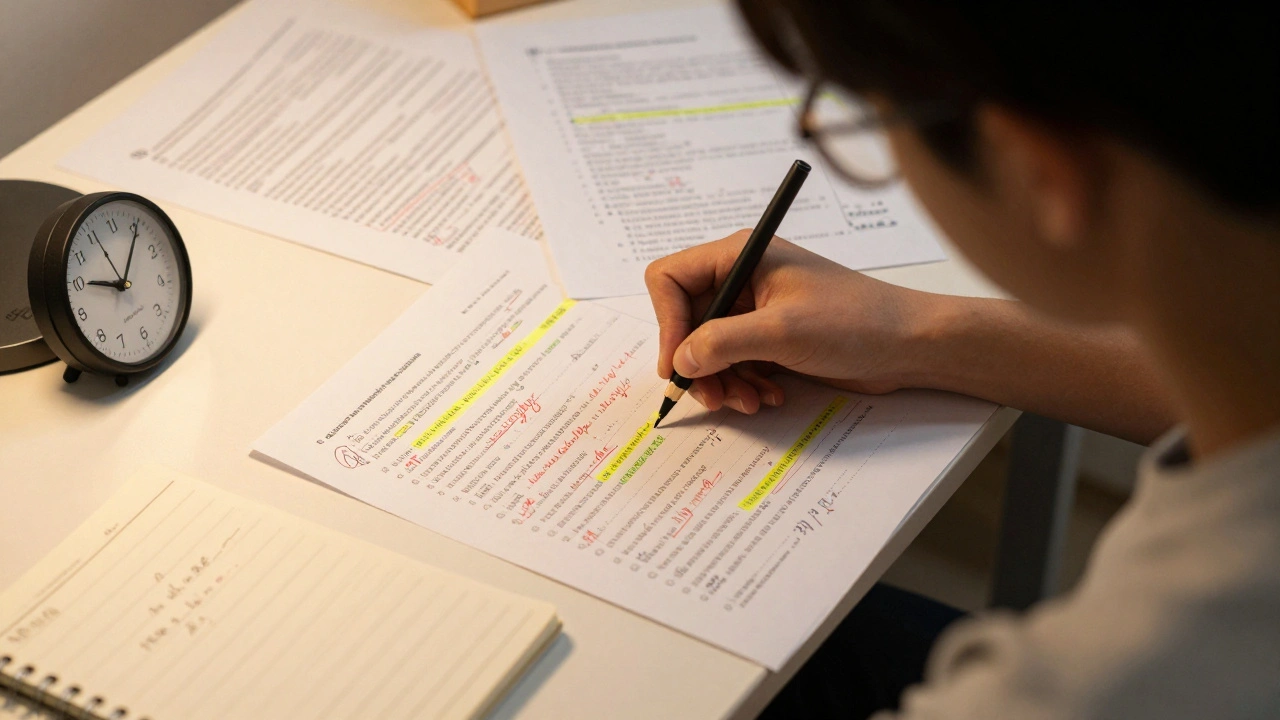
Past papers and practice questions are the most effective way to prepare for exams. Learn how to use old exams to understand question patterns, improve timing, and boost your score with real strategies that work.