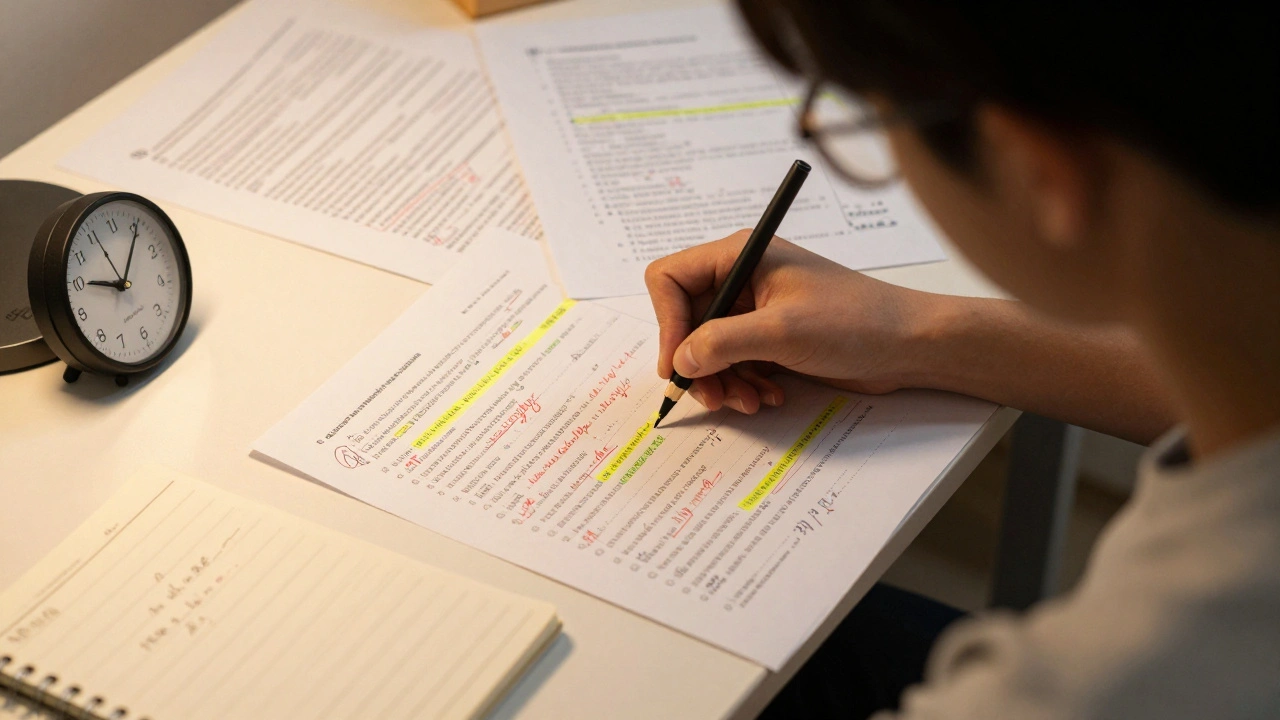
Looking at old exams isn’t just about memorizing answers-it’s about learning how your test thinks. If you’ve ever sat down to a final exam and felt like the questions came out of nowhere, you weren’t alone. Most students waste hours rereading notes or highlighting textbooks. But the real key to understanding what’s coming? Past papers.
Why Past Papers Work Better Than Rereading Notes
Your brain remembers patterns, not pages. When you study from a textbook, you’re absorbing information in isolation. But exams don’t test facts one at a time-they test how those facts connect under pressure. Past papers show you exactly how your teacher or exam board turns textbook concepts into actual questions.
A 2023 study from the University of Cambridge tracked 1,200 students preparing for final exams. Those who used past papers regularly scored 22% higher on average than those who only reviewed lecture slides. Why? Because past papers force your brain to practice retrieval-the same skill you’ll need on exam day.
Think of it like training for a race. Reading about running won’t get you faster. You have to run. Past papers are your daily training session.
How to Find Reliable Past Papers
Not all old exams are created equal. A paper from five years ago might not reflect today’s curriculum. Start with these sources:
- Your school or university’s official exam archive-most institutions keep past papers for students
- Official exam board websites (like College Board, AQA, or IB)
- Teacher-provided resources-ask directly if they have a folder of past exams
- Student forums or shared drives-only use these if the papers match your syllabus exactly
Avoid random websites that sell "premium" past papers. If your exam board publishes them for free, there’s no reason to pay. Check the year, exam code, and syllabus number on the paper to make sure it’s the right one.
How to Use Past Papers Like a Pro
Just opening a past paper and scribbling answers won’t help. You need a system.
- Do one paper under timed conditions-set a clock for the exact length of your real exam. No breaks, no phone, no notes.
- Grade it like a real examiner-use the official mark scheme if available. Don’t be kind to yourself. If the answer doesn’t match the marking criteria, mark it wrong.
- Highlight every mistake-not just the ones you got wrong, but the ones you got right for the wrong reason.
- Group your errors-did you keep missing questions on stoichiometry? Did you run out of time on the essay section? Patterns matter more than individual mistakes.
- Redo the paper-after a few days, try it again without looking at your first attempt. If you get the same mistakes, you’ve got a gap to fix.
This isn’t about perfection. It’s about spotting where your brain freezes under pressure.
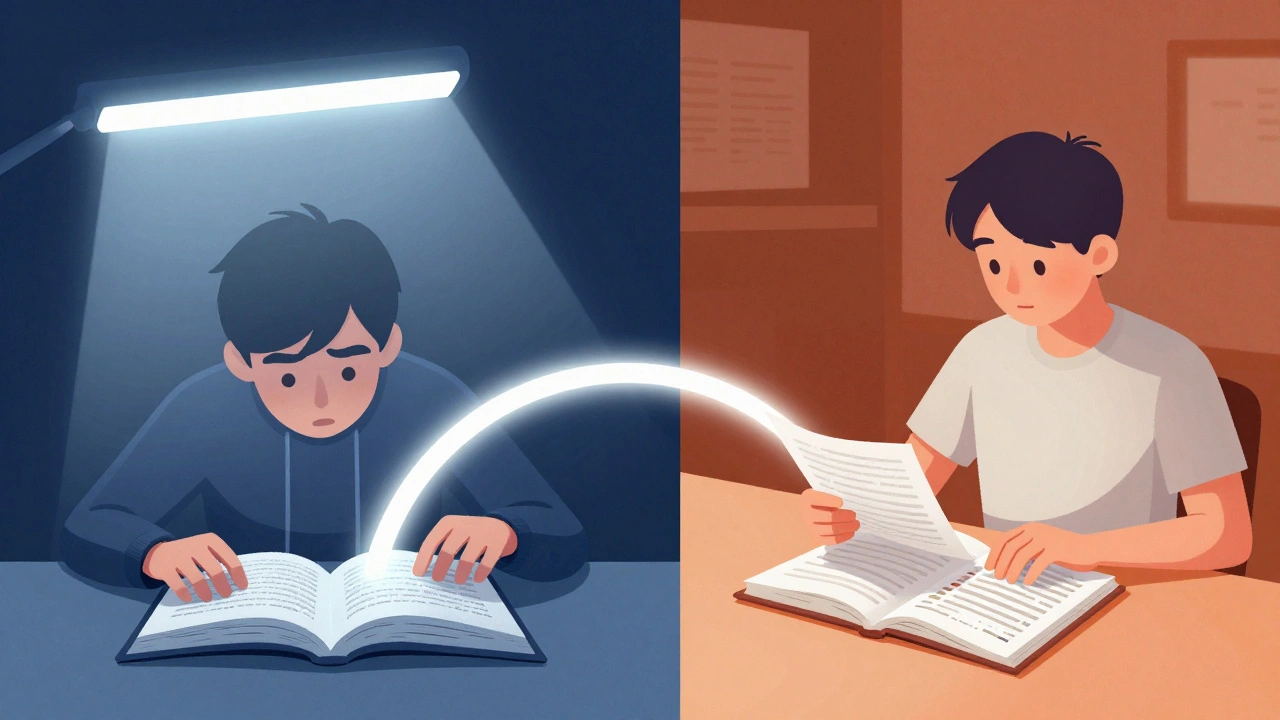
Practice Questions: The Hidden Weapon
Past papers are full-length tests. But sometimes, you need to drill a single topic before you can tackle the whole exam. That’s where practice questions come in.
Textbooks often have end-of-chapter questions. Your teacher might give you problem sets. Online platforms like Khan Academy or Quizlet have topic-specific quizzes. Use these to:
- Build confidence in weak areas before attempting full papers
- Learn how questions are worded in different formats (multiple choice, short answer, calculations)
- Practice speed on repetitive problem types-like balancing equations or interpreting graphs
Don’t skip the "easy" questions. If you get them right every time, you’re building automaticity. That saves mental energy for the hard ones on exam day.
What to Do When You Get Stuck
It’s normal to hit walls. Maybe you don’t know how to start a question. Maybe the wording is confusing. Here’s what to do:
- Look at the command word-"Explain," "Compare," "Calculate," "Describe." Each tells you exactly what the examiner wants. If you write a description when they asked for an explanation, you lose points-even if your content is correct.
- Break it down-if a question has two parts, answer them separately. Don’t try to combine them.
- Write something-even if you’re unsure, write a sentence. Partial credit adds up. A blank answer gets zero.
- Use the formula sheet-if one is provided, know where every formula is and what it does. Don’t wait until exam day to find it.
How Many Past Papers Should You Do?
There’s no magic number. But here’s a simple rule: Do one full paper every 7-10 days starting 6-8 weeks before your exam. That’s 5-8 papers total.
Why not do more? Because quality beats quantity. Doing ten papers badly, without reviewing mistakes, won’t help. Doing three papers well-with deep review and targeted practice-will.
Use your first paper as a baseline. Your last paper should feel easier. If it doesn’t, you’re not reviewing properly.
Common Mistakes Students Make
Even smart students mess this up. Here are the top three errors:
- Only doing papers at the last minute-waiting until the week before means you don’t have time to fix gaps.
- Reading answers instead of doing the work-flipping to the mark scheme too soon stops your brain from struggling and learning.
- Ignoring the mark scheme-you might think you answered correctly, but if you didn’t use the right keywords or structure, you lost points. Mark schemes aren’t just for grading-they’re a blueprint for how to think like an examiner.
One student I worked with kept getting 65% on her biology papers. She thought she knew the content. But when we looked at the mark schemes, she was missing key phrases like "active transport requires ATP" or "osmosis is passive." She knew the concepts-but didn’t know the exact language the exam wanted.
When to Stop Using Past Papers
Don’t stop too early. The week before the exam is when you should be doing one final timed paper. But don’t start new material then.
Instead, use that week to:
- Review your error log
- Re-read the mark schemes for your weakest topics
- Practice writing quick summaries of key concepts (1-2 sentences each)
- Get enough sleep, not more cramming
Your brain needs rest to lock in what you’ve learned. Past papers aren’t a sprint-they’re a slow build.
Final Tip: Turn Past Papers Into Your Own Study Guide
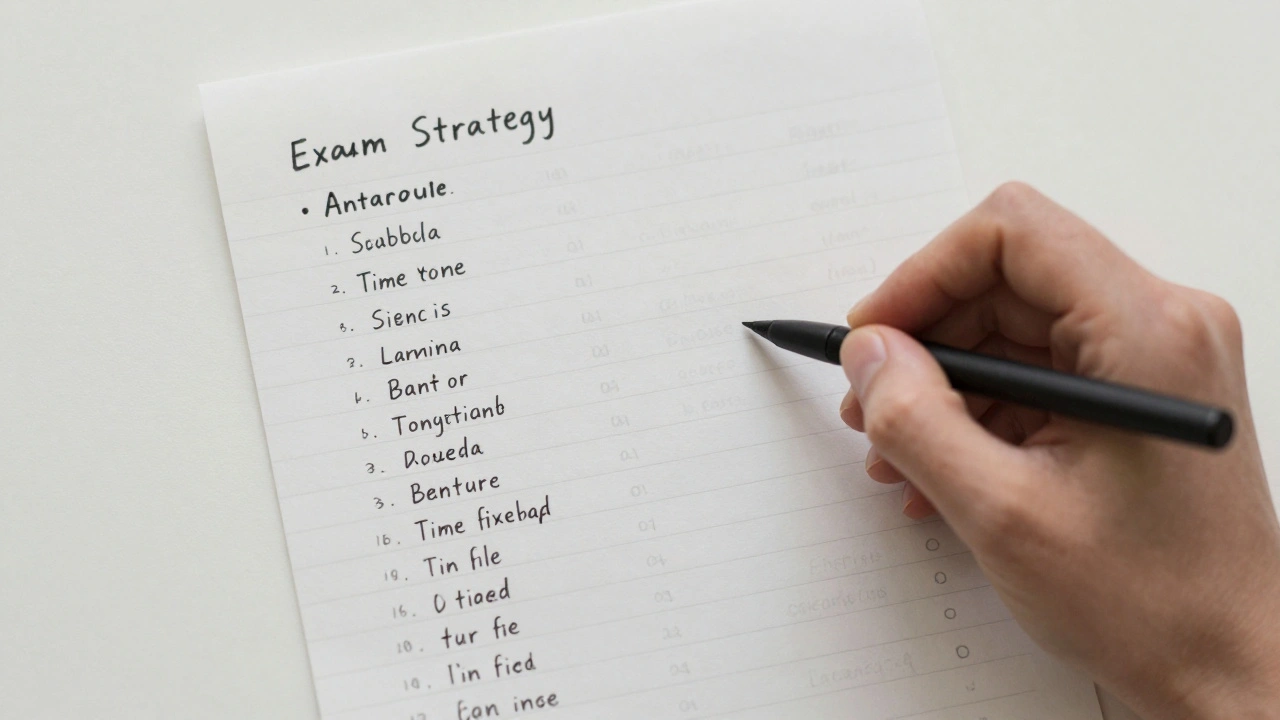
After you’ve done five or six papers, create a one-page cheat sheet-not with facts, but with patterns.
Write down:
- Which topics appear in every paper
- What type of question always comes in Section B
- Which command words you keep misreading
- How long you spend on each section
This becomes your personal exam strategy. You’re not just studying content-you’re studying the exam itself.
Can I just use online answer keys instead of doing past papers?
No. Answer keys tell you what the right answer is, but they don’t train your brain to think like an examiner. If you only read answers, you’ll recognize them in theory-but freeze when you have to write them under time pressure. Doing the work yourself builds the muscle memory you need.
What if my school doesn’t provide past papers?
Ask your teacher directly. If they don’t have any, search for the official exam board’s name plus "past papers" and your subject. For example, "AQA Biology GCSE past papers 2024." Most boards publish them for free. If you’re still stuck, check student-run repositories like Reddit or Discord groups-but always verify they match your syllabus.
Are past papers useful for essay-based exams?
Yes, even more so. Essay exams test structure, clarity, and argument flow-not just facts. Past papers show you how questions are framed, what evidence examiners expect, and how long your response should be. Practice writing full essays under timed conditions. Then compare your structure to model answers.
Should I do past papers from other countries?
Only if your syllabus is identical. For example, the UK’s AQA and Australia’s VCE have different exam styles and content focus. Using foreign papers can confuse you more than help. Stick to papers from your own exam board or curriculum.
How do I know if I’m ready for the real exam?
You’re ready when you can consistently score within 5% of your target grade on timed past papers-and you understand why you lost points on each mistake. If you can explain your errors clearly, you’ve moved beyond memorization into real understanding.