
There is a specific kind of exhaustion that hits when you are staring at a blank blog post while your laptop screen glows with an unfinished essay due in three hours. For many UK student bloggers is a creative pursuit that often conflicts with the rigid demands of higher education schedules., this isn't just about finding free time; it's about engineering a life where both identities coexist without one crushing the other. The goal isn't to write every single day, but to build a rhythm that survives exam weeks, placement periods, and social obligations.
The Myth of the Infinite Calendar
Most advice for new writers assumes you have a spare hour or two each day. In reality, a typical UK university week is packed with lectures, seminars, library sessions, and part-time jobs. If you try to fit blogging into the gaps, you will burn out by October. Instead, treat your writing schedule like a module. You don't cram for exams the night before; you study consistently over weeks. Blogging works the same way.
The first step is radical honesty about your available hours. Look at your timetable for the next four weeks. Identify blocks of time that are genuinely yours. This might be Tuesday mornings after a lecture or Saturday afternoons. These are your "writing windows." Protect them fiercely. If you can only find two three-hour blocks a week, that is your baseline. Do not plan for five. Plan for two, and aim to exceed them slightly when energy permits.
Batching Content for Efficiency
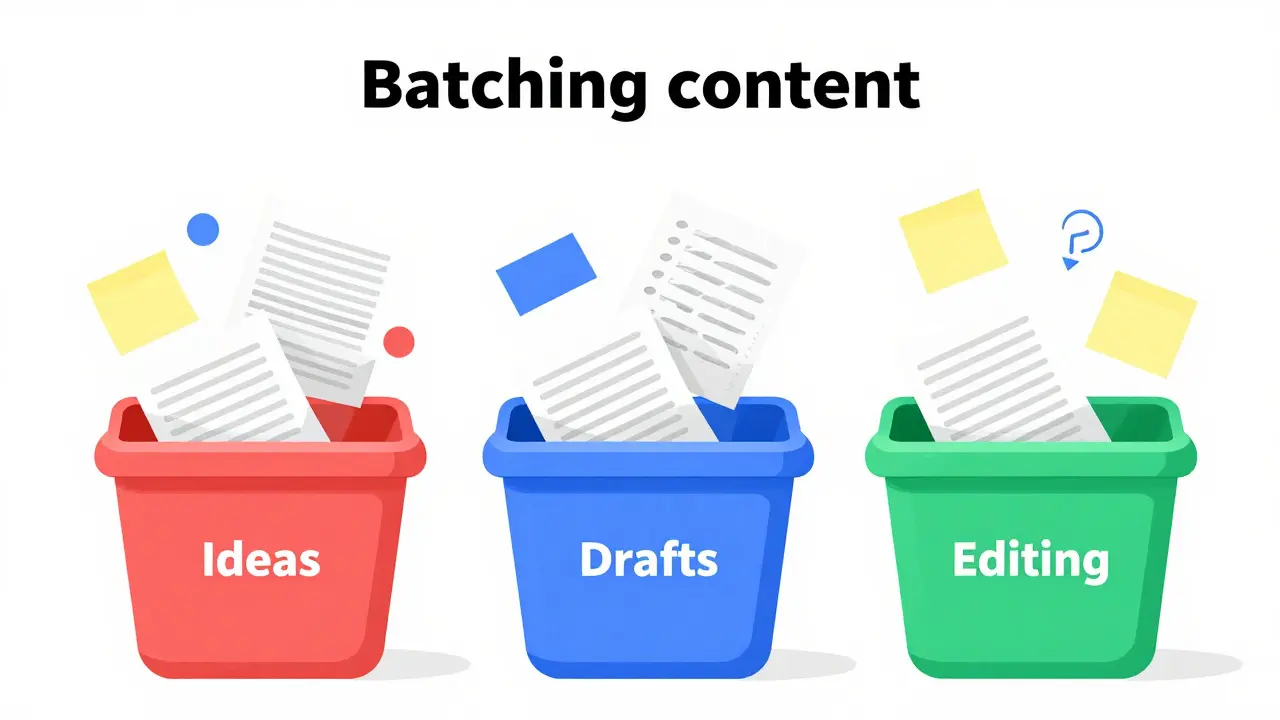
One of the biggest time wasters for student bloggers is context switching. Moving from researching a topic, to writing, to editing, to formatting, and then to social media promotion takes mental energy. Each switch costs you focus. The solution is batching. Instead of working on one article from start to finish, group similar tasks together.
- Idea Generation: Spend 30 minutes once a week brainstorming topics. Keep a simple note app or physical notebook handy for random thoughts during lectures or commutes.
- Drafting: Block out dedicated time solely for writing. No editing, no formatting, just getting words on the page.
- Editing & Publishing: Reserve a separate session for polishing the draft, adding images, and scheduling the post.
This method reduces the friction of starting. When you sit down to draft, you already know what you are writing. When you sit down to edit, you already have a draft. It turns a chaotic process into a predictable workflow.
Integrating Writing With Academic Life
You might think your university work and your blog are separate worlds, but they often overlap. Your modules provide endless material. A psychology student can write about cognitive biases. A history major can discuss primary source analysis. A business student can break down case studies in plain English.
Here is the trick: do not wait until you have finished all your assignments to use the knowledge. While studying for an exam, take notes on concepts that explain well. These become future blog posts. You are essentially doing double duty. You learn the material for your degree, and you create content for your audience. This makes the effort feel less like extra work and more like a natural extension of your studies.
Managing the Exam Period
Let's talk about the elephant in the room: exams. During revision weeks, consistency usually drops to zero. That is okay. The key is to manage expectations so you don't feel guilty.Before exams start, communicate with your readers. Post a short update saying, "I'm heading into exams, so posts may be slower or paused until [Date]." Most audiences appreciate the transparency. They want to know you are human, not a content machine.
If you must keep posting, lower the bar. A short, personal update about your study routine is better than a forced, low-quality long-form article. Or, pre-schedule three to four posts before the exam period begins. This creates a buffer that keeps your feed active while you focus entirely on your grades.
Tools That Save Time
You don't need expensive software to stay consistent. You need tools that reduce friction. Here are a few essentials that help student bloggers move faster:
- Content Calendars: Use a simple spreadsheet or a tool like Trello to visualize your upcoming posts. Seeing your pipeline prevents last-minute panic.
- Voice Memos: Capture ideas immediately. Talking through an idea is often faster than typing it. Transcribe later if needed.
- Scheduling Platforms: Tools like WordPress native scheduler or Buffer allow you to write a batch of posts and release them automatically. This decouples creation from publication.
The goal is to make the technical side of blogging invisible. You should spend your energy on the writing, not on figuring out how to upload an image or format a header.

Maintaining Motivation Without Burnout
Consistency is hard because motivation is fickle. Some days you will feel inspired; other days, you will feel like giving up. To combat this, detach your self-worth from your output. A bad post does not mean you are a bad writer. It means you had a bad day. Allow yourself to publish imperfect work. Perfectionism is the enemy of consistency.
Also, remember why you started. Revisit your early posts. Read comments from your first followers. Remind yourself that building an audience is a marathon, not a sprint. One missed week won't kill your blog. But quitting because you felt overwhelmed for a month will.
| Strategy | Best For | Risk |
|---|---|---|
| Daily Posting | High-volume news or lifestyle blogs | High burnout risk during term time |
| Weekly Long-Form | In-depth educational or niche content | Requires significant upfront research time |
| Bi-Weekly + Social Updates | Balanced approach for most students | May feel slow to grow initially |
| Exam Pause | Students prioritizing grades | Loss of momentum if not communicated |
Building a Sustainable Routine
Your routine should adapt to your semester. At the start of the year, when you are still settling in, keep the frequency low. As you get comfortable with your course load, you can increase output. During summer vacation, you might write more since academic pressure is off. Use these peaks to catch up on backlog or plan for the next term.
Finally, be flexible. Life happens. Family events, health issues, and unexpected opportunities will disrupt your schedule. Build slack into your system. If you miss a deadline, don't spiral. Just adjust the calendar for the following week. Resilience is built by recovering quickly, not by never failing.
Frequently Asked Questions
How often should a student blogger post?
Quality beats quantity. For most UK students, one high-quality post per week or one every two weeks is sustainable. Focus on consistency over frequency. It is better to post weekly for a year than daily for two months and then quit.
Should I pause my blog during exams?
Yes, if it helps your mental health. Inform your audience beforehand. Alternatively, pre-schedule a few posts to maintain presence without requiring active effort during peak stress periods.
How do I find time to write with a full university schedule?
Use batching and integrate writing with your studies. Write about topics you are already learning for your degree. Dedicate specific, protected blocks of time to writing rather than trying to squeeze it into small gaps.
What tools are essential for managing a student blog?
A content calendar (like Trello or a spreadsheet), a note-taking app for capturing ideas, and a scheduling tool within your CMS (like WordPress) are the core essentials. Avoid over-investing in complex tools until your basic workflow is stable.
How can I avoid burnout while balancing blogging and studies?
Set realistic goals based on your actual available time, not ideal time. Communicate changes in frequency to your audience. Remember that perfection is not required. Prioritize your mental health and grades above all else.