
Every year, thousands of women in the UK start university or college. For many, it’s the first time they’re responsible for their own health without their parents nearby. That includes knowing how to get contraception, book a smear test, and find a clinic that actually understands student life. It’s not complicated-but if no one shows you the way, it can feel overwhelming.
Contraception: What’s Free and How to Get It
If you’re a student in the UK, you don’t have to pay for contraception. The NHS gives out condoms, the pill, the implant, the injection, the coil, and more-all for free. You don’t need a GP referral. You don’t need to tell your parents. You just need to walk in.
Most university health centres have a sexual health nurse on site. If yours doesn’t, they’ll give you the details of the nearest clinic. Walk-in services are common, but some places let you book online. You can also get free condoms from campus pharmacies, student unions, or even some libraries.
The pill works for most people, but it’s not the only option. The implant lasts up to three years and doesn’t need daily attention. The coil (IUD or IUS) can last five to ten years and often reduces period bleeding. The injection lasts three months. All of these are reversible, and none affect your ability to get pregnant later.
One thing students often miss: if you’re on the pill and you’re sick or have severe diarrhea, it might not work. You need to use condoms for the next seven days. That’s not common knowledge-but it’s in every NHS leaflet. Ask for one.
Smear Tests: Why They Matter and When to Book One
A smear test, also called a cervical screening, checks for changes in the cells of your cervix that could lead to cancer. It’s not a test for STIs. It’s not painful for most people. It takes five minutes. And if you’re 25 or older, you’ll get a letter from the NHS inviting you to book one.
But here’s the catch: if you’re under 25, you won’t get a letter. That doesn’t mean you shouldn’t get tested. If you’ve had sex, even once, and you’re worried about HPV or abnormal bleeding, you can request a smear test. Clinics won’t turn you away. You just have to ask.
Many students delay because they think it’s embarrassing. Or they think it’s only for people who’ve had multiple partners. Neither is true. HPV is common-it’s passed through skin-to-skin contact. Most people clear it without knowing. But if it sticks around, it can cause changes. That’s why screening works.
If you’ve never had a smear test and you’re over 25, don’t wait for the letter. Book it now. The NHS says 75% of cervical cancers could be prevented with regular screening. That’s not a small number. That’s life-changing.
Where to Go: NHS Clinics, University Services, and Student-Friendly Options
You have choices. And not all clinics are the same.
University health centres are usually the easiest. They’re on campus, staffed by people who know student schedules, and they don’t judge. Many offer evening and weekend appointments. Some even have female-only clinics for extra comfort.
Community sexual health clinics (often called GUM clinics-Genitourinary Medicine) are NHS-run and open to everyone. They’re free, confidential, and usually have walk-in slots. You might have to wait longer, but you’ll get seen. Some have youth-specific hours-like 4-7pm on Tuesdays-designed for students and teens.
Pharmacies are another option. Some offer emergency contraception without an appointment. A few even give out free condoms and basic advice. Ask if they have a sexual health advisor on site.
Online services like FPA or Brook offer free consultations and can mail you contraception. You fill out a short form, answer a few health questions, and they send you the pill or patch by post. No need to leave your dorm. But you still need to go in for a smear test-it can’t be done remotely.
Don’t rely on Google Maps alone. Some clinics are listed under "sexual health" or "family planning," not "women’s health." Search "NHS sexual health clinic near me" for the most accurate results.

What to Expect at Your First Appointment
It’s normal to feel nervous. But here’s what actually happens:
- You’ll be asked for your name, date of birth, and contact details. No ID needed.
- You’ll talk briefly about your sex life, periods, and any symptoms. The nurse doesn’t care how many partners you’ve had. They care about your health.
- If you’re getting a smear test, you’ll be shown a private room. You can bring a friend for support, or ask for a female nurse. You can also request a speculum with a smaller size if you’re anxious.
- The test itself feels like a small pinch, if anything. Most people say it’s less uncomfortable than a pap smear they remember from school.
- You’ll get your results by post in about two weeks. If there’s an issue, they’ll call you directly.
You don’t need to undress fully. You’ll be covered with a sheet. You can keep your socks on. You can ask to stop at any time. No one will rush you. This is your appointment.
What to Do If You’re Too Scared to Go
It’s okay to be scared. But don’t let fear stop you.
Call the clinic first. Ask to speak to someone about your anxiety. Many clinics have a "first visit buddy" system-they’ll pair you with someone who’s been there before. Or they’ll let you come in just to look around, no test required.
Some students find it easier to go with a friend. Others write down their questions ahead of time. One student told me she brought her phone and played music during the test. It helped her relax.
If you’ve had trauma or abuse in the past, tell the nurse. They’re trained to handle this. They’ll move slower. They’ll ask you what you’re comfortable with. You’re in control.
Emergency Contraception: When You Need It Now
Had unprotected sex? Forgot your pill? Condom broke? You have options.
The morning-after pill (levonorgestrel) works up to 72 hours after sex. The ellaOne pill works up to 120 hours. Both are free from clinics, pharmacies, and some university health centres.
The copper IUD is the most effective option-it works up to five days after sex and can also be left in as long-term contraception. It’s over 99% effective. If you’re eligible, they can fit it the same day.
Don’t wait. The sooner you act, the better it works. And yes, you can get it even if you’re under 16. It’s confidential.
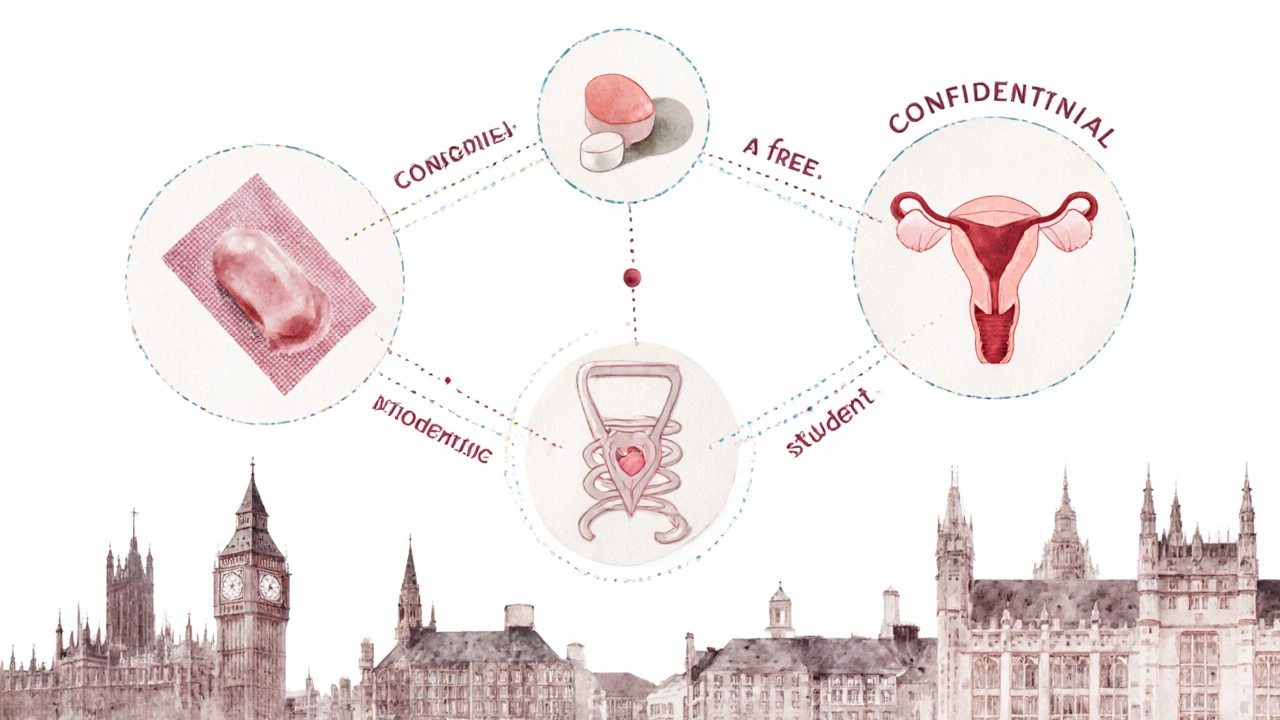
What’s Not Covered (and What to Watch For)
Not every women’s health issue is free. Hormone tests, private consultations, or specialist referrals might cost if you’re not on the NHS. But basic care-contraception, smear tests, STI checks-is always free.
Watch for symptoms that shouldn’t be ignored: heavy bleeding, pain during sex, unusual discharge, or missed periods without a clear reason. These aren’t "just stress." They’re signs. Book an appointment.
Also, don’t assume you’re fine just because you’ve never had an STI. Many have no symptoms. Chlamydia, for example, can damage your fertility without you knowing. Get tested if you’ve had a new partner.
Student Stories: Real People, Real Experiences
Maya, 20, from Manchester: "I waited two years to book my smear test because I thought it would hurt too much. I went with my flatmate. The nurse asked if I wanted to listen to music. I did. It was over in three minutes. I cried afterward-not from pain. From relief. I’d been scared for nothing."
Leila, 22, from Edinburgh: "I got the implant because I kept forgetting the pill. I didn’t tell my mum. I didn’t need to. The clinic gave me a leaflet with a phone number to call if I had questions. I called twice. They never made me feel stupid."
Samira, 19, from London: "I thought clinics were for people with problems. Turns out, they’re for anyone who’s sexually active. I went just to get condoms and ended up booking my smear test. Best decision I made this year."
Next Steps: What to Do Today
If you’re a student and you’re reading this, here’s your to-do list:
- Check if your university has a sexual health service. If yes, book a free appointment.
- If you’re 25 or older and haven’t had a smear test, book one now.
- If you’re under 25 and sexually active, ask for a smear test anyway.
- Find out where your nearest free condom distribution point is.
- Save the number of your local sexual health clinic in your phone.
Women’s health isn’t a luxury. It’s part of being a student. You’re studying, working, managing money, and building your future. Your body deserves the same care.
Do I need to be registered with a GP to get free contraception?
No. You don’t need to be registered with a GP to get free contraception in the UK. Sexual health clinics, university health centres, and pharmacies can provide it without a referral. Your GP record doesn’t need to be involved unless you want it to be.
Can I get a smear test before I’m 25?
Yes. While the NHS invites people for routine screening at 25, anyone who’s had sex and is concerned about cervical changes can request a smear test at any age. Clinics won’t refuse you. You just need to ask.
Are all contraceptive methods free for students?
Yes. All NHS-approved methods-including the pill, implant, coil, injection, and condoms-are free for anyone in the UK, regardless of age or student status. You don’t pay anything at the point of service.
Can I bring someone with me to my appointment?
Yes. You can bring a friend, partner, or family member for support. Many clinics encourage it, especially for first-time visitors. You can also ask to see a nurse of a specific gender or request to be seen in a private room.
What if I’m worried about confidentiality?
Everything you discuss is confidential. Staff won’t tell your parents, your university, or your GP unless you’re in immediate danger or under 13. Even then, they’ll try to involve you first. Your records are protected by law.