
If you’re a student in the UK and you’ve requested counselling through your university, you might have been told there’s a waiting list. It’s not unusual. Some schools have wait times of 4 to 8 weeks, and in rare cases, even longer. That’s a long time when you’re struggling to sleep, focusing in class, or just feeling like you can’t keep going. But waiting doesn’t mean doing nothing. There are real, practical steps you can take right now to protect your mental health while you wait.
Understand Why the Wait Happens
University counselling services in the UK are often stretched thin. Student demand has risen sharply over the last five years. In 2023, over 60% of UK universities reported a 30% or higher increase in counselling requests compared to 2020. But funding hasn’t kept up. Many services are still running on the same budget as before the pandemic. That means counsellors are seeing more students with fewer resources. It’s not that they’re ignoring you-it’s that they’re overwhelmed. Knowing this doesn’t fix the wait, but it helps you stop blaming yourself for not getting help fast enough.
Start with What’s Already Available
Your university likely offers more than just one-on-one counselling. Most campuses have:
- Group sessions on anxiety, stress, or sleep-these often have shorter wait times or no wait at all.
- Self-help portals with guided exercises, mood trackers, and CBT-based tools. Universities like UCL and Manchester offer these for free through their student health portals.
- Peer support networks run by trained students. These aren’t therapy, but talking to someone who’s been through similar stress can make a big difference.
- Drop-in hours for quick chats with a mental health advisor. These are usually 15-20 minutes, but they can help you get referrals or emergency contacts.
Check your student portal or email for links to these. Don’t wait for your counselling appointment to start using them.
Build a Daily Mental Health Routine
Waiting for counselling is easier when your days have structure. You don’t need to overhaul your life-just add small anchors.
- Move your body every day. Even a 10-minute walk outside helps lower cortisol. You don’t need a gym. Just get fresh air.
- Write down three things you’re grateful for each night. It sounds simple, but research from the University of Oxford shows this habit improves mood in as little as two weeks.
- Set one small win each day. It could be replying to one email, making your bed, or calling a friend. Celebrate it.
- Limit doomscrolling before bed. Studies show that scrolling for more than 20 minutes at night reduces sleep quality by 30% in students. Try using an app like Freedom or Screen Time to block social media after 9 p.m.
These aren’t magic fixes. But they create small pockets of calm. And calm gives you space to breathe while you wait.
Reach Out to People Who Already Know You
You don’t need to wait for a professional to talk. Talk to someone you trust.
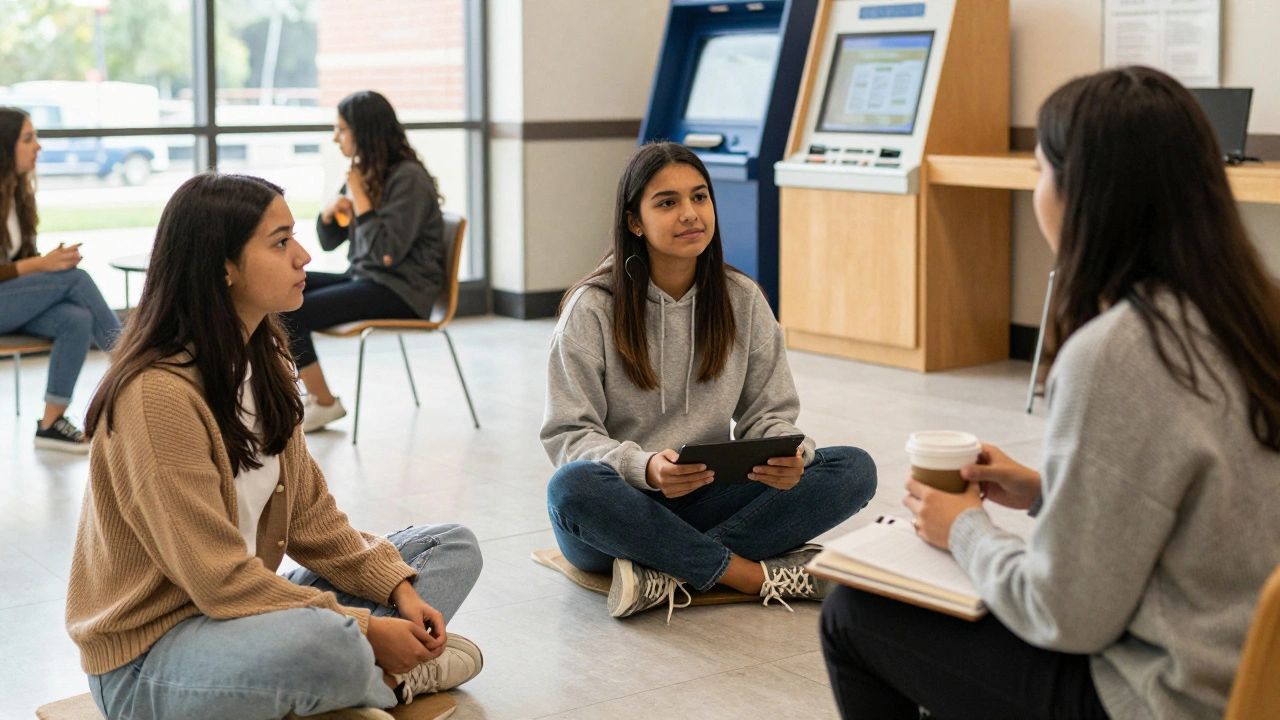
That might be a roommate who’s been through this. A tutor who notices you’ve been quiet. A family member who doesn’t judge. You don’t have to say, “I’m in crisis.” You can say, “I’ve been feeling really drained lately. Can we grab coffee?”
Many students feel guilty asking for help from friends. But loneliness is one of the biggest risk factors for worsening mental health. If you’re not talking to anyone, your stress compounds. Even one real conversation a week can lower your anxiety levels.
Know When to Escalate
Not all waits are equal. If you’re having thoughts of self-harm, feeling completely disconnected from reality, or can’t eat or sleep for more than three days, you need faster help. Don’t wait for your counselling slot.
Here’s what to do:
- Call NHS 111. They can connect you to urgent mental health services, even on weekends.
- Go to your GP. They can refer you to an NHS mental health team with shorter wait times than university counselling.
- Text SHOUT to 85258. It’s a free, 24/7 text service for crisis support. No judgment. Just someone listening.
These aren’t backups. They’re lifelines. Using them doesn’t mean you’re failing-it means you’re taking care of yourself.
Track Your Progress (Even If It’s Tiny)
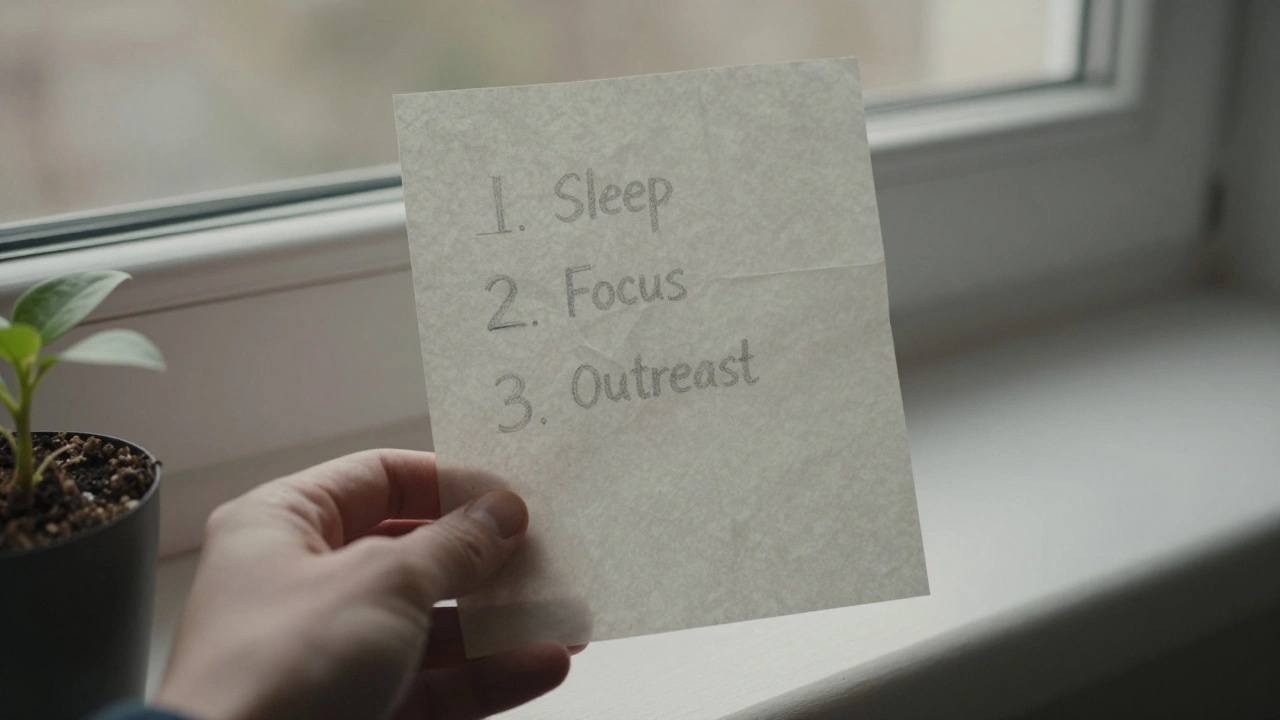
While you wait, keep a simple log. Not a journal. Just a note every few days:
- How was your sleep? (1-5)
- How was your focus? (1-5)
- Did you reach out to anyone? (Yes/No)
- What helped a little today?
This isn’t for your counsellor. It’s for you. When you look back after four weeks, you might see patterns: “I feel better after walks.” “I’m worse on days I skip breakfast.” “Talking to my flatmate helped more than I thought.” This data gives you power. You’re not just waiting-you’re learning about yourself.
Prepare for Your First Appointment
When your slot finally comes, you’ll be more ready if you’ve already started thinking about what you want to say. You don’t need a script. But you can write down:
- One thing that’s been hardest in the last month
- One thing you’d like to change
- One thing you’ve tried that helped-even a little
That’s it. Counsellors aren’t looking for perfect answers. They’re looking for honesty. If you show up with a few honest notes, you’ll get more out of that session than someone who walks in with no idea what to say.
What If You Still Feel Stuck?
Some students wait 10+ weeks and still feel like nothing’s changed. That’s frustrating. And valid.
If you’ve tried all the steps above and still feel like you’re sinking, it’s time to look outside your university. Many local charities offer free or low-cost counselling for students:
- Student Minds offers peer-led support groups across the UK.
- The Mix provides free counselling via text, phone, or chat for under-25s.
- Counselling Directory lets you search for registered therapists who offer sliding-scale fees.
You don’t have to wait for your university to fix this. You have options.
Remember: You’re Not Behind
Waiting for counselling doesn’t mean you’re weak. It doesn’t mean you’re not trying hard enough. It means the system is overloaded-and you’re still here, still reaching out, still trying to get better. That takes courage.
While you wait, you’re not passive. You’re building resilience. You’re learning what helps. You’re reaching out. You’re surviving. And that matters more than any waiting list number.
How long do UK university counselling waiting lists usually take?
Waiting times vary by university and time of year. On average, students wait 4 to 8 weeks. In high-demand periods-like exam season or the start of term-some schools report waits of 10-12 weeks. Smaller universities with fewer counsellors may have longer waits. Always ask your student services office for their current average wait time.
Can I get counselling outside my university while waiting?
Yes. Many students use NHS services, charities like The Mix or Student Minds, or private therapists with sliding-scale fees. You don’t need permission from your university to seek help elsewhere. In fact, using external support can sometimes speed up your university referral if you bring documentation of your progress.
What if I’m not sure if I need counselling?
You don’t need to be in crisis to benefit from counselling. If you’ve been feeling persistently low, anxious, overwhelmed, or disconnected for more than two weeks, it’s worth talking to someone. Counselling isn’t just for “serious” problems-it’s for anyone who feels stuck. Universities encourage students to reach out early, not just when things feel unbearable.
Do university counsellors keep everything I say private?
Yes, counselling sessions are confidential. Counsellors can only break confidentiality if there’s a serious risk to your life or someone else’s, or if required by law. They won’t share what you say with your professors, parents, or the university administration unless you give permission. Your privacy is protected under UK data protection laws.
Can I request a specific type of counsellor (e.g., gender, cultural background)?
Many universities allow you to request a counsellor based on gender, language, or cultural background. It’s not always guaranteed, but it’s worth asking. Some schools have dedicated counsellors for international students, LGBTQ+ students, or students from specific ethnic backgrounds. Don’t hesitate to ask-your comfort matters.
While you wait, you’re not idle. You’re preparing. You’re learning. You’re staying alive. And that’s the most important thing.