
Quick Summary: The Essentials
- Timing: Most applications open between March and June for a September start.
- Priority: First-year students usually get priority for on-campus halls.
- Process: Apply through the university portal after receiving your offer (Conditional or Unconditional).
- Costs: Rent is typically paid in installments aligned with your student loan.
- Options: Choose between catered (meals provided) and self-catered rooms.
The Master Timeline: When to Move
Getting your room depends heavily on your offer status. If you're an international student or someone moving from across the country, you can't just wing it in August.Between March and May, most universities open their initial windows. This is the research phase. You should be browsing the university's accommodation page, looking at room types, and checking the distance to the Student Union. If you have an unconditional offer, this is when you can often lock in your preferred room type.
From June to August, the rush happens. This is when the bulk of students accept their places and scramble for beds. If you wait until September, you're fighting for the leftovers. Be aware that some institutions, like University of Oxford or University of Cambridge, have a collegiate system where housing is tied to your college, not a central university portal, which changes the timeline significantly.
Deciphering the Room Options
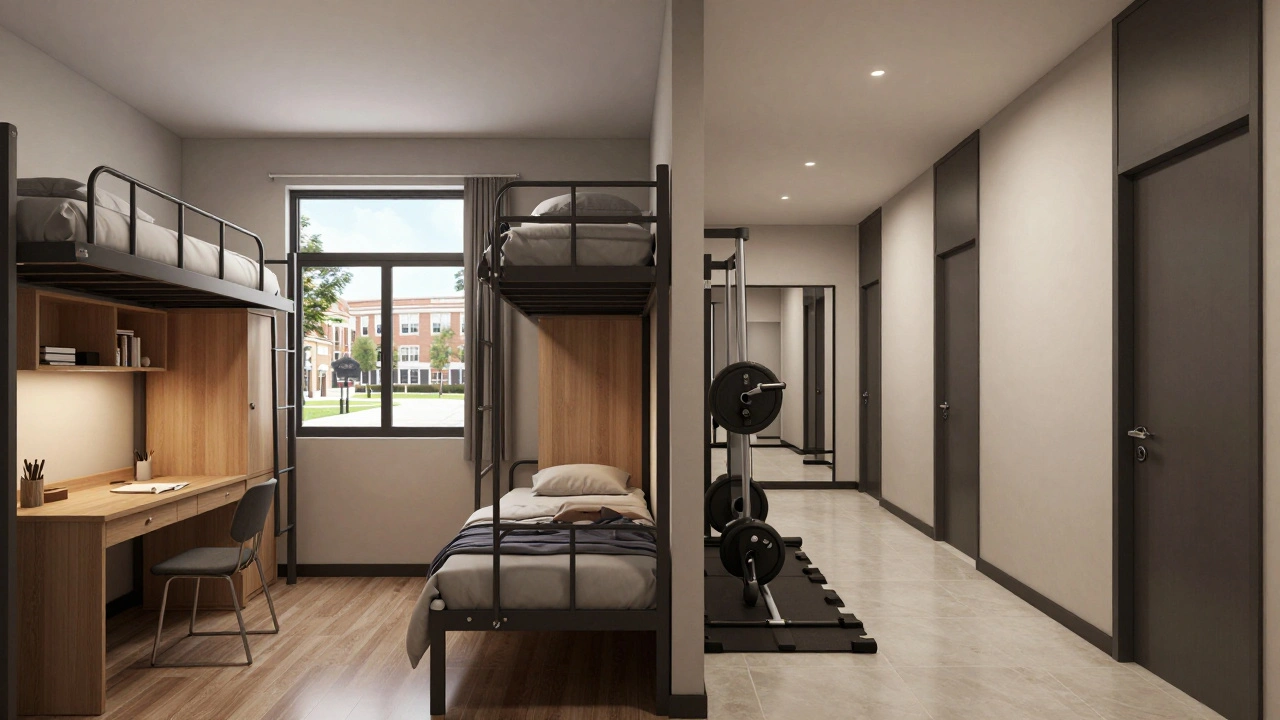
Not all halls are created equal. You'll likely see three main categories. First, there are the standard university-managed halls. These are the safest bet for freshmen because they're usually on campus and offer a built-in social life. Then you have private providers like Unite Students or IQ Student Accommodation. These are often fancier-think gym access and cinema rooms-but they can be more expensive and slightly further from the lecture halls.Then you have the choice of catering. Catered accommodation means you have a meal plan where you eat in a dining hall. It's great if you can't cook a piece of toast without burning it. Self-catered means you get a shared kitchen. Most students prefer self-catered because it's cheaper and gives you more freedom, but it means you're responsible for the dreaded "shared fridge cleanup" drama.
| Feature | University-Managed | Private Purpose-Built (PBSA) | Private Shared House (HMO) |
|---|---|---|---|
| Location | On or near campus | City center/Near campus | Residential areas |
| Cost | Moderate/Standard | Higher/Premium | Variable (usually lowest) |
| Social Life | Very high (First-years) | High (Mixed years) | Limited to housemates |
| Contract | University Agreement | Commercial Lease | Assured Shorthold Tenancy |
The Application Process Step-by-Step
Once you've decided where you want to live, the actual application is usually a digital process. First, log into your UCAS portal or the university's own applicant system. You'll see a link for "Accommodation."
- The Preference Form: You'll be asked to list your top three choices. Be honest here. If you hate noise, don't pick the "social hub" block.
- The Guarantor: This is where most international students get stuck. UK landlords want a guarantor-someone who lives in the UK and agrees to pay your rent if you can't. If you don't have one, the university will often ask for the full year's rent upfront or provide a university-backed guarantee.
- The Deposit: You'll pay a holding deposit to take the room off the market. This is usually a few hundred pounds and is deducted from your final rent.
- The Contract: Read the fine print. Most halls have a 40-week or 51-week contract. If you plan to stay over the summer for an internship, make sure you have a 51-week lease, or you'll be moving out in June.
Money Talk: Budgets and Payments
Renting in the UK isn't like renting an apartment in the US. In Halls of Residence, your rent almost always includes "bills." This means your electricity, water, heating, and Wi-Fi are bundled into one price. You won't have to argue with your roommates about whose turn it is to pay the electric bill.
Payments are typically split into three installments. These are strategically timed to hit right when your Student Loans Company (SLC) payment arrives-usually in October, January, and April. If you're paying privately, you might be asked for monthly payments, but for university-managed halls, the termly split is the gold standard.
Common Pitfalls to Avoid
One of the biggest mistakes students make is choosing a room based on a roommate they met on a Facebook group. While it sounds a great idea, these arrangements often fall apart by November. The university's matching algorithms are surprisingly decent; they group people by interests, habits, and course of study. Trust the system a bit more than a random social media thread.
Another trap is ignoring the "En-suite vs. Shared Bathroom" trade-off. An en-suite room (your own bathroom) is a luxury, but it's significantly more expensive. If you're on a tight budget, a shared bathroom is a great way to save money and, ironically, a faster way to make friends. There's something about complaining about the shower temperature together that bonds people.

What Happens if You Miss Out?
If you wake up in September and have no room, don't panic. Your first move should be the university's accommodation office. They often keep a "emergency list" of rooms that open up due to last-minute cancellations.
If that fails, look for a House in Multiple Occupation (HMO). This is a standard house rented to students. You'll need to find a local letting agent or use sites like SpareRoom. Just be careful: unlike halls, you'll have to set up your own internet and pay for gas and electricity separately. This adds a layer of admin that you definitely don't want during your first week of lectures.
Do I need an unconditional offer to apply for halls?
Not always. Many universities allow students with conditional offers to apply for accommodation. However, the room is usually only guaranteed once you meet your conditions and formally accept the place. Check your specific university's policy, as some might only open the portal for unconditional offer holders first.
What is the difference between a 40-week and a 51-week contract?
A 40-week contract covers the academic year, meaning you must move out during the summer break (usually by late June). A 51-week contract allows you to stay through the summer, which is essential if you're an international student who can't go home or if you have a summer job/internship in the city.
How do I handle the guarantor requirement if I'm an international student?
If you don't have a UK-based guarantor, you have three main options: pay the full year's rent in advance, use a professional guarantor service (which charges a fee), or see if the university provides a guarantee for its own halls. Most university-managed halls are more flexible with international students than private landlords are.
Are university halls safer than private rentals?
Generally, yes. Halls typically have 24/7 security, electronic key-card access, and on-site staff (Wardens or Resident Assistants) who can help with everything from locked-out rooms to mental health crises. Private rentals leave you more independent but lack that immediate support network.
Can I change my room if I don't get along with my flatmates?
It's possible but not guaranteed. Most universities have a "settling-in period" (usually the first 2-4 weeks). If there's a serious conflict, you can request a room swap. However, because halls are often 100% full, you might have to wait for someone else to move out or find someone willing to swap with you.
Next Steps for New Students
If you're just starting this process, your first move is to create a folder for all your housing documents. Save your offer letter, a scan of your passport, and any financial proofs. When the application window opens, these are the files you'll need to upload instantly. Speed is the game here.
Once you've secured your room, start thinking about your "starter kit." Don't buy a toaster and kettle before you arrive; most halls provide them, or you can buy them cheap at a local shop once you land. Focus on the big things: bedding, towels, and a very sturdy extension lead-because you'll never have enough power outlets near your bed.