
You hand over a chunk of cash to your landlord-often enough to cover a month’s rent or more-and then what? For many renters in the UK, that money sits in a black hole for months or even years. You pay it at the start, hope you get it back at the end, and pray they don’t invent a reason to keep half of it. But here is the thing: under Tenancy Deposit Protection (TDP) rules, your landlord cannot just stash that cash under their mattress. It has to be protected in a government-approved scheme. Knowing how this system works is the difference between getting your full refund and fighting for scraps.
The Legal Safety Net: Why Protection Isn't Optional
If you are renting a property in England or Wales as an Assured Shorthold Tenant, your landlord is legally required to protect your deposit within 30 days of receiving it. This isn't a suggestion; it is law. If they fail to do this, they can be ordered by a court to repay you up to three times the amount of your deposit. That is a massive penalty for simply being disorganized or trying to play games with your cash.
There are three main types of schemes authorized by the UK government:
- Custodial Schemes: The scheme holds the money. Think of it like an escrow account. Neither you nor the landlord touches the cash until the tenancy ends.
- Insured Schemes: The landlord keeps the money but pays a fee to an insurance provider. If the landlord refuses to return the deposit unfairly, the insurer steps in to pay you, and then chases the landlord for reimbursement.
- Deposit-Free Alternatives: Newer models where tenants pay a non-refundable fee instead of a cash deposit, though these have their own complexities regarding refunds.
Most landlords use insured schemes because it helps their cash flow. But regardless of which one they pick, they must give you specific information within 30 days. This includes the name of the scheme, the contact details, and how to resolve disputes. If you never got this paperwork, ask for it immediately. Their failure to provide it strengthens your position if things go south later.
What Exactly Can They Deduct?
This is where most arguments happen. Landlords often treat deposits as a bonus pot, assuming any flaw in the flat means they keep some cash. Wrong. The core principle of TDP is simple: A deposit is meant to cover unpaid rent, damage beyond fair wear and tear, or cleaning costs that exceed the standard agreed upon in the contract. It is not a general fund for repairs the landlord would have had to make anyway.
Let's break down the big three categories of deductions so you know what is fair game:
1. Unpaid Rent and Bills
If you leave owing rent, utility bills, or council tax (if applicable), the landlord can deduct these amounts. However, they need proof. A vague statement saying "you didn't pay" won't fly. They need invoices or bank statements showing the shortfall. If you paid your rent on time every month, this deduction should be zero.
2. Damage Beyond Fair Wear and Tear
This is the most contentious area. What counts as "fair wear and tear"? The Association of Residential Letting Agents (ARLA) provides guidelines, but common sense applies too. Faded carpets from sunlight? Wear and tear. A cigarette burn? Damage. Scuff marks on walls from moving furniture? Usually wear and tear. A large hole punched in the plaster? Damage.
Landlords cannot charge you for repainting the entire living room because there is one small mark on the wall. They can only charge for the repair of that specific spot, or a proportionate cost if the paint job was old. If the carpet was five years old and worn out when you moved in, they can't charge you the full replacement price if you spill red wine on it. They can only charge the residual value of the carpet at the time of the stain.
3. Cleaning Costs
Your contract likely states you must return the property in the same condition as you received it, minus fair wear and tear. This usually means professional-level cleaning. However, if the landlord hired a cleaner who charged £200 for a two-bedroom flat, but the going rate in your area is £100, they can only deduct the reasonable market rate. They cannot profit from your departure.
The Inventory Check-In: Your Best Defense
Imagine moving into a new flat. The landlord hands you a list of items. Do you sign it without looking? Big mistake. The inventory report is the baseline document against which your exit inspection will be compared. If the report says the carpet has a stain in the hallway, and you leave with that same stain, you shouldn't be charged for it. If the report is silent, but the landlord claims the stain is new, you might be able to argue it was pre-existing if you have photos.
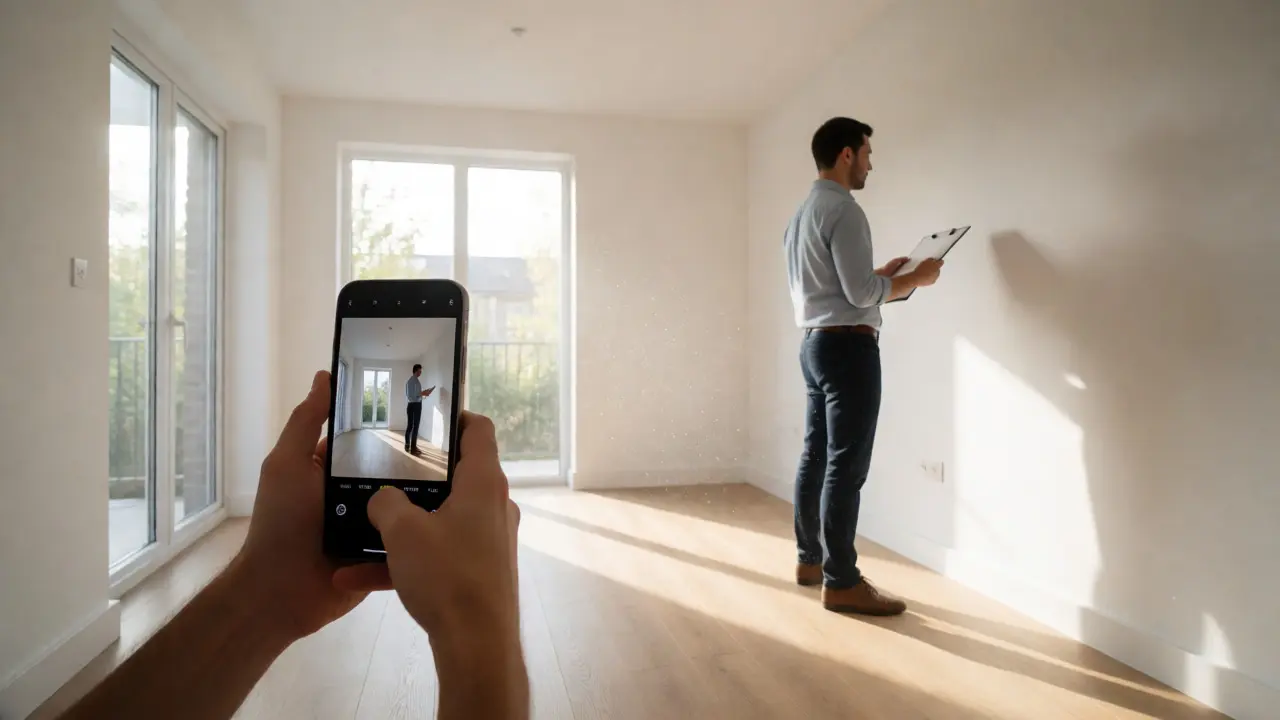
Here is a pro tip: Take date-stamped photos and videos of every single room on day one. Focus on corners, appliances, skirting boards, and window frames. Send these to the landlord or agent via email so there is a paper trail. When you move out, repeat the process. Having visual evidence makes it incredibly hard for a landlord to fabricate damage claims.
| Issue | Landlord's Likely Claim | Tenant's Strongest Counter-Argument |
|---|---|---|
| Carpet Stains | Full replacement cost (£500) | Residual value calculation based on age and lifespan |
| Wall Marks | Repaint entire room (£300) | Spot repair cost or percentage of room painted |
| Garden Maintenance | Professional landscaping fee | Contract specifies "tidy" vs. "professionally landscaped" |
| Mould/Damp | Tenant failed to ventilate | Evidence of structural defect or heating issues |

How Disputes Are Resolved Without Court
If you and your landlord disagree on deductions, you don't necessarily need to hire a lawyer. All three approved TDP schemes offer free Alternative Dispute Resolution (ADR) services. This is essentially an independent adjudication service. You submit your evidence (photos, emails, receipts), the landlord submits theirs, and an independent expert decides who gets what.
The key to winning an ADR case is documentation. An adjudicator looks at facts, not feelings. If you claim the mould was caused by a leaking roof, you need photos of the leak, dates you reported it, and perhaps a builder's quote. If the landlord claims you broke a door, they need photos of the broken door and proof it wasn't broken before. The burden of proof lies with whoever is making the claim.
It is worth noting that ADR decisions are binding in practice. While technically you could still take it to small claims court, the adjudicator's decision is based on strict evidence standards, so overturning it is difficult and expensive. Most people accept the outcome because it is fast and free.
Recent Changes: The Renters' Rights Bill Impact
Housing laws in the UK are evolving. As of 2026, the implementation of various clauses from the Renters' Rights Bill continues to shift the landscape. One major change affecting deposits is the ban on Section 21 "no-fault" evictions in many contexts, which gives tenants more stability. More importantly, there is increased scrutiny on "fees" disguised as deposits.
Under the Tenant Fees Act 2019 (which remains central to current regulations), deposits are capped at five weeks' rent for properties with annual rents under £50,000, and six weeks for those above. Any other upfront payments-like admin fees or referencing fees-are largely banned. This simplifies the financial picture. If a landlord tries to hold back money for something not explicitly covered by damage, rent arrears, or breach of contract, it is likely illegal.
Furthermore, digitalization is speeding up the process. Many schemes now allow instant online verification of deposit protection status. You can check if your deposit is protected by visiting the website of the relevant scheme (DPS, MyDeposits, or TDS) and entering your details. If it is not listed, you have leverage. You can withhold further rent payments (with legal advice) or demand immediate protection plus penalties.
Practical Steps to Maximize Your Refund
Don't wait until the last week of your tenancy to think about your deposit. Start preparing eight weeks out. Here is a checklist to ensure you walk away with the maximum amount:
- Review the Inventory: Compare your current state against the move-in report. Identify any discrepancies.
- Deep Clean: Hire a professional cleaner if possible, or clean meticulously yourself. Keep receipts if you hire someone.
- Repair Minor Issues: Fill nail holes, replace broken light bulbs, and fix minor plumbing leaks. These are cheap fixes that prevent larger deductions.
- Take Exit Photos: Document everything. Include close-ups of previously noted damages to show no new damage occurred.
- Return Keys: Hand them over in person if possible, or use recorded delivery. Get a receipt for the keys.
- Submit a Forwarding Address: Ensure the landlord knows exactly where to send the cheque or transfer.
If the landlord proposes deductions, ask for itemized quotes. If they say they deducted £150 for cleaning, ask for the invoice. If they deducted £400 for a broken shelf, ask for the receipt of the new shelf. Vague numbers are red flags. Challenge them politely but firmly in writing.
Frequently Asked Questions
Can my landlord keep my deposit for normal wear and tear?
No. The law clearly distinguishes between damage and fair wear and tear. Normal aging of fixtures, fading curtains, and scuff marks from walking are considered fair wear and tear. The landlord cannot deduct money for these unless the damage exceeds what is expected over the duration of the tenancy.
What happens if my landlord hasn't protected my deposit?
If your landlord fails to protect your deposit in an approved scheme within 30 days, they are in breach of statutory duties. You can apply to the county court, which may order the landlord to repay your deposit and pay you a penalty of up to three times the deposit amount. This also prevents them from using a Section 21 eviction notice until the deposit is properly protected.
Do I have to pay for professional cleaning?
Only if your tenancy agreement explicitly requires professional cleaning. Even then, the cost deducted must be reasonable and reflect the actual market rate. If you cleaned the property to a high standard yourself, and the landlord hires a cleaner unnecessarily, you can dispute the deduction.
How long does it take to get my deposit back?
Typically, 10 to 28 days after the tenancy ends, provided there are no disputes. If there is a dispute, the timeline depends on how quickly both parties agree to use the ADR service. Once the adjudicator makes a decision, funds are usually released within a few working days.
Can the landlord deduct money for garden maintenance?
Yes, but only if the garden was maintained to a certain standard when you moved in and you failed to maintain it. The deduction must be for the actual cost of bringing the garden back to its original state. If the garden was already overgrown when you arrived, you cannot be charged for fixing that initial state.