
Imagine packing your bags, booking your flights, and preparing to leave everything behind for a fresh start in London or Manchester. Then, you hit a wall. Your chosen university isn't on the official list of sponsors. That moment is stressful, but it’s also preventable. For international students aiming to study in the United Kingdom, finding a sponsored university isn't just a formality-it is the absolute foundation of your entire journey.
In 2026, the rules around studying abroad have tightened. The UK government maintains strict controls on who can issue visas, and only institutions with a specific license-known as a "sponsor"-can legally enroll you. If you apply to a school without this status, your visa application will be rejected before it even starts. This guide cuts through the confusion. We will walk you through exactly how to verify sponsorship, understand what it means for your studies, and ensure your dream of a British degree doesn’t fall apart at the administrative gate.
What Does "Sponsored University" Actually Mean?
When we talk about a "sponsored university," we aren't talking about financial aid or scholarships. This term refers to an institution that has been granted a Sponsor License by the UK Home Office. Think of it as a badge of trust. The government vets these schools to ensure they are legitimate, financially stable, and capable of managing international students properly.
Without this license, a university cannot issue a Confirmation of Acceptance for Studies (CAS). You might know CAS as the critical document you need to apply for your visa. It’s a unique reference number that proves you have a place at a recognized institution. No CAS means no visa. Period.
Why does this matter so much? Because the UK immigration system relies on this chain of custody. The Home Office trusts the university to check your qualifications, monitor your attendance, and report if you drop out. If the university lacks the license, the chain breaks immediately. Understanding this distinction saves you from wasting time on applications that will never lead to a valid visa.
How to Verify if a University is a Valid Sponsor
You don’t have to guess whether a school is approved. The UK government publishes an up-to-date, searchable list of all licensed sponsors. As of 2026, this is the single most important step in your research process. Here is how you do it correctly:
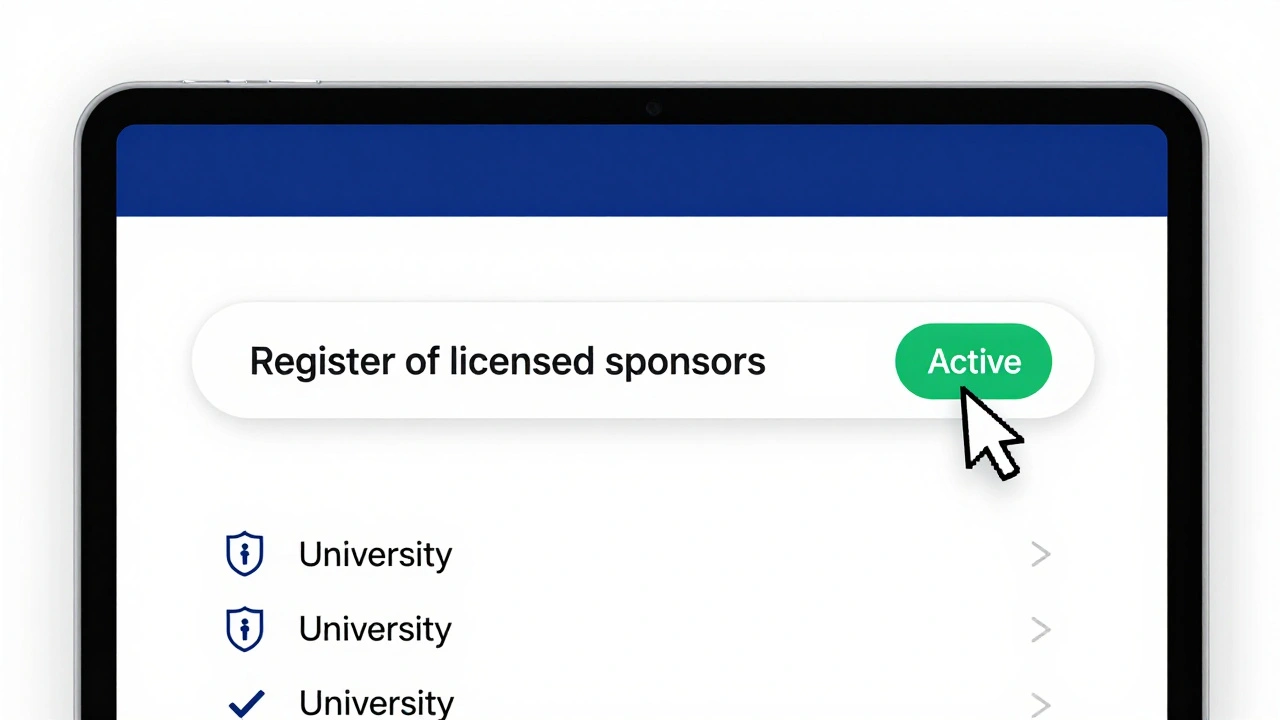
- Go to the Official Source: Visit the UK Government website (gov.uk) and search for the "Register of licensed sponsors." Do not rely on third-party blogs or outdated PDFs found via generic search engines. The official register is the only source of truth.
- Filter by Category: Select "Student" as the category. This filters out companies that sponsor work visas, leaving only educational institutions.
- Search by Name: Type the exact name of the university you are interested in. Be precise. "University of London" is different from "London University." Small naming differences can lead to false negatives.
- Check the Status: Look for the status column. You want to see "Active." If it says "Revoked," "Suspended," or "Expired," do not apply there. A revoked license often means the institution failed compliance checks, which could jeopardize your own standing if you’re already enrolled.
Pro tip: Save a screenshot of the university’s entry on this list. Keep it in your digital folder alongside your offer letter. If any questions arise during your visa interview or appeal, having proof that the institution was active at the time of application is invaluable.
Top-Tier vs. Lower-Tier Sponsors: What’s the Difference?
Not all sponsored universities are created equal. The Home Office categorizes sponsors into two main groups: Higher Education Institutions (HEIs) and Other Educational Institutions. This distinction affects your visa experience significantly.
| Sponsor Type | Examples | Visa Flexibility | Risk Level |
|---|---|---|---|
| Higher Education Institutions (HEIs) | Oxford, Cambridge, Imperial College | High (Post-study work options) | Low |
| Other Educational Institutions | Private colleges, language schools | Limited (Strict course monitoring) | Medium to High |
Higher Education Institutions, such as Russell Group universities, are generally trusted more by immigration officers. They have robust internal systems to track student progress. If you attend one of these, your path to a post-study work visa (often called the Graduate Route) is smoother. These schools rarely face sudden license revocations because they adhere to strict quality standards.
On the other hand, smaller private colleges or language centers fall under "Other Educational Institutions." While they are still valid sponsors, they undergo more frequent audits. If a small college loses its license due to poor management, current students are usually allowed to finish their term, but transferring can be a nightmare. Always prioritize established HEIs if your goal is long-term career prospects in the UK.
The Application Process: From Offer to Visa
Once you’ve confirmed the university is a sponsor, the next steps follow a strict timeline. Missing a deadline here can cost you an entire academic year. Here is the typical flow for 2026:
- Receive Unconditional Offer: You must meet all academic requirements first. Conditional offers do not trigger the CAS issuance.
- Pay Tuition Deposit: Most universities require a partial payment before issuing the CAS. Ensure you use a traceable method like bank transfer.
- Get Your CAS Number: The university sends this electronically. Double-check every detail on the CAS statement-your name, date of birth, and course dates must match your passport exactly. Errors here cause automatic visa rejections.
- Apply for Visa Online: Use the CAS number in your online application. Upload your financial evidence showing you can cover tuition and living costs (currently £1,334 per month for London, £1,023 outside London).
- Biometrics Appointment: Book a slot at a local visa center. Bring your passport and appointment confirmation.
Note that processing times vary. Standard processing takes about three weeks, but peak seasons (July-August) can stretch this to eight weeks. Apply as soon as you receive your CAS. Don’t wait until the last minute.
Common Pitfalls That Lead to Rejection
Even with a sponsored university, your visa can still be denied. Immigration officers look for consistency and honesty. Here are the most common traps:
Financial Gaps: You must show funds have been held in your account for 28 consecutive days before applying. If you withdrew money and redeposited it, the clock resets. Plan your finances months in advance.
Course Progression Issues: If you’re continuing your education in the UK, the new course must be a logical step up. Applying for a bachelor’s degree after completing a master’s in a similar field raises red flags. Officers may suspect you’re using the student visa as a backdoor to work illegally.
Ignoring Sponsor Changes: Sometimes, a university changes its name or merges with another institution. Check the sponsor list again after you receive your offer. If the entity name changed, ensure the CAS reflects the current legal name registered with the Home Office.
What Happens If Your University Loses Its License?
This scenario is rare but terrifying. If a university’s sponsor license is revoked while you are studying, the Home Office notifies you directly. You are typically given a grace period to find a new sponsor. You must transfer to another licensed institution quickly. Failure to do so results in your visa being curtailed, meaning you must leave the UK within 60 days. Always keep a backup list of alternative universities in case of emergencies.
Frequently Asked Questions
Can I choose any university in the UK for my student visa?
No, you cannot. You must choose a university that holds a valid Student Route sponsor license issued by the UK Home Office. Only these institutions can provide the Confirmation of Acceptance for Studies (CAS) required for your visa application.
How do I check if a university is currently sponsored?
Visit the official UK Government website and search the "Register of licensed sponsors." Filter by the "Student" category and enter the university's exact name. Ensure the status shows as "Active" before submitting your application.
What is a CAS number and why is it important?
A CAS (Confirmation of Acceptance for Studies) is a unique reference number provided by your sponsored university. It confirms you have been accepted onto a course and includes details about your tuition fees and accommodation. You must include this number in your visa application; without it, your application will be refused.
Does a sponsored university guarantee my visa approval?
No, it does not. While attending a sponsored university is a mandatory requirement, you must also meet other criteria such as proving sufficient financial resources, meeting English language proficiency standards, and demonstrating genuine intent to study. The visa decision rests with the UK immigration authorities.
What should I do if my university's sponsor license is revoked?
If your university loses its license, you will be notified by the Home Office. You must quickly find another licensed sponsor and transfer your enrollment. If you fail to secure a new sponsor within the allowed timeframe, your visa will be curtailed, and you will be required to leave the UK.