
Imagine your flight to London gets cancelled on the day of your exchange program start, or you twist an ankle during a weekend hike in Scotland and need emergency physiotherapy. For UK students studying abroad or traveling domestically, these moments can turn a stressful trip into a financial nightmare without proper coverage. Yet, when it comes time to file a travel insurance claim, many students freeze. They don’t know where to start, what documents to gather, or how long they should wait for a payout. The result? Missed deadlines, rejected claims, and out-of-pocket expenses that could have been covered.
This guide cuts through the confusion. It walks you through exactly what to do when things go wrong while you’re away from home, specifically tailored for students navigating the UK’s healthcare system, transport networks, and academic schedules. Whether you’re dealing with a medical bill, a stolen laptop, or a delayed flight, you’ll learn how to protect your money and your peace of mind.
Key Takeaways
- Act fast: Most policies require you to notify the insurer within 48 hours of an incident to avoid automatic rejection.
- Keep everything: Save every receipt, police report, and medical note. Missing paperwork is the #1 reason student claims fail.
- Use NHS carefully: If you’re a full-time international student, you likely pay the Immigration Health Surcharge (IHS), which gives you access to the National Health Service (NHS). You may not need private travel insurance for routine care, but you still need it for repatriation and non-medical losses.
- Check your policy limits: Student plans often cap daily medical payouts at £100-£200 per day. Know your limit before you accept a treatment plan.
- Digital backups save lives: Store scans of your passport, insurance card, and policy document in the cloud. Physical copies get lost; digital ones don’t.
Understanding Your Coverage: What’s Actually Included?
Before you file anything, you need to know if the issue is even covered. Many students assume “comprehensive” means everything, but that’s rarely true. A standard student travel insurance policy typically covers four main areas: medical emergencies, trip interruption, baggage loss, and personal liability.
For medical issues, look for the phrase “unlimited medical cover” versus “daily maximum.” If your policy says “£150 per day,” and you’re hospitalized for ten days, you only get £1,500, not the full hospital bill. This is a critical distinction. Also, check if pre-existing conditions are excluded. If you have asthma and carry your inhaler, it’s usually fine. But if you had a recent knee surgery and haven’t disclosed it, that claim might be denied.
Baggage claims are another common pitfall. Insurers often define “lost” as “missing for more than 30 days.” If your suitcase is just delayed by two days, you might only be reimbursed for essential items like toiletries and one change of clothes, up to a specific cap (often around £100-£150). Keep receipts for every replacement item you buy immediately after the delay.
The First 48 Hours: Critical Steps to Protect Your Claim
When something goes wrong, your first instinct might be to panic. Instead, follow this sequence. Time is your enemy in insurance claims.
- Document the incident immediately. If your phone is stolen, take photos of the damage or empty bag. If you’re injured, get a witness statement if possible. Write down the date, time, location, and names of anyone involved while it’s fresh in your memory.
- Contact your insurer’s emergency line. Don’t wait until you get home. Call the 24/7 assistance number on your policy card. Ask for a reference number. This proves you notified them promptly.
- Get official reports. For thefts, visit the nearest police station. Even if they don’t catch the thief, the police report (or “case number”) is mandatory for most claims. For medical visits, ask the doctor to write “urgent” or “emergency” on the prescription or discharge summary if applicable.
- Keep original receipts. Do not throw away any paper. Scan them to your phone or email yourself immediately, but keep the physical receipt safe in a folder.
A common mistake students make is paying cash for small items and losing the receipt. If you can, use a credit card or bank transfer so there’s a digital trail. If you must pay cash, take a photo of the shop sign and the receipt together.
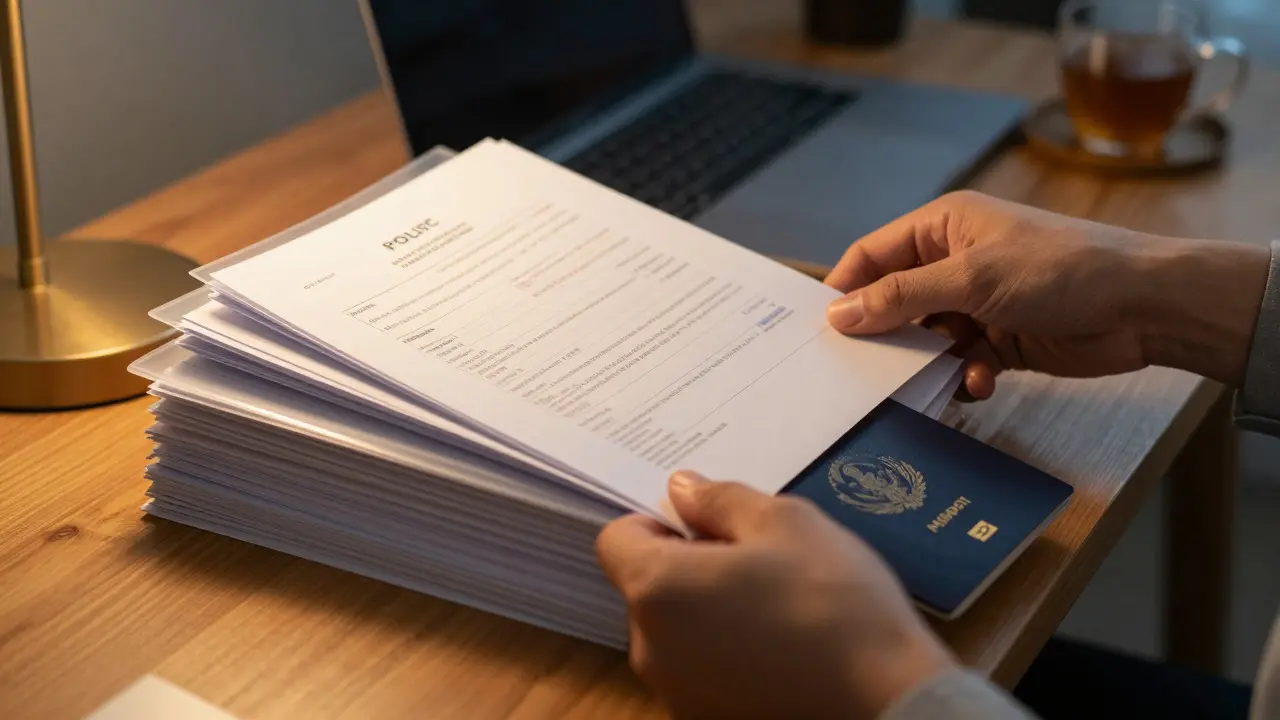
Navigating Medical Claims in the UK
Here’s where it gets tricky for international students. If you’re from outside the European Economic Area (EEA) and Switzerland, you’ve likely paid the Immigration Health Surcharge (IHS) as part of your visa application. This entitles you to use the NHS on the same terms as British residents. That means GP visits, A&E (Accident & Emergency) treatments, and prescriptions are free (or heavily subsidized).
So, do you need travel insurance for medical bills? Yes, but for different reasons. Private travel insurance is crucial for:
- Medical repatriation: If you need to fly back to your home country for specialized treatment, the NHS won’t pay for the flight. Your insurance will.
- Private hospital upgrades: If you prefer a private room or faster specialist access, insurance covers the difference.
- Non-NHS eligible services: Dental emergencies and optical repairs are often excluded from IHS coverage but included in travel insurance.
If you’re claiming against your travel insurance for a medical event, ensure the doctor knows you’re making a claim. Some insurers require direct billing, meaning the hospital sends the invoice to the insurer, not you. Others require you to pay upfront and submit the invoice later. Clarify this before treatment starts to avoid cash flow problems.
Filing the Claim: Documents and Deadlines
Once you’re back home or stable, it’s time to file the formal claim. Most insurers give you between 30 to 90 days to submit your paperwork, but some policies state “as soon as reasonably practicable.” Check your policy wording.
You’ll typically need to fill out a claim form provided by the insurer. Alongside this, attach:
- Proof of identity: Copy of your passport and student ID.
- Policy details: Your policy number and dates of coverage.
- Incident evidence: Police report, medical notes, airline delay certificates, or hotel cancellation emails.
- Financial proof: Original receipts, bank statements showing payments, or invoices.
- Claim form: Signed and dated.
Submit this via the insurer’s online portal if available. It creates a timestamped record. If you must send it by post, use tracked delivery and keep the tracking number. Follow up by email after 10 working days if you haven’t heard back. Insurers are legally required to acknowledge your claim within 5 business days under UK Financial Conduct Authority (FCA) rules.
Common Reasons Claims Get Rejected (And How to Avoid Them)
Not all rejections are fair, but many are due to simple errors. Here are the top three culprits:
1. Late Notification. If you waited two weeks to call the insurer about a stolen backpack, they might argue you didn’t mitigate your loss. Always call within 48 hours.
2. Non-Disclosure. Did you tell the insurer about your chronic condition? If you didn’t disclose it when buying the policy, they can void the claim related to that condition. Be honest during purchase.
3. Missing Documentation. A claim for a broken laptop without a repair quote or proof of ownership (like a purchase receipt) is hard to prove. Always keep proof of value for expensive items.
| Scenario | Covered by IHS/NHS? | Covered by Travel Insurance? | Action Required |
|---|---|---|---|
| Broken arm in A&E | Yes (free treatment) | Yes (repatriation/private upgrade) | Register with local GP, keep discharge papers |
| Lost suitcase with clothes | No | Yes (up to policy limit) | File PIR with airline, buy essentials, keep receipts |
| Stolen laptop | No | Yes (if declared value) | Police report, proof of purchase |
| Dental root canal | Usually No | Yes (check sub-limit) | Invoice from dentist, treatment notes |

What If the Insurer Says “No”?
Getting a rejection letter is frustrating, but it’s not the end. Read the letter carefully. It must state the reason for rejection. If you disagree, you have the right to appeal internally. Write a polite but firm letter explaining why you believe the decision was wrong, attaching any new evidence you have.
If the internal appeal fails, you can escalate to the Financial Ombudsman Service (FOS). The FOS is free for consumers and handles disputes between customers and financial service providers. They have the power to order the insurer to pay out. Most students find that simply threatening to go to the FOS encourages the insurer to review the case more seriously.
Pro Tips for Stress-Free Claims
- Create a “Claim Folder”: Use a dedicated email address or a physical folder for all travel-related documents. Start it the day you buy your insurance.
- Know your excess: Most policies have an excess (deductible) of £50-£100 per claim. Don’t bother claiming for a £30 pair of sunglasses if your excess is £50.
- Travel with a companion: If you’re traveling alone, keep a copy of your itinerary with a family member. If you disappear, they can help initiate the search and claim process.
- Read the Small Print: Specifically, look for “exclusions.” Things like adventure sports (skiing, hiking above certain altitudes) might need a rider or extra fee to be covered.
Frequently Asked Questions
How long does a travel insurance claim take to process?
Simple claims like lost baggage are often settled within 14-21 days. Complex medical claims can take 6-8 weeks. The insurer must acknowledge your claim within 5 business days, but there is no strict legal deadline for final payment, though they aim for efficiency.
Do I need travel insurance if I pay the IHS?
Yes. The IHS covers NHS healthcare, but it doesn’t cover medical repatriation, private hospital fees, dental/optical emergencies, or non-medical losses like luggage and trip cancellations. Comprehensive travel insurance fills these gaps.
What is a PIR and why do I need it for lost luggage?
PIR stands for Property Irregularity Report. It’s a document you file with the airline if your luggage is delayed or lost. It serves as official proof that the airline accepted responsibility. Without it, proving the loss to your insurer becomes much harder.
Can I claim for missed lectures due to illness?
Usually, no. Travel insurance covers financial losses directly caused by the insured event, such as extra accommodation or return flights. It rarely covers indirect losses like tuition fees or missed exams, unless your policy explicitly includes “trip extension” or “academic interruption” cover.
What should I do if my phone is stolen abroad?
First, contact your mobile provider to block the SIM. Then, go to the nearest police station to get a report. Finally, contact your insurer. If your phone has remote tracking (like Find My iPhone), try to locate it before reporting it lost, as insurers may reduce the payout if you didn’t attempt recovery.