
There is a specific moment in the first week of university when your bank app turns red. You have just paid rent, bought textbooks, and treated friends to dinner, only to realize you are £50 short before the next paycheck or maintenance loan drop. For many UK students is a demographic that relies heavily on unsecured credit facilities provided by high-street banks to bridge the gap between monthly income and immediate expenses. This reliance creates a fragile financial ecosystem where a single missed payment can trigger a cascade of charges.
The core problem isn't just spending too much; it's the invisible mechanics of how banks calculate interest and penalties. Most students assume an overdraft is free money for a month. In reality, it is a precise financial instrument with strict rules that vary significantly between institutions. Understanding these rules is the difference between a manageable buffer and a debt spiral that follows you long after graduation.
Understanding the Two Types of Student Overdrafts
Not all overdrafts are created equal, and confusing them is the most common mistake new students make. When you open a current account as a student, you are typically offered one of two types of credit facility. Knowing which one you have determines exactly how much you will pay if you go negative.
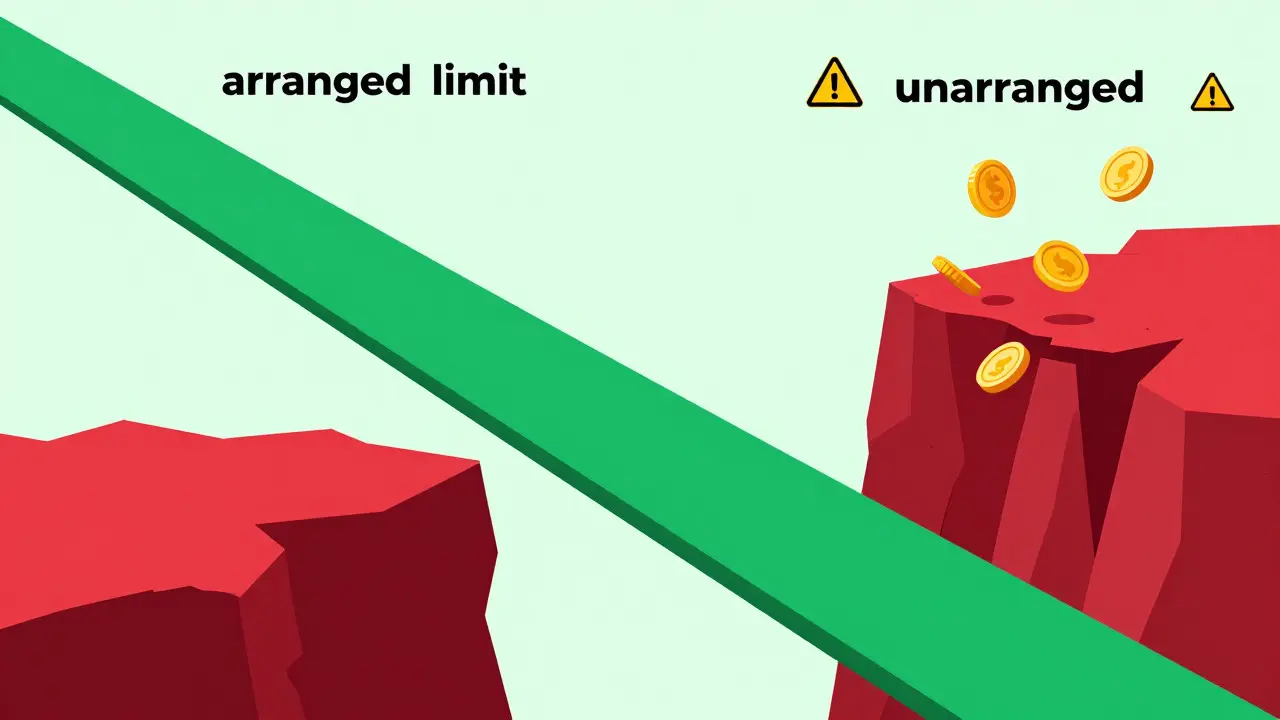
Arranged Overdrafts are pre-agreed limits set by your bank. If you stay within this limit, the money is usually interest-free for a certain period (often the entire academic year). However, if you exceed this limit even by one penny, you enter an 'unarranged' state. This is where the danger lies. Banks charge daily interest on the unarranged portion, plus fixed penalty fees. These charges compound quickly. For example, if your arranged limit is £1,000 and you spend £1,050, you aren't just paying for £50 of extra cash; you are triggering a fee structure that can cost you £30-£50 immediately, plus daily interest on the full overage amount until you repay it.
Unarranged Overdrafts happen when you bounce a direct debit or card payment without having any pre-approved credit line. Some banks allow a small buffer here, but it is rarely generous. The key distinction is control. An arranged overdraft gives you a ceiling; an unarranged one is a surprise. Your goal should always be to stay within the arranged limit at all times.
| Feature | Arranged Overdraft | Unarranged Overdraft |
|---|---|---|
| Interest Rate | 0% (usually) while within limit | Variable, often 40-50% APR equivalent |
| Fixed Fees | None (while within limit) | £3 - £8 per incident or daily charge |
| Control | You know the exact maximum | Unknown, depends on bank policy |
| Impact on Credit Score | Low risk if managed well | High risk, may appear as default |
The Hidden Cost of Daily Interest
Students often underestimate the power of daily compounding. Even if the annual percentage rate (APR) sounds manageable, the daily calculation eats into your budget fast. Let’s look at a realistic scenario. Suppose you have an arranged limit of £1,500. You accidentally overspend by £200 during exam week. That £200 sits in your account for five days before you transfer money from your savings account to clear it.
If the unarranged interest rate is 45% APR, the daily interest is roughly 0.123%. On £200, that is about 25 pence per day. Over five days, that’s £1.25 in interest. Sounds small, right? Now add the fixed penalty fee. Many banks charge a flat £5 for every time you go over the limit. So, for a £200 oversight lasting five days, you’ve paid £6.25. If you forgot to check your balance for a week instead of five days, the interest grows, and if you triggered multiple transactions that each counted as separate incidents, the fees could double or triple. This is why 'small' overspending feels like a huge loss-it’s not just the principal, it’s the administrative penalty for being out of sync with your bank’s systems.
Strategies to Stay Within Your Limit
Avoiding fees requires active management, not just passive hope. Here are three practical strategies that work for most students:
- Sync Your Income and Expenses. Your maintenance loan and part-time job payments don’t always arrive on the same day. Map out your monthly cash flow. If your loan drops on the 1st and your rent is due on the 3rd, ensure you have enough buffer to cover the gap. Use a simple spreadsheet or a budgeting app to track inflows and outflows. The goal is to never rely on the overdraft for planned expenses like rent or bills.
- Set Up Low Balance Alerts. Most mobile banking apps allow you to set notifications for when your balance falls below a certain threshold. Set this alert at £50 or £100 above your overdraft limit. This gives you a warning window to move money from savings or delay non-essential purchases before you hit the red zone.
- Use the 'Pay Yourself First' Method. As soon as you receive your income, transfer a fixed amount into a separate savings account or a different pot. This ensures that your current account balance reflects only what you plan to spend in the next few days. It reduces the temptation to dip into the overdraft because you know there is a reserve available if needed, but you have to actively move it.
Negotiating Your Limit and Terms
Your initial overdraft limit is not set in stone. Many students accept the default offer of £1,000 or £1,500 without asking questions. But your needs change. If you live in London or Manchester, where living costs are higher, a £1,500 limit might be tight. Conversely, if you live in a smaller city, a larger limit might invite unnecessary risk.
Contact your bank’s student support team. Explain your situation. Are you covering additional travel costs? Do you have a family member who sends you money irregularly? Banks are often willing to adjust limits if you show responsible behavior. Ask specifically about 'interest-free periods.' Some banks offer interest-free overdrafts for the entire academic year, while others only offer it for the first six months. Clarifying this term can save you hundreds of pounds.
What Happens If You Bounce a Payment?
Bouncing a direct debit, such as a phone bill or streaming subscription, is more expensive than simply going over your limit. When a payment fails, the bank returns it to the payer. The payer (the company) may re-attempt the payment, sometimes charging their own admin fee. Meanwhile, your bank charges a 'returned item fee' or 'bounced payment fee,' which can range from £5 to £15. This is separate from any overdraft interest. To avoid this, always keep a small buffer in your account-say, £20-£30-above your overdraft limit. This buffer acts as a shock absorber for unexpected small charges.

Managing Limits During Exam Periods
Exam weeks are financial black holes. Students tend to spend more on food delivery, late-night snacks, and social outings. This is when overdraft usage spikes. Proactively increase your limit before exams if you anticipate higher spending. Or, better yet, freeze non-essential subscriptions. Cancel Netflix or Spotify for a month if you know you’ll be studying intensively. Every pound saved is a pound less likely to push you into the unarranged zone. Remember, the stress of managing money adds to the stress of studying. Keep the finances simple and predictable during high-pressure periods.
Long-Term Implications for Your Credit Score
While student overdrafts are generally viewed leniently by credit agencies, consistent misuse can leave a mark. If you regularly max out your limit and take months to repay, it signals high debt utilization. This can affect your ability to get a mortgage or car loan after graduation. Aim to keep your average overdraft usage below 50% of your total limit. This shows lenders that you manage credit responsibly. Check your credit report annually to ensure no errors are recorded regarding your student account.
Is a student overdraft really free?
It is only free if you stay within your arranged limit and adhere to the bank's specific terms. Most banks offer interest-free credit for a set period (often the academic year), but exceeding the limit triggers daily interest and fixed fees. Always read the fine print to confirm the duration of the interest-free period.
How much should I set my overdraft limit to?
Set it based on your monthly essential expenses minus your guaranteed income. A good rule of thumb is to have a limit that covers one month's worth of variable costs (food, transport, entertainment) plus a 10% buffer. Don't set it too high, as a large available credit can encourage overspending.
What happens if I forget to pay back the overdraft?
If you remain within the arranged limit, nothing immediate happens, but interest may start accruing if the interest-free period has ended. If you exceed the limit, you will incur daily interest and potential fees. If you ignore it for several months, it could negatively impact your credit score and lead to collection actions.
Can I switch banks to get a better overdraft deal?
Yes, but it takes time. Switching accounts can take 7-14 days. Compare the total cost of ownership, including interest rates, fees, and the length of the interest-free period. Ensure your direct debits and standing orders are transferred correctly to avoid bounced payments during the switch.
Does using an overdraft hurt my credit score?
Using an arranged overdraft responsibly does not typically hurt your credit score. In fact, it can help build a positive history. However, frequently exceeding the limit, having bounced payments, or carrying a high balance for extended periods can signal financial instability to lenders, potentially lowering your score.