
You’re staring at your bank balance. It’s negative again. Maybe it’s because rent went up, or maybe you lost that part-time job at the coffee shop last week. Whatever the reason, the panic is real. You need cash now, not next month when Student Finance England processes another payment.
If you are a UK Student facing money troubles, you are not alone. The cost of living has hit students harder than most groups in the country. But here is the good news: universities and colleges have pots of money set aside specifically for situations like yours. They call them emergency grants, hardship funds, or bursaries. The problem? Most students don’t know they exist, or they find the application process so confusing they give up before they start.
This guide cuts through the bureaucracy. We’ll look at how to access these funds, what counts as "hardship," and how to write an application that actually gets paid out. Whether you are at a big Russell Group university or a local college, there is likely support waiting for you if you know where to knock on the door.
What Counts As Financial Hardship?
Before you rush to fill out forms, you need to understand what the system sees as "hardship." It isn’t just about being broke. Universities distinguish between general money worries and acute financial crises.
General Money Worries: This includes things like budgeting issues, low income from part-time work, or high lifestyle spending. For these, universities usually offer advice, budgeting workshops, or small loans. They rarely give free cash (grants) for this unless your situation is severe.
Acute Financial Hardship: This is your ticket to emergency grants. It involves sudden, unexpected events that leave you unable to meet basic needs like food, heating, or rent. Examples include:
- Sudden loss of employment or parental support.
- Unexpected medical bills or mental health crises requiring time off work.
- Family emergencies requiring travel home.
- Rent arrears leading to eviction threats.
- Domestic abuse or relationship breakdowns.
If your situation fits the second list, you are a strong candidate for non-repayable grants. If it fits the first, you might still get help, but expect more scrutiny and possibly a loan rather than a gift.
The Hierarchy Of Student Funding Sources
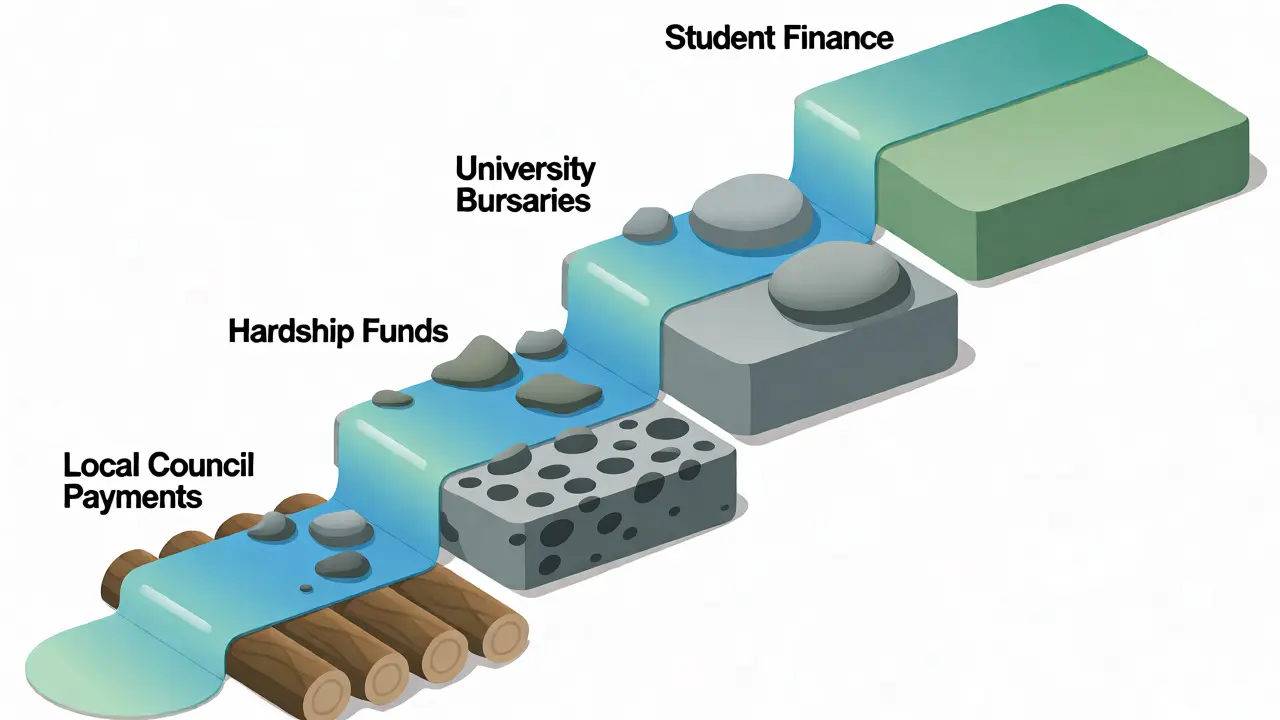
Don’t just apply for a university grant immediately. There is a specific order of operations you should follow to maximize your chances and minimize debt. Think of it as a waterfall: water flows down until it hits a barrier.
| Priority | Funding Source | Type | Why Use This First? |
|---|---|---|---|
| 1 | Student Finance Maintenance Loan | Loan | It’s your guaranteed entitlement. Check if you’ve missed a payment date or if your household income assessment was wrong. |
| 2 | University Bursaries/Scholarships | Grant | Automatic awards based on household income. Often paid directly into your account without an application. |
| 3 | Hardship Funds/Emergency Grants | Grant/Loan | Discretionary. Requires proof of hardship. Best for sudden crises. |
| 4 | Local Council Discretionary Housing Payment | Grant | Helps with rent shortfalls if you are eligible for housing benefit (rare for full-time students). |
| 5 | Credit Unions/Community Loans | Low-interest Loan | Better rates than payday lenders. Good for bridging gaps while waiting for grants. |
Start with #1. Log into your Student Finance portal. Are you getting the full maintenance loan? Sometimes, if your parents’ income dropped recently, you can appeal for a higher loan amount. This takes time, but it’s tax-free and doesn’t require a separate application form for hardship.
How To Apply For University Hardship Funds
Every university handles this differently, but the core requirements are surprisingly similar. The goal of the assessor is simple: verify that you really need the money and that you’ve tried other options.
Gather Your Evidence
Applications fail most often because of missing paperwork. Before you click "submit," scan these documents:
- Bank Statements: Usually the last 3 months. Highlight essential expenses like rent, utilities, and food.
- Rent Agreement: Shows your liability.
- Proof of Income: Payslips, benefits letters, or a letter from parents confirming they cannot support you.
- Evidence of Crisis: A doctor’s note, a redundancy letter, or an eviction notice.
Write A Compelling Personal Statement
This is where you win or lose. Don’t just say "I’m broke." Tell a story. Be specific. Use facts and figures.
Bad Example: "I am struggling with money because I lost my job and rent is too high. Please help me."
Good Example: "In September, I lost my weekend barista job due to business closures. My monthly income dropped by £400. My rent is £650, and my utility bill rose to £80 after the price cap change. After paying fixed costs, I have £15 left for food and transport for the entire month. I have applied for universal credit but am waiting 5 weeks for the first payment. I need £200 to cover immediate grocery and bus fares to attend lectures."
Notice the difference? The second example shows calculation, urgency, and impact on studies. Assessors want to see that the grant will keep you enrolled and studying.
Special Circumstances: When Standard Rules Don’t Apply
Some students fall outside the typical "young person living in halls" demographic. If you fit one of these categories, standard advice might miss key opportunities.
Mature Students And Parents
If you are over 25 or have dependent children, you likely qualify for additional allowances. Many universities have specific funds for mature students who may have debts from previous education or family responsibilities. Look for terms like "Dependants Grant" or "Mature Student Bursary." These are often overlooked because they aren’t advertised in freshers’ week materials.
International Students
Historically, international students were excluded from public funding. However, many universities now include them in their internal hardship funds. Check your university’s policy explicitly. Some institutions reserve a portion of their welfare fund specifically for non-home students. Additionally, if your visa status allows you to work, losing that income is a valid hardship claim. Document the loss carefully.
Students With Disabilities
You might already receive the Disabled Students’ Allowance (DSA). But DSA covers equipment and non-medical helpers, not necessarily living costs. If your disability causes extra energy bills (e.g., running computers or medical devices) or requires specialized transport, this counts as hardship. Combine your DSA evidence with your bank statements to show why your baseline costs are higher than average.
Alternative Lifelines: Beyond The University
If your university says no, or the wait is too long, look elsewhere. Do not ignore these external sources.
Food Banks And Charities
Trussell Trust food banks provide three days of emergency food. You need a voucher, which you can get from your university’s student union advice service, Citizens Advice, or even some GP surgeries. It’s not charity; it’s a safety net. Using it frees up your remaining cash for rent.
Student Union Advice Services
Your SU almost certainly has trained advisors. They are experts in navigating the bureaucratic maze. They can check if you are eligible for benefits you haven’t claimed, such as Universal Credit (if you are a lone parent or disabled) or Council Tax exemptions. Sometimes, simply having an advisor advocate for you speeds up the university’s decision process.
Credit Unions
Unlike payday lenders charging 1,000% APR, credit unions often lend to students at rates under 42.6%. Joining might cost a few pounds, but it provides a safe way to bridge a two-week gap without spiraling into debt. Ask your SU if they have a partnership with a local credit union.

Pitfalls To Avoid When Seeking Help
Even with good intentions, students make mistakes that delay payments or reduce amounts.
- Ignoring Deadlines: Hardship funds often close at the end of term. Apply early in the semester if possible, or immediately when the crisis hits.
- Overstating Expenses: Don’t list Netflix subscriptions or gym memberships as "essential." Assessors scrutinize budgets. List only essentials: rent, utilities, council tax (if applicable), food, and transport to campus.
- Hiding Assets: If you have savings, declare them. Asking for a grant when you have £5,000 in the bank looks bad. Explain why you can’t use those savings (e.g., "This is my tuition deposit held in escrow").
- Not Following Up: Applications can sit in queues. Send a polite email after 7-10 working days asking for a status update.
Next Steps: Your Action Plan
Feeling overwhelmed? Here is your checklist for today:
- Check your Bank Account: Calculate exactly how much you are short this month.
- Contact Your Student Union: Book an appointment with their money advice team. Bring your bank statements.
- Search Your University Website: Type "hardship fund" or "financial assistance" into the search bar. Find the specific contact email.
- Draft Your Application: Use the structure above: Context, Calculation, Request.
- Apply for External Help: If you are hungry, get a food bank voucher today. Don’t wait.
Remember, using these funds is not a sign of failure. It is a smart financial strategy. Universities prefer you stay enrolled and graduate rather than drop out due to money stress. They want to help you. You just have to ask correctly.
Do I have to pay back university hardship funds?
It depends on the type of fund. "Grants" and "Bursaries" are usually non-repayable gifts. "Loans" or "Emergency Assistance" may need to be repaid, often interest-free and spread over several months. Always read the award letter carefully. If it doesn't specify repayment, assume it's a grant but confirm with the advisor.
Can international students get emergency grants?
Yes, many UK universities include international students in their internal hardship funds. However, eligibility rules vary strictly by institution. Some require you to have been enrolled for a certain period or prove that your home currency collapsed or family support stopped unexpectedly. Check your specific university's policy page under "Welfare" or "Financial Support."
How long does it take to get the money?
Standard processing times range from 5 to 15 working days. During peak times (start of term or exam season), it can take longer. If you are facing immediate hunger or eviction, tell the assessor explicitly. Some universities offer rapid-response micro-grants (£50-£100) within 48 hours for urgent cases.
Will claiming a grant affect my student loan?
Generally, no. University hardship grants are considered discretionary institutional aid and do not typically reduce your statutory Student Finance maintenance loan. However, always double-check with your finance office, as policies can shift. It is rare for a university grant to claw back government funding.
What if I am rejected for a hardship fund?
You can appeal. Ask for the reasons in writing. Common reasons for rejection include insufficient evidence or failing to demonstrate that you exhausted other options. Gather more documentation-like a letter from a landlord or doctor-and resubmit. Also, explore local council Discretionary Housing Payments or charitable trusts related to your field of study.