Student life in the UK is expensive, but your wallet doesn't have to suffer just because you're studying. Between rent, textbooks, and eating out, finding ways to save on everyday essentials like clothes feels like a part-time job. The good news? Most major high street brands and online retailers offer significant discounts specifically for students. If you know where to look and how to verify your status, you can slash your shopping bills by 10% to 50% without spending a fortune.
This guide breaks down exactly which shops give you the best deals, how to get verified quickly, and the hidden tricks that make these discounts even more valuable. Whether you need a new winter coat or just want to refresh your wardrobe before term starts, here’s how to maximize your savings in 2026.
The Core of Student Savings: Verification Methods
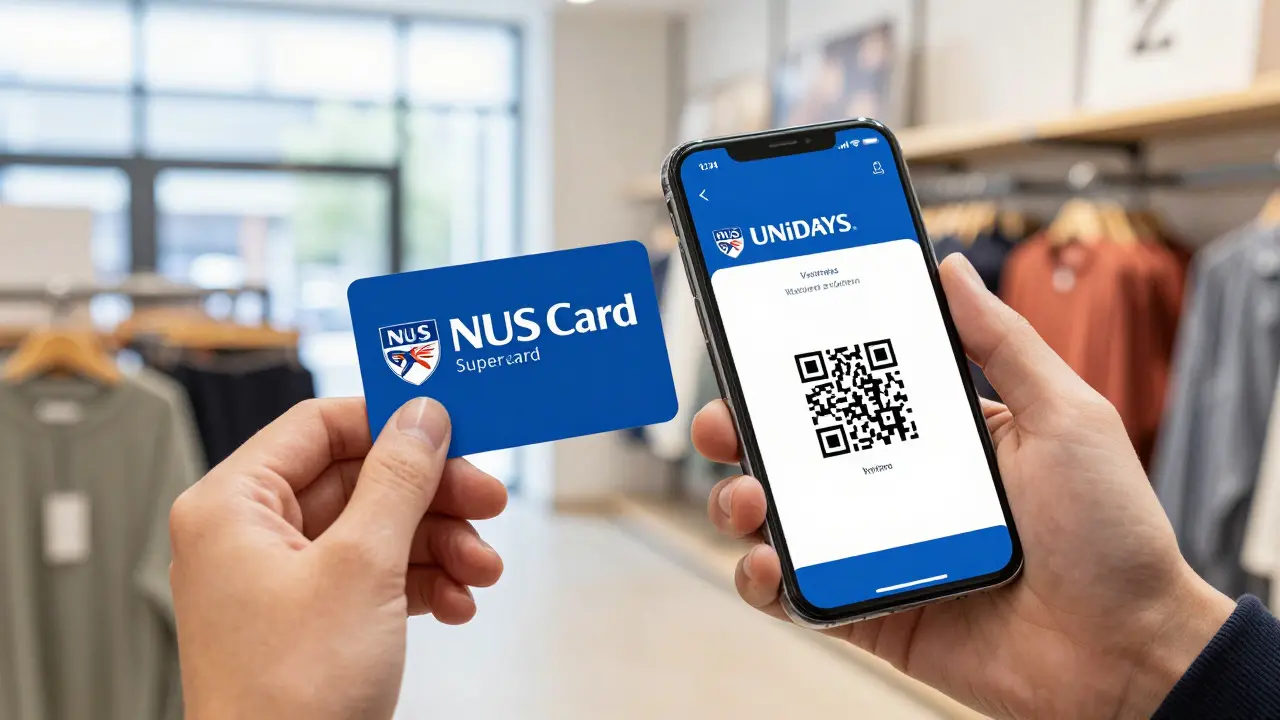
Before you can unlock any discount, you need proof that you’re a student. In the UK, this process has become much smoother over the last few years, moving away from physical cards toward digital verification. The two main methods are the NUS SuperCard is a multi-purpose card that provides access to student discounts, entertainment, and services across the UK. It serves as your primary identity document for most brick-and-mortar stores. and the UNiDAYS platform, which handles instant online verification for hundreds of brands.
Here’s how each works in practice:
- NUS SuperCard: You buy this once (usually around £30-£40 per year) and it lasts for the duration of your course. You show the physical card at the checkout. It’s still the gold standard for in-store purchases because cashiers recognize it instantly. It also includes a bank account and insurance perks, making it cost-effective if you use those features too.
- UNiDAYS: This is free. You sign up with your university email address, and their system verifies your status automatically. Once approved, you get unique promo codes for online stores and QR codes for in-store apps. It covers brands like ASOS, Topshop, and H&M.
- Student Edge: Similar to UNiDAYS, this app focuses on local offers and some national chains. It’s less dominant than UNiDAYS but worth having if you live in a specific city with localized deals.
Pro tip: Don’t wait until you’re standing at the checkout to check your eligibility. Download the UNiDAYS app and verify your status right now. It takes less than five minutes, and having your QR code ready prevents awkward delays when you’re actually shopping.
Top Clothing Brands Offering Student Discounts
Not all discounts are created equal. Some brands offer a flat percentage off everything, while others only apply the discount to full-price items. Here’s a breakdown of the biggest players in UK fashion and what you can expect from them.
| Brand | Discount Type | Verification Method | Key Restrictions |
|---|---|---|---|
| ASOS | 10% off full price | UNiDAYS / Student ID | Cannot be used with other sales or vouchers |
| H&M | 10% off full price | UNiDAYS / Student ID | In-store only for some periods; online varies |
| Topshop | 10% off full price | UNiDAYS / Student ID | Excludes sale items and accessories |
| M&S | 10% off full price | NUS Card / Student ID | Applies to clothing and homeware; excludes concessions |
| Next | 10% off full price | NUS Card / Student ID | Valid on most lines; check for seasonal exclusions |
| Boots | 10% off beauty/clothing | NUS Card / Student ID | Often combined with Clubcard points |
A critical detail many students miss: full-price only. If you see a jacket marked down from £80 to £40, you usually can’t stack the 10% student discount on top of that sale price. To get the best value, buy full-price items during off-peak times (like mid-season) rather than waiting for clearance sales. A 10% discount on a £100 item saves you £10. A 10% discount on a £50 sale item saves you only £5. Do the math before you add to cart.

Beyond Fashion: Retail Giants with Hidden Perks
Clothing is just the start. Many non-fashion retailers offer substantial savings that directly impact your monthly budget. These are often overlooked because they aren’t “fashion” brands, but the cumulative savings can be significant.
Tech and Electronics
If you’re buying a laptop, phone, or headphones, check Currys and Argos. Currys typically offers 10% off selected tech products for students. Argos sometimes runs specific student promotions through UNiDAYS. For Apple products, the official Apple Store offers education pricing, which is slightly different from standard student discounts but often better for MacBooks and iPads. You’ll need to upload proof of enrollment directly to their site.
Furniture and Home Goods
Setting up your first apartment or dorm room is expensive. IKEA does not have a permanent blanket student discount, but they frequently run “Student Weeks” where specific items are discounted. Keep an eye on their local store events. John Lewis offers a 10% discount on furniture and homeware for students with a valid NUS card or student ID. This is one of the highest-value discounts available because furniture tickets are large. Saving 10% on a £500 sofa is £50 back in your pocket.
Beauty and Personal Care
Boots and Superdrug both offer 10% off beauty products. Superdrug’s discount is particularly useful because it applies to their own brand range, which is affordable to begin with. Stacking this with their loyalty program points can result in nearly 15-20% total savings on regular purchases.
How to Maximize Your Savings: Strategic Tips
Having access to discounts is one thing; using them effectively is another. Here are four strategies to ensure you’re getting the most out of every pound.
- Stack Loyalty Programs: Most major retailers have loyalty schemes (Clubcard at Boots, Next Rewards, etc.). Always join these. While you can’t always stack the student discount with a sale, you can earn points on the discounted price. Over a year, these points translate into free items or extra vouchers.
- Time Your Purchases: Avoid buying full-price items during major sales events (Black Friday, Boxing Day) unless the sale price is already lower than your post-discount price. Use a calculator: If an item is £100, and it’s 20% off (£80), do you save more with the sale (£20) or the student discount on full price (£10)? In this case, the sale wins. But if the item is £100 and the student discount is 10%, you pay £90. If it’s 10% off sale price, you pay £81. The rule: Compare the final price, not the percentage.
- Use Cashback Apps: Sites like TopCashback or Quidco often offer cashback on student-verified purchases. You can earn 5-10% cashback on top of your 10% discount. This means a £100 purchase could effectively cost you £81 after discount and cashback. It’s passive income for your student account.
- Share Smartly (But Carefully): Some students share their NUS card with friends. Technically, it’s meant for the cardholder. However, many cashiers don’t check strictly. If you’re buying group gifts, consider splitting the order so each person uses their own discount where possible. Avoid abusing the system, though, as some stores now require photo ID matching the card name.

Common Pitfalls to Avoid
Even experienced shoppers make mistakes with student discounts. Watch out for these three traps:
- The “Sale Item” Trap: As mentioned, most discounts exclude sale items. Don’t assume you can double-dip. Check the terms and conditions on the website or ask the cashier before reaching for your wallet.
- Expired Status: Your student status changes every year. If you graduate, your UNiDAYS access expires. Make sure you re-verify if you move to a postgraduate course. Using an expired card can lead to being charged the full price and potentially losing trust with the retailer.
- Forgetting Online vs. In-Store Differences: Some brands offer the discount online but not in-store, or vice versa. Always check the specific channel’s policy. For example, some fast-fashion brands require you to enter a code online, while in-store you just show your ID. Knowing which method applies where saves time and frustration.
FAQs About UK Student Retail Discounts
Do I need a NUS card to get student discounts?
No, not necessarily. While the NUS SuperCard is widely accepted, many retailers now accept UNiDAYS verification or simply a valid student ID from your university. However, having a NUS card is convenient because it’s recognized by almost all major high-street stores without needing to scan a QR code or enter a code. It’s the fastest way to check out.
Can I use student discounts on sale items?
Usually, no. Most brands specify that the student discount applies only to full-price items. Sale items, clearance, and special offers are typically excluded. Always compare the final price after applying the discount versus the sale price to see which is cheaper.
Are international students eligible for UK retail discounts?
Yes. International students enrolled in UK universities are eligible for the same discounts as domestic students. You just need to verify your status through UNiDAYS or present a valid student ID from your institution. The NUS card is also available to international students if they choose to join.
What is the best app for finding student deals in the UK?
UNiDAYS is currently the most comprehensive app, covering over 250 brands including ASOS, H&M, and John Lewis. It provides instant verification and unique promo codes. Student Edge is a secondary option that may have local deals not found on UNiDAYS, but UNiDAYS should be your primary tool.
Do student discounts expire when I graduate?
Yes. Once you complete your course, your student status ends, and your access to discounts via UNiDAYS or NUS will expire. If you continue to higher education (e.g., from undergraduate to master’s), you can re-verify your status to keep the benefits active.