
Choosing where to live in the UK is one of the biggest financial and lifestyle decisions you'll make as a student. It’s not just about paying rent; it’s about your mental health, your social life, and how much time you spend commuting versus studying. You might think a cheap room in a big house is the obvious winner, but hidden costs like energy bills and lack of privacy can turn that "bargain" into a nightmare. Or maybe you’re eyeing a sleek studio apartment, dreaming of independence, only to realize the price tag eats up half your maintenance loan before you’ve even bought groceries.
The market has shifted dramatically by 2026. With inflation stabilizing but rents remaining high in cities like London, Manchester, and Edinburgh, students are more cautious than ever. This guide breaks down the three main options-shared rooms, private rooms, and studio apartments-so you can pick the one that actually fits your budget and personality.
Key Takeaways
- Shared Rooms: Cheapest option (approx. £80-£120/week) but offers zero privacy. Best for social butterflies with tight budgets.
- Private Rooms (En-suite or Standard): The sweet spot for most students (£130-£180/week). Offers personal space while keeping community vibes.
- Studio Apartments: Most expensive (£180-£250+/week) but provides full independence. Ideal for mature students or those needing quiet study zones.
- Hidden Costs: Always check if bills are included. Excluding utilities can add £20-£40 per month unexpectedly.
- Location Matters: A cheaper room far from campus often costs more in transport than a pricier room nearby.
Understanding Your Options: What Are They Really?
Before we talk money, let’s clarify what these terms actually mean in the UK context, because definitions vary between universities and private landlords.
A Shared Room is exactly what it sounds like: two or more people sleeping in the same bedroom. In student halls, this is common for first-year undergraduates. You share a bed space (usually separate beds), a wardrobe, and potentially a desk. You also share a bathroom and kitchen with other residents in the flat or corridor. The defining feature here is the lack of physical barrier between you and your roommate when you sleep.
A Private Room gives you your own lockable door. You have your own bed, desk, and storage. However, you still share communal facilities like the kitchen, living area, and sometimes the bathroom. These come in two flavors: standard (sharing a bathroom with others) and en-suite (having your own attached bathroom). En-suites are significantly more popular now due to hygiene concerns post-2020.
A Studio Apartment is a self-contained unit. Everything happens in one room: sleeping, cooking, eating, and working. There is no separate bedroom or living room. You usually have a small kitchenette (fridge, microwave, hob) and an en-suite shower room. Some studios are part of large student complexes with shared gyms and study spaces; others are standalone flats in residential areas.
The Cost Breakdown: Where Does Your Money Go?
Let’s look at real numbers. Prices vary wildly by city. London is always the outlier, but regional hubs like Bristol or Leeds are catching up. Here is a typical weekly rent range for the 2026 academic year.
| Accommodation Type | London (Weekly) | Regional Cities (Weekly) | Bills Included? | Typical Deposit |
|---|---|---|---|---|
| Shared Room (Halls) | £100 - £140 | £70 - £110 | Usually Yes | £300 - £500 |
| Private Room (Standard) | £150 - £200 | £110 - £150 | Often No | £400 - £700 |
| Private Room (En-suite) | £180 - £250 | £130 - £180 | Mixed | £500 - £800 |
| Studio Apartment | £220 - £350+ | £160 - £240 | Rarely | £600 - £1,000+ |
Notice the "Bills Included?" column. This is where many students get burned. If you choose a private studio in a residential area, you might pay £180/week for rent, but then face separate charges for electricity, gas, water, internet, and council tax exemption processing. That could easily add £30-£50 per week. Halls of residence almost always include all bills, making the higher sticker price sometimes cheaper overall.
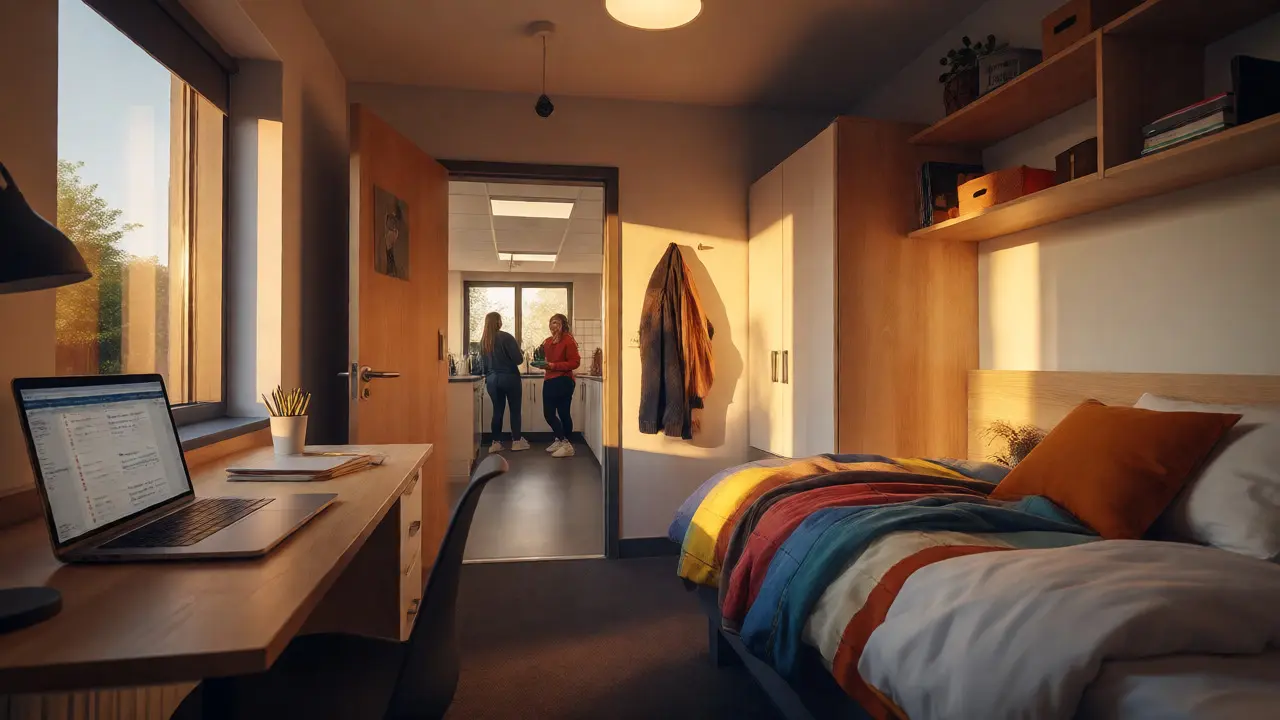
Lifestyle and Social Impact: Who Do You Want to Be?
Money isn’t the only factor. Your living situation dictates your daily routine.
Shared Rooms force interaction. You cannot hide. If your roommate is loud, you hear it. If they are messy, you see it. For extroverts, this is great-you make friends fast. But for introverts or light sleepers, it can be draining. Studies on student well-being suggest that lack of privacy correlates with higher stress levels during exam periods. If you need to decompress after a lecture, having nowhere to go except a library or a pub can be exhausting.
Private Rooms offer a compromise. You have a sanctuary to retreat to. You can close the door and focus. Yet, you still benefit from the communal kitchen culture. Cooking together is one of the best ways to bond with peers. If you are new to the UK or nervous about making friends, a private room in a purpose-built student accommodation (PBSA) complex is often the safest bet socially. You get autonomy without isolation.
Studios are for independents. You control the temperature, the noise level, and the cleanliness. No arguing over whose turn it is to clean the microwave. However, loneliness is a real risk. Without forced social interaction, some students struggle to build a support network. You have to actively seek out clubs and societies. Mature students or those with partners often prefer studios because they value quiet over chaos.
Practical Considerations: Chores, Space, and Logistics
Think about the mundane details. How much cleaning do you want to do?
In a shared room, you split chores. If your partner does the dishes, you vacuum. It works if both parties are responsible. If not, resentment builds quickly. Space is minimal. You likely won’t fit a second monitor or a large bookshelf. Storage solutions become critical-think under-bed boxes and wall hooks.
In a private room, you manage your own mess. The communal kitchen requires collective responsibility. Many PBSAs hire cleaners for common areas, which is a huge plus if you hate scrubbing toilets. Check the contract: does the landlord provide a cleaner, or is it up to you? If it’s up to you, set a rota immediately.
In a studio, you clean everything yourself. Every day. Because it’s small, dirt shows faster. But you don’t wait for anyone else to clear the table before you can cook dinner. You can eat breakfast in bed and work at the same desk. The efficiency is unmatched. Just be prepared to buy compact appliances. A full-size oven won’t fit; you’ll use a toaster and a single-hob stove.

How to Choose: A Decision Framework
Still unsure? Ask yourself these questions:
- What is your monthly budget cap? If it’s under £800 including food and transport, avoid London studios. Look at shared rooms or regional private rooms.
- Do you study better in silence or background noise? Silence points to studios or en-suites. Background noise suggests shared houses are fine.
- Are you sensitive to smells or noises? If you can’t sleep with someone breathing next to you, skip shared rooms.
- How important is location? Calculate the commute cost. A £20 cheaper room that takes 45 minutes each way via bus adds £40/month in fares and 3 hours of lost study time.
- Do you plan to stay long-term? First-years often benefit from the structure of halls. Third-years or masters students often prefer the freedom of studios.
Pitfalls to Avoid
Don’t sign a tenancy agreement without checking these three things:
- Joint and Several Liability: In shared houses, if one person leaves early, the rest are liable for their rent. Ensure you know who your housemates are before signing.
- Break Clauses: Can you leave early if you drop out or change courses? Most contracts are fixed for 44 weeks. Breaking them can cost thousands.
- Furnishings Inventory: Take photos of every scratch and stain on move-in day. Send them to the agent within 7 days. Otherwise, you might lose your deposit for damage you didn’t cause.
Final Thoughts
There is no "best" option, only the best option for you. If you value community and low cost, go shared. If you balance social life with study needs, pick a private en-suite. If you crave independence and can afford it, take the studio. Visit the places in person if possible. Photos lie. Smell the air, listen to the traffic, and imagine waking up there every day for nine months. That gut feeling matters more than any spreadsheet.
Is it cheaper to live in a shared room or a studio?
Generally, shared rooms are cheaper. However, you must factor in utility bills. If a studio excludes bills, the total monthly cost might exceed a shared room with all-inclusive pricing. Always compare the "all-in" weekly cost.
Can I bring my partner to a shared room?
Usually, no. Most student halls and shared houses prohibit overnight guests staying regularly, especially of the opposite sex or same-sex partners, depending on the specific hall policy. Studios allow partners to stay freely.
Do I pay Council Tax in student accommodation?
Full-time students are exempt from Council Tax. You will need to provide a certificate from your university to the local council. If you live in a mixed household (students and non-students), the discount may be reduced or removed.
What happens if my flatmate moves out early?
In a joint tenancy, the remaining tenants are typically liable for the missing rent until a replacement is found. This is known as "joint and several liability." Check your contract for a break clause or guarantee scheme offered by the landlord.
Are studios suitable for international students?
Yes, but they can be isolating. International students often benefit from the built-in community of shared accommodations. If choosing a studio, ensure you join university societies or language exchange groups to combat potential loneliness.