
You have the CV. You have the cover letter. Now comes the part that makes most UK students sweat: the internship interview. It’s not about reciting your personal statement back to them. It’s about proving you can handle real work, even if you’ve never held a full-time job yet.
Recruiters in London, Manchester, or Birmingham aren’t looking for perfection. They are looking for potential, reliability, and cultural fit. If you walk in thinking you need to sound like a senior executive, you’ll likely fail. If you show up prepared, curious, and honest, you’re already ahead of 80% of applicants who just memorized generic answers from YouTube.
Why UK Employers Ask Specific Questions
Before you practice your lines, understand why they ask what they ask. In the UK market, there is a strong emphasis on "soft skills" alongside technical ability. For an internship, the bar for technical knowledge is lower than for a graduate role, but the bar for attitude is higher.
- Reliability: Can we trust you to show up on time? Will you do the boring tasks without complaining?
- Learning Agility: Do you pick things up quickly when confused?
- Cultural Fit: Will you fit into our team dynamic, or will you clash with colleagues?
Every question maps to one of these three pillars. When you prepare, don't just think about the answer; think about which pillar you are hitting.
The Big Five Questions (And How to Nail Them)
These five questions appear in over 70% of UK internship interviews. Here is how to approach them without sounding robotic.
1. "Tell me about yourself."
This is the icebreaker, but it’s also a test of your communication structure. Don’t give your life story. Use the Present-Past-Future formula.
- Present: Who are you now? (e.g., "I’m a second-year Business student at University of Leeds...")
- Past: What relevant experience do you have? (e.g., "...where I led a student society project that increased engagement by 20%.")
- Future: Why are you here? (e.g., "...and I’m looking to apply those organizational skills in a marketing environment like yours.")
Keep it under 90 seconds. If you ramble, you lose control of the narrative.
2. "Why do you want this internship?"
Avoid saying "I need experience" or "It looks good on my CV." That sounds self-serving. Instead, connect your goals to their company’s mission.
Example: "I’ve followed your recent campaign on sustainable packaging. As someone passionate about environmental science, I want to see how data drives consumer behavior in that sector. This internship is the perfect bridge between my academic theory and practical application."
3. "What are your strengths?"
Don’t list adjectives. Give evidence. If you say you are "hardworking," prove it. "I balance a part-time retail job with my studies, which taught me strict time management. I haven’t missed a deadline in two years."
4. "What is your greatest weakness?"
This is a trap. Saying "I’m a perfectionist" is cliché and often seen as insincere. Pick a real, minor weakness and show how you manage it. "I sometimes struggle with public speaking. To fix this, I joined a debate club last semester, and I’ve already presented twice without shaking."
5. "Do you have any questions for us?"
Saying "no" is a red flag. It shows you didn’t research the company. Prepare three questions. Good ones include: "What does success look like in the first 3 months?" or "How does the team collaborate on cross-departmental projects?"
Tailoring Your Answers to the Industry
A finance intern needs different answers than a creative agency intern. Here is how to tweak your tone based on the sector.
| Industry | Key Attribute to Highlight | Sample Answer Angle |
|---|---|---|
| Finance/Banking | Attention to detail, analytical rigor | Mention specific Excel skills or case study analysis from university. |
| Marketing/Creative | Portfolio, adaptability, trend awareness | Showcase a specific social media campaign you analyzed or created. |
| Engineering/IT | Problem-solving, technical stack familiarity | Discuss a specific bug you fixed or a project you built using Python or Java. |
| Consulting | Communication, logical structuring | Use the STAR method to describe how you solved a complex group problem. |
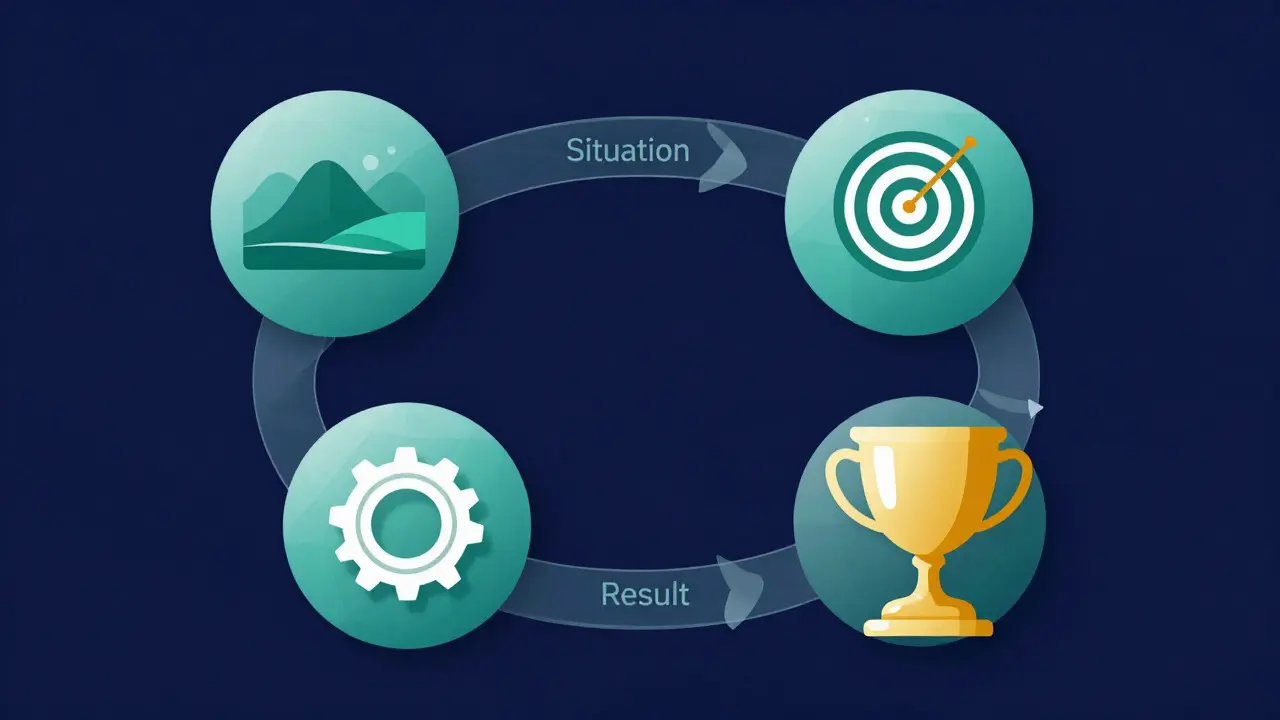
The STAR Method: Your Best Friend
For behavioral questions like "Tell me about a time you faced a challenge," use the STAR method. It keeps your answer structured and concise.
- S - Situation: Briefly set the scene. ("During my final year group project...")
- T - Task: What was your specific responsibility? ("I had to coordinate the timeline for five people...")
- A - Action: What did YOU do? Not "we." ("I created a shared Trello board and held daily 10-minute stand-ups...")
- R - Result: What was the outcome? Use numbers if possible. ("We submitted two days early and received a distinction.")
Practice this out loud. Record yourself on your phone. Listen to how you sound. Are you rushing? Are you mumbling? Fix it before the real thing.
Common Mistakes to Avoid
Even well-prepared candidates fail because of small errors. Watch out for these:
- Badmouthing previous employers: Even if your last summer job was terrible, keep it positive. Say you learned valuable lessons.
- Being too vague: "I worked hard" is weak. "I processed 50 invoices per day" is strong.
- Ignoring body language: Sit up straight. Make eye contact. Smile. These signal confidence.
- Not researching the interviewer: Check LinkedIn. If they recently posted about a new product, mention it. It shows genuine interest.

Virtual Interviews: Tips for Zoom/Teams Calls
Many UK companies still conduct first-round interviews virtually. The rules are slightly different.
- Background matters: Use a plain wall or a virtual background that isn’t distracting. No clutter.
- Lighting: Face a window or lamp. Don’t have light behind you; it creates shadows on your face.
- Eye contact: Look at the camera, not the screen, when speaking. It simulates eye contact.
- Audio check: Test your mic 10 minutes before. Silence is worse than slight static.
If the connection drops, don’t panic. Wait 30 seconds. If they don’t reconnect, send a quick email: "Apologies for the drop-out. Ready to continue whenever you are."
Final Preparation Checklist
In the 24 hours before your interview, run through this checklist:
- [ ] Print 3 copies of your CV (even for virtual interviews, having one helps you stay organized).
- [ ] Re-read the job description. Match your answers to the keywords used in the ad.
- [ ] Plan your outfit. Professional but comfortable. In the UK, smart casual is usually safe unless specified otherwise.
- [ ] Know the route. If in-person, arrive 10-15 minutes early. Not 30 (too eager) and not 5 (risky).
- [ ] Prepare a notebook and pen. Taking notes during the interview shows you are engaged.
Remember, an internship interview is a two-way conversation. They are evaluating you, but you are also evaluating them. Is this a place where you want to spend six months? Trust your gut. If something feels off, it probably is.
Go in with confidence, be honest about what you know and don’t know, and show them you are ready to learn. That’s all they really want.
How long should my answers be?
Aim for 60-90 seconds for standard questions. For "Tell me about yourself," keep it under 2 minutes. If you go longer, you risk losing their attention. Practice timing your answers with a stopwatch.
Should I bring references to the interview?
Usually, no. References are requested after the offer stage. However, if the job description specifically asks for them, bring printed copies. Otherwise, just have the names and contact details ready in your head or on your phone.
What if I get a question I don't know the answer to?
Don't guess. Say, "That's a great question. I haven't encountered that specific scenario before, but here is how I would approach finding the answer..." Then, explain your problem-solving process. Employers value honesty and logic over fake expertise.
Is it okay to negotiate salary for an internship?
Generally, no. Most UK internships have fixed stipends. Unless the role is explicitly paid above minimum wage and the offer seems low compared to industry standards, accept the offered amount. Focus on learning opportunities instead.
How many rounds of interviews are typical?
Most UK internships involve 2 rounds. Round 1 is usually with a recruiter or HR manager to assess fit and basic skills. Round 2 is with the hiring manager or team lead to dive deeper into technical or behavioral aspects. Some large firms may add a third round with a senior director.