You land in the UK, drop your bags at the accommodation, and realize you need to buy groceries. You try to pay with your home country's card, but it gets declined or charges a hefty foreign transaction fee. Sound familiar? For most international students, setting up a UK bank account is the first real hurdle of settling in. It’s not just about having money; it’s about avoiding unnecessary fees, building a credit history early, and managing your budget without constantly checking exchange rates.
Here’s the reality: banks in the UK are competitive, but they are also bureaucratic. They want proof that you are who you say you are and that you live where you say you live. If you walk into a branch empty-handed, you’ll likely leave frustrated. But if you prepare correctly, you can have an account open within days, sometimes even before you arrive on campus. This guide breaks down exactly how to navigate this process, which banks actually accept students, and what documents will save you from rejection.
Why You Need a Local Account Immediately
You might wonder, "Can’t I just use my home bank card?" Technically, yes. Most Visa and Mastercard debit cards work in UK shops. But doing so long-term is a financial mistake for three specific reasons.
- Foreign Transaction Fees: Many home banks charge 1-3% per transaction. Buy coffee daily? That adds up fast.
- Unfavorable Exchange Rates: Your home bank sets its own rate, which is often worse than the market rate. You lose value every time you spend.
- No Direct Debit Access: This is the big one. In the UK, utilities, phone contracts, and even some tuition installments rely on Direct Debit. Without a local account, you cannot set these up. You’ll be stuck paying manual bills, risking late fees.
Opening a student current account solves these problems instantly. These accounts are designed specifically for full-time students, meaning no monthly maintenance fees and access to student perks like railcard discounts or free music subscriptions.
The Document Checklist: What Banks Actually Ask For
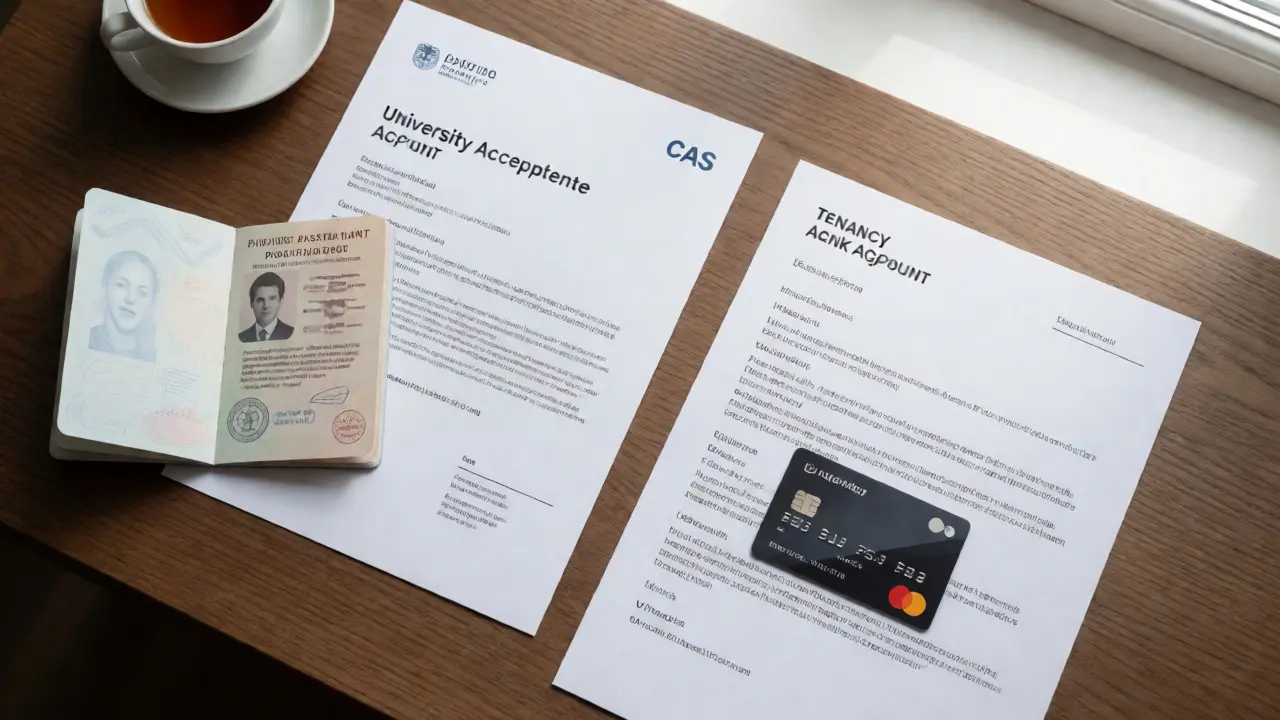
Banks don’t guess; they verify. To open an account, you need to satisfy two legal requirements: identity verification and address verification. Missing one document usually results in an automatic decline.
| Requirement | Accepted Documents | Pro Tip |
|---|---|---|
| Proof of Identity | Valid Passport (non-EU) or National ID Card (EU/EEA). Driving license is rarely accepted as primary ID for foreigners. | Ensure your passport has at least 6 months validity remaining. |
| Proof of Address | University Letter of Acceptance (CAS), Council Tax bill, Tenancy Agreement, or Utility Bill (less than 3 months old). | A CAS letter is the gold standard for new arrivals because it links your name to your university status. |
| Student Status | Student ID card (if issued immediately) or official enrollment confirmation email. | If you haven't received your physical ID yet, print the digital confirmation from your student portal. |
One common pitfall: utility bills. If you live in university halls, you might not receive a bill in your name. Instead, ask your housing office for a "Residence Confirmation Letter." Not all branches accept this, so call ahead. Alternatively, wait until you move into private renting where the tenancy agreement is clearly in your name.
Which Banks Are Best for International Students?
Not all high-street banks treat international students equally. Some require you to visit a branch in person; others allow online applications. Here is a breakdown of the major players based on ease of setup and student benefits.
| Bank | Application Method | Key Feature | Potential Drawback |
|---|---|---|---|
| Barclays | In-branch only | Extensive branch network; accepts CAS letters easily. | Long queues; strict on proof of address. |
| Lloyds Bank | In-branch or Online (pre-registration) | Good app interface; widely used by students. | May require initial deposit (£100+). |
| HSBC | In-branch | Global connectivity if you already have an HSBC account elsewhere. | Stricter compliance checks; slower approval. |
| Monzo | Online/App-based | Instant approval; great app features; no minimum balance. | Limited cash withdrawal options; no traditional customer service desk. |
| Starling Bank | Online/App-based | Full current account features; easy to open remotely. | Requires a UK phone number and address upfront. |
Traditional vs. Digital Banks: Traditional banks like Barclays and Lloyds offer face-to-face support, which is helpful if you’re confused. However, their processes are slow. Digital banks like Monzo and Starling are faster. Monzo, for instance, allows you to apply while sitting in your bedroom. The catch? You need a UK mobile number and a UK address registered with them. If you’ve just landed and don’t have either, start with a traditional bank branch visit using your university letter.
Step-by-Step: How to Open Your Account
Once you have your documents ready, follow this sequence to minimize stress.
- Pre-apply Online (If Available): Check if your chosen bank offers a "pre-application" form online. This saves time in the branch. Fill it out before you go.
- Gather Physical Copies: Do not rely on photos on your phone. Print your CAS letter, tenancy agreement, and passport copy. Bring originals too.
- Visit the Branch Early: Go right when they open (usually 9:00 AM). Avoid lunch hours and end-of-day rushes. Ask for a "Student Account Specialist" if available.
- Explain Your Situation Clearly: Tell the banker, "I am an international student starting my course next week. I have my CAS and housing contract." Being direct helps them select the correct product code.
- Make the Initial Deposit: Most banks require a small deposit (£50-£100) to activate the account. Have cash or a transfer ready.
- Request Your Details Immediately: Don’t wait for the post. Ask for your Sort Code and Account Number via email or text so you can set up payments right away.
If you choose a digital bank like Monzo, the steps differ slightly. Download the app, upload scans of your passport and proof of address, and verify your identity via video selfie. Approval can take minutes to 48 hours. Keep monitoring your email for requests for additional documents-responding quickly prevents delays.

Common Pitfalls and How to Avoid Them
Even with perfect documents, things can go wrong. Here are the most frequent issues students face and how to fix them.
- Name Mismatch: Ensure your name on your passport matches your university records and bank application exactly. If your passport says "Jian Wei Li" but your university record says "Li Jian Wei," clarify this with the bank. Use the format from your passport for the bank account.
- Address Discrepancies: If you move from halls to private housing during the year, update your address with the bank immediately. Failure to do so can lead to mail being returned and potential account freezes.
- Overdraft Confusion: Student accounts often come with an overdraft facility (borrowed money). Read the terms. Some offer £1,500 interest-free, but others charge interest after a certain limit. Treat the overdraft as a safety net, not extra income.
- Ignoring Credit Building: Even as a student, your activity matters. Paying your phone bill via Direct Debit on time builds a positive credit footprint. This helps later when you look for rental properties or graduate loans.
Another subtle trap: currency conversion apps. While you wait for your UK account, consider using a multi-currency card like Wise or Revolut. These hold multiple currencies and offer better exchange rates than traditional banks. They are excellent stop-gap solutions for the first few weeks.
Managing Money After Opening the Account
Having the account is step one. Managing it effectively is step two. UK banking culture relies heavily on automation. Set up standing orders for rent and fixed expenses. Use the bank’s app to categorize spending. Most student accounts provide weekly summaries via email-read them.
Keep a buffer. Unexpected costs arise-lab fees, social events, travel. Aim to keep at least £200 in your account at all times to avoid accidental overdraft fees. Also, beware of "churning." Some banks offer cash incentives for switching accounts. As a student, stick with one reliable provider to build consistency unless a significantly better deal appears.
Can I open a UK bank account before arriving in the country?
Generally, no. Most traditional high-street banks require you to be physically present in the UK to verify your identity and address. However, some digital banks like Starling allow pre-application from abroad, but final activation usually requires a UK address and phone number. Plan to open your account within the first two weeks of arrival.
Do I need a National Insurance number to open a student bank account?
No, you do not need a National Insurance (NI) number to open a basic student current account. The NI number is primarily for tax and employment purposes. You can open an account without it, though you should apply for one soon if you plan to work part-time during your studies.
What happens if my visa expires while I still have the bank account?
If your visa expires and you leave the UK, you must inform your bank. They may close the account or convert it to a non-resident account, which often comes with fees. If you stay in the UK and renew your visa, simply provide the new immigration status document to your bank to keep the account active under student terms.
Is it safe to give my bank details to landlords?
Yes, providing your sort code and account number is standard practice for paying rent via bank transfer. Never share your PIN, password, or full card security codes (CVV) with anyone, including landlords or agents. Only share the account number and sort code.
Which bank is easiest for international students to open an account with?
Digital banks like Monzo and Starling are often the fastest due to automated app-based verification. Among traditional banks, Barclays and Lloyds are known for being relatively accommodating to international students with valid university documentation, provided you visit a branch prepared with all required proofs.