
Key Takeaways for Applicants
- Only use UCAS Extra if you have zero offers left on your Hub.
- You can apply for up to four new courses.
- It is different from Clearing; Extra is for those who want to apply and wait for a decision, whereas Clearing is for immediate placement.
- You must check for vacancies on the UCAS search tool before applying.
- The process usually runs from February through July.
What Exactly Is UCAS Extra?
Think of the first UCAS round as the main event. Most people get their offers there. But sometimes, things don't go to plan. Maybe you were too ambitious with your choices, or perhaps you decided to change your course direction entirely. That's where UCAS Extra steps in. It allows you to submit a new application to courses that haven't filled up yet. Unlike the first round, where you apply to five different universities, here you're looking for gaps in the system.
A common mistake is confusing this with Clearing. While both deal with vacancies, they serve different needs. In Clearing, you often call the university and get an offer on the spot based on your results. With Extra, you submit a formal application through the portal and wait for the university to review your grades and personal statement. It's a slower, more traditional application process that happens after the initial deadline has passed.
When Should You Actually Use It?
You can't just jump into Extra because you're unhappy with your current offers. There's a specific set of rules about who is eligible. You should use this service if:
- You have no unconditional offers.
- You have conditional offers, but you know for a fact you won't meet the entry requirements.
- You've had all your offers declined by the universities.
- You've decided to change your mind about the course you want to study.
If you still have a conditional offer that you think you can hit, keep it. There's no need to gamble by moving into Extra. However, if you're staring at a blank screen on your dashboard with no paths forward, this is your primary tool for getting back into the system. It's a safety net designed to ensure that qualified students don't miss out on higher education just because of a few bad bets in January.
The Step-by-Step Process to Applying
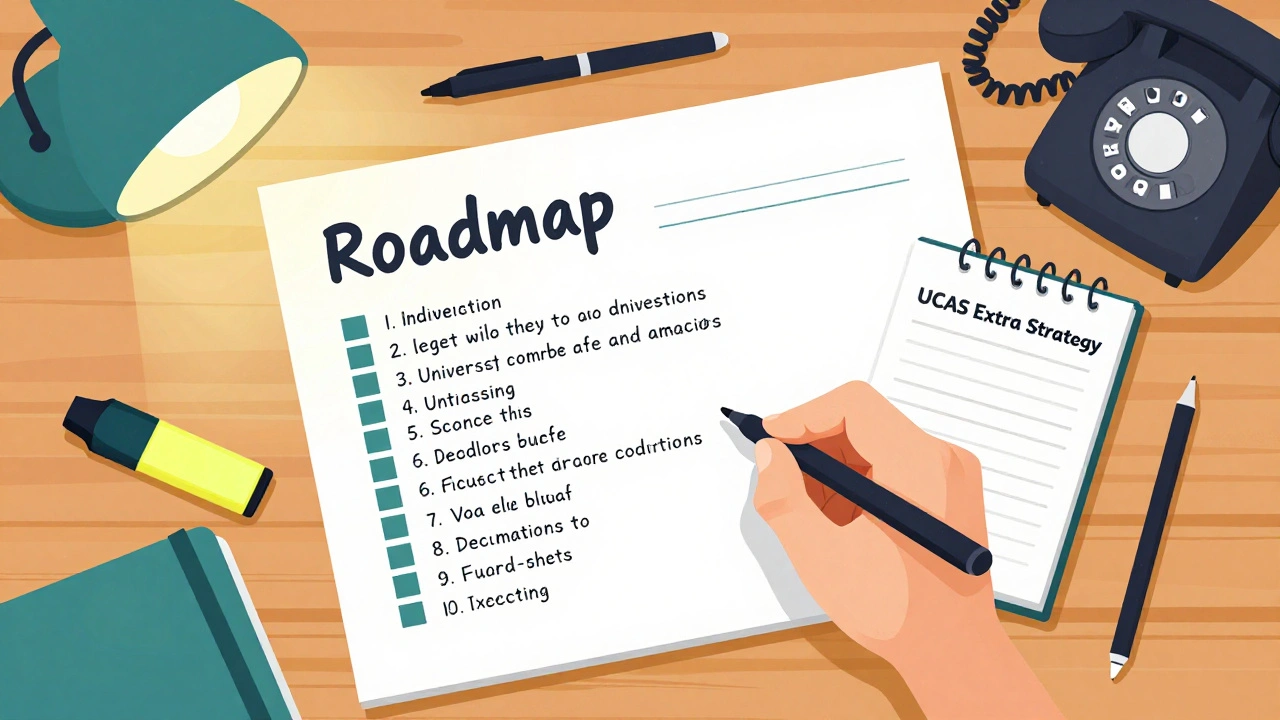
Getting a new offer through this route requires a bit more legwork than the first time around. You can't just click and hope; you need to be strategic. Follow these steps to maximize your chances:
- Search for Vacancies: Use the UCAS Search Tool to find courses that are explicitly listed as having space. Don't guess; if a course isn't listed as vacant, don't waste one of your four slots on it.
- Contact the University: Before hitting 'submit', give the admissions office a call. Ask if they are still actively looking for students for that specific course. This saves you time and lets you gauge their interest in your profile.
- Update Your Personal Statement: You don't always need to rewrite your whole statement, but if you're switching subjects, you absolutely must. A statement written for History won't get you into a Psychology degree.
- Submit Your New Choices: Add up to four courses to your application. Remember, you are applying for a place, not asking for an immediate 'yes'.
- Wait for the Decision: The university will review your application. They might give you a conditional offer, an unconditional one, or a rejection.
Comparing UCAS Extra and Clearing
Because these two often overlap in the calendar, it's easy to get them twisted. Here is a breakdown of how they actually differ in practice.
| Feature | UCAS Extra | Clearing |
|---|---|---|
| Timing | Starts mid-February | Starts mid-July (peak in August) |
| Process | Formal application via Hub | Phone calls and email offers |
| Decision Speed | Days or weeks | Often immediate (on the spot) |
| Eligibility | No current offers | No place/Missed grades/Changed mind |
| Number of Choices | Up to 4 courses | Unlimited calls/inquiries |

Common Pitfalls to Avoid
Applying for a second time can be stressful, and that stress often leads to mistakes. One of the biggest errors is applying to "reach" universities again. If you were rejected from a top-tier institution in the first round, applying to them via Extra is usually a waste of a slot. Look for universities where your predicted grades are comfortably above the entry requirements. This is about securing a spot, not gambling again.
Another mistake is ignoring the Personal Statement. Some students assume that because it's "Extra", the universities are desperate and won't care about the quality of the writing. That's a myth. While they might be more flexible with grades, they still want to see that you're actually interested in the subject. A lazy, copy-pasted statement is a quick way to get a second rejection.
Finally, don't forget about the UCAS Hub deadlines. The window for Extra closes as the academic year approaches. If you wait until August, you've bypassed Extra and moved straight into Clearing. While Clearing is great, it's much more chaotic and competitive in real-time.
Strategic Tips for Success
If you want to make this work, treat it like a job hunt. You need to research the "market". Look at universities in different regions of the UK. Sometimes, a fantastic course at a university in the North of England has more vacancies than a mediocre course in a major city. Be flexible with your location, and you'll find far more options.
Use the phone. When you call an admissions tutor, you aren't just asking if there's space; you're making a first impression. Be polite, have your UCAS ID ready, and be able to explain clearly why you're a good fit for the course. A positive phone call can often make a university more inclined to accept your formal Extra application.
Keep a spreadsheet of who you've called, what they said, and the deadlines for their responses. When you're dealing with four different universities, it's easy to lose track of which one asked for an updated reference or which one is waiting for your predicted marks. Staying organized is half the battle.
Can I use UCAS Extra if I already have one conditional offer?
No. To be eligible for UCAS Extra, you must have no confirmed offers. If you have a conditional offer, you are still "in the system." If you're worried you won't meet the conditions, you can't use Extra yet; you'll have to wait for Clearing in the summer.
Does applying through UCAS Extra cost extra money?
Yes, there is typically a fee for using the UCAS Extra service. This is a separate charge from your initial application fee. Check the current UCAS pricing on their official website for the exact amount for the 2026 cycle.
Can I change my course subject when using Extra?
Absolutely. This is one of the main reasons people use the service. If you've realized your first-choice subject isn't for you, you can apply for a completely different degree. Just make sure to update your personal statement to reflect your interest in the new subject.
What happens if I get rejected from all four Extra choices?
If that happens, your next step is Clearing. Clearing opens up in July and August, allowing you to apply for any remaining vacancies at any university. It's a much more fluid process where you can often secure a place within a single phone call.
Do I need to ask my teacher for a new reference?
Usually, no. Your existing reference from the first application cycle will stay with your account. However, if you've changed your course to something drastically different, it's a good idea to ask your teacher if they can add a short note or a new sentence to support your change in direction.
What to Do Now
If you're currently sitting with no offers, don't panic. Start by logging into your Hub and verifying your status. Then, spend an afternoon on the UCAS search tool identifying five or six potential courses that look like a good match for your grades. Once you have your shortlist, start making those phone calls. The goal is to move from "zero offers" to "one solid offer" as quickly as possible so you can stop worrying and start planning your move to university.