
If you're applying to university in the UK for 2025 entry, missing a UCAS deadline isn't just stressful-it can end your chances. There’s no second try. No extensions. No "I didn't know" excuses. The system doesn’t bend. And if you’re waiting until January to start thinking about it, you’re already behind.
What Is UCAS, Really?
UCAS stands for Universities and Colleges Admissions Service. It’s the single portal through which nearly all undergraduates in the UK apply. Whether you’re targeting Oxford, Manchester, or a small specialist college in Wales, you use UCAS. You don’t apply directly to each school. You pick up to five courses, write one personal statement, and submit everything in one go. It’s efficient-but only if you know the rules.
The UCAS system runs on strict deadlines. These aren’t suggestions. They’re cut-off points. After they pass, your application either gets rejected outright or pushed into a late pile where spots are already gone. And the earlier deadlines? Those are for the most competitive courses-medicine, dentistry, veterinary science, and Oxford and Cambridge.
The Main UCAS Deadline: October 15, 2025
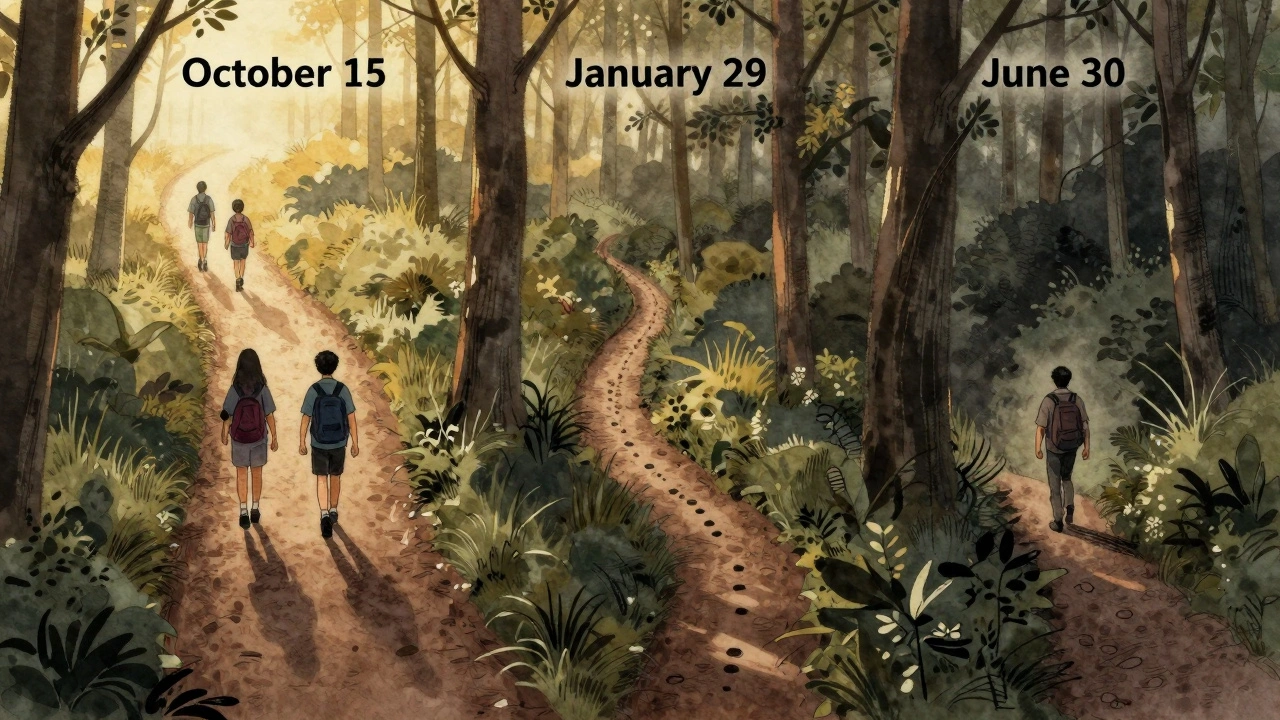
This is the one that catches most people off guard. If you’re applying to medicine, dentistry, veterinary science, or any course at Oxford or Cambridge, your application must be submitted by October 15, 2025. That’s six months before most other deadlines.
Why so early? These programs get hundreds of applications for every spot. Universities need time to review, interview, and rank candidates. They don’t wait. If you miss this date, you’re not just late-you’re out. No exceptions. Even if your grades are perfect, your personal statement is brilliant, and your references are glowing, it won’t matter if UCAS doesn’t receive your application by 6 p.m. UK time on October 15.
Real example: In 2024, over 17,000 people applied to medicine through UCAS. Only about 6,800 got offers. The top 20% of applicants got in. That’s not luck. That’s preparation. And preparation means knowing the deadline isn’t in January-it’s in October.
The General Deadline: January 29, 2026
For everyone else-most undergraduates applying to UK universities-the main deadline is January 29, 2026. This covers everything from business and engineering to psychology and history. It’s the date most students aim for.
But here’s the catch: January 29 isn’t a "relax and submit on the 28th" deadline. It’s a "submit by the 20th" deadline. Why? Because UCAS doesn’t process applications instantly. Universities start reviewing applications the day after the deadline. If yours arrives on the 29th at 5:59 p.m., it’s still accepted. But if there’s a glitch with your reference, your personal statement doesn’t upload, or your teacher forgets to submit their part, you have zero room for error.
Most successful applicants submit by mid-January. That gives them time to fix mistakes, follow up on references, and even revise their personal statement after getting feedback. Waiting until the last week means you’re gambling with your future.
The Late Deadline: June 30, 2026
Yes, there’s a third deadline: June 30, 2026. This is for applicants who missed the January date and still want to apply. It’s not a backup plan-it’s a long shot.
By June, most universities have filled their spots. What’s left? Courses with low enrollment, less popular locations, or programs that didn’t get enough qualified applicants. You might still get in-but you’ll have fewer choices, less financial aid, and no guarantee of housing. Some universities won’t even accept late applications after May.
And here’s the brutal truth: if you’re applying in June, you’re already behind the curve. You’re competing with people who applied in October and January and got rejected. They’re now on the waiting list. You’re starting from zero.
What Happens After You Submit?
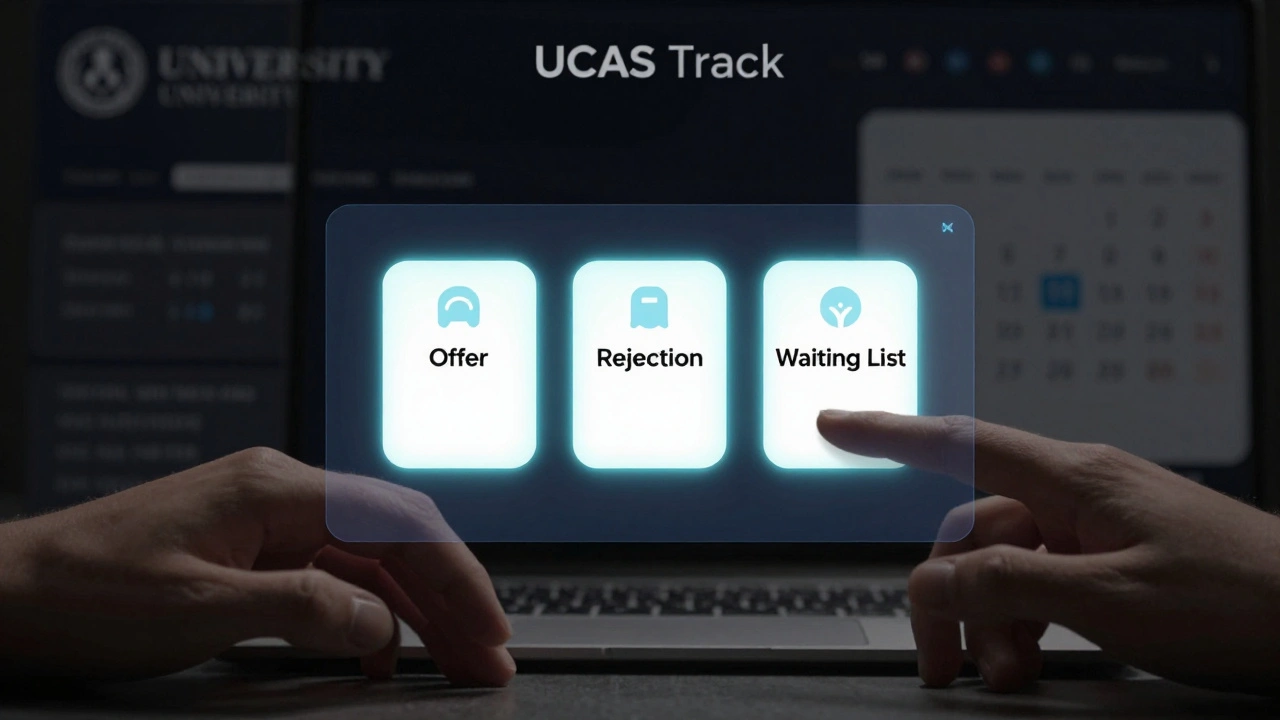
After you hit submit, UCAS sends your application to your chosen universities. They have until the end of March to make decisions on applications submitted by January 29. You’ll get one of three responses:
- Offer-conditional or unconditional. Conditional means you need certain grades. Unconditional means you’re in, no matter your final results.
- Rejection-you didn’t meet their criteria. This doesn’t mean you’re not smart. It just means they had more qualified applicants.
- Waiting list-they’re holding your application in case someone else drops out.
You’ll see all this on your UCAS Track account. No emails. No calls. Just Track. Check it weekly. If you get an offer, you have until June 10, 2026 to decide which one to accept. You can hold two offers-one firm and one insurance-until then.
What You Need to Have Ready
Before you even start filling out the UCAS form, you need four things:
- Your personal details-name, address, nationality, contact info. Double-check your passport details if you’re an international student.
- Your predicted grades-your school or college gives these. Don’t guess. If your teacher says you’re likely to get AAB, don’t write AAA. They’ll check.
- Your personal statement-this is your voice. Not a resume. Not a list of achievements. Why do you want to study this subject? What have you done to explore it? What makes you different? Keep it under 4,000 characters. No fluff.
- Your reference-usually from a teacher, counselor, or employer. They need to submit it through UCAS. Don’t wait until the last minute to ask them.
And don’t forget: UCAS charges £28 for one choice or £29 for two to five. Payment is made online. No cash. No checks. If you can’t afford it, apply for the UCAS fee waiver. It’s available for students on free school meals or low-income households.
What Not to Do
Here’s what most applicants mess up:
- Copying a template-your personal statement must sound like you. If it reads like a textbook, it’s dead.
- Waiting for perfect grades-you don’t need A*AA to apply. You need to apply. Grades come later.
- Using the same personal statement for all five choices-if you’re applying to engineering and English literature, your statement needs to reflect both. Generic doesn’t work.
- Ignoring the UCAS Track portal-if you don’t check it, you won’t know if your reference is missing or if you’ve been rejected.
- Thinking you can apply after January-you can, but your odds drop by 70%.
What If You Miss a Deadline?
If you missed October 15 and you’re applying for medicine or Oxbridge? You’re out for 2025. Wait until next year. Start now.
If you missed January 29? You can still apply until June 30, but your options will be limited. Use UCAS Clearing-the system that matches applicants with unfilled courses. It starts in July. You’ll need to call universities directly. Be ready with your grades, personal statement, and a clear reason why you want their course.
Clearing isn’t a backup. It’s a second chance. And it works-if you’re prepared. In 2024, over 50,000 students got into university through Clearing. But you can’t just wait. You have to act.
Final Checklist
Here’s what you need to do by the end of January 2026:
- Submitted your UCAS application
- Confirmed your reference was uploaded
- Reviewed your personal statement for clarity and authenticity
- Double-checked all course codes and university names
- Paid your UCAS fee
- Set up UCAS Track and checked it weekly
If you’ve done all this, you’ve done more than 80% of applicants. You’re not just applying-you’re in control.
What happens if I submit my UCAS application after the January 29 deadline?
You can still apply until June 30, 2026, but most universities will have already filled their spots. Your choices will be limited, and you’ll compete with applicants who missed earlier deadlines. Use UCAS Clearing to find remaining courses, but don’t count on getting your first-choice program.
Can I apply to more than five courses through UCAS?
No. UCAS allows a maximum of five course choices in one application. If you want to apply to more, you must wait until the next cycle or use UCAS Extra, which lets you add one more choice after you’ve used all five and haven’t received any offers.
Do I need to take the IELTS if I’m applying from outside the UK?
If English isn’t your first language, most UK universities require proof of proficiency. IELTS is the most common, but some accept TOEFL, PTE, or Duolingo. Check each university’s website-they’ll list accepted tests and minimum scores. Don’t assume UCAS will tell you this.
Can I change my course choices after submitting my UCAS application?
You can change your course choices before the January 29 deadline using UCAS Track. After that, you can’t swap courses unless you use UCAS Extra or Clearing. If you’re unsure, research your options thoroughly before hitting submit.
What’s the difference between a conditional and unconditional offer?
A conditional offer means you must achieve certain grades in your final exams (like A-levels or IB) to secure your place. An unconditional offer means you’re already accepted, no matter your results. Unconditional offers are rare and usually given to students with outstanding records or who’ve already met the entry requirements.