Handing over your debit card at a shop in Paris or Tokyo feels routine, but the small print on your bank statement often tells a different story. For UK students individuals aged 18-25 studying in higher education institutions who frequently cross borders for holidays, exchanges, or internships, managing cash flow across borders is a major part of the budget. You are not just paying for coffee; you are paying a hidden tax every time you swipe or withdraw.
The core issue is simple: banks make money when you use their services abroad. This revenue comes from two main sources: the foreign exchange (FX) fee and the ATM withdrawal charge. Understanding how these work is the first step to keeping more of your hard-earned allowance in your pocket.
How Foreign Exchange Fees Actually Work
When you pay in a currency other than British Pounds (GBP), your bank converts the amount into GBP using an exchange rate. This rate is rarely the "mid-market" rate you see on news sites. Instead, it includes a markup known as the foreign exchange fee a percentage added to the standard exchange rate by financial institutions when converting currencies. Most high-street banks in the UK charge between 3% and 4% on top of the actual exchange rate for purchases made with debit cards.
Let’s look at a concrete example. If you buy a meal in Rome for €50, and the mid-market rate is £1 = €1.17, the true cost is roughly £42.74. However, if your bank adds a 3.99% fee, the calculation changes significantly. The effective rate becomes worse, pushing the cost up to approximately £44.45. That extra £1.71 might seem small, but multiply that by ten meals during a week-long trip, and you’ve lost nearly £17 to administrative costs alone.
This markup applies to every single transaction. It does not matter if you are buying a train ticket or a souvenir. The percentage remains consistent, which means larger purchases incur larger absolute losses. This is why relying solely on your primary current account for spending abroad is financially inefficient for frequent travelers.
The Hidden Cost of ATM Withdrawals
Withdrawing cash seems like the obvious alternative to avoid card surcharges, but it has its own set of traps. When you insert your UK debit card into an overseas ATM, three potential charges can apply:
- Your Bank’s Withdrawal Fee: Many UK banks charge a fixed fee per transaction (e.g., £2.00) or a percentage of the amount withdrawn for non-Eurozone countries.
- The ATM Operator’s Surcharge: The local bank owning the machine may charge a fee, often around 2-3% of the withdrawal amount. This is usually displayed on the screen before you confirm the transaction.
- Dynamic Currency Conversion (DCC): This is the most dangerous trap. The ATM will ask if you want to be charged in GBP instead of the local currency. Always say no. Choosing GBP locks in a poor exchange rate controlled by the ATM provider, often adding another 5-7% to the cost.
For instance, withdrawing £100 worth of Euros at an Italian ATM might result in you receiving less cash due to a £2 bank fee plus a 2.5% operator fee. If you accidentally select DCC, the total loss could exceed 10% of the value. The strategy here is to minimize the number of transactions. Withdrawing a larger sum once or twice reduces the impact of fixed fees, though you must balance this against the risk of carrying too much physical cash.
Specialized Student Travel Cards vs. High-Street Banks
This is where the landscape shifts dramatically. In recent years, specialized digital banks and travel-focused cards have entered the market, offering rates far superior to traditional institutions. These providers typically operate on a subscription or freemium model, passing lower operational costs onto the user.
| Feature | Standard UK Debit Card | Specialized Travel Card |
|---|---|---|
| Purchase FX Fee | 3.0% - 4.0% | 0.0% - 0.5% (often free within limits) |
| ATM Withdrawal Fee (Non-EU) | £2.00 + 2-3% operator fee | Free up to monthly limit, then ~£2.00 |
| DCC Protection | Manual choice (risk of error) | Often automatic best-rate selection or clear prompts |
| Monthly Limit | Varies widely | Typically £1,000 - £3,000 free tier |
These specialized cards allow you to hold multiple currencies simultaneously. For example, you can pre-load Euros or US Dollars at the mid-market rate before you even leave the UK. When you arrive, you spend those held funds without any conversion fee at the point of sale. This eliminates the surprise element entirely. For students, this predictability is crucial because budgets are tight and unexpected fees can derail a month’s savings.
Strategies for Minimizing Costs While Abroad
You don’t need to be a finance expert to save money, but you do need a plan. Here is a practical workflow for managing money as a student traveler:
- Pre-load Your Balance: Before flying, convert a portion of your funds into the destination currency using a low-fee app. This ensures you have cash or credit ready upon arrival without rushing to find an ATM in an unfamiliar city.
- Use Local Currencies Only: Whether at an ATM or a point-of-sale terminal, always choose to be charged in the local currency. Let your bank handle the conversion, not the merchant.
- Monitor Your Limits: Check your app daily to ensure you haven’t hit your free withdrawal or spending cap. Once the cap is reached, fees usually kick in immediately.
- Keep a Backup Payment Method: Technology fails. Cards get blocked. Always carry a secondary payment method, such as a different bank’s debit card or a small amount of physical cash in a secure location.
- Check Tax-Free Refunds: In many EU countries, VAT refunds for tourists are available. Ensure your receipts are stamped at the airport before leaving, as this process can take longer than expected and requires specific documentation.
One common pitfall is forgetting to inform your bank if you are using a traditional card for a long period. While most modern systems detect travel automatically, some older accounts still require notification to prevent fraud blocks. A blocked card at a hotel check-in is a stressful experience that can ruin the start of a trip.
Regional Differences: Eurozone vs. Non-Eurozone
Not all destinations treat UK travelers equally. Within the Eurozone, regulations have historically mandated that merchants accept cards at the interbank rate, meaning no extra fees should be passed to the consumer. However, enforcement varies, and some smaller vendors still attempt to add service charges. Outside the Eurozone, such as in the US, Canada, or Asia, the rules are looser. Merchants have more freedom to set their own acceptance fees, which they may pass on to the customer.
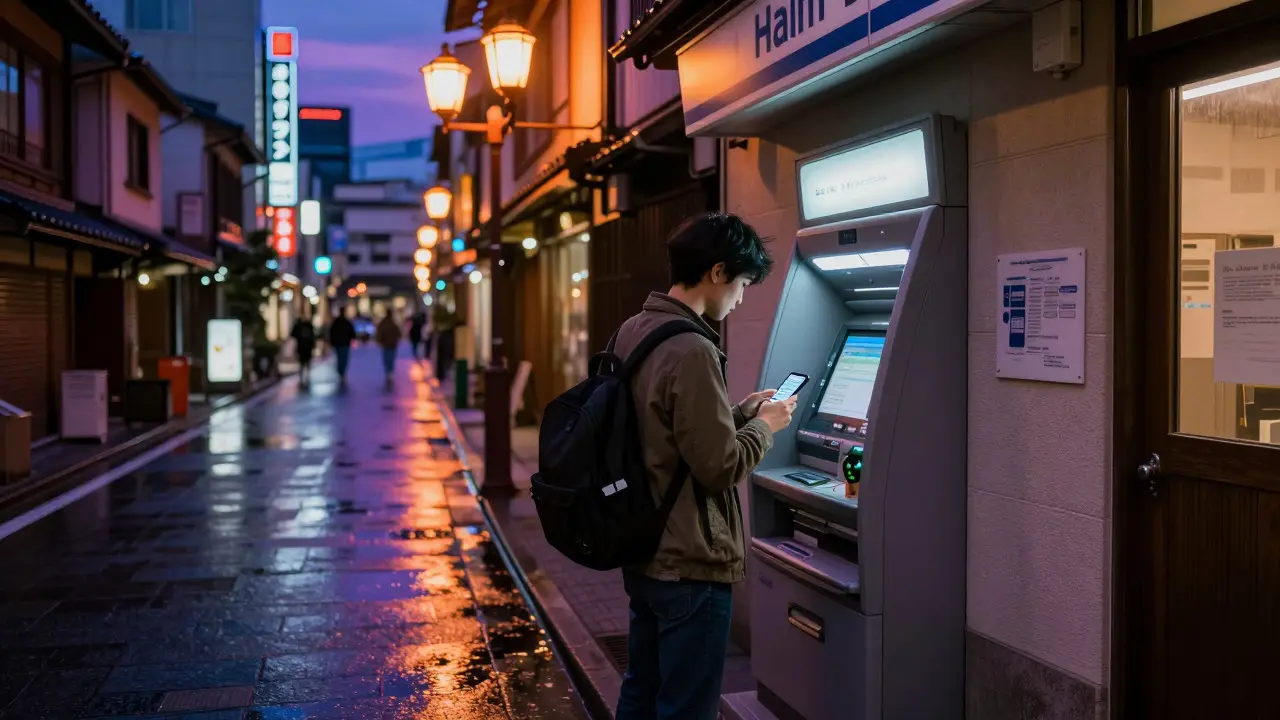
In the United States, for example, tip culture is mandatory in restaurants, which adds 15-20% to food costs. This isn't an FX fee, but it is a significant factor in the total cost of living abroad. Similarly, in Japan, cash is still king in many smaller establishments, despite the rise of digital payments. Having access to local yen cash via a reliable ATM network is therefore essential, rather than optional.
Troubleshooting Common Issues
Even with the best planning, things go wrong. Here is how to handle the most frequent issues:
- Card Declined at POS: First, check if you have sufficient funds. Second, ensure you selected the correct currency. Third, try a different chip/tap method. If it persists, switch to your backup card.
- ATM Keeps Swallowing Card: Avoid ATMs attached to convenience stores or standalone machines in isolated areas. Use ATMs located inside or directly next to major bank branches. They are safer and less prone to mechanical failure.
- Unexpected Fees on Statement: Review your bank’s terms and conditions. Some fees are only applied after a certain threshold of usage. If the fee seems erroneous, contact customer support immediately while you are still abroad, as disputes are easier to resolve in real-time.
Managing money abroad doesn’t have to be a source of stress. By understanding the mechanics of FX fees and choosing the right tools, you can keep your budget intact and focus on the experience rather than the expense. The key is preparation. Know your limits, know your rates, and always have a backup plan.
Is it better to withdraw cash or use a card abroad?
It depends on the location. In the Eurozone, using a card with a low-FX-fee provider is often cheaper due to zero conversion costs. In non-Eurozone countries, withdrawing cash in large denominations to minimize fixed ATM fees is usually more cost-effective, provided you avoid Dynamic Currency Conversion.
What is Dynamic Currency Conversion (DCC) and why should I avoid it?
DCC is a service offered by ATMs and merchants that allows you to pay in your home currency (GBP) instead of the local one. It sounds convenient, but the exchange rate used is typically 5-7% worse than the standard rate. Always choose to pay in the local currency to let your bank handle the conversion at a fairer rate.
Do UK student banks offer special travel benefits?
Some traditional UK banks offer reduced or zero FX fees for students under 25, but this is not universal. It is crucial to check the specific terms of your student account. Often, dedicated travel apps offer better rates regardless of age, making them a worthwhile supplement to a primary student bank account.
How much cash should I bring when traveling as a student?
Aim for enough cash to cover the first 2-3 days of expenses, including transport and meals. This ensures you are not dependent on finding an ATM immediately upon arrival. Keep the rest in your card-based wallet to maintain security and ease of tracking.
Are there any risks associated with using digital travel wallets?
The main risk is technological dependency. If your phone dies or loses signal, accessing digital-only funds can be difficult. Mitigate this by keeping a physical backup card and a small amount of emergency cash. Also, ensure your digital wallet is linked to a stable funding source back in the UK.