
Every September, UK university students face a familiar dilemma: the pile of required reading lists looks expensive, and the bank account doesn't have much room to spare. With average first-year textbook costs hitting £400-£600 per subject in some STEM and medical courses, choosing how to access these materials can save you hundreds over three years. But which method actually works? Do you buy new, rent used, or switch to digital? The answer depends on your course, your learning style, and how long you need the book.
Let’s break down the real costs and benefits of each option so you can make a smart financial move before the semester starts.
The Real Cost of Traditional Textbooks
Buying new textbooks from major retailers like Amazon is the most straightforward but often the most expensive route. For a standard academic text, prices typically range from £35 to £80. However, specialized fields like engineering, law, or medicine can see prices jump to £100-£150 per volume. If your department requires five core texts, that’s easily £500+ right out of the gate.
The downside isn’t just the upfront cost. Most university textbooks are only useful for one or two semesters. Once you’ve finished the module, those books sit on a shelf gathering dust, losing value rapidly. Unlike consumer electronics, academic texts rarely hold their resale value after the first year unless they are classic editions that remain in print for decades.
Renting: The Middle Ground
Textbook rental services have grown significantly in the UK over the last decade. Platforms like VitalSource and local university bookshops now offer seasonal rentals. You pay a fraction of the purchase price-usually 30% to 50% less-and return the book at the end of the term.
Here’s how the math usually shakes out:
- New Purchase: £60 (one-time)
- Used Purchase: £25-£35 (one-time, variable condition)
- Semester Rental: £20-£30 (per term, includes shipping)
If you only need the book for one semester, renting is almost always cheaper than buying new. It’s also cleaner; you don’t have to worry about previous owners’ notes or damaged pages. The catch? You must return the book on time. Late fees can quickly eat up any savings, and if you lose the book, you’re liable for the full replacement cost. This makes renting ideal for elective modules or subjects where you won’t refer back to the material later.
Digital Alternatives: E-Books and Open Access
Digital textbooks are no longer just a convenience-they’re a serious cost-saving tool. Many publishers now offer e-book versions at a discount, sometimes as low as 20% off the print price. Services like Cengage and Pearson provide subscription models where you pay monthly for access to multiple titles rather than buying each one individually.
But the biggest win in the digital space is Open Educational Resources (OERs). These are free, peer-reviewed textbooks hosted by universities or organizations. The UK government has been pushing for OER adoption, and many institutions now list free alternatives in their syllabi. For example, instead of paying £70 for a general physics text, you might find a high-quality open-access version on a platform like OpenStax.
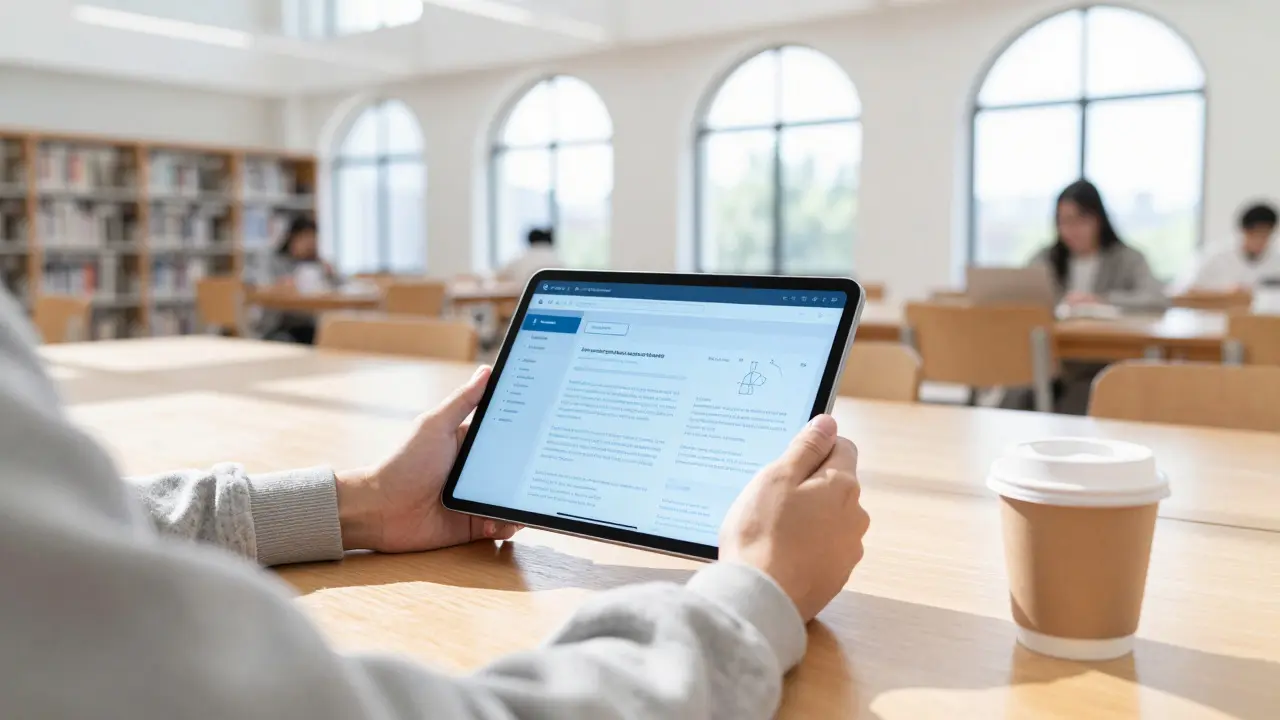
Digital options shine for students who use tablets or laptops daily. You can highlight, search, and annotate without damaging the physical copy. However, not all subjects lend themselves well to screens. Medical students who need to memorize anatomical diagrams or law students who cross-reference case law may find that flipping through a physical page is faster and more intuitive.
Comparison: Which Option Fits Your Budget?
| Option | Avg. Cost per Book | Best For | Main Risk |
|---|---|---|---|
| Buy New | £40-£80 | Core modules, long-term reference | High upfront cost, low resale value |
| Buy Used | £20-£35 | Budget-conscious students, flexible schedules | Variable condition, limited availability |
| Rent | £20-£30/term | Single-semester modules, electives | Late fees, loss liability |
| Digital/OER | £0-£25 | STEM, social sciences, tech-savvy users | Screen fatigue, licensing restrictions |
Strategic Tips for Maximizing Savings
You don’t have to pick just one strategy. Smart students mix and match based on the specific requirements of each module. Here’s a practical approach:
- Check the Library First: Before spending a penny, search your university library catalog. Many core texts are available on reserve or in the main collection. If the book is there, you don’t need to buy it.
- Ask Professors About OERs: Some lecturers are happy to accept open-access alternatives if you demonstrate that the content matches the syllabus. Always get approval in writing.
- Use Student Discounts: Retailers like Waterstones and online platforms often offer 10-15% discounts with a valid student ID. Don’t skip this step-it adds up over a year.
- Resell After Use: If you do buy, sell the book at the end of the year on sites like ABO (AbeBooks) or local Facebook groups. You can often recover 30-50% of the original cost.

Common Pitfalls to Avoid
Even with the best intentions, students make mistakes that cost them money. Watch out for these:
- Buying the Wrong Edition: Publishers release updated editions every few years. Check the exact ISBN provided by your professor. An older edition might be cheaper but lack critical updates or problem sets.
- Ignoring Bundle Deals: Sometimes, buying a bundle of three related books is cheaper than purchasing them separately. Check retailer websites for combo offers.
- Overlooking Hidden Fees: Rental services often charge for shipping, insurance, and late returns. Read the fine print before committing.
Frequently Asked Questions
Is it worth buying new textbooks if I plan to resell them?
Generally, no. Resale value drops significantly after the first year. Unless the book is a classic that remains in demand for decades, you’ll likely lose 50% or more of the initial cost. Renting or using digital versions is usually more financially efficient for short-term needs.
Can I use free PDFs from the internet instead of official textbooks?
It depends. If the PDF is an official Open Educational Resource (OER), yes. If it’s a pirated copy of a copyrighted book, it’s risky. While enforcement is rare, some professors check for specific edition features. Always verify with your instructor before relying on unofficial sources.
Which is better for exam preparation: physical or digital books?
Research suggests that physical books may aid retention for complex, visual-heavy subjects like anatomy or engineering. Digital books are superior for quick searching and referencing in text-heavy subjects like history or law. Test both methods during the first week of the semester to see what works for your brain.
Do UK universities provide financial aid for textbook costs?
Most UK universities include a modest 'study materials' allowance in their maintenance loan guidance, but it’s rarely enough to cover all books. Check with your student finance office for hardship funds or bursaries specifically designated for academic resources.
How early should I start looking for textbooks?
Start as soon as your reading list is published, usually in July or August. Popular titles sell out quickly, and rental slots fill up fast. Waiting until September means you’ll pay premium prices or miss out on used copies entirely.