
You look at a list of top universities in the UK, and you see stars, scores, and acronyms that feel like code. TEF, REF, NSS. They pop up on every prospectus and ranking site. But what do they actually mean for your degree? More importantly, how do these government-backed metrics dictate which universities get the attention-and the funding?
These three acronyms represent the backbone of how the UK measures higher education. They are not just random stats; they are the levers that pull institutions toward specific behaviors. If you understand them, you stop looking at rankings as magic numbers and start seeing them as reflections of institutional priorities. Let’s break down exactly how each one works and why it matters.
The Teaching Excellence Framework (TEF): What Your Lecturers Are Worth
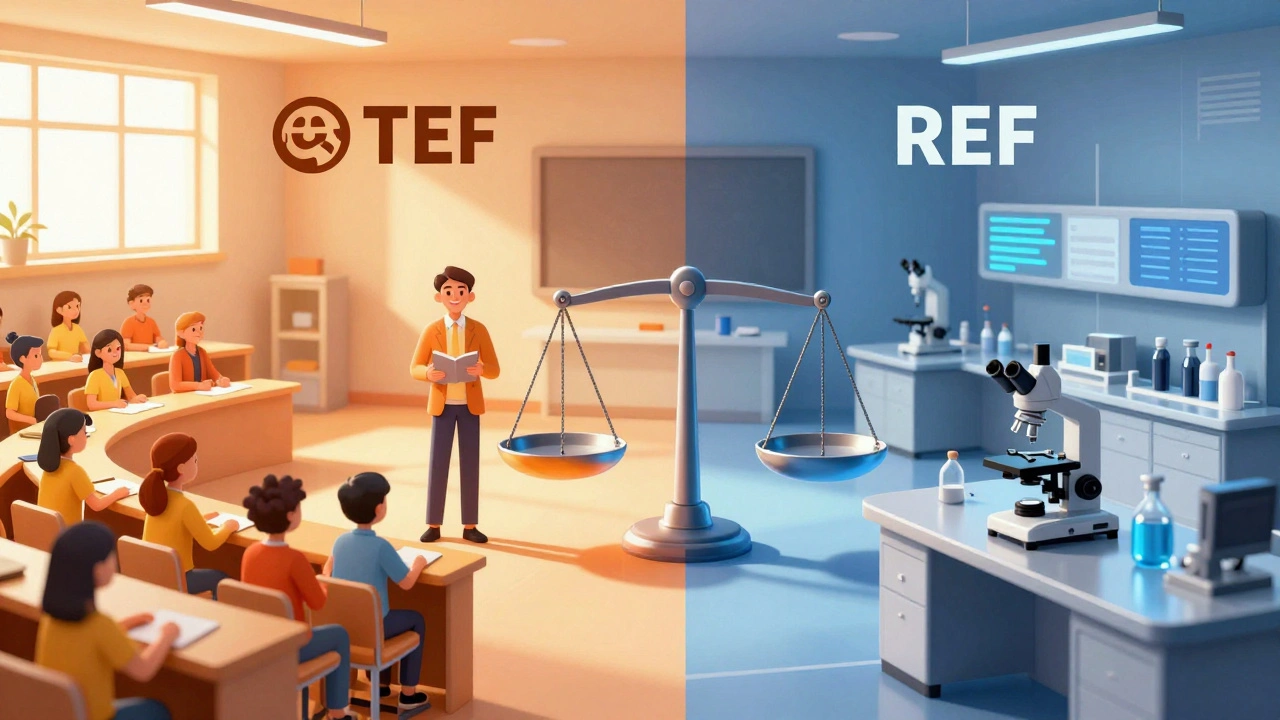
When you hear about the Teaching Excellence Framework, also known as TEF, think of it as the government’s report card for teaching quality. Launched to ensure that students were getting value for their tuition fees, the TEF awards universities a rating of Gold, Silver, or Bronze based on the quality of teaching and learning environments.
| Rating | Meaning | Key Indicators |
|---|---|---|
| Gold | Sustained excellence | High student satisfaction, strong retention rates |
| Silver | Consistently good | Above-average outcomes, solid teaching feedback |
| Bronze | Meets expectations | Standard performance, room for improvement |
The TEF relies heavily on data from the National Student Survey (NSS) and graduate outcomes. It asks simple questions: Do students stay enrolled? Do they find jobs after graduation? Is the teaching engaging? For a university, getting a Gold TEF rating is a massive marketing win. It signals to prospective students that the institution prioritizes classroom experience over pure research output.
However, critics argue that TEF can encourage "teaching to the test." Universities might focus on boosting short-term satisfaction scores rather than challenging students with rigorous coursework. As a student, look beyond the color label. Check if the university publishes detailed breakdowns of *why* they received their rating. Did they improve retention? Or did they just inflate satisfaction surveys?
The Research Excellence Framework (REF): The Prestige Engine
If TEF is about teaching, the Research Excellence Framework, or REF, is about prestige. Conducted every few years by the UK’s four higher education funding councils, the REF assesses the quality of research across all disciplines. It determines how much public funding universities receive for research activities.
The REF uses a star-rating system from 0 to 4:
- 4*: World-leading originality, significance, and rigour.
- 3*: Internationally excellent.
- 2*: Recognized internationally.
- 1*: Respected locally.
- Unrated: Does not meet minimum standards.
This framework directly impacts university rankings because global lists like QS and Times Higher Education weigh research output heavily. A university with a high proportion of 4* research will climb these lists quickly, even if its teaching is average. This creates a divide: some universities become research powerhouses, attracting top academics and international scholars, while others focus purely on undergraduate teaching.
For postgraduate students, especially those pursuing PhDs, the REF score is critical. You want to study under supervisors who are producing 4* work. For undergraduates, however, a high REF score doesn’t guarantee better lectures. In fact, highly research-focused professors sometimes have less time for teaching duties. Always check if the department balances both metrics.
National Student Survey (NSS): The Voice of the Student
The National Student Survey, or NSS, is the largest annual survey of final-year undergraduate students in the UK. Run by HESA (Higher Education Statistics Authority), it asks students to rate their course on teaching, assessment, academic support, learning resources, community, and career prospects.
Why does this matter? Because the NSS data feeds directly into the TEF and most university league tables. A drop in NSS scores can signal deeper problems within a department. For example, if students consistently complain about delayed feedback on assignments, it suggests administrative bottlenecks that affect learning.
Here’s the catch: NSS scores can be manipulated. Some universities incentivize participation or frame questions in ways that skew results. Also, cultural differences play a role. Students from certain backgrounds may be less likely to criticize authority figures, leading to artificially high scores. When comparing universities, look at the trend lines over three years, not just the single latest year. Consistency matters more than spikes.
How These Metrics Combine to Shape Rankings
No single metric tells the whole story. Ranking aggregators like The Guardian University Guide and Times Higher Education create weighted formulas using TEF, REF, and NSS data alongside other factors like entry tariff and financial health.
| Ranking Body | NSS Weight | Research Output Weight | Other Factors |
|---|---|---|---|
| The Guardian | High | Low | Entry scores, dropout rates |
| Times/Sunday Times | Medium | Medium | Student-to-staff ratio, facilities |
| QS World Rankings | Low | Very High | International faculty, citations |
Notice the difference? The Guardian leans heavily on student satisfaction (NSS), making it useful for finding happy campuses. QS leans on research (REF), making it ideal for identifying globally respected institutions. There is no "best" ranking-only the best ranking for your specific goals.
If you care about employability, look for universities with strong TEF Gold ratings and high graduate outcome scores. If you want to publish papers later, prioritize departments with high REF 4* outputs. Ignoring this distinction leads to mismatched expectations.
Pitfalls to Avoid When Interpreting Data
Data without context is dangerous. Here are common traps students fall into:
- Averaging hides extremes: A university might have a great overall NSS score but terrible scores in one specific department. Always drill down to the subject level.
- Sample size bias: Small specialized colleges often have inflated scores due to smaller respondent pools. One bad semester can tank their average disproportionately.
- Recency illusion: Rankings change yearly. A university dropping from rank 10 to 15 isn’t necessarily failing-it might be investing in new infrastructure that hasn’t yielded results yet.
- Ignoring non-metric factors: Location, campus culture, and networking opportunities don’t show up in TEF or REF. Visit open days. Talk to current students. Feel the vibe.
Also, remember that these metrics reflect past performance. They don’t predict future innovation. A university with moderate REF scores might be launching groundbreaking interdisciplinary programs that won’t appear in rankings for five years. Look for emerging trends in curriculum design and industry partnerships.

Practical Steps for Prospective Students
So, how do you use this information wisely? Start by defining your priorities. Are you seeking a traditional academic experience, or do you want vocational training with strong industry links? Once you know your goal, filter universities accordingly.
- Check the official sources: Don’t rely solely on third-party blogs. Go directly to the Office for Students (OfS) website for TEF data and HESA for NSS results.
- Compare subject-specific data: A university might be ranked 50th overall but 5th in Computer Science. Focus on the department you’ll join.
- Look at retention and continuation rates: These are part of TEF calculations. High dropout rates suggest poor support systems, regardless of teaching quality.
- Read qualitative reviews: Sites like Unistats provide raw data, but platforms like RateMyProfessors offer anecdotal evidence that numbers miss.
Finally, talk to alumni. Ask them what surprised them about their degree. Did the university deliver on its promises? Did the teaching match the reputation? Real-world feedback cuts through the noise of standardized metrics.
The Future of University Metrics in the UK
The landscape is shifting. With tuition caps frozen and inflation rising, universities face pressure to prove efficiency. Expect tighter integration between TEF and financial accountability. Governments may start linking funding more directly to graduate employment outcomes rather than just satisfaction scores.
Additionally, there’s growing demand for transparency around diversity and inclusion. Future iterations of these frameworks might include metrics on equity gaps in attainment and progression. This would add another layer of complexity but also greater fairness to the evaluation process.
As an applicant, stay informed. Subscribe to newsletters from the OfS and HESA. Follow debates in higher education policy journals. Understanding the rules of the game helps you choose a partner that aligns with your values-not just your grades.
What is the difference between TEF and REF?
TEF focuses on teaching quality and student experience, awarding Gold, Silver, or Bronze ratings. REF evaluates research output and impact, using a 0-4 star system. TEF matters more for undergraduates; REF matters more for postgraduates and researchers.
Does a Gold TEF rating guarantee a good education?
Not necessarily. While it indicates sustained excellence in teaching, it doesn't account for individual course quality or personal fit. Always review subject-specific NSS scores and speak with current students before deciding.
How often is the REF conducted?
The REF typically runs every five to six years. The last major cycle was in 2021, so the next assessment is expected around 2026-2027. Results significantly influence university funding and global rankings.
Can small universities compete with large ones in these metrics?
Yes, especially in TEF and NSS where personalized teaching often leads to higher satisfaction. However, REF favors larger institutions with diverse research portfolios. Smaller colleges excel in niche subjects rather than broad prestige.
Which ranking should I trust most?
It depends on your goals. Use The Guardian for teaching-focused insights, Times Higher Education for balanced views, and QS for global research prestige. Cross-reference multiple sources to avoid bias.
Do employers care about TEF or REF scores?
Most employers care more about skills, internships, and degree classification. However, prestigious brands associated with high REF scores can open doors in competitive fields like finance or academia.
Is the NSS reliable?
Generally yes, but treat it as one data point. Response rates vary, and some institutions may influence results. Look for consistent trends over several years and compare against national averages.
What happens if a university loses its TEF rating?
They lose the right to display the badge in marketing materials, which can hurt recruitment. It also triggers scrutiny from regulators and may lead to reduced enrollment unless improvements are made quickly.