
When you apply to university through UCAS, your teacher reference isn’t just a formality-it’s often the most personal part of your application. Admissions teams read hundreds of personal statements, but only a few references that truly capture who you are beyond grades. The problem? Most students don’t know what teachers actually write, or how to help them write something strong.
What Do UK Teachers Actually Write in UCAS References?
UK teachers don’t just repeat your grades. They’re asked to assess your academic potential, work ethic, and personal qualities. UCAS gives them a structured form with specific prompts: your academic performance, intellectual curiosity, motivation, resilience, teamwork, and any relevant context like illness or personal challenges.
Real examples from actual references:
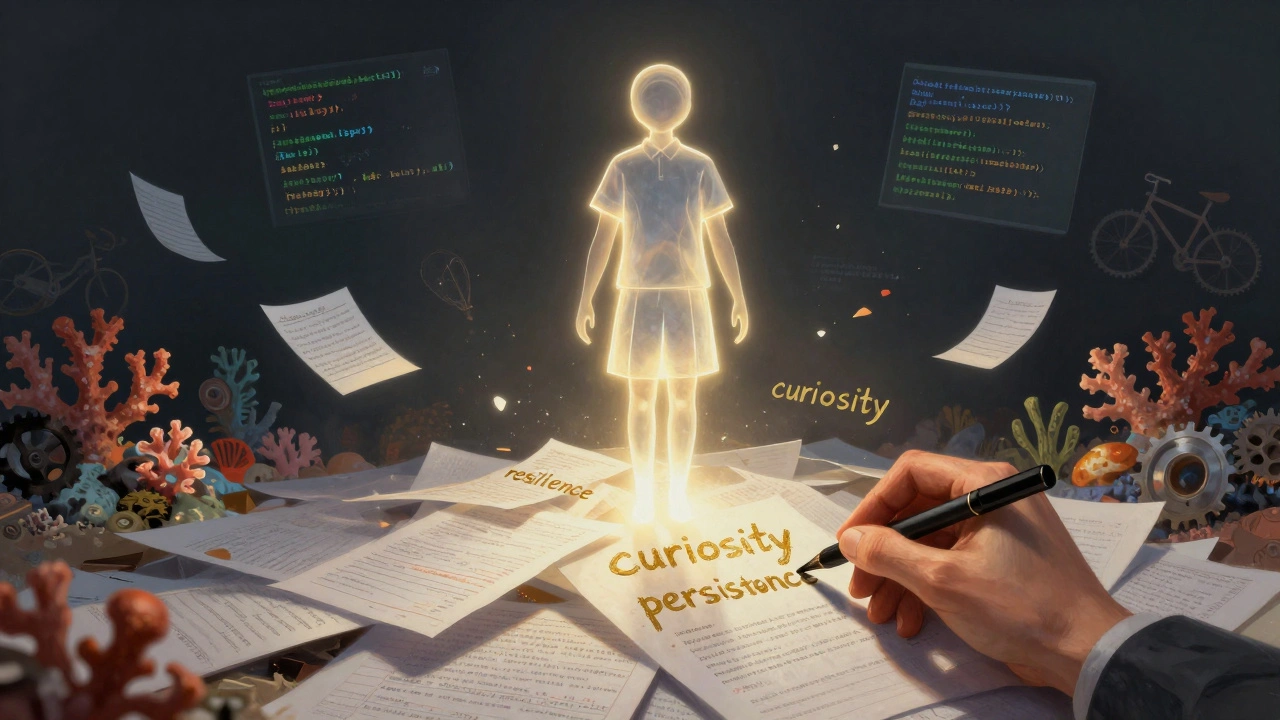
- "Alex consistently exceeds expectations in A-level Biology. Their independent research project on coral reef resilience was submitted two weeks early and included data analysis beyond the syllabus. They’re the student who stays after class to ask, ‘What if we tried this?’"
- "Despite missing three weeks of school due to a family emergency, Jamie maintained top marks in Maths and volunteered to tutor two peers during revision week. Their determination stood out even in a cohort of high achievers."
- "Sam is not the loudest in class, but their written work is always precise, thoughtful, and original. They rarely volunteer to speak, but when they do, it’s always on point. They’ve improved from a B to an A* over two years through quiet persistence."
Notice the pattern? It’s not about being the best. It’s about being memorable. Admissions tutors want to see growth, curiosity, and character-not just a list of A*s.
Why Your Reference Matters More Than You Think
At top UK universities, grades alone won’t get you in. In 2024, 42% of offers at Russell Group universities went to applicants with grades just below the stated entry requirements. Their references filled the gap.
One Oxford admissions officer told me: "We’ve rejected students with three A*s because the reference said nothing beyond ‘hardworking and polite.’ We’ve accepted students with BBCC because the teacher described how they taught themselves Python to build a climate modeling tool during lockdown. That’s the difference."
Your reference is your chance to show you’re not just a grade on a page. It’s where your personality, resilience, and intellectual spark come through.
How to Ask for a Reference-Without Making It Harder
Don’t wait until the last minute. Ask your teacher by the end of Year 12, or as soon as you’ve decided on your university choices. Approach them in person, not by text or email.
Here’s what works:
- Choose the right teacher. Not just the one who gave you the highest grade. Pick the one who knows you best-someone who saw you struggle and push through, or who noticed your quiet passion for a subject.
- Be specific. Say: "I’m applying to study Psychology at UCL and would be grateful if you could write my UCAS reference. I’ve really valued your feedback on my essays and how you encouraged me to explore cognitive bias in class."
- Give them context. Mention your personal statement, your intended course, and any key projects or moments you’d like them to highlight.
- Offer to help. Don’t ask them to write it from scratch. Offer to provide bullet points, a copy of your personal statement, or a list of achievements.
Teachers are busy. Make their job easier, and they’ll write something better.
What to Give Your Teacher to Help Them Write a Strong Reference
Don’t just say, "Let me know if you need anything." Give them something concrete. Here’s what actually helps:
- A printed copy of your personal statement (they’ll use it to check for alignment)
- A list of 3-5 key academic projects or assignments you’re proud of (include grades, deadlines, and what you learned)
- Any awards, competitions, or extracurriculars tied to your chosen subject (e.g., science fair, debate team, volunteering)
- A short paragraph about your motivation: "I want to study Engineering because I rebuilt my bike’s gear system after it broke, and I realized I love solving problems with real-world impact."
- A reminder of any personal context: illness, family responsibilities, moving schools, or other challenges that affected your performance
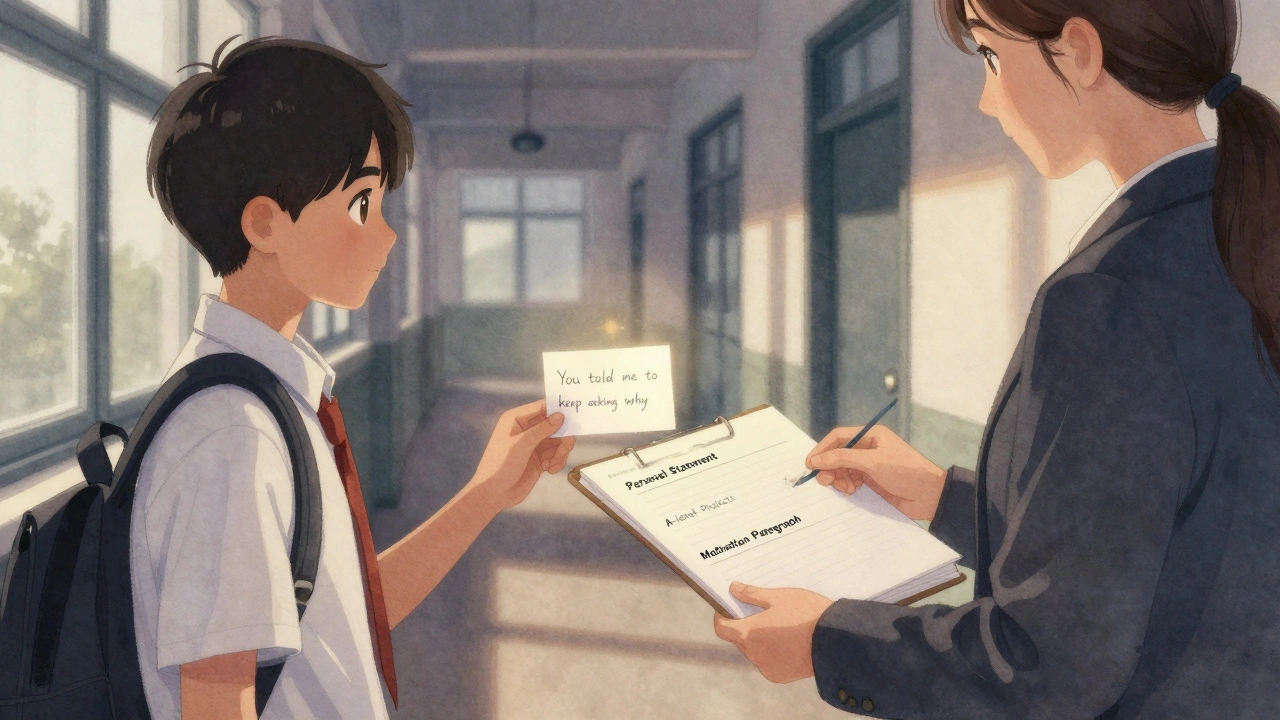
One student gave their teacher a folder with their best essays, a photo from a robotics competition, and a handwritten note: "You told me to keep asking why. That’s why I’m applying to Cambridge." The reference ended up being one of the most detailed in the school that year.
What Teachers Can’t (and Won’t) Write
Teachers follow strict ethical guidelines. They won’t:
- Make up achievements you didn’t have
- Exaggerate your grades or involvement
- Write a reference that contradicts your personal statement
- Comment on your personal life unless it’s relevant to your academic performance
They also won’t write a negative reference-but they might write a lukewarm one if you don’t give them enough to work with. A vague reference like "hardworking and reliable" is worse than no reference at all. It makes you blend in.
What If Your Teacher Doesn’t Know You Well?
If you’ve changed schools, had a teacher who was absent a lot, or just didn’t connect with your main subject teacher, don’t panic. You still have options.
- Ask a teacher from a subject you excelled in-even if it’s not your chosen degree. A strong reference from a Design & Technology teacher who saw you build a prototype for a school science fair can be powerful for Engineering.
- Ask a tutor, coach, or employer if they can write a reference. UCAS allows one non-academic reference if you’ve been out of school for over a year, or if you’re applying for a vocational course.
- Use your personal statement to explain why you chose a particular referee. "I’ve worked closely with Mr. Lee in robotics club for two years, and he’s seen me lead teams through multiple competition failures. He’s the best person to speak to my resilience."
It’s not about the title-it’s about the insight.
Common Mistakes Students Make
Here’s what usually goes wrong:
- Asking too late-teachers have 50+ references to write by January.
- Writing the reference for them and asking them to sign it. That’s a red flag.
- Asking someone who barely knows you because they’re "easy to ask."
- Not checking if your reference is submitted. UCAS doesn’t notify you. Follow up with your school’s careers office.
- Thinking a reference is just a formality. It’s not. It’s your story, told by someone who’s seen you grow.
Final Tip: Be the Student They Remember
The best references come from students who showed up-not just to get a grade, but to learn. Who asked questions. Who stayed after class. Who tried again after failing. Who cared.
You don’t need to be perfect. You just need to be real.
So start now. Pick your teacher. Give them the tools. Let them tell your story. Because the university that takes you isn’t just looking for the highest grades. They’re looking for the person who’ll make the most of the opportunity.
Can I see my UCAS reference before it’s sent?
No, you cannot see your reference before it’s submitted. UK schools are required to keep references confidential to maintain their integrity. However, you can ask your teacher to review a draft with you before submission-many do this informally. Just don’t ask them to let you edit it directly.
What if my teacher writes something negative?
It’s extremely rare for a UK teacher to write a negative UCAS reference. If they feel they can’t give a strong reference, they’ll usually decline politely and suggest you ask someone else. If you suspect your reference is unfair, contact your school’s head of sixth form or careers advisor immediately. They can intervene or help you get a replacement.
Can I use the same reference for multiple universities?
Yes. UCAS allows one reference to be sent to all five of your university choices. Your teacher writes one reference, and UCAS shares it with every institution you apply to. You don’t need separate references for each university.
How long should a UCAS reference be?
There’s no strict word limit, but most references run between 400-600 words. The UCAS form gives teachers space for a structured response plus a free-text section. The best references use both: they answer the prompts clearly and then add a personal insight in the open section.
Do universities actually read the reference?
Yes, and they read it carefully. At competitive universities, admissions tutors often read the reference before even looking at your personal statement. It’s one of the first things they check. A strong reference can get your application reviewed even if your grades are borderline. A weak one can sink an otherwise strong application.
Next Steps: What to Do Right Now
- Identify your best referee by Friday. Pick the teacher who knows your work best-not just your grade.
- Prepare your materials: personal statement, key projects, and a short note on your motivation.
- Ask them in person or via a thoughtful email by next Monday.
- Follow up in two weeks if you haven’t heard back. Don’t assume it’s done.
Your UCAS reference isn’t just paperwork. It’s the last chance for someone who’s watched you grow to say, "This student belongs here." Make sure they have everything they need to say it well.