
When you move into a new student house in the UK, the last thing you want is to be stuck paying too much for utilities or dealing with a provider that won’t answer the phone. Many students don’t realize that the previous tenants might have left their energy or broadband contract running - and you could end up on an expensive default tariff without even knowing it. Switching providers isn’t hard, but it’s easy to miss the steps. Here’s how to do it right, without the stress.
Check Who’s Currently Supplying Your Utilities
Before you do anything else, find out who’s already supplying gas, electricity, water, and internet in your house. This isn’t always obvious. Sometimes, the landlord has a bulk contract. Other times, the last group of students just left their accounts active. Look for a recent bill - it should be in a drawer, on the fridge, or emailed to the house email account. If you can’t find one, call the national meter number for your area. For electricity, dial 0800 050 0500. For gas, it’s 0800 050 0500 (yes, same number). They’ll tell you who the supplier is and give you a reference number.
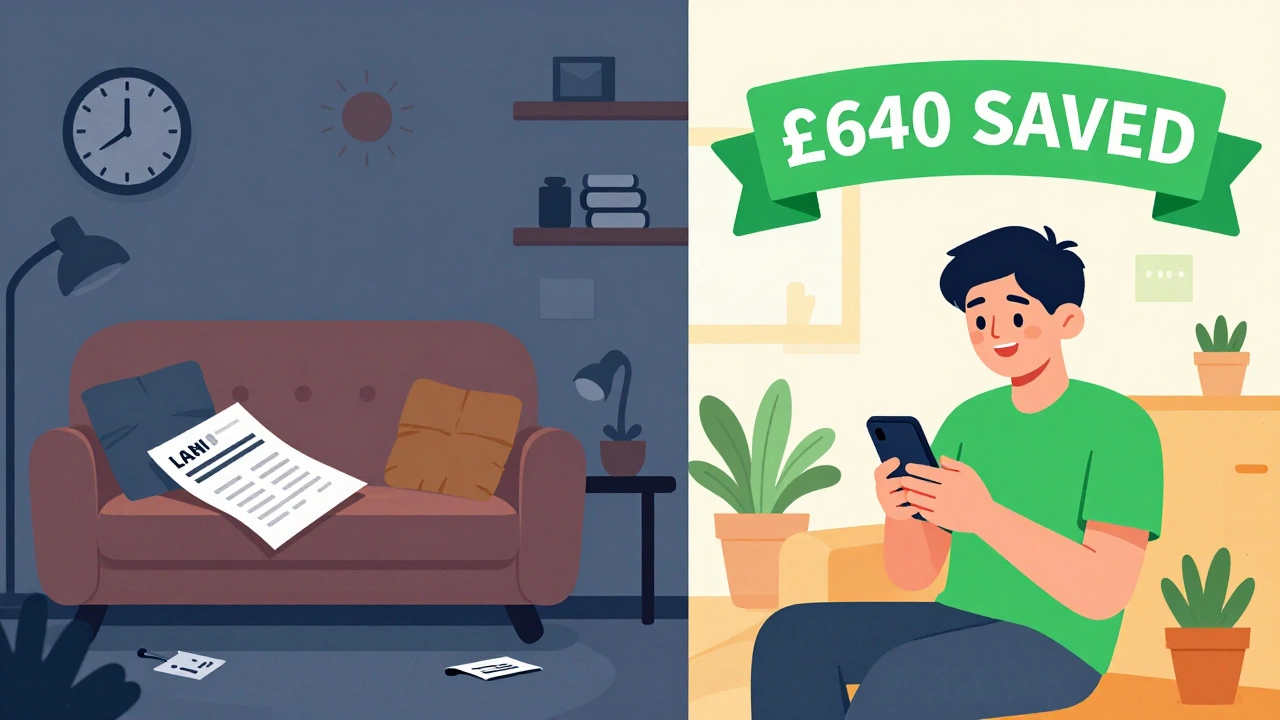
Don’t assume the provider is the same as the one you had at home. A lot of students get surprised when they see their first bill and realize they’re on a tariff that costs £30 more a month than their old one. In 2025, the average student household in the UK paid £1,840 a year for gas and electricity. But students who switched early paid as little as £1,200. That’s a £640 difference.
Don’t Stay on the Default Tariff
Every supplier has a default tariff - usually the most expensive one. If you don’t pick a plan, you’ll automatically be placed on it. That’s not a mistake. It’s how they make money. In 2024, Ofgem found that 42% of student households were on default tariffs. These plans often have no fixed term, but they charge more per unit of energy. You might think, “I’ll just leave it for now,” but that’s like leaving money on the table.
For example, if your house uses 3,500 kWh of electricity and 12,000 kWh of gas a year, being on a default tariff could cost you £1,780. But switching to a fixed-rate plan like Octopus Energy’s Agile tariff or Outfox the Market’s Student Deal could drop that to £1,190. That’s not a small change. That’s a £590 saving per year. And that’s money you can use for textbooks, trips, or just not worrying about your bank balance.
Compare Suppliers Like a Pro
You don’t need to check every supplier. Just use one trusted comparison site. Pick Uswitch or Energylinx. Both are free, independent, and updated daily. Enter your postcode, your house’s energy use (if you don’t know it, guess based on the number of people - 3 people = medium usage), and whether you want a fixed or variable rate. The site will show you prices from 15+ suppliers. Look for:
- Fixed price for 12 or 24 months - protects you from price hikes
- No exit fees - so you can switch again if you find a better deal
- Green energy options - if that matters to you
- Customer service ratings - avoid companies with scores below 4.0 on Trustpilot
Some suppliers even offer student discounts. For example, Utilita gives £20 off your first bill if you’re a student. Bulb (now part of Octopus) used to have a student referral program. While it’s paused, they still offer low rates. Always check the small print - some deals require direct debit and online account management.
Switching Is Easier Than You Think
Once you pick a new supplier, the process takes less than 10 minutes. You’ll need:
- Your postcode
- Your current supplier’s name
- Your meter numbers (found on your bill or on the meter itself)
- Your bank details for direct debit
You don’t need to call your old supplier. The new one handles everything. They’ll notify your old provider, arrange the switch date, and even send you a confirmation email. The whole process usually takes 17-21 days. You won’t lose power or gas. No one comes to your house. No wires are touched.
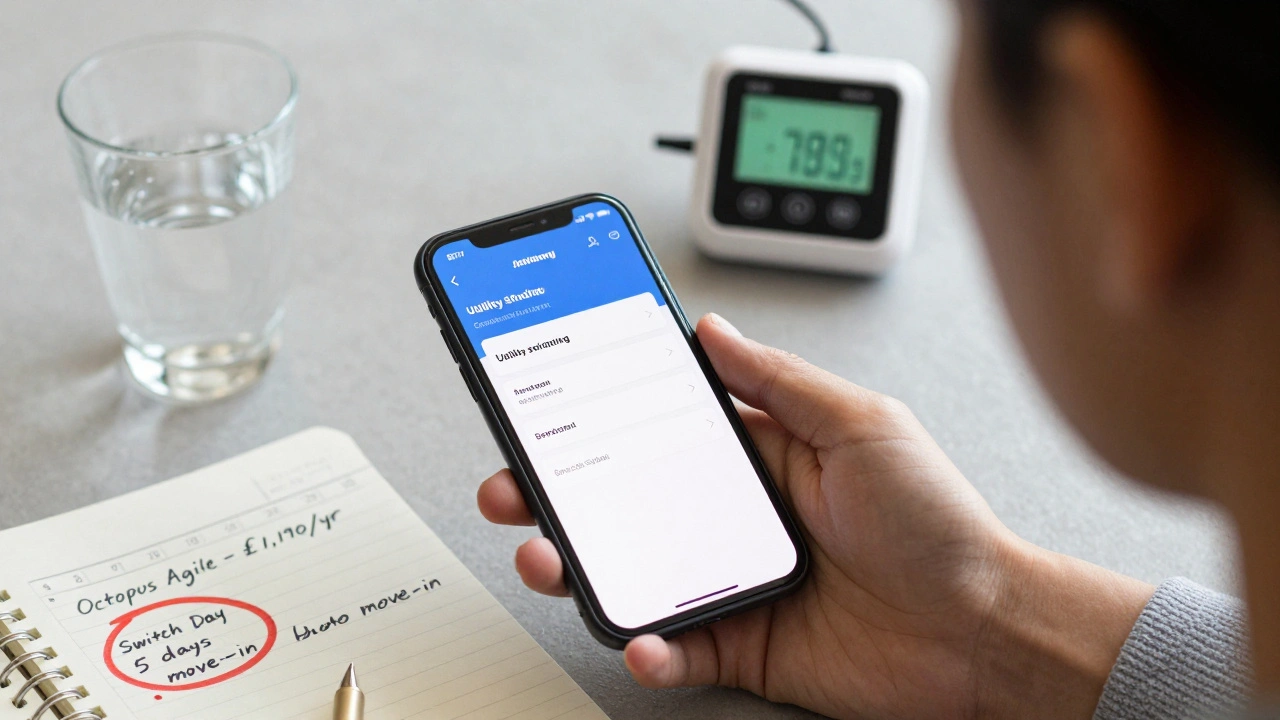
One thing to watch: the switch date. Don’t pick a date right before your move-out day. If you switch too late, you might end up with two bills - one from the old supplier for the time you lived there, and one from the new one for the time you didn’t. Aim to switch 5-7 days before you move in. That way, you’re covered from day one.
Water and Broadband Are Different
Water isn’t optional - it’s mandatory. But unlike energy, you can’t choose your water supplier. It’s based on your postcode. So if you move from Manchester to Leeds, your water company changes. But you still need to set up your account. Go to Water UK and enter your postcode. You’ll find your provider and a link to register. Most water companies let you pay monthly, quarterly, or annually. Paying monthly is easiest for students.
Broadband is where you have real choice. You can pick from providers like BT, Sky, Virgin Media, or smaller ones like Vodafone, Hyperoptic, or Community Fibre. Look for deals that include free setup, no contract, or free router. Some student houses have shared broadband - check if it’s already set up. If not, one person in the house can sign up and split the cost. Just make sure the contract is in someone’s name who will be there the whole year. Otherwise, you’ll end up with a £100 bill from someone who left.
Set Up Direct Debit and Track Usage
Most suppliers give you a discount if you pay by direct debit. It’s usually 5-10% off. So even if the monthly rate looks a bit higher, the direct debit discount often makes it cheaper overall. Set it up as soon as you switch. And link your account to a smart meter if you have one. Smart meters show your real-time usage. You’ll see spikes when everyone’s using the kettle or heater at once. That helps you spot waste.
Apps like Octopus Energy’s or EDF’s let you set alerts. You can get a notification if your usage goes over 50 kWh in a day. That’s a sign someone left the heater on all night. Or if your bill suddenly jumps 30%, you’ll know something’s wrong - maybe a leak, or someone’s using the oven nonstop.
What to Do When You Move Out
Don’t just walk away. Even if you’re moving to another house, you need to close your account. Log in to your supplier’s website. Find the “Move Out” option. Enter your final meter reading. Submit it. Then wait for your final bill. It might take 4-6 weeks. If you overpaid, you’ll get a refund. If you underpaid, they’ll send you a small bill. Either way, you’re covered.
Some students forget this step and end up with a debt on their credit file. It’s rare, but it happens. One student in Birmingham got a £70 bill two years later because they never closed their account. The supplier kept trying to charge the house. The debt was passed to a collections agency. That’s not worth the risk.
Common Mistakes and How to Avoid Them
- Mistake: Waiting until the bill arrives to switch. Fix: Switch before you move in.
- Mistake: Choosing the cheapest deal without checking reviews. Fix: Look for 4.0+ ratings on Trustpilot. Cheap doesn’t mean reliable.
- Mistake: Letting one person handle all bills without a written agreement. Fix: Use a shared spreadsheet or app like Splitwise. Track who pays what.
- Mistake: Not checking if the deal includes standing charges. Fix: Compare total cost - not just unit price.
And don’t fall for the “free gift” trap. A free toaster or £10 Amazon voucher sounds nice, but it’s rarely worth it. The average student saves more than £500 a year just by switching to a better tariff - no gifts needed.
Final Tip: Do It Once, Then Forget It
Once you’ve switched, you’re done - until next year. Most fixed deals last 12 or 24 months. Set a calendar reminder for 30 days before it ends. That’s when you’ll get the best new deals. Don’t wait for your supplier to email you. They won’t. They’ll just roll you onto a more expensive plan.
Switching providers isn’t about being a budget guru. It’s about not getting ripped off. Every student house in the UK has the power to save hundreds - if they just take 20 minutes to check their bills and make a change. You don’t need to be an expert. You just need to start.
Do I have to switch utilities if I’m moving into a student house?
No, you don’t have to switch, but you should. If you don’t, you’ll likely be placed on the supplier’s default tariff, which is often the most expensive option. Many students end up paying £50-£100 extra per month without realizing it. Switching can save you hundreds a year.
Can I switch utilities if I’m not the one who signed the lease?
Yes. The person who signed the lease doesn’t need to be the one who switches utilities. As long as you’re living in the house and have access to the meter readings and bills, you can switch. Suppliers don’t care who signed the lease - they care who’s using the service.
What if my housemates don’t want to switch?
If you’re on a joint account, everyone needs to agree. But you can still switch to a better deal - just make sure the new plan works for everyone. For example, if one person prefers green energy and another wants the lowest price, find a supplier that offers both. Or split the bills: one person handles energy, another handles broadband. Clear communication prevents conflict.
Will switching affect my credit score?
No, switching utilities doesn’t affect your credit score. Suppliers may do a soft credit check to set up direct debit, but that doesn’t show up on your report. Only missed payments or unpaid bills hurt your score. As long as you pay your bills on time, switching is safe.
How long does it take to switch energy suppliers?
It takes between 17 and 21 days from the day you apply. You’ll get a confirmation email with your switch date. No one visits your home. Your gas and electricity won’t be interrupted. You’ll just start seeing lower bills after the switch.
What if I move out before my contract ends?
If you move out before your fixed-term contract ends, you can still switch. Most suppliers let you cancel early if you’re moving - no exit fee. Just give them your final meter reading and move-out date. You’ll get a final bill, and your account will close. Make sure you do this before you leave.