
Living as a student in the UK doesn’t mean you have to trash the planet. Thousands of students across Manchester, Edinburgh, and London are already proving that you can cut waste, save money, and still enjoy campus life-all without buying into the hype of fast fashion or single-use coffee cups. The truth? Sustainable living isn’t about perfection. It’s about small, consistent choices that add up.
Swap disposable for reusable-starting today
One coffee cup might not seem like much. But the average UK student drinks 3-4 cups a week. That’s over 150 disposable cups a year. Most of them end up in landfills because recycling bins on campus rarely handle them properly. The fix? Carry a reusable cup. Most universities have partnerships with coffee chains like Starbucks, Costa, or independent cafés that give you 25p to 50p off every time you bring your own. Some even offer free refills. It’s not just cheaper-it’s easier. Keep one in your backpack, one in your dorm, and another in your car if you cycle to class.
Same goes for water bottles. Tap water in the UK is among the safest in the world. Yet, students still buy 1.5 billion plastic bottles annually. Bottled water costs up to 300 times more than tap. Fill up at campus water stations-almost every university now has them near libraries, gyms, and lecture halls. Stainless steel or glass bottles last years. Some students even customize theirs with stickers from campus events. That’s sustainability with personality.
Shop smarter: secondhand isn’t outdated
Student fashion cycles fast. You buy a hoodie for a festival, wear it twice, and toss it. But the fashion industry produces 10% of global carbon emissions. And most student clothes come from brands that rely on cheap labor and synthetic fabrics that shed microplastics.
Start with your wardrobe. University towns like Brighton, Leeds, and Glasgow have thriving secondhand markets. Charity shops, student-run swap events, and apps like Depop and Vinted are full of nearly new jackets, shoes, and textbooks. At the University of Sheffield, students host a monthly ‘Swap & Sip’-bring clothes you don’t wear, take something you do. No money changes hands. No waste is created.
For textbooks? Skip buying new. Use the university library’s reserve copies, join Facebook groups like ‘Free Textbooks UK Students,’ or rent from sites like Bookboon or Zookal. A £120 textbook can often be rented for £15 a term. And when you’re done? Sell it back or give it away. One student at Cardiff University turned her textbook resale side hustle into £300 extra income last year.
Food waste? Not on my watch
UK students throw away an average of 2.5kg of food per week. That’s more than £1,000 a year down the drain. Cafeterias are getting better-many now offer smaller portion sizes and ‘pay-as-you-take’ trays. But you can do more.
Plan meals. Use apps like Olio to share extra groceries with neighbors. Leftover pasta? Turn it into a frittata. Half-used herbs? Freeze them in olive oil. Most student kitchens have a small freezer. Use it.
Join a food co-op. Over 60 UK universities now have student-run food collectives where members buy in bulk-rice, beans, oats, spices-at wholesale prices. You split the cost, split the delivery, and split the work. It cuts waste, saves money, and builds community. At the University of York, the co-op feeds 200+ students monthly with organic, plastic-free groceries.

Move differently: walk, bike, bus
Transportation is the second-largest source of emissions for students after food. If you live on campus, you likely don’t need a car. But even if you don’t, you might still drive to the supermarket or visit friends.
Most UK universities offer free or discounted bus passes. The National Union of Students has negotiated deals with bus companies like Stagecoach and First Bus-students can get monthly passes for under £20 in many cities. Biking is even better. Cities like Cambridge and Oxford have bike-share schemes with docking stations right outside dorms. Many universities give away free locks and safety lights to new students.
Walking isn’t just green-it’s free. A 15-minute walk to class burns 75 calories. That’s one less snack you need to buy. And if you’re heading out on weekends? Try train travel. Railcards for students cost £30 a year and give you 1/3 off most fares. It’s cheaper than petrol, and you get to read a book or nap the whole way.
Power down: energy habits that matter
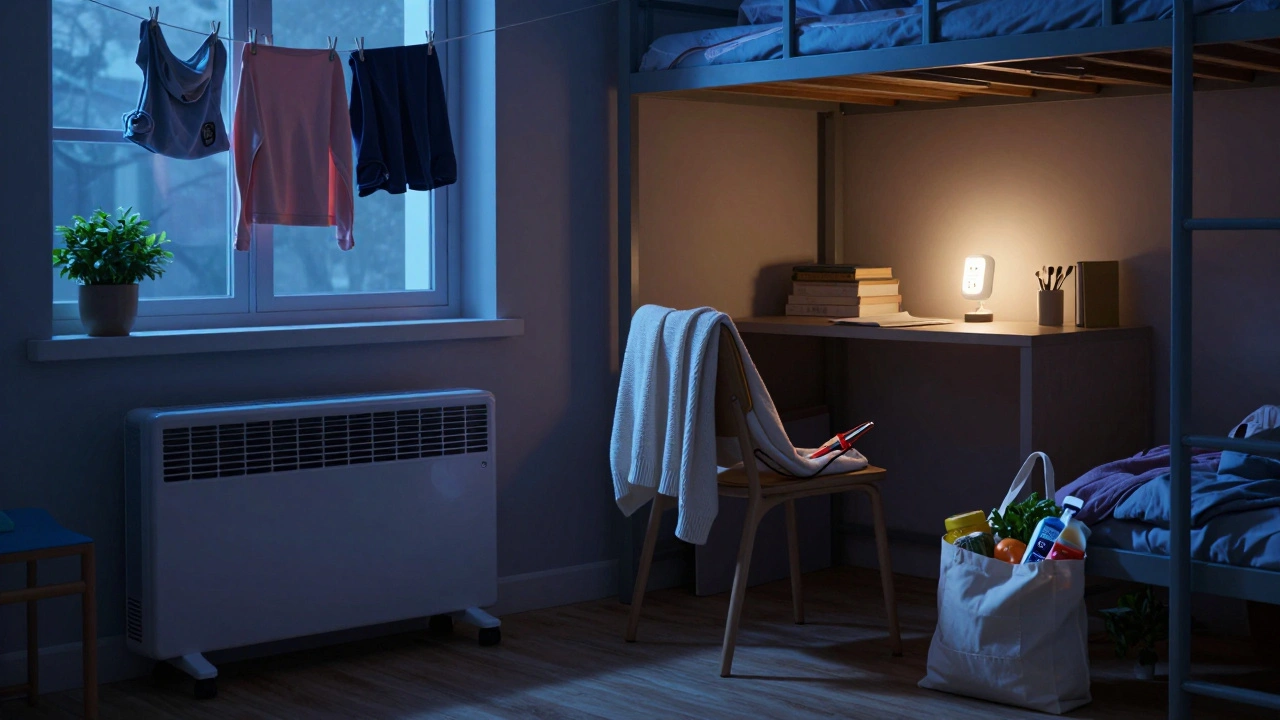
Heating a dorm room in winter can use more energy than running a laptop for a year. But students often leave heaters on all day, or forget to turn off lights and chargers.
Simple fixes work. Use a smart plug-costs £10-to schedule your kettle or lamp to turn off at midnight. Buy a £5 radiator panel to reflect heat back into the room. Wear a jumper instead of cranking up the thermostat. And if your dorm has shared laundry? Wash full loads, use cold water, and air-dry. It cuts energy use by 80% compared to the dryer.
Some universities now offer ‘Green Room’ certifications. If you meet energy-saving targets-turning off lights, unplugging devices, using less hot water-you get a badge, a discount on your utility bill, or even a free reusable tote. At the University of Edinburgh, over 1,200 students earned the badge last year.
Join the movement: campus groups make change stick
Individual habits matter, but collective action changes systems. Every UK university has at least one sustainability group. Some are tiny. Others run campaigns that force the admin to act.
At the University of Bristol, students pushed for a campus-wide meat-free Monday in cafeterias. The university agreed-and saw a 30% drop in food waste. At the University of Glasgow, students lobbied to remove plastic cutlery from all events. It’s now banned across campus.
Join one. Even if you just show up to one meeting a month. You’ll meet people who care. You’ll learn how petitions work. You might even help your university get a Green Impact Award from the National Union of Students. That’s real impact-not just a reusable cup.
It’s not about being perfect
You won’t become zero-waste overnight. You’ll forget your cup. You’ll buy a snack in plastic. You’ll leave the light on. That’s okay. Sustainability isn’t about guilt. It’s about progress.
Start with one habit. Carry a water bottle. Use the library. Wash clothes in cold water. Do that for a month. Then add another. Before you know it, you’re not just living sustainably-you’re leading by example. And that’s how campuses change.
Can I really save money by living sustainably as a student in the UK?
Yes, and often more than you expect. A reusable coffee cup saves £1-£2 per drink-£50-£100 a term. Buying secondhand clothes cuts fashion spending by 60-80%. Renting textbooks instead of buying new can save £100-£300 per year. Using public transport with a student railcard or bus pass cuts car costs by over £1,000 annually. Air-drying clothes and unplugging devices lower energy bills. These aren’t small savings-they add up to £1,500+ per year.
What if my university doesn’t have recycling bins or water stations?
Start by asking. Many campuses lack infrastructure not because they don’t care, but because no one’s requested it. Talk to your student union, join a sustainability group, or email the facilities team. At the University of Liverpool, students collected 1,200 signatures for water refill stations-and got 15 installed within six months. Even a simple petition can trigger change. In the meantime, bring your own water bottle and use public fountains or café refill stations.
Is vegan food really more sustainable on campus?
Yes, but it’s not the only way. Plant-based meals use up to 75% less water and generate 50-80% fewer emissions than meat-based ones. Many UK university cafeterias now offer vegan options-often cheaper too. But sustainability isn’t just about diet. Eating less meat once a week, choosing local produce, or avoiding food waste matters just as much. You don’t need to go fully vegan to make a difference.
How do I find eco-friendly student groups near me?
Check your university’s student union website-they usually list all clubs. Search for ‘Sustainability Society,’ ‘Green Campus Group,’ or ‘Eco Action.’ Facebook and Instagram are also great. Many groups post events like clothing swaps, tree planting days, or zero-waste workshops. If you can’t find one, start your own. All it takes is one post: ‘Anyone want to start a campus recycling initiative?’ You’ll be surprised how many people say yes.
What’s the biggest mistake students make when trying to live sustainably?
Trying to do everything at once. Buying 10 reusable items, switching to a vegan diet, quitting fast fashion, and starting a compost bin all in week one leads to burnout. Sustainability isn’t a checklist-it’s a rhythm. Pick one habit. Master it. Then add the next. The goal isn’t to be perfect. It’s to be consistent. One reusable bottle used every day beats ten bought and forgotten.