
The Great Debate: Silence vs. Sound
You've seen the YouTube thumbnails: a cozy anime room, rain hitting the window, and a title that says "Lo-fi beats to study/relax to." Millions of students swear by these playlists, but if you've ever tried to read a complex textbook while a catchy pop song played in the background, you know it doesn't always work. The truth is, your brain isn't a multitasker; it's a master of switching tasks very quickly. When you add sound to your study session, you're essentially asking your brain to manage two streams of information at once.
Whether music helps or hurts depends entirely on what you're doing and how your brain processes noise. For some, total silence is deafening and creates anxiety. For others, a single lyric can derail an entire hour of deep work. The goal isn't to find a "magic playlist" that works for everyone, but to understand the physics of sound and how it interacts with your study music preferences to maximize retention.
Quick Takeaways: Sound and Learning
- Complex tasks require low-stimulus environments (silence or brown noise).
- Repetitive tasks benefit from upbeat music to maintain arousal and mood.
- Lyrics are the enemy of reading comprehension because they compete for the same language processing centers in the brain.
- Consistency matters more than genre; a predictable soundscape prevents the "startle response."
The Science of Cognitive Load
To understand why music affects us, we have to talk about Cognitive Load Theory, which is a framework describing how much information the working memory can hold at one time. Your brain has a limited amount of "bandwidth." When you study, you're filling that bandwidth with facts, formulas, and concepts. If you play music with complex lyrics or a shifting tempo, you're using up a chunk of that bandwidth just to process the sound.
This is where the "Irrelevant Sound Effect" comes in. Research shows that background speech-even in a language you don't understand-interferes with the ability to memorize lists or read texts. This happens because your Phonological Loop, a component of working memory that deals with auditory information, gets jammed. If you're reading a sentence about organic chemistry while a singer is belting out a chorus, your brain is fighting a war between the written word and the spoken one.
Matching the Music to the Task
Not all study sessions are created equal. If you're rewriting notes or organizing a planner, your brain is in "autopilot" mode. In these moments, silence can actually lead to boredom and a drop in productivity. This is where high-energy music can act as a catalyst, keeping you awake and motivated.
However, when you hit the "Deep Work" phase-like solving a new calculus problem or writing a thesis-you need a different sonic environment. The key is to find sound that occupies the background without demanding attention. This is why many people gravitate toward instrumental tracks. When there are no words, the brain doesn't feel the need to "decode" the message, allowing the focus to remain on the page.
| Task Type | Recommended Sound | Why it Works |
|---|---|---|
| Heavy Reading / Writing | Brown Noise / Silence | Zero linguistic interference |
| Math / Logic Problems | Classical / Ambient | Provides rhythm without distraction |
| Reviewing Flashcards | Lo-fi / Chillhop | Maintains a steady, relaxed mood |
| Data Entry / Organizing | Upbeat Pop / Electronic | Prevents boredom and fatigue |

Beyond Music: The Power of Color Noise
If music is too distracting, you might want to look into "color noise." This isn't music in the traditional sense, but a steady frequency of sound that masks distracting environment noises, like a humming refrigerator or a distant lawnmower. The most common is White Noise, which contains all audible frequencies at equal intensity. While effective, some find it too "sharp" or static-like.
A better alternative for many is Pink Noise, which filters out higher frequencies to create a deeper, more balanced sound, similar to steady rain. Then there's Brown Noise (or Red Noise), which emphasizes the lowest frequencies. Think of the roar of a distant thunderstorm or a low rumble. Brown noise is often the gold standard for people with ADHD or those who struggle with an overactive mind, as it creates a "sonic cocoon" that shuts out the world.
The Mozart Effect: Fact or Fiction?
You've probably heard that listening to Mozart makes you smarter. This is based on a study from the 1990s that suggested a temporary boost in spatial-temporal reasoning. However, later research debunked the idea that just playing classical music increases your general IQ. What actually happens is "Arousal-Mood Optimization."
Basically, if the music makes you feel alert and positive, you'll perform better. If you hate classical music and find it boring, listening to it will actually hinder your performance because you'll be annoyed. The "Mozart Effect" is less about the composer and more about how the music affects your emotional state. If Video Game Soundtracks make you feel like a hero on a mission, they might actually be more effective for your productivity than a symphony.
Building Your Ideal Soundscape
If you want to experiment with sound, don't just shuffle your favorites. Build a strategy based on the science of focus. Start by identifying your "distraction threshold." If you find yourself humming along to a song instead of reading, that song needs to go.
Try the "Layering Technique." Start with a base of brown noise to kill the external environment. Then, layer in a low-volume, instrumental playlist. The brown noise acts as a floor, and the music acts as a gentle stimulant. Keep the volume at a level where you can still hear your own internal monologue clearly. If the music becomes the main event, it's no longer background music; it's a distraction.
Another pro tip is to use a "Warm-up Playlist." Spend 10 minutes listening to high-energy music you love to get your mood up and your brain engaged. Then, as you transition into the actual study material, switch to a minimalist soundscape. This signals to your brain that the "play" time is over and the "focus" time has begun.
Can I study with lyrics if I know the song by heart?
Even if you know the words, your brain still processes the linguistic information. While it's less distracting than a new song, it still occupies a portion of your working memory. For heavy reading or writing, it's always safer to stick to instrumentals.
Why does lo-fi music seem to work so well?
Lo-fi (low fidelity) beats usually have a predictable tempo, a lack of sharp changes in volume, and no lyrics. This predictability prevents the "startle response" in your brain, allowing you to enter a flow state more easily.
Is total silence always the best option?
Not necessarily. For some, total silence makes every tiny noise (like a clock ticking) feel amplified and distracting. A light layer of background noise can actually provide a consistent auditory environment that helps many people concentrate better.
What is the best volume level for study music?
The general rule is to keep it as a "background" element. If the music is loud enough that you can't hear your own thoughts or it's causing you to subconsciously tap your foot, it's likely too loud. Aim for a low-to-moderate volume that fills the space without dominating it.
Do noise-canceling headphones actually help?
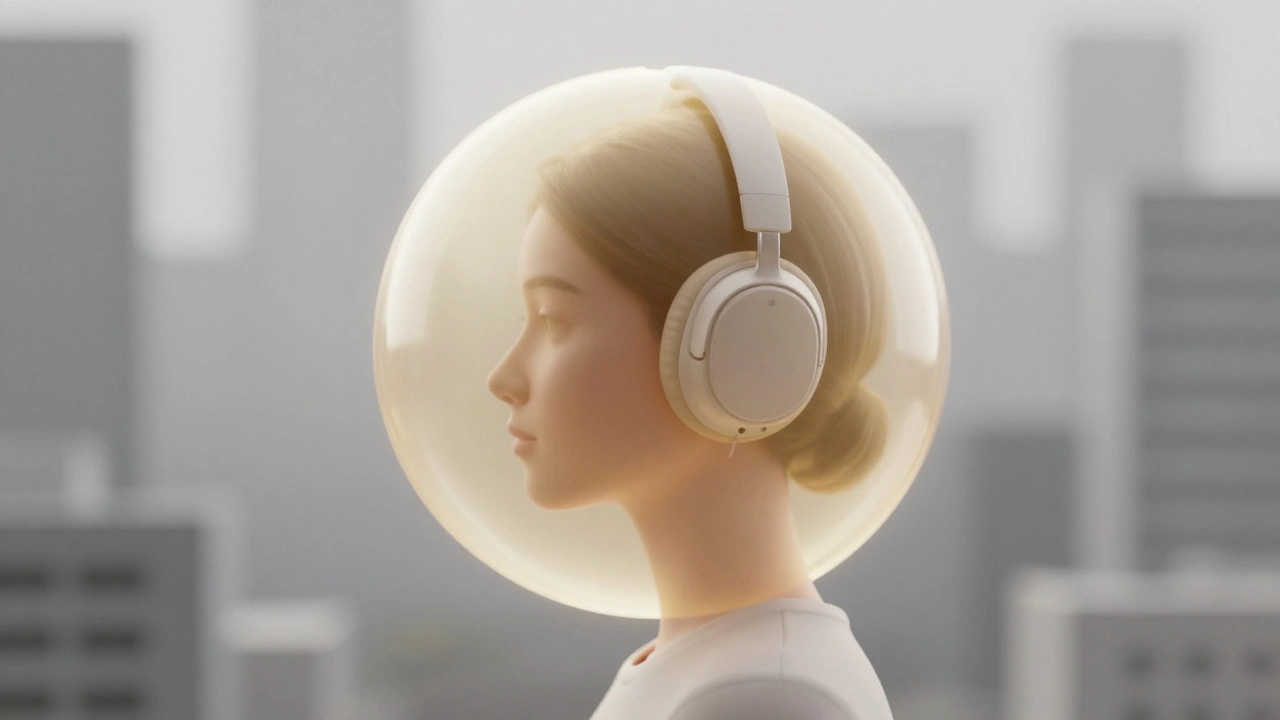
Yes, they are incredibly effective because they remove the unpredictable spikes in noise (like people talking or doors slamming) that trigger the brain's orienting reflex, which pulls your attention away from your work.
Next Steps for Your Focus Journey
If you're not sure where to start, try a one-week experiment. Spend two days studying in total silence, two days with brown noise, and three days with instrumental music. Track your "time to focus"-how long it takes you to actually get into the zone-and how many pages you cover. You'll likely find that your needs change based on the subject. You might need brown noise for history but a lo-fi beat for chemistry. Once you find your pattern, you can build a custom sonic toolkit that turns any environment into a productive workspace.