
If you're a student renting in the UK, your landlord can't just kick you out anytime they want. You have real legal protections-just like any other tenant. Too many students think being in uni means they don't get the same rights, but that's not true. Whether you're in a shared house, a studio flat, or a university-managed property, your tenancy is covered by UK law. Knowing what you're entitled to can save you thousands and stop you from being taken advantage of.
Your Tenancy Type Matters
The kind of contract you sign determines your rights. Most students have an assured shorthold tenancy (AST). This is the most common type for private rentals. It gives you security for at least six months. After that, your landlord can ask you to leave-but only with proper notice and a legal reason. They can't just say, "I need the place for my cousin."
Some students live in university halls. If the university runs the accommodation directly, you likely have a licensing agreement, not a tenancy. That means fewer protections. But even then, you still have rights under consumer law. The university can't change rules mid-year without notice or charge you extra fees that weren't in the original contract.
Watch out for "excluded tenancies"-these are rare but dangerous. If you live with your landlord and share a kitchen or bathroom, you might be classified as a lodger. That cuts your rights dramatically. Your landlord only needs 28 days' notice to evict you, and they don't need a court order. Always check your contract before signing.
Deposit Protection Is Not Optional
Landlords in the UK must protect your deposit in a government-approved scheme within 30 days of receiving it. That’s not a suggestion-it’s the law. If they don’t, you can take them to court and get back up to three times your deposit, plus your original money.
There are three approved schemes: Deposit Protection Service (DPS), MyDeposits, and Tenancy Deposit Scheme (TDS). Your landlord must give you details of which one they used, along with proof you’ve paid. If they don’t, write to them immediately. Keep copies of everything.
At the end of your tenancy, your landlord can only deduct money for damage beyond normal wear and tear. A stained carpet? That’s wear and tear. A broken window? That’s your responsibility. They can’t charge you for cleaning unless the property was left in a filthy state-like food rotting in the kitchen or mold growing from ignored spills. Many students lose deposits because landlords use vague terms like "general mess." Document everything when you move in and out. Take date-stamped photos of every room, every appliance, every scratch.
Repairs and Maintenance Are the Landlord’s Job
Your landlord must keep the property in good repair. That includes heating, hot water, plumbing, electrical wiring, and structural safety. If your boiler breaks in January, they have to fix it. If the bathroom leaks and ruins your books, they’re responsible for the damage.
Don’t assume they’ll fix things fast. You need to report problems in writing-email or text is fine. Keep a record. If they ignore you for more than 14 days, you can escalate. Contact your local council’s environmental health team. They can inspect the property and force the landlord to act. In extreme cases, they can even issue fines or prosecute.
Landlords sometimes say, "You broke it, you fix it." That’s not legal. If you accidentally damage something, you pay for repairs. But if the washing machine is old and stops working, that’s their problem. Don’t let them shift responsibility.
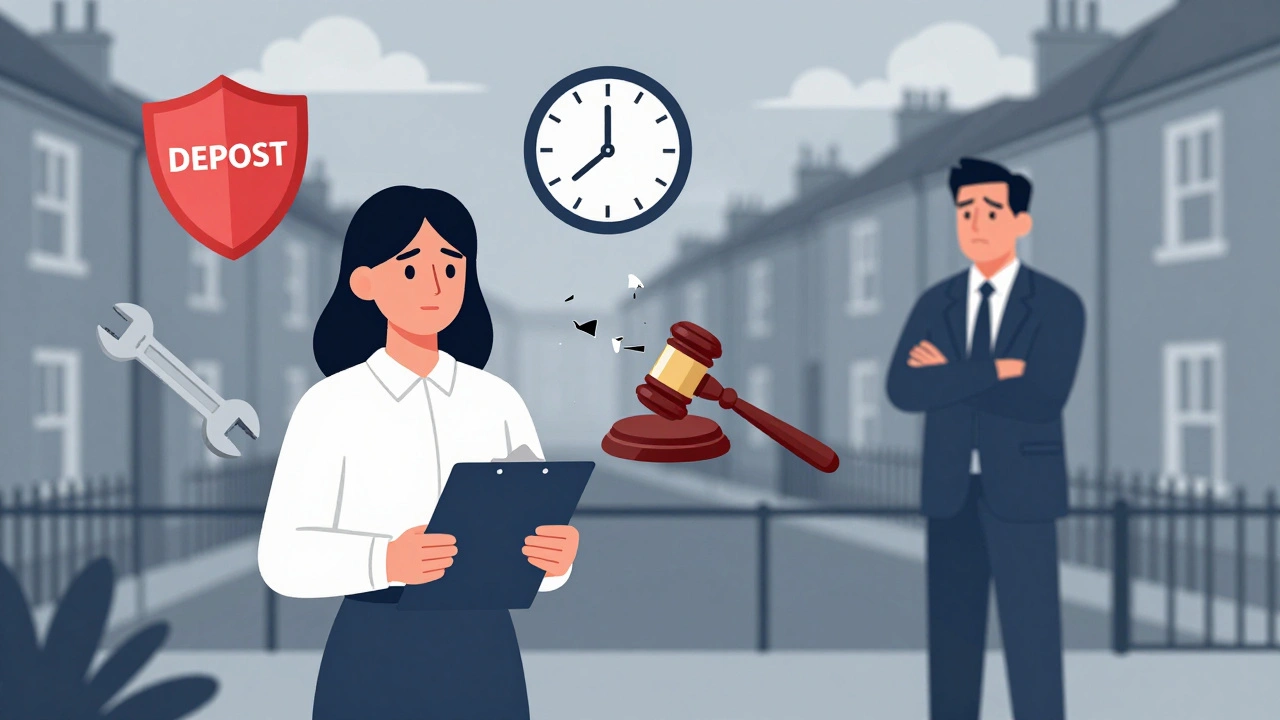
You Can’t Be Evicted Without a Court Order
Even if your landlord gives you a notice to quit, they can’t change the locks or turn off your utilities. That’s illegal eviction-and it’s a criminal offense. You can call the police. They will help you get back in.
Landlords must use one of two legal routes to evict you:
- Section 21: "No-fault" eviction. They can use this after your fixed term ends, but only if they’ve followed all rules (deposit protection, gas safety certificate, EPC, How to Rent guide). They must give you at least two months’ notice.
- Section 8: For specific breaches, like rent arrears, damage, or anti-social behavior. They must prove it in court.
Many students get scared by a Section 21 notice and leave early. Don’t. You have the right to stay until the court orders you out. If you leave before then, you could still owe rent. Always get legal advice before signing anything.
Utilities, Bills, and Hidden Costs
Some landlords include bills in rent. Others don’t. The contract must say clearly which ones you pay. If it doesn’t, you don’t have to pay them. Many students get hit with huge electricity bills because they assumed it was included. Check your contract before moving in.
Landlords can’t charge you for things like cleaning services, admin fees, or referencing checks after you’ve signed. Those were banned in 2019 under the Tenant Fees Act. If you’re asked to pay them, refuse. Report the landlord to Trading Standards. You can even reclaim the money.
Gas safety certificates must be renewed yearly. You have the right to see the current one. If your landlord won’t show it, don’t move in. No certificate = no legal tenancy. Same goes for the Energy Performance Certificate (EPC). It must be at least an E rating. Anything lower is illegal for new tenancies.
Roommates and Joint Tenancies
If you’re on a joint tenancy with three other students, you’re all equally responsible for the rent. If one person leaves or stops paying, the others must cover it. That’s the law. Many students don’t realize this until they’re left with a £1,200 bill.
Consider a joint tenancy only with people you trust. If you’re worried, ask for separate tenancies-but most landlords won’t agree. If you’re not on the contract but live there, you have no legal rights. You can be kicked out without notice. Always get your name on the agreement.
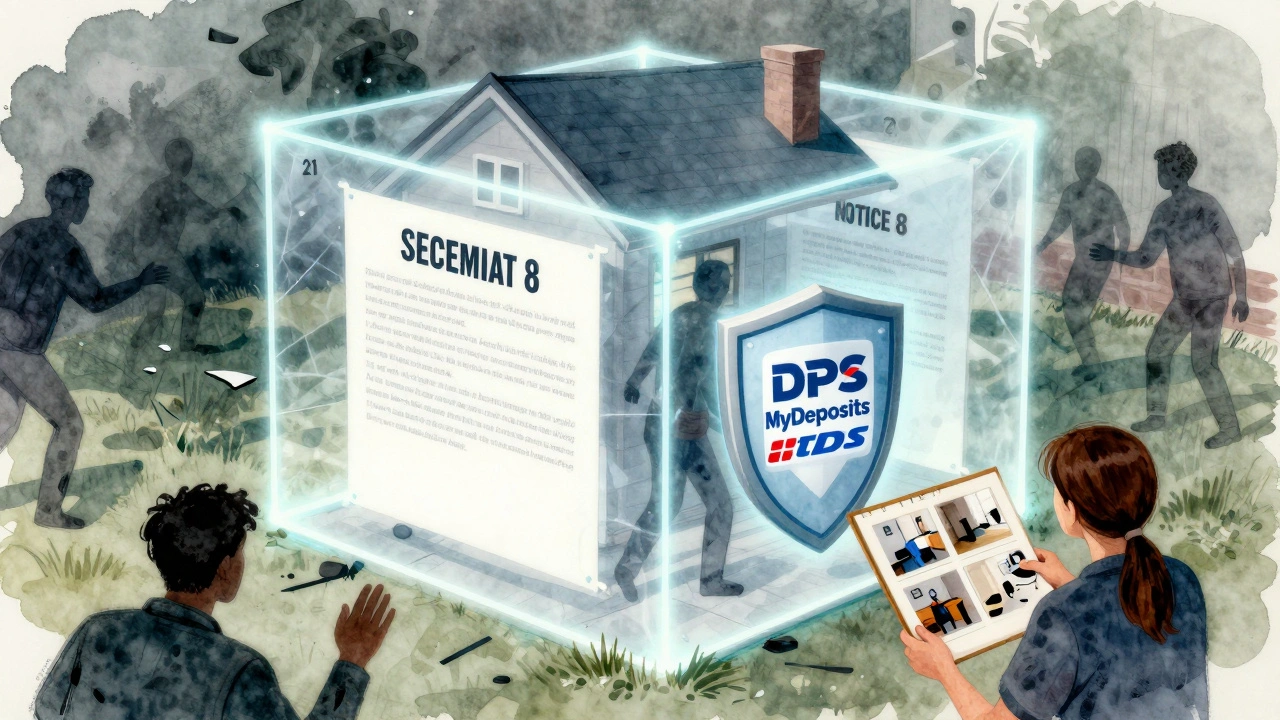
What to Do If Your Rights Are Violated
If your landlord breaks the rules, act fast. First, write a formal letter or email. Be clear, calm, and factual. List what they did wrong and what you want them to do. Give them 14 days to fix it.
If they don’t respond:
- Contact your university’s student union. Most have free housing advisors.
- Reach out to Shelter or Citizens Advice. They offer free legal help for renters.
- Report to your local council’s housing team. They can take enforcement action.
- If money is owed, you can claim it in the County Court. The process is simple and cheap.
Don’t wait. The longer you wait, the harder it is to prove your case. Keep every email, receipt, photo, and text. Evidence wins.
Common Myths About Student Tenancies
- Myth: "I’m a student, so I don’t have the same rights." Truth: You have the same rights as any tenant.
- Myth: "My landlord can enter anytime." Truth: They need 24 hours’ notice unless it’s an emergency.
- Myth: "I can’t complain about noise or mold." Truth: You can-and the council can force the landlord to act.
- Myth: "I’ll lose my deposit if I don’t clean perfectly." Truth: Normal wear and tear is protected by law.
These myths are spread by landlords who know students are overwhelmed. Don’t let them use your inexperience against you.
Can my landlord enter my room without asking?
No. Landlords must give at least 24 hours’ written notice before entering your property, unless it’s an emergency like a gas leak or flooding. They can’t just show up. Even if they say they’re doing inspections, they still need permission. If they enter without notice, you can report them to your local council.
What happens if I break my lease early?
You’re still legally responsible for rent until the end of your fixed term. But if your landlord finds someone else to move in, you’re off the hook. You can try to find a replacement tenant, but you can’t force them to accept someone. Some landlords charge a fee for early termination-this is only legal if it’s clearly written in your contract and reasonable. Unreasonable fees are banned under the Tenant Fees Act.
Can my university evict me from halls without reason?
If you’re in university-managed accommodation, you usually have a licensing agreement, not a tenancy. That means fewer protections. But they still must follow their own rules and give proper notice. They can’t evict you mid-term without a valid reason like serious misconduct, damage, or non-payment. Check your housing contract for the termination process. If they act unfairly, contact your student union-they often have legal support for this.
Do I need renters insurance as a student?
It’s not legally required, but it’s smart. Your landlord’s insurance only covers the building-not your stuff. If your laptop, phone, or textbooks get stolen or damaged in a fire, you lose everything without insurance. Many student policies cost under £50 a year and cover accidental damage too. Check if your parents’ home insurance already covers you while you’re away.
Can my landlord increase my rent during the tenancy?
During a fixed-term tenancy (like 12 months), your rent can’t go up unless it’s written in the contract. After the fixed term ends, they can raise it-but only with a formal notice using a Section 13 notice. You can challenge it if it’s too high compared to similar local rentals. If you’re on a periodic tenancy (month-to-month), they must give you at least one month’s notice for a rent increase.
Next Steps for Student Renters
Before signing anything:
- Read the contract. If you don’t understand it, ask for help.
- Confirm your deposit is protected. Ask for the scheme name and reference number.
- Take photos of the property on move-in day. Date them.
- Check the gas safety certificate and EPC rating.
- Know who’s responsible for each bill.
If you’re already renting:
- Report problems in writing.
- Keep records of all communication.
- Know your eviction rights.
- Don’t be afraid to ask for help-student unions and charities are there for you.
You’re not alone. Thousands of students face these issues every year. The law is on your side. Use it.