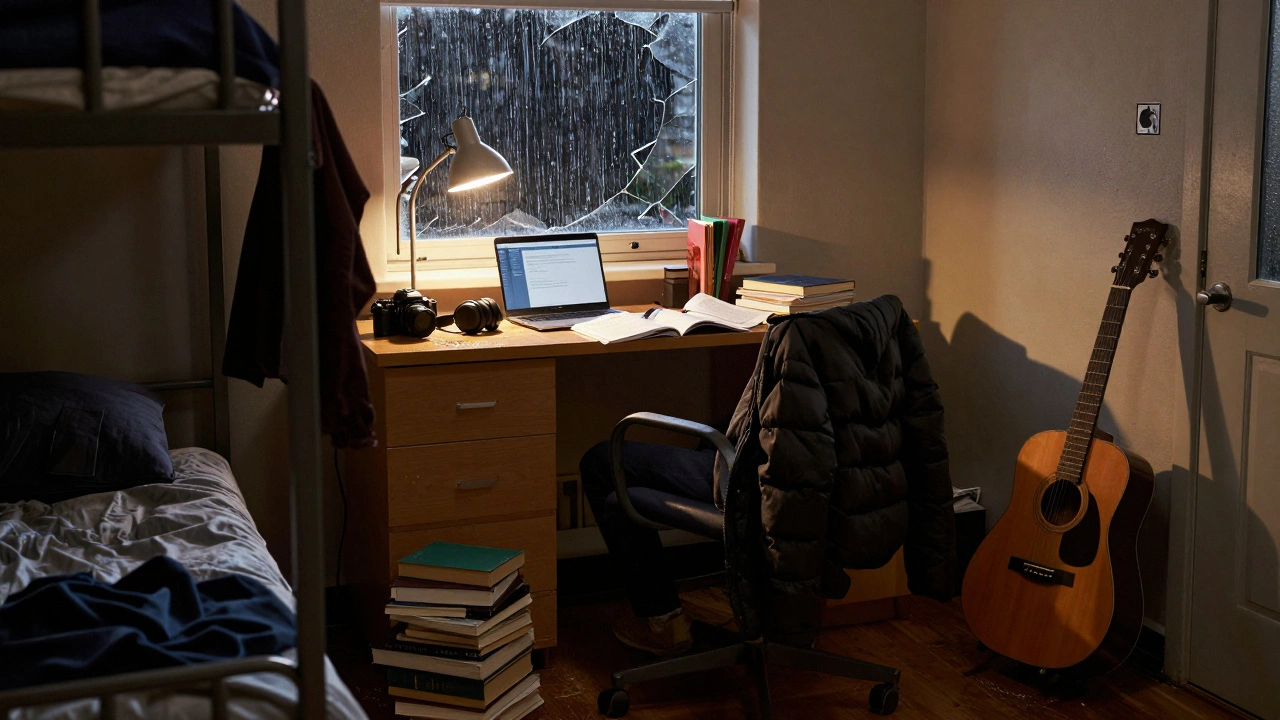
Living away from home for the first time as a student in the UK means more than just packing clothes and textbooks. It means protecting what you own-your laptop, your winter coat, your guitar, even your microwave. That’s where student accommodation insurance comes in. But not all policies are the same. Some cover you for theft, fire, or water damage. Others leave you exposed for things you’d never expect. And many students don’t even realize they’re underinsured until something breaks, gets stolen, or floods their room.
What student accommodation insurance actually covers
Most student accommodation insurance policies cover the basics: theft, fire, flood, and accidental damage. If someone breaks into your hall of residence and steals your laptop, your policy should pay to replace it. If a pipe bursts in your flat and ruins your books and clothes, you’re likely covered. But the details matter.
Typical coverage includes:
- Personal belongings-laptops, phones, cameras, clothes, musical instruments, and other items you bring from home. Most policies cap this at £3,000 to £5,000 total, with limits per item (like £500 for a single laptop).
- Accidental damage-spilling coffee on your roommate’s laptop, cracking a TV screen, or breaking a window. This is often included but not always.
- Fire and flood damage-if your room catches fire or water leaks from above, your belongings are protected.
- Theft from the property-if your room is burgled, even if the door wasn’t locked, most insurers will pay out.
- Liability cover-if you accidentally start a fire that damages the building or injure someone in your flat, this part covers legal costs and compensation.
Some policies even cover your belongings when you’re away from your room-like if your bike gets stolen from campus or your suitcase is taken during a train trip. But that’s rare. Always check if your policy includes away-from-home cover.
What student accommodation insurance doesn’t cover
Here’s where students get caught off guard. Just because you have insurance doesn’t mean you’re protected for everything.
- High-value items without extra coverage-if you have a £2,000 camera or a £1,500 gaming setup, most standard policies won’t cover them fully. You need to list them as high-value items and pay extra.
- Roommate’s belongings-your policy only covers your stuff. If your roommate’s PS5 gets stolen, their insurance pays, not yours. Many students assume they’re covered under a shared policy. They’re not.
- Damage caused by negligence-if you leave the kettle on and it causes a fire, you might still be covered. But if you leave the window open during a storm and water floods your room, the insurer could deny your claim.
- Loss or damage from pests-mice chewing through your cables, bedbugs ruining your mattress-those aren’t covered. You’re expected to keep your room clean and pest-free.
- Wear and tear-your hoodie’s zipper broke after two years? That’s not a claim. Insurance isn’t a replacement plan for old stuff.
- Student visas and travel documents-your passport, visa, or student ID card? Not covered. You can’t claim for replacing these.
One big gap? Student accommodation insurance rarely covers your deposit. If you break your lease early or cause damage to the property, your deposit is at risk. That’s not insurance-that’s a landlord’s security policy. You need separate renter’s insurance or a deposit protection scheme to cover that.
How much coverage do you really need?
Most universities recommend £3,000 to £5,000 in personal belongings cover. But that’s just a baseline. Look at what you actually own.
Let’s say you brought:
- Laptop: £1,200
- Phone: £800
- Wireless headphones: £300
- Winter coat and boots: £400
- Books and stationery: £200
- TV and gaming console: £1,000
- Camera: £1,500
That’s already £5,400. And you haven’t even added your guitar, printer, or clothes. If your policy caps at £3,000, you’re £2,400 short. That’s not insurance-that’s a gamble.
Pro tip: Take photos of your belongings when you move in. Keep receipts for anything over £500. If you need to file a claim, proof makes the difference between getting paid and getting denied.
Is your university’s insurance enough?
Many UK universities offer free or discounted insurance to students. Sounds great, right? Not always.
University policies often have:
- Low coverage limits (sometimes as low as £1,500)
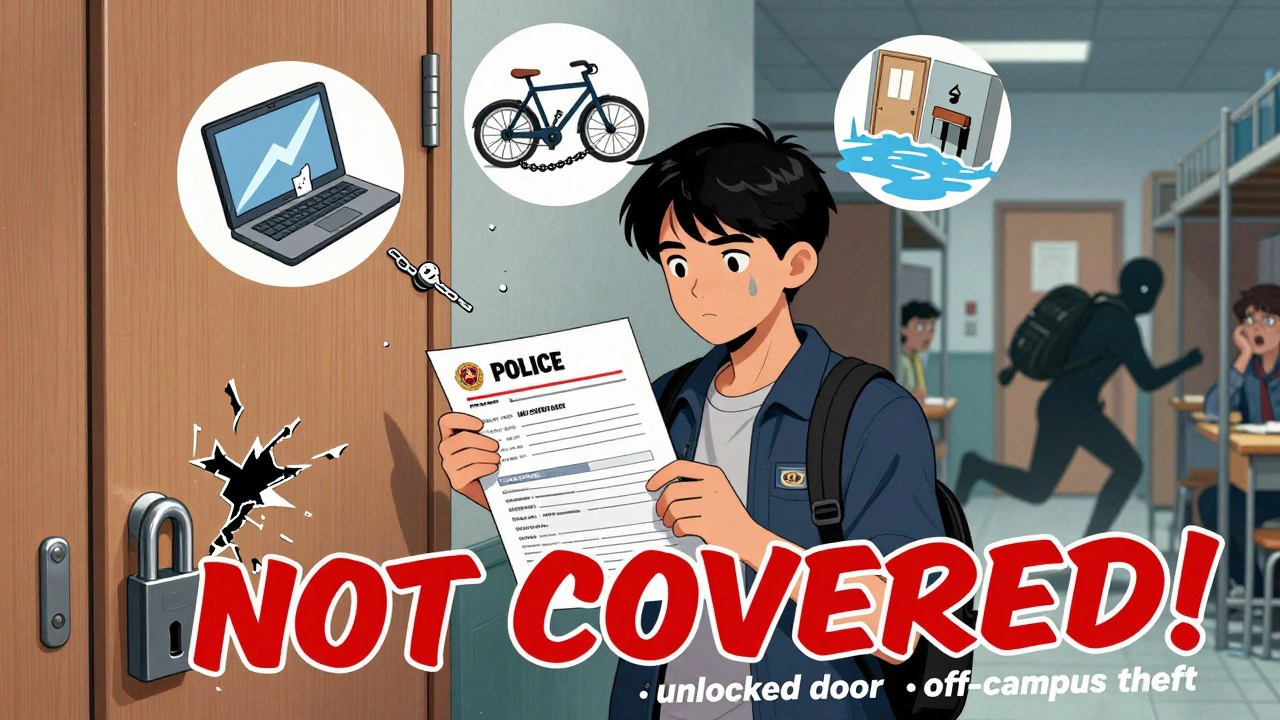
- Strict exclusions (no cover for theft if you didn’t lock your door)
- No away-from-home cover
- Slow claims processing
One student in Manchester had her laptop stolen from the library. Her university policy said it wasn’t covered because it wasn’t in her room. She had to pay £1,100 out of pocket. That’s not protection-that’s a loophole.
Check the fine print. If the policy doesn’t cover theft outside your room, or if it excludes laptops over £800, it’s not worth relying on.
How to choose the right policy
Don’t just pick the cheapest option. Look for these features:
- At least £5,000 in personal belongings cover-preferably £7,000+
- High-value item cover-lets you list expensive items with no extra charge or low premiums
- Accidental damage included-not as an add-on
- Away-from-home cover-covers your stuff when you’re traveling or studying abroad
- 24/7 claims line-you don’t want to wait three days to report a theft
- No lock requirement-some policies deny claims if you didn’t lock your door, even if it was a forced entry
Top providers for students in the UK include Endsleigh, AXA, and Cover4Students. Compare policies using comparison sites like MoneySuperMarket or Uswitch. Don’t trust the university’s default option without checking.
What happens if you don’t have insurance?
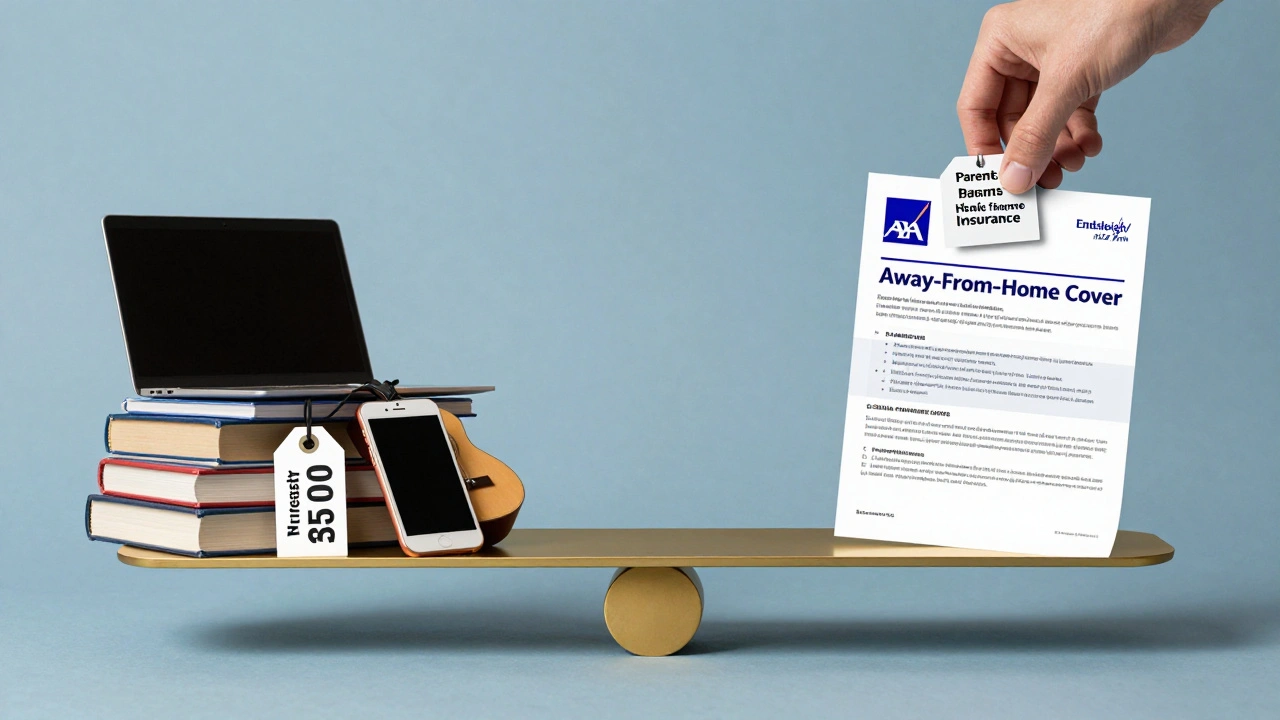
Students without insurance often assume their parents’ home insurance covers them. It doesn’t. Most home policies only cover belongings while you’re at home. Once you move out for university, you’re on your own.
Without insurance, you’re paying for everything yourself. A stolen laptop? That’s £1,200 gone. A flooded room? Your books, clothes, and electronics are ruined. A broken window? You’re on the hook for repairs.
And if you’re in a shared house, one person’s accident can cost everyone. If someone leaves the stove on and burns the kitchen, the landlord might charge the whole flat. Without liability cover, you could end up paying hundreds just because you were in the wrong place at the wrong time.
Claims process: what to do when something goes wrong
If something happens, act fast:
- Report theft to the police within 24 hours. Get a crime reference number.
- Take photos of the damage or missing items.
- Collect receipts or proof of purchase if you have them.
- Contact your insurer within 48 hours. Delayed claims get denied.
- Don’t throw anything away. Insurers may ask to inspect damaged items.
Some insurers offer instant replacements for laptops and phones through partner stores. Others pay out in cash. Know how your policy works before you need it.
Common myths about student insurance
- Myth: My parents’ insurance covers me.
Reality: It doesn’t. Most policies stop covering you once you move out for university. - Myth: I’m safe in a university hall.
Reality: Halls have higher theft rates than private flats. Dorms are easy targets. - Myth: I don’t have anything valuable.
Reality: A laptop, phone, and headphones are worth more than most people think. Replacing them costs thousands. - Myth: Insurance is too expensive.
Reality: Most student policies cost £50-£100 a year. That’s less than £10 a month. For most, it’s cheaper than replacing one item.
Student accommodation insurance isn’t optional. It’s the difference between recovering from a loss and being stuck with a huge bill. Don’t wait until it’s too late.
Does student accommodation insurance cover my bike?
It depends. Most policies cover bikes only if they’re stored inside your room or a locked storage area. If your bike is stolen from outside your building, you’re likely not covered unless you pay for extra away-from-home cover. Always check if your policy includes bicycles and what conditions apply.
Can I get insurance if I’m living in private rented accommodation?
Yes. Student accommodation insurance works the same whether you live in university halls or a private flat. Some policies are designed specifically for private renters and include cover for things like accidental damage to the property or landlord’s fixtures. Make sure your policy covers your specific living situation.
Do I need insurance if my university says it’s not required?
Yes. Just because it’s not required doesn’t mean it’s not necessary. Most students who lose belongings without insurance end up paying out of pocket. A single incident-a theft, fire, or flood-can cost more than a year’s insurance premium. Insurance is cheap protection against expensive surprises.
What if I’m sharing a house with non-students?
You can still get student insurance, but make sure it doesn’t exclude shared houses. Some policies only cover students living in university-managed accommodation. Look for policies labeled for "private rented student accommodation" or ask the insurer directly. Your non-student housemates will need their own insurance for their belongings.
Is my smartphone covered if I drop it and the screen breaks?
Only if your policy includes accidental damage. Many basic plans don’t. You’ll need to check if accidental damage is included or if it’s an add-on. Even then, there may be a £50-£100 excess you have to pay. Always confirm the terms before assuming your phone is covered.