
Every year, across universities in the UK, something special happens. It’s not a lecture, not an exam, and not even a pub night. It’s the roar of a crowd, the squeak of trainers on wet grass, and the raw energy of students pushing their limits-not for grades, but for pride. These are the Sports Days and Varsity Events, the heartbeat of student life beyond the lecture halls.
What Exactly Are Sports Days and Varsity Events?
Sports Days are usually one-day, campus-wide competitions held by individual universities. Think relay races, tug-of-war, sack races, and sometimes even quirky events like pie-eating contests or blindfolded football. They’re open to all students, no matter their skill level. The point isn’t to win a trophy-it’s to show up, cheer for your flatmates, and maybe embarrass yourself in a good way.
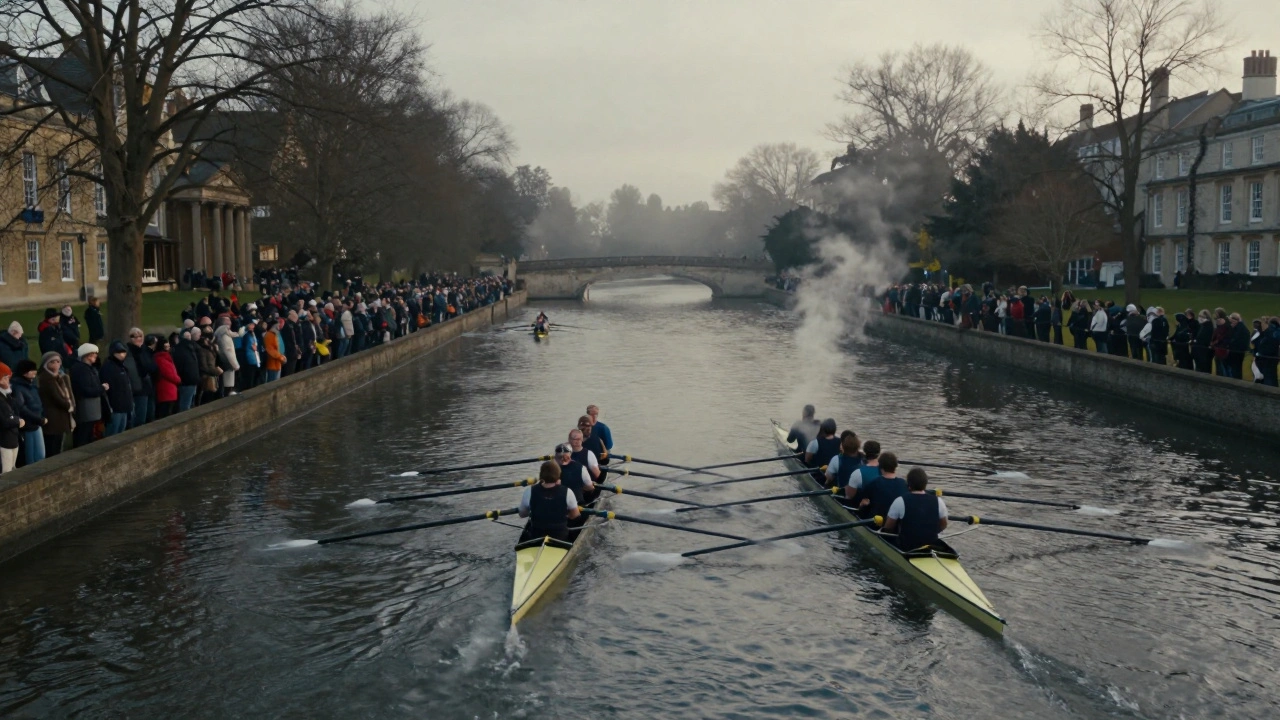
Varsity Events, on the other hand, are the big leagues. These are annual, high-stakes contests between two rival universities. The most famous is the Oxford vs. Cambridge Boat Race, which has been running since 1829. But it’s not just rowing. There’s Varsity Match in rugby, cricket, hockey, netball, and even fencing. These aren’t club games. They’re televised, sponsored, and attended by thousands. The winner gets bragging rights for a full year-and sometimes a trophy that’s older than most students’ grandparents.
Why Do These Events Still Matter Today?
With online classes, streaming services, and students juggling part-time jobs, you might think student sports have faded. But they haven’t. In fact, they’ve grown more important.
A 2023 survey by the UK Student Sport Federation found that 78% of students who participated in a Varsity Event said it improved their sense of belonging at university. That’s not just a nice feeling-it’s linked to lower dropout rates and better mental health. These events create bonds that last beyond graduation. Alumni still talk about the time they won the Varsity 400m or got covered in custard in the staff vs. student pie fight.
They also keep universities competitive. Schools like Durham, Loughborough, and Bath invest heavily in their sports programs. Loughborough alone has produced over 100 Olympic medalists since 2000. Their sports facilities aren’t just for athletes-they’re open to every student. And that openness is part of the magic.
The Biggest Varsity Rivalries in the UK
Not all rivalries are created equal. Some are historic. Others are just plain wild.
- Oxford vs. Cambridge (The Boat Race) - Held on the Thames in London every March. Over 250,000 people line the banks. The race lasts just under 20 minutes. But the preparation? Months of pre-dawn training, broken bones, and emotional breakdowns. It’s not just sport-it’s tradition with oars.
- Durham vs. Newcastle (The BUCS Varsity) - A full day of 30+ sports. In 2025, over 3,500 students competed. The winner is decided by a points system across everything from archery to ultimate frisbee. The losing university has to sing the winner’s anthem at the next pub quiz.
- St Andrews vs. Dundee (The Rivalry That Began With a Punt) - Started in 1970 after a student from St Andrews accidentally hit a Dundee student with a golf ball. Now it’s a full weekend of rugby, rowing, and a 10km charity run. The trophy? A giant rubber duck.
- University of Edinburgh vs. University of Glasgow - The oldest continuous Varsity series in the UK. First held in 1880. The football match is still played on the same pitch in Glasgow’s West End. The losing team buys the winning team’s entire football squad a round of Irn-Bru.
How Do Students Get Involved?
You don’t need to be an elite athlete. In fact, most participants aren’t.
At most universities, sign-ups open two months before the event. You can join a team as a player, volunteer as a marshal, help with marshalling, or even design the event T-shirt. Many students sign up just to get out of their rooms. One student from Cardiff told me: "I joined the tug-of-war team because I wanted to meet people who didn’t talk about dissertations. I ended up being captain. Now I’m studying sports psychology."
Universities often run "Try It" sessions in the weeks leading up to the event. You can try boccia, wheelchair rugby, or even quidditch (yes, it’s real). No experience needed. Just show up in trainers and a sense of humor.
The Impact Beyond the Finish Line
These events don’t just create memories. They build skills.
- Teamwork - You learn to rely on people you barely know. A teammate might be a biochemistry student who’s never run a mile. Another might be a literature major who’s never touched a rugby ball. But together, they win.
- Resilience - You’ll lose. You’ll fall. You’ll get soaked in rain or sunburned under a clear sky. But you’ll get back up. That’s something no lecture can teach.
- Leadership - Many students who never saw themselves as leaders end up organizing teams, managing logistics, or calming panicking teammates before a race.
Employers notice this. A 2024 study by the Higher Education Careers Service Unit found that 62% of recruiters said they valued Varsity participation more than a 2:1 degree when evaluating entry-level applicants. Why? Because it shows grit, initiative, and the ability to perform under pressure.

What’s Changing?
Tradition is strong-but not rigid.
More events now include para-sports. Wheelchair racing is part of the official scoring at most Varsity Days. Transgender athletes compete under clear, inclusive guidelines. And gender balance? It’s getting better. In 2025, 54% of participants in Varsity events were women-up from 38% in 2015.
Some universities are also moving away from "winning at all costs." Loughborough now awards "Spirit of the Event" trophies for teams that show the most sportsmanship. Durham introduced a "No Shouting" rule-no more chanting at opponents. It’s not about silence. It’s about respect.
What You’ll See If You Attend
Picture this: A chilly morning in March. A field lined with colorful tents. A mix of students in matching T-shirts, some in pajamas, others in full sports gear. Music blares from speakers. A professor is refereeing a three-legged race. A group of medics is on standby with ice packs and energy gels.
At the finish line, it’s not about who came first. It’s about who screamed the loudest. Who hugged the person who fell. Who stayed behind to help clean up. Who took a photo with the guy who finished last, then bought him a hot chocolate.
That’s the real win.
Are Sports Days only for athletes?
No. Sports Days are designed for everyone. You don’t need to be fast, strong, or skilled. Many events are non-competitive-like egg-and-spoon races, pie-throwing, or tug-of-war. The goal is participation, fun, and building community. Most participants have never played organized sports before.
How do Varsity Events differ from regular university sports?
Regular university sports are ongoing clubs or teams that train and compete throughout the year. Varsity Events are one-off, high-profile competitions between two rival universities. They’re bigger, more public, and often include dozens of sports in a single day. They’re also usually the highlight of the academic year for many students.
Do international students participate in UK Sports Days?
Yes, and they often bring unique energy. International students join teams, help organize events, and sometimes introduce new games from their home countries. Many universities have special welcome sessions to help them get involved. In 2025, over 20% of participants in Varsity events were international students.
Are these events still relevant in the age of online learning?
More relevant than ever. With remote learning, students often feel isolated. Sports Days and Varsity Events create real, physical connections. They’re one of the few times students from different faculties come together for a shared, non-academic purpose. Universities report higher retention rates and better mental health outcomes in schools with strong sports traditions.
Can I join a Varsity team if I’m not a student?
No. Varsity Events are strictly for enrolled students. Alumni sometimes return to cheer, but they can’t compete. Some universities have separate alumni events, but the official Varsity competitions are only for current students. This keeps the focus on student experience and community.
What Comes Next?
If you’re a student in the UK, don’t wait for someone to invite you. Find your university’s student union website. Look for "Sports Day" or "Varsity" under "Student Life." Sign up. Show up. Try something you’ve never done. You might not win. But you’ll leave with something better-a story, a laugh, and maybe a new friend.
And if you’re not a student? Go watch one. You’ll see what university life really looks like-not in brochures, not in lectures-but in the muddy boots, the cheering, and the quiet moments after the race when everyone just sits together, exhausted, and happy.