When life throws something unexpected at you-illness, family crisis, mental health struggles, or even just a bad stretch of luck-your studies shouldn’t have to pay the price. UK universities know this. That’s why they have formal processes for special considerations and academic extensions. But knowing they exist is only half the battle. Getting them requires knowing exactly how, when, and what to ask for.
What Counts as Special Circumstances?
Not every rough week qualifies. Universities in the UK aren’t looking for excuses. They’re looking for evidence of something that seriously disrupted your ability to study or perform. Common examples include:- Severe illness (physical or mental) lasting more than a few days
- Death or serious illness of a close family member
- Domestic violence or unsafe living conditions
- Significant financial hardship affecting your ability to focus
- Disability-related challenges not already covered by standard support
- Accidents or emergency situations (e.g., car crash, fire)
What doesn’t usually count? Running out of time because you procrastinated, missing a deadline because you forgot, or feeling stressed about multiple assignments. Universities expect you to manage workload-but they also expect life to happen. The key is whether the issue was outside your control and significantly impacted your performance.
How to Request an Extension
The process isn’t complicated, but timing matters. Most universities require you to apply before the deadline. If you wait until after you’ve missed it, you’re already in violation-and your chances drop sharply.- Check your department’s policy. Every faculty has its own rules. Some allow 7-day extensions automatically with a form. Others require medical evidence and a meeting. Start by visiting your department’s student support page or asking your personal tutor.
- Gather evidence. This isn’t optional. A doctor’s note, a death certificate, a letter from a counselor, or even a police report for a home incident-all of these help. Generic statements like “I’ve been unwell” won’t cut it. Be specific: dates, symptoms, treatment, how it affected your work.
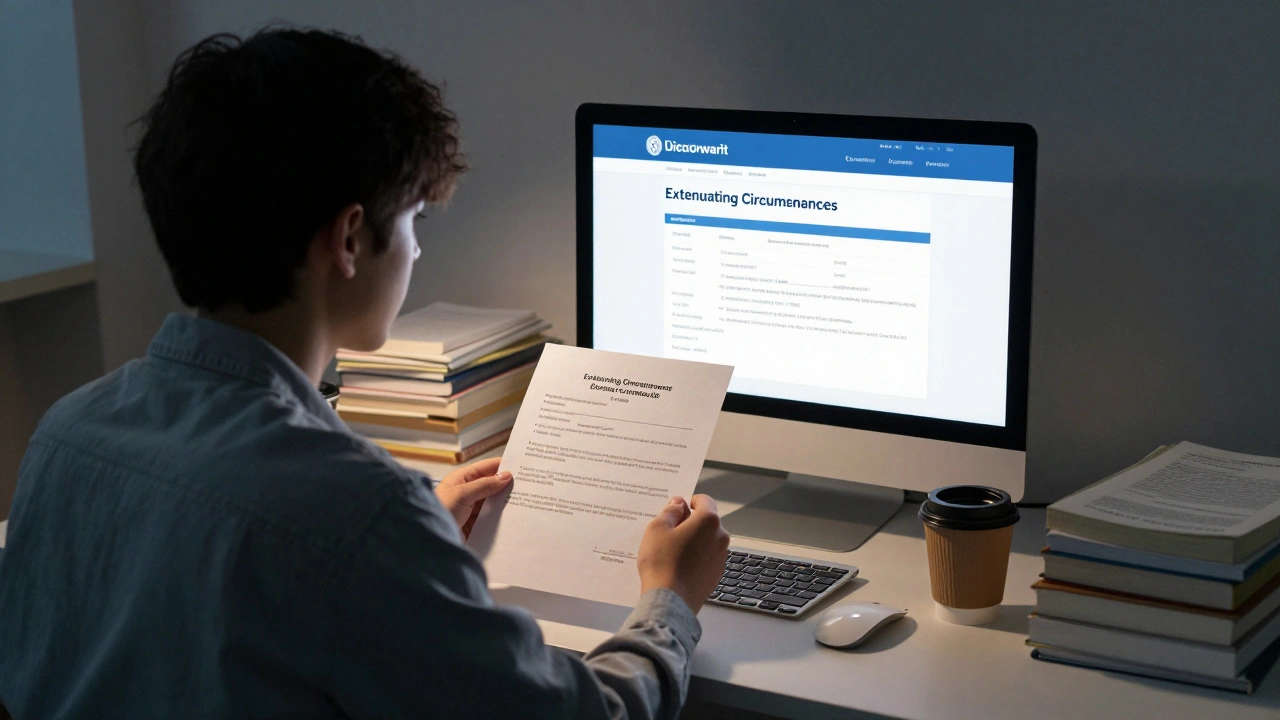
- Submit a formal request. Most universities use an online portal called something like “Extenuating Circumstances” or “Special Considerations.” Fill out every field. Don’t skip the “impact” section. Explain clearly: “I was hospitalized from March 1-7 and unable to complete my essay draft.”
- Follow up. If you don’t hear back in 3-5 working days, email the student services office. Don’t wait. Delays can cost you your deadline.
Some departments offer emergency short-term extensions (24-72 hours) for last-minute crises. But don’t assume this is automatic. You still need to notify them.
What About Exams?
If you’re unwell on exam day, you’re not alone. Thousands of UK students request special arrangements every year. You can apply for:- Extra time (25%, 50%, or even 100% more depending on need)
- A separate room (for anxiety, sensory issues, or medical needs)
- Breaks during the exam
- Use of a computer or scribe
- Rescheduling the exam to a later date
For exams, you usually need to notify the exam office on the day-either before the exam starts or immediately after if you’re too unwell to sit it. Bring your evidence with you. If you don’t show up without notice, you’ll likely get a zero. But if you report it properly, you can often take the exam later without penalty.

What Happens After You Apply?
Once submitted, your case goes to a committee. They review your evidence, your academic history, and whether your request is consistent with past patterns. If you’ve never requested an extension before, that helps. If you’ve had multiple requests in one term, they may ask for more details or refer you to counseling services.Outcomes vary:
- Approved: You get the extension, extra time, or rescheduled exam. No penalty.
- Partially approved: You get less than you asked for-maybe 3 days instead of 7. This is common.
- Denied: Rare, but happens if evidence is weak or inconsistent. You’ll usually get a written explanation.
- Referred: You’re asked to meet with a student support advisor or disability officer to discuss long-term solutions.
Important: Even if your request is denied, you can appeal-but only if you have new evidence or can prove the decision was unfair. Appeals take time, so don’t delay.
What You Shouldn’t Do
There are common mistakes that hurt your chances:- Waiting until after the deadline to ask
- Asking a friend to email on your behalf without your formal submission
- Using vague language: “I’ve had a tough time” instead of “I had a panic attack on March 3 and was under psychiatric care until March 10”
- Forgetting to attach documents
- Assuming your tutor will automatically know-always submit officially
Also, don’t try to negotiate directly with your professor. They don’t have the authority to grant extensions. That power lies with the academic office. Go through the official channel every time.

Long-Term Support: Beyond One Extension
If this isn’t your first time, you might need more than a one-off fix. UK universities offer formal accommodations for students with ongoing issues:- Disability Support Services: For diagnosed conditions like ADHD, autism, depression, or chronic illness. They can arrange exam adjustments, note-takers, or flexible deadlines across semesters.
- Academic Mentoring: Some universities assign mentors to help students manage workload and deadlines.
- Wellbeing Advisors: Free, confidential support for stress, anxiety, or personal crises.
These aren’t perks-they’re legal rights under the Equality Act 2010. If you’ve struggled repeatedly, register with your university’s disability office. It takes time to set up, but once done, you won’t have to reapply every time.
Real Examples That Worked
A student in Manchester missed a final essay because she was in the hospital after a car accident. She submitted her ER report, a doctor’s letter, and a timeline of how her recovery affected her ability to write. She got a 10-day extension and a pass without penalty. Another student in Edinburgh had a family member die the day before his exam. He emailed the exam office within 2 hours, attached the death certificate, and requested a deferred sitting. He was offered the next available exam date with no mark deduction. These didn’t work because they were “lucky.” They worked because they followed the rules, provided clear evidence, and acted fast.What If You’re Still Not Sure?
Talk to your student union. Every UK university has a student advice service-free, confidential, and trained to help with exactly this. They’ve seen hundreds of cases. They know what evidence works. They can even help you draft your request.You’re not asking for special treatment. You’re asking for fair treatment. Universities are built to support students when life gets hard. But you have to ask-and you have to ask the right way.
Can I request an extension after missing the deadline?
It’s possible, but much harder. Most universities only accept late requests if you have strong evidence that something prevented you from applying earlier-like being hospitalized or in a crisis. Even then, approval isn’t guaranteed. Always try to submit before the deadline.
Do I need a doctor’s note for every request?
Not always, but it helps a lot. For health-related issues, a note from a GP, counselor, or hospital is the strongest evidence. For non-medical issues like bereavement or housing problems, official documents (death certificate, council letter, police report) work better than personal statements.
Will requesting an extension affect my grade?
No. If your request is approved, your work is assessed under the same standards as everyone else. Extensions don’t mean lower expectations-they mean you’re given the time you need to meet them. Your grade is based on the quality of your work, not the reason you needed extra time.
Can I get an extension for group projects?
Yes, but it’s trickier. You’ll need to show how your situation specifically affected your contribution. The group may still be expected to meet the deadline, so you’ll need to work with your team and the department to find a fair solution-like submitting your part late with approval.
How long does it take to get a decision?
Most universities respond within 3-5 working days. If you haven’t heard back by then, follow up. Delays can happen during busy periods like exam season, but you shouldn’t be left waiting more than 10 days.