
It’s 3:00 AM in a dorm room in Manchester. The blue light from your laptop is the only thing keeping you awake, and you’re staring at a blank page for an essay due tomorrow. You feel tired, but too wired to sleep. Sound familiar? For many UK students is a demographic facing unique academic pressures combined with lifestyle factors that disrupt circadian rhythms. You aren't just lazy; your brain is likely fighting against a schedule that doesn't match its natural biology. Poor sleep isn't just about feeling groggy-it directly impacts your emotional stability and cognitive sharpness. If you want to stop the cycle of low mood and scattered focus, you need to look at your Sleep Hygiene is the practice of maintaining consistent habits and environmental conditions that promote high-quality rest. It’s not about sleeping more hours; it’s about making those hours count.
Why Your Brain Needs a Reset
Your brain doesn't shut off when you close your eyes. During deep sleep, it consolidates memories and clears out metabolic waste products that accumulate during the day. This process, known as glymphatic clearance, is crucial for learning. If you skip this phase by staying up late, you're essentially trying to learn new material on a computer that hasn't been defragmented in weeks. Research from the University of Oxford suggests that students who maintain regular sleep schedules perform significantly better on complex problem-solving tasks than those with erratic patterns. It’s not magic; it’s biology. When you prioritize rest, you aren't just resting your body; you are optimizing the hardware that processes your studies.
Mood is the other half of the equation. Lack of sleep increases activity in the amygdala, the part of the brain responsible for emotional responses. This means minor stresses-like a difficult assignment or a social conflict-feel ten times worse when you’re sleep-deprived. By stabilizing your sleep, you stabilize your emotions. It’s a direct line between your bedtime and your ability to handle the next day without snapping or feeling anxious.
The Circadian Clock and Student Life
Most university timetables in the UK start early, often around 9:00 AM or even 8:00 AM for lab sessions. However, many students naturally drift toward a later wake-up time, especially on weekends. This mismatch creates what experts call "social jetlag." Imagine flying from London to New York every Monday and back to London every Friday. That’s the physiological toll of irregular sleep. To fix this, you need to anchor your rhythm. Pick a consistent wake-up time, even on weekends. Yes, it feels harsh on Saturday mornings, but it prevents the Sunday night crash that ruins your Monday productivity. Your body thrives on predictability. Give it a reliable signal, and it will deliver energy when you need it most.
Optimizing Your Dorm Room Environment
Student housing is rarely designed for optimal sleep. Thin walls, shared bathrooms, and bright hallway lights can make rest difficult. But you don’t need a luxury hotel to improve your environment. You just need to control three variables: light, temperature, and noise.
- Light: Use blackout curtains if possible. If you can’t block all light, use a comfortable eye mask. Light is the strongest signal for your circadian clock. Even a small amount of light from a streetlamp or phone screen can suppress melatonin production.
- Temperature: The ideal bedroom temperature is between 16°C and 18°C (60-65°F). Your core body temperature needs to drop slightly to initiate sleep. If your room is too warm, you’ll struggle to fall asleep. A fan or opening a window can help regulate this.
- Noise: If you live with flatmates, communication is key. Agree on quiet hours. If that’s not possible, invest in high-fidelity earplugs or a white noise machine. White noise masks sudden sounds like doors slamming or footsteps, preventing them from waking you fully.
Digital Detox: The Blue Light Trap
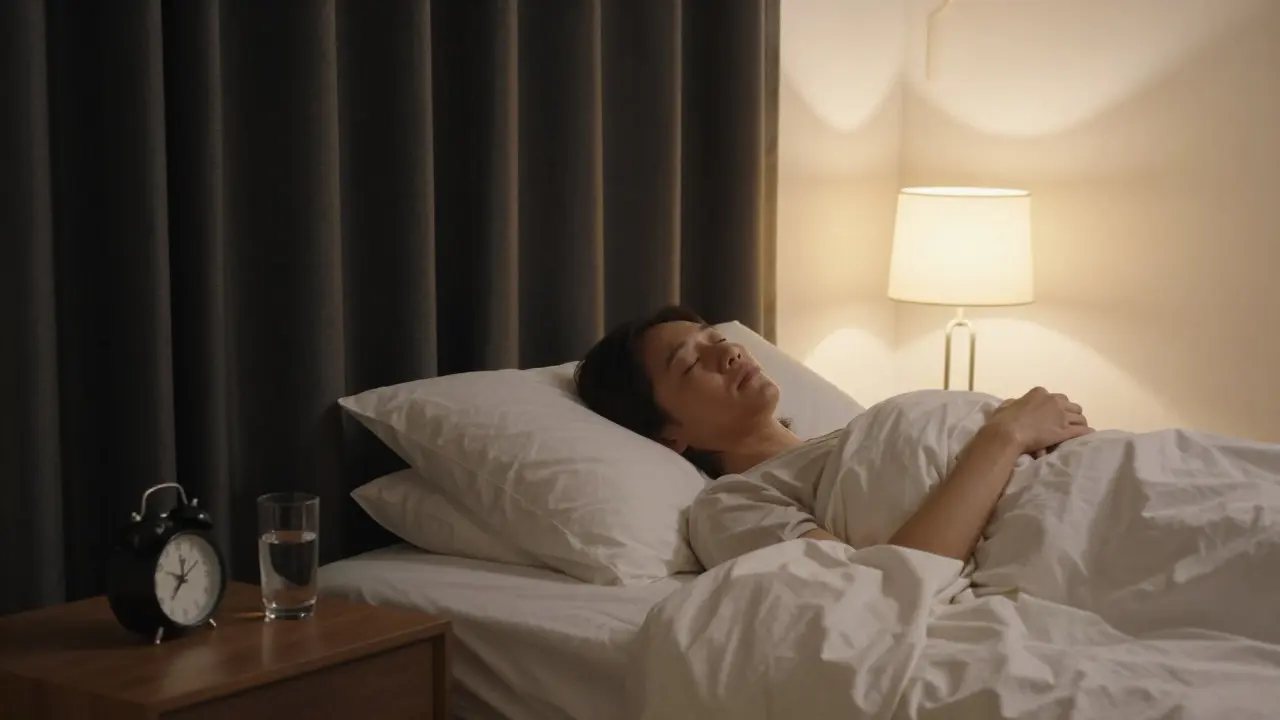
We know we should put our phones away, but why does it matter so much? Screens emit blue light, which tricks your brain into thinking it’s still daytime. This suppresses melatonin, the hormone that makes you sleepy. The effect lasts for hours after you turn the screen off. So, scrolling through social media at 11:00 PM doesn't just delay sleep; it actively inhibits the chemical process needed to fall asleep. Set a digital curfew. Charge your phone outside the bedroom or across the room. Buy a physical alarm clock if you rely on your phone for waking up. This single change can reduce the time it takes to fall asleep by up to 30 minutes for many people. It’s one of the highest-impact changes you can make with zero cost.
Caffeine and Alcohol: The Hidden Disruptors
Coffee is fuel for many students, but it has a long half-life. Caffeine stays in your system for six to eight hours. If you drink a double espresso at 4:00 PM, half of that caffeine is still active in your bloodstream at midnight. It may not keep you awake consciously, but it reduces the depth of your sleep. Try to cut off caffeine intake by 2:00 PM. Similarly, alcohol might help you fall asleep faster, but it fragments your sleep architecture. It suppresses REM sleep, which is vital for memory consolidation and emotional regulation. So, while a pint might help you nod off, it ensures you wake up feeling foggy and emotionally fragile. Moderation is key, but timing is everything.

Building a Wind-Down Routine
Your brain needs a transition period between high-alert study mode and low-energy sleep mode. Jumping straight from intense reading to bed is like slamming the brakes on a car going 70 mph. Create a 30-minute wind-down ritual. Dim the lights. Read a physical book-not a screen. Do some gentle stretching or meditation. The goal is to lower your heart rate and signal safety to your nervous system. Consistency is more important than the specific activity. Whether it’s journaling, listening to calm music, or taking a warm shower, doing the same thing every night trains your brain to recognize that sleep is approaching. This conditioning can drastically reduce sleep latency over time.
| Disruptor | Impact on Sleep | Actionable Solution |
|---|---|---|
| Blue Light Exposure | Suppresses melatonin, delays sleep onset | Set a 1-hour screen-free curfew before bed |
| Late Caffeine Intake | Reduces deep sleep duration | Stop consuming caffeine after 2:00 PM |
| Inconsistent Wake Times | Causes social jetlag, lowers alertness | Wake up at the same time daily, including weekends |
| Noisy Dorm Environment | Fragments sleep, prevents deep stages | Use white noise machines or high-fidelity earplugs |
| Alcohol Consumption | Suppresses REM sleep, causes morning grogginess | Limit intake to 1-2 drinks, finish 3 hours before bed |
Nap Strategy: Friend or Foe?
Napping can be a powerful tool, but only if done correctly. A short nap of 10 to 20 minutes can boost alertness and mood without causing sleep inertia-that groggy feeling you get when you wake up from deep sleep. However, napping longer than 30 minutes can pull you into deeper sleep stages, making you feel worse upon waking. Also, avoid napping after 3:00 PM, as it can interfere with your nighttime sleep drive. If you’re struggling with afternoon crashes, try a "coffee nap": drink a cup of coffee, then immediately take a 20-minute nap. The caffeine will kick in just as you wake up, giving you a double boost of alertness. Just remember, naps are a supplement, not a replacement for good night-time sleep.
When to Seek Help
Most sleep issues can be resolved with behavioral changes. However, if you’ve tried these routines for four weeks and still struggle to sleep, or if you experience loud snoring, gasping, or excessive daytime sleepiness despite adequate time in bed, you might have a sleep disorder like insomnia or sleep apnea. In the UK, you can access support through your GP or university counseling services. They can refer you to a sleep clinic if necessary. Don’t suffer in silence. Chronic sleep deprivation is a health issue, not a character flaw. Getting professional help is a sign of strength, not weakness.
How many hours of sleep do UK students actually need?
Most adults need between 7 and 9 hours of quality sleep per night. While some individuals function well on 6 hours, the majority of students performing at their best require at least 7.5 hours. Quality matters more than quantity, so focus on uninterrupted sleep cycles rather than just counting hours in bed.
Is it okay to sleep in on weekends to catch up?
Sleeping in by more than two hours on weekends can reset your circadian rhythm and cause "social jetlag," making Monday mornings harder. It’s better to go to bed earlier on Friday and Saturday nights rather than sleeping in excessively. Keep your wake-up time within a one-hour window of your weekday schedule.
Do I need special supplements to improve my sleep?
Usually, no. Melatonin supplements can help adjust your sleep-wake cycle, especially if you have jet lag or shift work, but they are not a cure for poor sleep hygiene. Prioritize environmental and behavioral changes first. If you consider supplements, consult a healthcare provider to ensure they are safe for you and won’t interact with other medications.
What if I can’t fall asleep because of anxiety?
Anxiety keeps your brain in a state of high alert. Try cognitive techniques like focusing on slow, deep breathing or progressive muscle relaxation. Avoid checking the clock, as this increases stress. If lying in bed for more than 20 minutes becomes stressful, get up, do a quiet activity in dim light, and return to bed only when sleepy. This reassociates your bed with sleep, not worry.
Does exercise help with sleep quality?
Yes, regular moderate exercise improves both sleep duration and quality. However, avoid intense workouts within 2-3 hours of bedtime, as the increase in body temperature and adrenaline can make it harder to fall asleep. Morning or afternoon exercise is generally best for promoting restful nights.