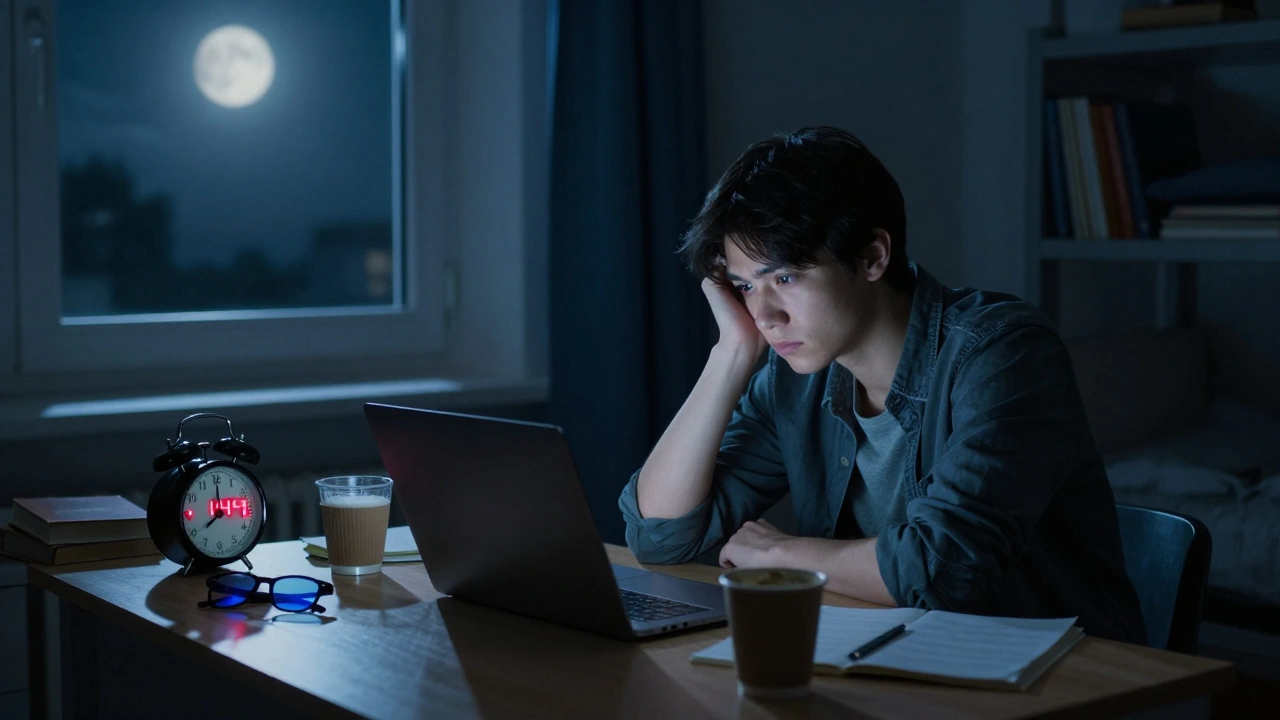
Most UK university students think pulling all-nighters is just part of the deal. You’ve got a essay due, a lab report to finish, and your flatmates are binge-watching a show in the next room. So you stay up. Again. But here’s the truth: sleep isn’t a luxury-it’s your brain’s reset button. And skipping it isn’t making you more productive. It’s making you slower, forgetful, and more stressed.
Why Sleep Matters More Than You Think
A 2024 study from the University of Cambridge tracked 1,200 UK undergraduates over one academic year. Students who slept less than 6 hours a night on average scored 17% lower on exams than those who got 7-9 hours. It wasn’t because they studied less. It was because their brains couldn’t process what they’d learned. Sleep is when your brain sorts through the day’s information, files it into long-term memory, and clears out mental clutter. No sleep? No retention. No focus. No problem-solving.
It’s not just grades. Lack of sleep messes with your mood, your immune system, and even your appetite. Students who sleep poorly are 2.3 times more likely to snack late at night on sugary or fatty foods, according to a 2025 report from the NHS. That’s not just a bad habit-it’s a cycle. Late-night junk food leads to blood sugar spikes, which disrupt sleep further. And the cycle keeps going.
The UK Student Sleep Problem: Real Numbers
Let’s get real. A 2025 survey by Student Minds found that 68% of UK university students regularly get less than 7 hours of sleep. One in four says they sleep under 5 hours on weeknights. Why? It’s not just studying. It’s:
- Scrolling through social media until 2 a.m.
- Drinking caffeine after 4 p.m. to stay awake
- Wearing blue-light glasses but still using phones in bed
- Trying to "catch up" on sleep weekends-only to crash harder on Monday
And here’s the kicker: 42% of these students say they don’t think their sleep habits are a problem. That’s the biggest barrier. You don’t fix what you don’t see as broken.
What Good Sleep Looks Like for Students
Good sleep isn’t about how long you’re in bed. It’s about consistency, quality, and routine. The NHS recommends:
- 7-9 hours per night, every night
- Going to bed and waking up within 30 minutes of the same time-even on weekends
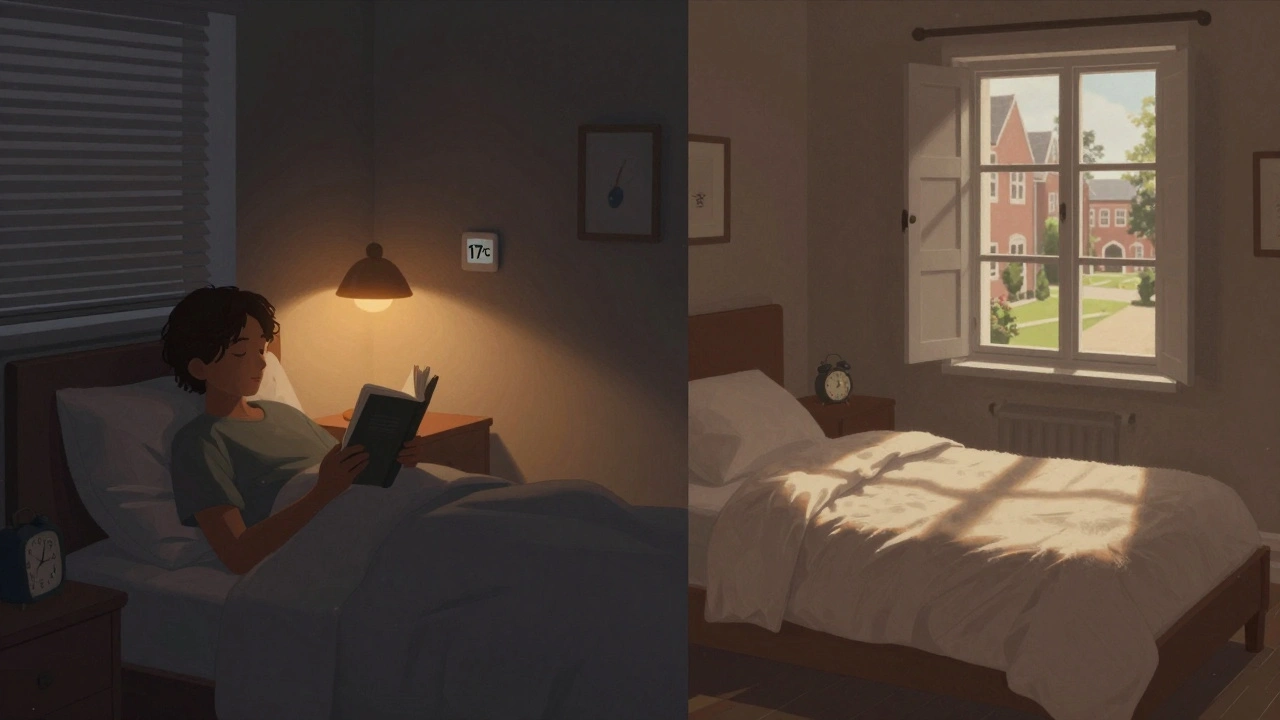
- Keeping your bedroom cool (16-18°C), dark, and quiet
- Using your bed only for sleep and sex-not studying, scrolling, or eating
That last one is critical. If your bed is also your desk, your snack zone, and your Netflix lounge, your brain stops associating it with rest. It’s like training a dog to sit: you need consistent cues. Your bed should be a cue for sleep.
Step-by-Step: Building Better Sleep Habits
Changing sleep habits doesn’t mean buying expensive gadgets or joining a sleep clinic. It’s about small, daily choices. Start here:
- Set a fixed bedtime alarm-not a wake-up alarm, a bedtime alarm. When it goes off, you stop studying, close your laptop, and start winding down.
- Switch off screens 60 minutes before bed. Blue light blocks melatonin, the hormone that tells your body it’s time to sleep. Use a book, a podcast, or just sit in dim light.
- Limit caffeine after 2 p.m. Coffee, energy drinks, even chocolate-anything with caffeine takes 6-8 hours to leave your system. That 3 p.m. latte? It’s still in your bloodstream at midnight.
- Get morning sunlight. Even 10 minutes outside before noon helps reset your internal clock. It tells your brain: "It’s daytime. Stay awake. Then sleep later."
- Don’t nap after 3 p.m. A 20-minute nap before lunch? Fine. A 90-minute nap at 5 p.m.? That’s stealing your nighttime sleep.
What Doesn’t Work (And Why)
You’ve probably tried some of these:
- Sleeping in on weekends-This throws off your rhythm. You feel fine Saturday, then crash on Sunday night. Monday feels like a hangover. Your body hates inconsistency.
- Drinking alcohol to "help" you sleep-It might make you feel drowsy, but it ruins deep sleep. You’ll wake up feeling foggy, even if you slept 8 hours.
- Using sleep apps that track your cycles-They’re fun, but they often create anxiety. If you’re obsessing over whether you got enough REM sleep, you’re stressing yourself awake.
- Buying expensive pillows or mattresses-Unless yours is broken, you don’t need a £800 mattress. Focus on routine, not gear.
What Helps: Real Student Hacks
Some students have cracked this. Here’s what works in real life:
- Study in the library, not your room-This creates a mental boundary. Your room = sleep. Library = work.
- Use a physical alarm clock-Put it across the room. You have to get up to turn it off. No snoozing in bed.
- Try the 20-minute rule-If you’re lying awake for more than 20 minutes, get up. Do something quiet and boring-read a dull book, fold laundry. Don’t check your phone. Go back to bed when you feel sleepy.
- Get a sleep buddy-Find one friend who also wants better sleep. Text each other: "Lights out at 11." Accountability works.
When to Ask for Help
If you’ve tried these steps for 4 weeks and still can’t sleep, you’re not alone. 1 in 5 UK students have a sleep disorder like insomnia or sleep apnea. It’s not weakness. It’s biology.
Most UK universities offer free, confidential sleep support through student health services. Some even have sleep coaching programs. Don’t wait until you’re failing exams or crying over deadlines. Talk to your GP or student wellness center. They can check for underlying issues like anxiety, depression, or restless legs syndrome-all of which affect sleep.
The Bigger Picture
Good sleep isn’t about being "productive." It’s about being human. Your brain needs downtime to repair itself. Your body needs rest to fight off colds. Your mood needs calm to handle stress. University isn’t a sprint. It’s a marathon-and you can’t run it on fumes.
Think of sleep like your GPA. You don’t need to ace every night. Just aim for 7 hours most nights. Miss one? No guilt. Get back on track tomorrow. Small wins add up. One week of 7-hour nights. Then two. Then three. Before you know it, you’re not just surviving university-you’re thriving.
How many hours of sleep do UK university students actually need?
Most UK university students need 7-9 hours of sleep per night. This isn’t a suggestion-it’s based on decades of sleep science. Teenagers and young adults (18-25) still need more sleep than older adults because their brains are still developing. Even if you feel fine on 6 hours, your memory, reaction time, and decision-making are still impaired. You’re not performing at your best.
Is it okay to catch up on sleep over the weekend?
Not really. Sleeping in on weekends might feel good, but it disrupts your body’s internal clock. This is called "social jet lag." You’re essentially living two different schedules: one for weekdays, one for weekends. Your body doesn’t adapt well to that. The result? You feel groggy on Sunday nights, struggle to wake up Monday, and end up more tired than before. Consistency-even on weekends-is the key.
Does caffeine affect sleep even if I don’t feel it?
Yes. Caffeine has a half-life of about 5-6 hours. That means if you drink a coffee at 4 p.m., half of it is still in your system at 10 p.m. Even if you don’t feel wired, your brain’s ability to enter deep sleep is reduced. A 2023 study in the British Journal of Sleep Medicine found that students who drank caffeine after 2 p.m. took 30% longer to fall asleep and spent 20% less time in deep sleep-even if they didn’t notice any difference.
Can I use melatonin supplements to fix my sleep?
Melatonin isn’t a sleeping pill-it’s a timing signal. It tells your body it’s nighttime. If you’re out of sync (like after traveling or pulling all-nighters), a low-dose (0.5-1 mg) melatonin supplement taken 90 minutes before bed can help reset your rhythm. But it won’t fix poor habits. If you’re still scrolling in bed or drinking coffee late, melatonin won’t help. Use it as a short-term tool, not a long-term fix.
What should I do if I’m too stressed to sleep?
Stress and sleep lock each other in a cycle. If you’re anxious, you can’t sleep. If you can’t sleep, you’re more anxious. Break the cycle with a 10-minute wind-down routine: write down your worries on paper (get them out of your head), do 5 minutes of slow breathing (inhale 4 seconds, hold 4, exhale 6), then turn off lights. Don’t try to "force" sleep. Just create calm. Your body will follow.