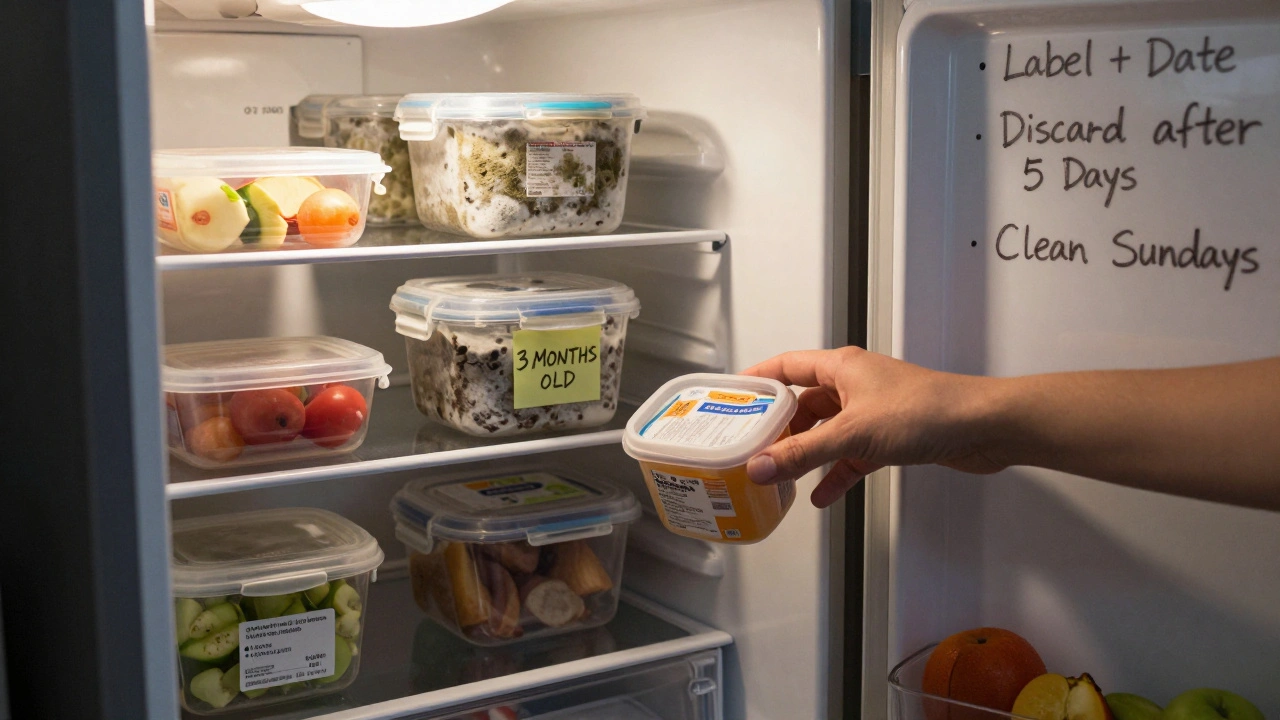
Imagine opening the fridge in your student flat and finding a container covered in mold, with a sticky note that says "DO NOT TOUCH - 3 MONTHS OLD". You’re not alone. This is the reality for most UK students sharing a kitchen. The shared fridge is the battleground of student life - a place where hunger meets neglect, and where hygiene rules are often ignored until someone gets sick. It doesn’t have to be this way.
Why Shared Fridges Become Chaos
Student kitchens aren’t designed for long-term food storage. They’re shared by 5 to 10 people, each with different schedules, diets, and levels of responsibility. A 2023 survey by the National Union of Students found that 68% of UK students have encountered spoiled food in the fridge at least once a term. Nearly 40% said they avoided eating from the fridge altogether because they couldn’t tell what was safe.
It’s not that students are messy on purpose. It’s that no one ever taught them how to share space properly. There’s no handbook. No sign on the wall. Just silence - until someone finds a half-eaten curry in a Tupperware that hasn’t been opened since October.
The Three Rules of Fridge Survival
If you want to keep your food safe and your flatmates sane, follow these three rules. They’re simple. They’re proven. And they’re the only thing standing between you and a food poisoning nightmare.
- Label everything. Your name. The date you put it in. What’s inside. That’s it. No one cares if your handwriting is messy. But they do care if they’re eating your expired yogurt. Use masking tape and a permanent marker. If you’re feeling fancy, buy pre-printed labels from the supermarket. It’s cheaper than replacing your entire kitchen after a salmonella scare.
- Check before you toss. Don’t just throw out anything that looks suspicious. Smell it. Look at the date. If it’s been there more than five days and isn’t sealed, it’s probably dead. But if it’s still sealed and within its use-by date? Give it a chance. Many students throw out perfectly good food because they’re scared of the unknown. That’s waste. And it’s expensive.
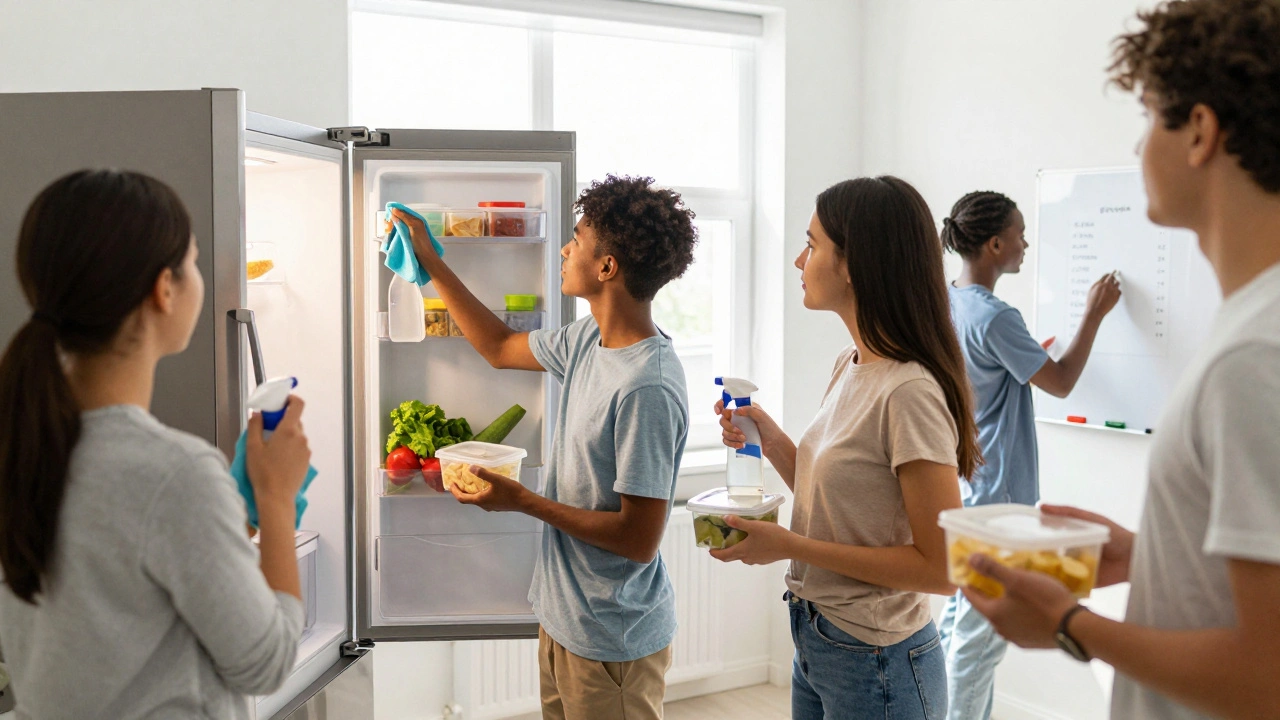
- Clean weekly. Pick one day a week - say, Sunday - and do a 10-minute fridge wipe-down. Take out everything. Wipe shelves with vinegar and water. Toss anything unlabelled. Put back what’s still good. It takes less time than scrolling through TikTok. And it stops the smell from becoming a permanent fixture in your kitchen.
What to Label - And What Not To
Not all food needs the same level of attention. Here’s what works:
- Label these: Leftovers, meal prep containers, yogurts, cheese slices, bottled drinks, anything in a reusable container.
- Don’t waste time on: Fresh fruit, unopened milk cartons, sealed packs of bread. These are obvious. If it’s still in its original packaging and has a clear expiry date, leave it alone.
But here’s the catch: if you put something in a container that wasn’t made for storage - like a takeaway tub or a jam jar - you must label it. People assume those are trash. And they’ll throw them out. Or worse, eat from them.
Hygiene Isn’t Optional - It’s Survival
Food poisoning doesn’t care if you’re stressed about exams. It doesn’t care if you’re broke. It just wants a warm, damp fridge and someone who forgot to wash their hands after handling raw chicken.
Studies from Public Health England show that improper food handling in shared kitchens is responsible for 32% of foodborne illness cases among students aged 18-24. That’s not a small number. That’s someone in your flat, curled up on the toilet, missing lectures because they ate something that sat in the fridge for two weeks.
Here’s how to avoid being that person:
- Wash your hands before touching food. Seriously. Even if you just microwaved something.
- Never leave raw meat out. If you bring it home, put it in a sealed container on the bottom shelf immediately. Raw meat drips. And that drip can spread bacteria to everything below it.
- Use separate containers for dairy, meat, and leftovers. Don’t stack them. Keep them apart.
- Don’t use the same spoon to taste and then put back. Use a clean one every time. Or better yet - don’t taste from the container at all. Pour a bit into a bowl.
And if you see someone else doing something dangerous? Don’t say nothing. Say something. Quietly. Politely. "Hey, that chicken’s been in there since last Tuesday. Mind if I toss it?" Most people will thank you. A few won’t. But you’ll still be the one who kept the kitchen safe.
What Happens When No One Follows the Rules
There’s a reason some student flats have a "Fridge War" every term. It starts small: someone takes your milk. Then they leave it out. Then they don’t label it. Then it goes off. Then you find it covered in black fuzz. Then you throw it out. Then they get mad. Then you get mad. Then the landlord gets a complaint.
Landlords don’t care who did what. They just see a fridge that smells like a compost heap. And they’ll charge the whole flat for cleaning. Or worse - they’ll threaten to evict everyone.
The solution isn’t punishment. It’s clarity. Put up a simple whiteboard near the fridge with three rules:
- Label with name + date.
- Discard unlabelled items after 5 days.
- Wipe down every Sunday.
That’s it. No fines. No lectures. Just a reminder. And if someone ignores it? Don’t argue. Just remove their food. And leave a note: "Removed. Not labelled. Date: March 3, 2026. - Flatmates".
It sounds harsh. But it works. And it’s better than spending £50 on a new fridge because someone left a curry in a plastic tub for six months.
Real-Life Examples That Work
At the University of Manchester, a group of third-year students created a "Fridge Charter" - a one-page poster with rules, emojis, and a checklist. They laminated it and taped it to the fridge. Within two weeks, complaints dropped by 70%. No one was perfect. But now, everyone knew the rules.
At Queen Mary University in London, a flat installed a shared Google Sheet. Each person added what they put in, the date, and when they took it out. If something wasn’t removed after five days, the system auto-reminded them. It sounds geeky. But it worked. And it stopped arguments before they started.
You don’t need tech. You don’t need a system. You just need consistency. And a little bit of courage.
What to Do When You’re the Only One Trying
Let’s be honest. You’re probably the only one who labels their food. That’s okay. You’re not doing it for them. You’re doing it for yourself.
Here’s what to do:
- Buy your own shelf. A small plastic bin or a wire rack you can slide in. Put your food there. Label it. Keep it separate.
- Use clear containers. If they can see what’s inside, they’re less likely to touch it.
- Take a photo of your food when you put it in. Send it to your flatmates group chat. "Just put my lunch in the fridge. Labelled. Date: March 10. Don’t touch."
It’s not about being annoying. It’s about being smart. If you’re the only one who follows the rules, you’ll be the only one with safe, fresh food. And that’s a win.
Final Tip: The 5-Day Rule
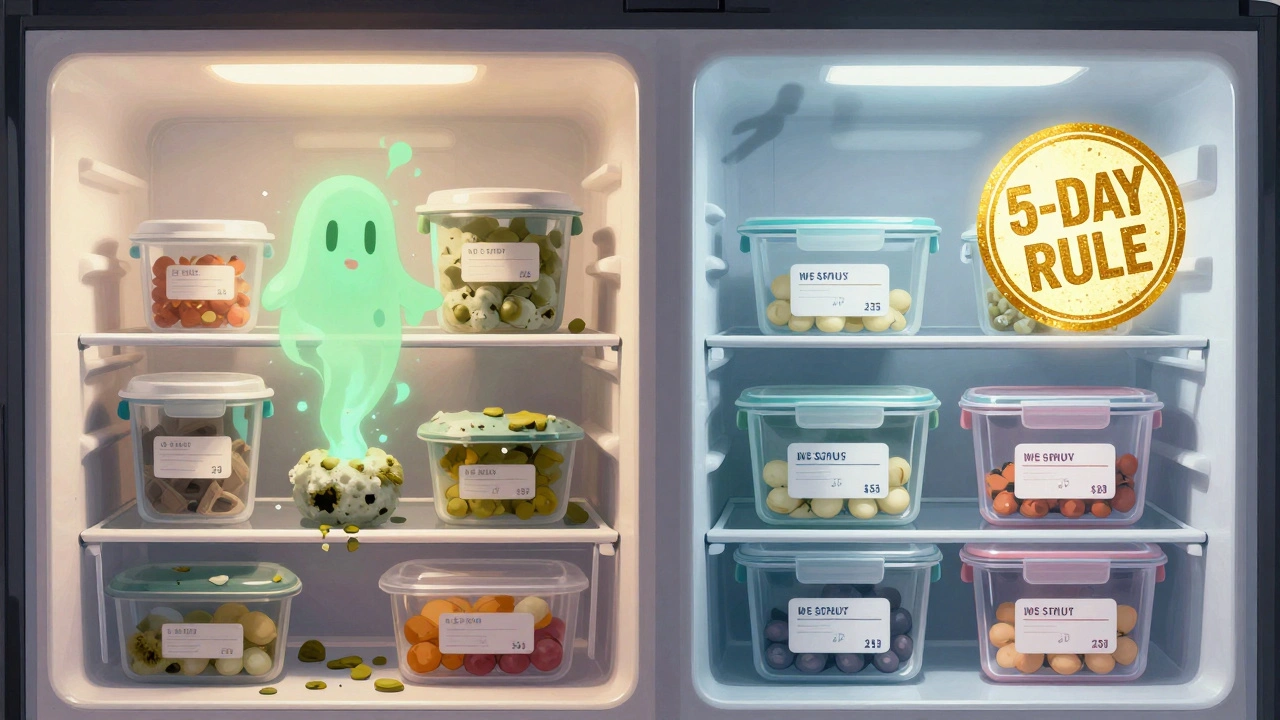
Here’s the golden rule of student fridge life: If it’s not labelled, and it’s been in the fridge longer than five days - throw it out.
That’s it. No exceptions. Not for "I think it’s still good." Not for "It’s my mum’s recipe." Not for "I paid £8 for this." Five days. After that, it’s not food. It’s a biohazard.
And if you’re ever unsure? Smell it. If it smells like regret, toss it.
What if someone keeps taking my food even though I labelled it?
First, check if it’s a mistake. Sometimes people grab the wrong container. If it’s happening repeatedly, talk to them. Say: "I noticed my food keeps disappearing. I’ve been labelling it - can we figure out what’s going on?" If that doesn’t work, switch to a lockable container. They’re cheap - under £10 online. Or use a small personal mini-fridge. Some student accommodations allow them. If not, ask your landlord. It’s better than losing your lunch every day.
Can I use my own fridge in a student flat?
It depends on your tenancy agreement. Some landlords allow small personal fridges (under 100 litres). Others ban them for safety or space reasons. Always ask first. If allowed, make sure it’s energy efficient. A small fridge you use only for your food is cheaper than constantly replacing spoiled groceries. It also cuts down on drama.
How do I clean the fridge without getting yelled at?
Don’t do it alone. Ask if anyone wants to help. Say: "I’m cleaning the fridge this Sunday. Want to join? We can split the vinegar and get it done in 15 minutes." If no one does it, do it anyway. Leave a note: "Fridge cleaned. All unlabelled items thrown out. Let’s keep it this way." Most people will appreciate it. A few won’t. But you’ll have set the standard.
Is it okay to put food in the freezer if it’s not labelled?
No. Freezers are even worse than fridges. Food can last months there - and no one checks. A frozen curry from last semester? It’s still there. And someone will eat it. Label everything in the freezer. Write the date and contents clearly. If you’re freezing homemade meals, use freezer bags and write on them with a marker. It’s the only way to avoid disaster.
What’s the best way to label food if I don’t have tape or markers?
Use a sticky note and a pen. If you don’t have either, write directly on the container with a permanent marker - most plastic and glass can handle it. If you’re in a pinch, use a piece of paper taped with sellotape. It’s not pretty, but it works. The goal isn’t perfection. It’s clarity. As long as someone can read your name and the date, you’ve done your part.