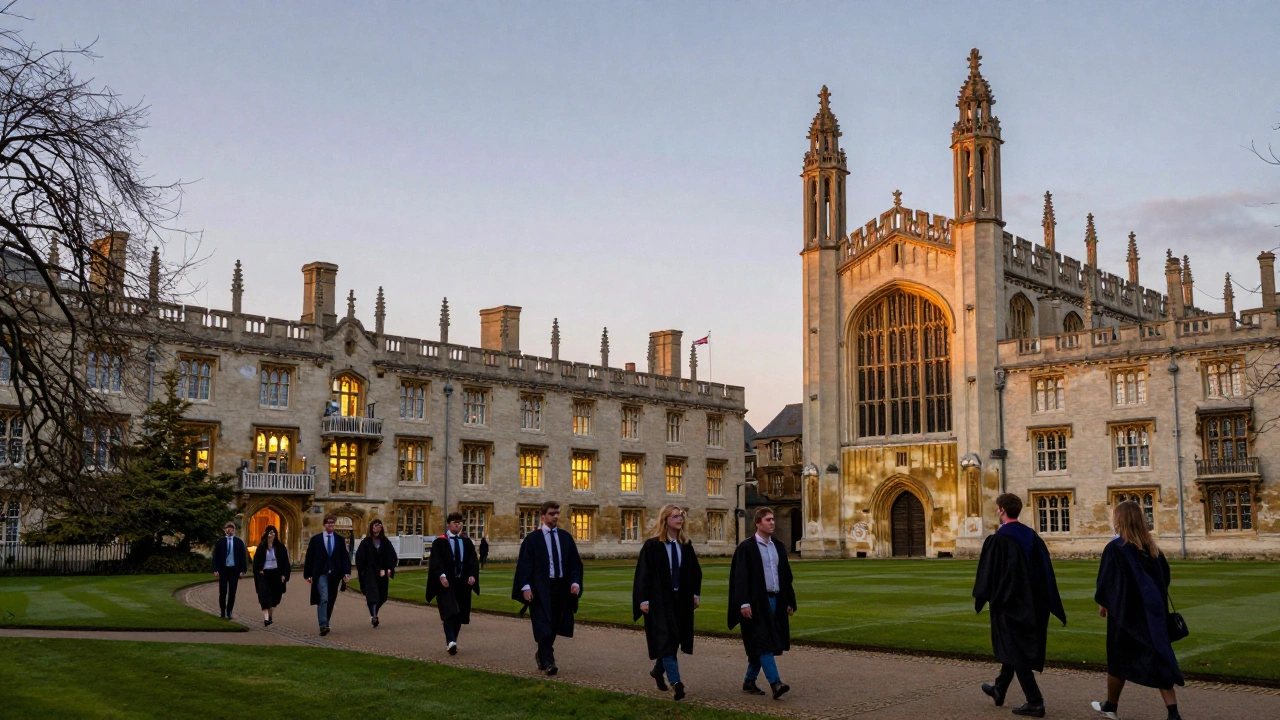
When you’re deciding where to study in the UK, you’ve probably heard the name Russell Group thrown around like it’s the only path to success. But what exactly is it? And more importantly-should you even care?
What Is the Russell Group?
The Russell Group is a self-selected alliance of 24 public research universities in the UK. These schools aren’t officially ranked by the government, but they’re known for three things: heavy research output, strong industry connections, and high academic standards. Think of them as the UK’s version of Ivy League schools in the U.S.-but with a very British twist.
They were formed in 1994 to represent universities that get the lion’s share of research funding. Today, they include famous names like Oxford, Cambridge, Imperial College London, UCL, Edinburgh, and Manchester. Together, they account for about 65% of all research funding in the UK and produce nearly 70% of the country’s top-tier research papers.
But here’s the thing: being in the Russell Group doesn’t mean every course is better. A student studying fine arts at Goldsmiths (not in the group) might get more studio time than someone at a Russell Group university. And a student in engineering at Sheffield Hallam might have better access to industry placements than a peer at a bigger, more prestigious school.
Why Do People Care So Much?
There are three big reasons the Russell Group gets so much attention.
- Employer recognition: Many UK employers-especially in finance, law, consulting, and engineering-still use Russell Group as a quick filter. It’s not foolproof, but it’s common. A 2023 survey by Graduate Market Trends found that 48% of recruiters said they actively prioritize applications from Russell Group universities, even if the degree subject didn’t match.
- Research opportunities: If you want to do a PhD, work in a lab, or publish early, Russell Group schools have the infrastructure. They offer undergraduate research placements, access to national facilities like the Diamond Light Source, and professors who are actively publishing. At Imperial, over 60% of undergrads in science programs get to work on real research projects before graduation.
- Global reputation: Outside the UK, especially in Asia and North America, the name carries weight. A degree from UCL or LSE opens doors in international job markets more easily than a similar degree from a non-Russell Group school.
But again-this doesn’t mean every student there thrives. Some students at top Russell Group schools feel overwhelmed. The pressure to perform is real. Dropout rates are higher at Oxford and Cambridge than at many regional universities. And not every Russell Group university has a strong student support system.
What’s the Real Cost?
There’s a hidden price tag that doesn’t show up on tuition bills.
First, entry requirements. Russell Group universities typically ask for A-level grades like A*AA or higher. For international students, that often means an IB score of 38+ or a high SAT/ACT score. If you’re coming from a school that doesn’t have strong academic support, this can feel impossible.
Second, cost of living. Most Russell Group schools are in expensive cities: London, Edinburgh, Oxford, Cambridge. Rent in student housing there can cost £1,000-£1,500 per month. That’s nearly double what you’d pay in cities like Leicester or Plymouth. And while scholarships exist, they’re fiercely competitive.
Third, the social pressure. A 2024 study from the Higher Education Policy Institute found that students at Russell Group universities were 37% more likely to report feeling isolated or anxious than students at non-Russell Group institutions. Why? The competition is intense. The expectation to be ‘the best’ is constant.

Who Should Apply?
Not everyone should aim for the Russell Group. But here’s when it makes sense:
- You’re certain about a research-heavy field like physics, medicine, engineering, or economics.
- You’re confident in your academic ability and thrive under pressure.
- You plan to work in the UK or internationally in fields where prestige matters-like law, finance, or global NGOs.
- You have the financial support or scholarships to cover higher living costs.
If any of those don’t apply to you, you’re not behind. Many non-Russell Group universities offer better teaching, smaller class sizes, and stronger graduate outcomes in practical fields. For example:
- University of Surrey has one of the highest graduate employment rates in the UK for engineering.
- King’s College London (a Russell Group member) and University of East Anglia (not) have nearly identical law graduate salaries.
- University of Strathclyde in Glasgow has a 95% graduate employment rate in business, beating several Russell Group schools.
What If You Don’t Get In?
Rejection from a Russell Group university isn’t the end. In fact, many students who didn’t get into their first-choice Russell Group school end up happier and more successful.
Here’s what works:
- Transfer after your first year. Many Russell Group schools accept transfers from other UK universities with strong grades.
- Apply for a postgraduate degree. A master’s from a Russell Group university is often more valuable than an undergraduate degree from one-especially if you’ve built a strong portfolio or work experience first.
- Focus on skills, not names. Employers in tech, creative industries, and startups care more about your portfolio, internships, and projects than your university logo.
One student I spoke with-Maria, from Birmingham-got rejected from Oxford for economics. She went to the University of Warwick instead. She interned at a fintech startup during her second year, published a research paper on student debt, and landed a job at Goldman Sachs in London. Her degree? Not from a Russell Group school. Her experience? Perfect.

How to Decide
Here’s a simple checklist to help you decide:
- What field do you want to study? (If it’s medicine, engineering, or law-Russell Group has advantages. If it’s art, design, or social work-look elsewhere.)
- Can you handle high pressure? (Ask yourself: Do you thrive in competition, or do you need space to grow?)
- What’s your budget? (Can you afford London rent? Or would you be stressed by debt?)
- Where do you want to work after graduation? (If it’s in the UK, prestige helps. If it’s in tech startups or freelancing, skills matter more.)
- Have you visited campuses? (Some Russell Group schools feel cold and impersonal. Some non-Russell Group schools feel like home.)
There’s no single right answer. The best university for you isn’t the most famous one. It’s the one where you’ll learn the most, feel supported, and leave with clear next steps.
Alternatives to Consider
You don’t need to choose between Russell Group and nowhere. Here are other strong options:
- University of St Andrews (not in Russell Group, but often ranked higher than some members-excellent for humanities and sciences).
- University of Bath (top for engineering and architecture, with industry links rivaling Imperial).
- University of Exeter (strong in environmental science and business, great student satisfaction scores).
- University of Glasgow (historic, affordable, and highly respected in medicine and law).
Some of these schools have lower entry requirements, better student support, and just as strong graduate outcomes. Don’t ignore them just because they’re not in the Russell Group.
Final Thought
The Russell Group isn’t a guarantee of success. It’s a label. And labels can be useful-but they can also blind you.
What matters more than the name on your degree? Your grades. Your internships. Your projects. Your network. Your resilience.
If you get into a Russell Group school and use it well? Great. But if you go somewhere else, work hard, and build something real? You’ll still be ahead of the game.
Are Russell Group universities better than other UK universities?
Not necessarily. Russell Group universities are research-heavy and have strong reputations, especially in fields like law, medicine, and engineering. But many non-Russell Group schools offer better teaching, smaller class sizes, and higher graduate employment rates in practical fields like design, education, and tech. What matters most is the course, location, support services, and your fit-not the label.
Do employers only hire from Russell Group universities?
No. While some large firms in finance, law, and consulting still use Russell Group as a filter, most employers today focus on skills, experience, and portfolios. Tech startups, creative industries, and public sector jobs rarely care about the university name. A 2024 survey found that 61% of UK employers now prioritize internships and project work over where someone studied.
Is it harder to get into Russell Group universities?
Yes. Entry requirements are typically higher. For example, Oxford and Cambridge often ask for A*AA or higher at A-level, while many non-Russell Group schools accept ABB or even BBB. International students also face stiffer competition for spots. But if you don’t get in, it doesn’t mean you’re not capable-you just might be better suited elsewhere.
Can I transfer to a Russell Group university later?
Yes. Many Russell Group universities accept transfer students after the first year, especially if you’ve earned top grades (usually a 2:1 or higher). This is a smart strategy for students who didn’t meet entry requirements initially or want to start at a more affordable or supportive school before moving up.
Are Russell Group universities worth the higher cost?
It depends. If you’re studying a research-intensive field and plan to work in a prestige-driven industry, the cost might pay off. But for many students, the higher rent, tuition, and pressure aren’t matched by better outcomes. Non-Russell Group schools like Surrey, Strathclyde, or Bath often offer similar job prospects at lower costs and less stress.