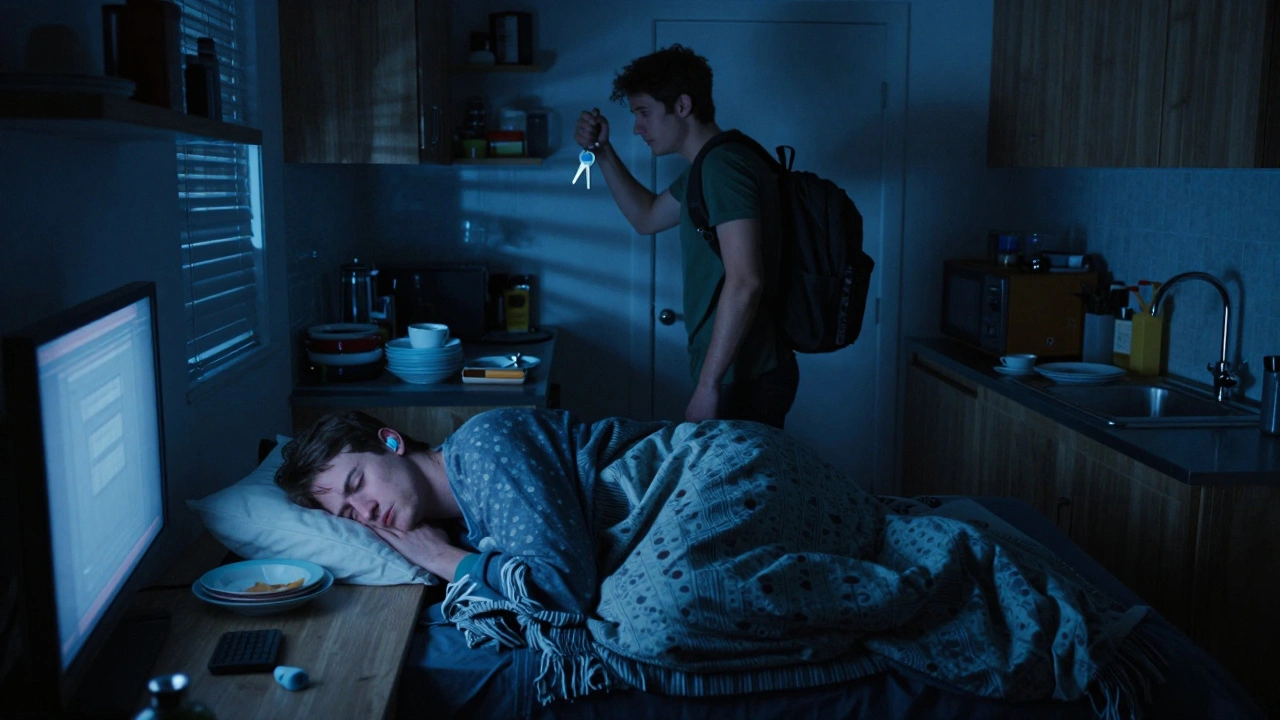
Living with roommates in the UK isn’t just about sharing a kitchen or splitting the rent. It’s about surviving term time without screaming into a pillow at 2 a.m. because someone left the dishes for three days or blasted music while you were trying to sleep. The right roommate can make uni life easier. The wrong one? It can turn your degree into a stress test. So before you sign that contract, ask the right questions. Not the polite ones. The real ones.
What are your sleep habits?
This isn’t about being a night owl or an early bird. It’s about whether someone comes home at 3 a.m. after a party and turns on the TV at full volume. Or if they snore loudly enough to wake the whole flat. Ask directly: "Do you usually go to bed before midnight? Do you ever have people over late?" Don’t settle for "I’m usually quiet." Ask for examples. If they say "I’ve had friends stay over before," dig deeper. "How often? What time did they leave?" A student who says "I sleep with earplugs" might be trying to hide a habit. Someone who says "I’m asleep by 11, lights off by 10:30" is giving you real data.
How do you handle cleaning?
Every flat has that one person who thinks the sink is a compost bin. Ask: "Do you clean your own space? What about shared areas?" Don’t assume they’ll follow a cleaning roster. Ask if they’ve lived with others before and what went wrong. If they say "We just did a rota," ask what happened when someone skipped their turn. Real answers: "My last flatmate never cleaned the bathroom, so I started doing it every week." Or: "We had a WhatsApp group for reminders, and it worked." Avoid vague replies like "I’m tidy." Tidy is subjective. One person’s tidy is another’s disaster zone.
How do you feel about guests?
Is it okay for your roommate to have a partner over every Friday? What about a friend staying for a weekend? Or a whole group of people crashing for a movie night? Ask: "What’s your limit?" Some students treat their room like a hotel. Others get anxious if someone else touches their side of the sofa. If they say "I don’t mind," press further. "What if someone stayed for three nights in a row?" Or: "What if they used your shower every day?" A student who says "I’d be fine if they cleaned up after" shows awareness. One who says "I don’t care as long as they pay for food" might be hiding a deeper issue.
How do you handle money and bills?
Bills are the #1 reason flatmates split up. Ask: "Do you pay on time? What if someone forgets?" Some students pay exactly on the due date. Others pay a week late and expect you to cover the difference. Ask if they’ve ever had a late payment issue. If they say "I’ve never had a problem," ask how they handle it when someone else does. A good answer: "I send a reminder the day before. If they’re late, I pay it and they reimburse me the next day." A red flag: "I just cover it and hope they remember." That’s a recipe for resentment.

What’s your stance on noise and music?
One person’s chill lo-fi playlist is another’s migraine trigger. Ask: "Do you listen to music with headphones?" If they say "Sometimes," ask when and how loud. "Do you ever play music out loud?" If they say "Only when I’m alone," ask: "What about when friends visit?" A student who says "I only play music out loud if I’m cooking" is being honest. One who says "I don’t really think about it" is a risk. Also ask about TV volume. Are they the type to watch Netflix at full blast while you’re trying to study? Or do they use subtitles because they don’t want to disturb anyone?
How do you handle food?
Food theft is real. So is the "I’ll just take a bit" mentality. Ask: "Do you eat from the fridge? Do you label your stuff?" Some students label everything with neon tape. Others leave a half-eaten yogurt in the back for weeks. Ask if they’ve ever had food stolen. If they say "No," that’s suspicious. If they say "Yes, and I started labeling everything," that’s a sign they learned. Also ask about shared groceries. Do they expect you to buy milk for both of you? Or do they always chip in? A student who says "I always pay my share for communal items" is trustworthy. One who says "I just take what I need" is not.
How do you handle conflict?
This is the most important question. Not because you want drama - but because you want to avoid it. Ask: "What do you do if something bothers you?" If they say "I ignore it," run. If they say "I talk about it right away," that’s gold. Ask for an example. "Have you ever had a problem with a roommate? How did you fix it?" A good answer: "I told them straight: ‘The dishes are piling up. Can we set a schedule?’ We did, and it worked." A bad one: "I just moved out." That tells you they don’t solve problems - they escape them.
What’s your vibe around privacy?
Some students treat the flat like a shared dorm. Others need their own space. Ask: "Do you mind if I lock my door?" If they say "No, I don’t," that’s fine. If they say "I don’t lock mine," ask why. "Do you mind if I have people over without telling you?" A student who says "I like to know who’s around" is thoughtful. One who says "I don’t care what you do" might be emotionally detached - or worse, manipulative. Privacy isn’t about being antisocial. It’s about boundaries.
What are your long-term plans?
Are they staying for the full year? Or do they plan to move out after Christmas? Are they studying abroad next term? Are they taking a gap semester? If they’re only there for term one, you’re stuck with someone else for the rest. Ask: "Do you plan to stay here the whole academic year?" Don’t assume. Some students sign a 12-month contract but have no intention of staying. That’s not dishonest - it’s common. But you need to know. If they’re leaving early, ask if they’ll help find a replacement. If they say "I’ll leave it to you," that’s a red flag.
What’s your pet policy?
Even if you hate pets, someone else might want one. Ask: "Are you okay with pets?" Even if you’re allergic, you need to know. Some landlords allow pets. Some flats have mice because a past tenant left a hamster behind. Ask: "Has there ever been a pet here?" If they say "No," ask: "Would you be okay with one?" A student who says "I love cats, but I’d never get one here because of the lease" is honest. One who says "I don’t mind" but then mentions their ex’s dog might be hiding something.
What’s your emergency plan?
What happens if you get sick? If you’re locked out? If the boiler breaks? Ask: "Do you have a key to the flat?" If they say "No," ask who does. Who do you call if the water’s leaking? Is there a maintenance contact? Do you have a list of emergency numbers? If they say "I don’t know," that’s a problem. You need to know who to call when the lights go out or the pipes burst. A roommate who says "I’ve got the landlord’s number saved" is reliable. One who says "I think it’s in the folder" might not even know where the folder is.
Final tip: Trust your gut - and get it in writing
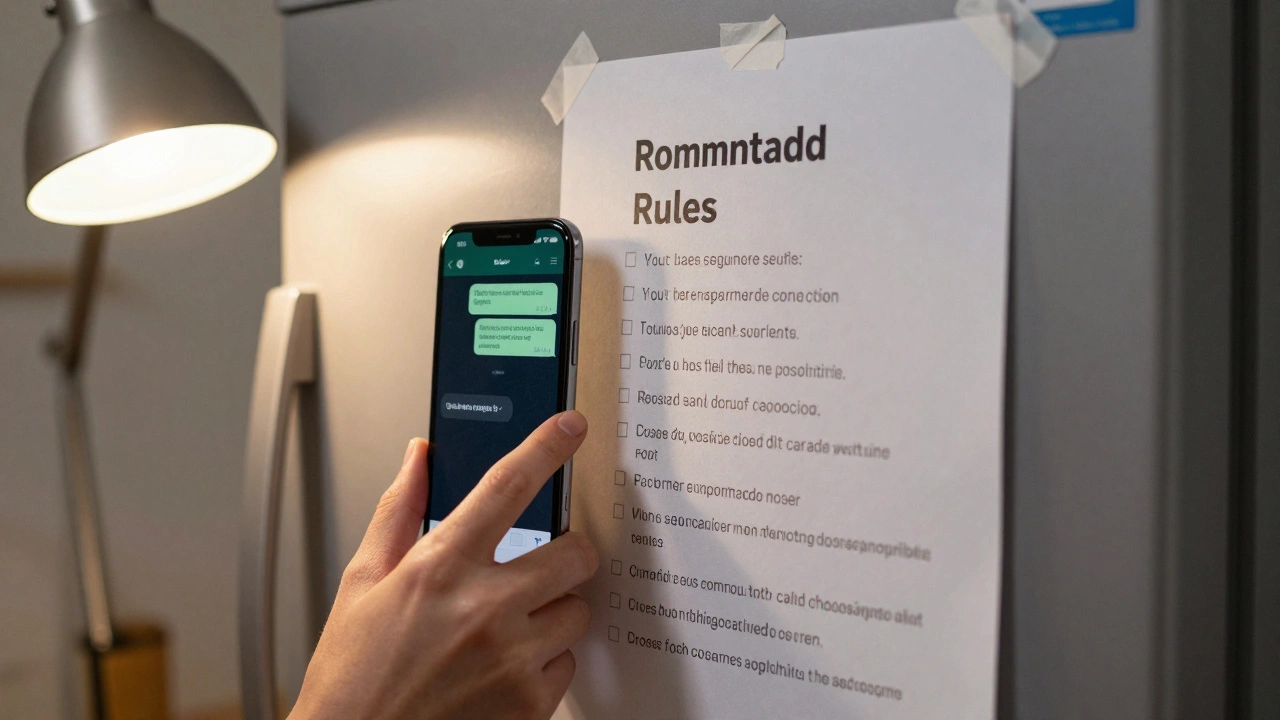
After you’ve asked all these questions, take a breath. Did they hesitate? Did they dodge? Did they say "I don’t know" too many times? That’s not just awkward - it’s a warning. You don’t need to be best friends. But you do need to know how they’ll act when things get messy. And always, always, get agreements in writing. Clean schedule? Put it on the fridge. Bill payment plan? Send a WhatsApp message and screenshot it. Guest rules? Type them up. You’re not being paranoid. You’re being smart. University life is hard enough. Don’t add a toxic living situation to the mix.