
Imagine you’ve just landed at Heathrow, jet-lagged but buzzing with excitement. You have your course confirmed, your accommodation booked, and a fresh sense of independence. Then, three weeks into term, you get an email from your landlord or letting agent: "Please provide your right to rent documentation by Friday." Panic sets in. What does that mean? Do you need to go back to your country? Will they evict you?
If you are an international student in the UK, this scenario is not just a hypothetical-it’s a legal requirement known as the Right to Rent scheme. Introduced under the Immigration Act 2014, this rule forces landlords and agents to check every adult tenant’s immigration status before signing a tenancy agreement. For British citizens, it’s a quick ID check. For you, it involves specific visas and biometric cards. Getting this wrong can delay your move-in, cost you money, or worse, lead to a failed tenancy.
What Exactly Is the Right to Rent Check?
The Right to Rent scheme is a government initiative designed to prevent illegal immigrants from renting private accommodation in England. It shifts part of the border control burden onto landlords. If a landlord lets a property to someone without the right to rent, they can face fines of up to £3,000 per adult. That’s why agents take this seriously.
Here is the crucial distinction: The scheme currently applies only to England. Wales and Scotland have different rules. In Scotland, there is no mandatory right to rent check for most tenancies, though landlords may still ask for ID. In Wales, the rules are similar to England but with some variations regarding public sector housing. If you are studying in London, Manchester, or Bristol, you are squarely in the zone where this law bites hardest.
You don’t need to prove you’re a student for the rent check itself; you need to prove you have the legal right to be in the UK and rent property. Your student status helps explain your income source (loans, savings, parental support), but your visa type determines your eligibility to sign the lease.
The Core Documents You Must Provide
Landlords cannot accept just any document. They must see original, valid proof of your immigration status. Since Brexit, the system has shifted heavily toward digital verification, which is faster but requires you to be tech-savvy.
Most international students on a Student Visa (formerly Tier 4) fall into one of two categories:
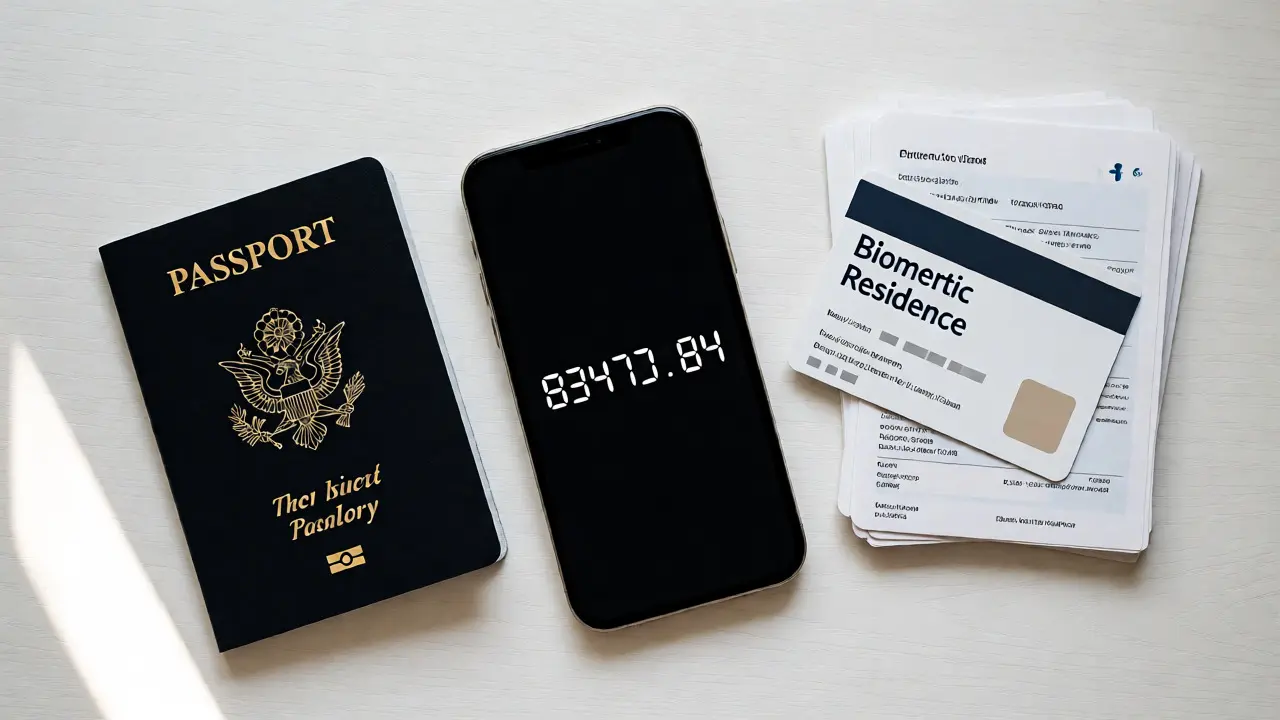
- Visa issued after January 1, 2021: You likely do not have a physical sticker in your passport. Instead, you have a Biometric Residence Permit (BRP) card or, increasingly, a digital immigration status via the UKVI online service.
- Visa issued before 2021: You might still hold a BRP card that expires on December 31, 2024, or later if extended. Note: All BRPs expire on December 31, 2024, regardless of the date printed on them. After this date, you must use the online share code system.
Since we are in October 2026, the transition to fully digital status is complete for most new arrivals. Here is what you typically need to hand over:
- A Valid Passport: This proves your identity and nationality. It must be current.
- Digital Share Code: You generate this on the GOV.UK website using your passport or travel document number and your date of birth. This code allows the landlord to view your immigration history online.
- BRP Card (if applicable): While phasing out, some older permits might still be presented alongside the digital record during transitional periods, but the digital record is now king.
Do not send photocopies unless explicitly asked for backup. Landlords usually want to see the originals or conduct a live video call while you hold your passport up to the camera. They then use their own device to access the Home Office database using your share code.
How the Digital Verification Process Works
Gone are the days of sending certified copies of passports through the post. The UK government introduced the Online Right to Rent Check service to streamline this. Here is how you navigate it without losing your mind:
First, you need to create a UKVI Account. If you applied for your visa online, you likely already have one. Log in to your account on the GOV.UK website. Look for the section labeled "View and prove your immigration status." Click "Get a share code." This generates a nine-character alphanumeric code that lasts for 90 days.
Give this code to your landlord or letting agent. They will enter it, along with your date of birth, into their own version of the Home Office checking service. This pulls up a snapshot of your status. It shows whether you have unlimited leave to remain, limited leave (like a student visa), or no right to rent.
| Document Type | Who Uses It | Validity Period | Action Required |
|---|---|---|---|
| Digital Share Code | Most non-UK nationals with eVisas | 90 days | Generate via GOV.UK app/website |
| BRP Card | Older visas (phased out by end of 2024) | Until Dec 31, 2024 | Present physically + update to digital |
| Passport with Vignette | New arrivals entering UK | 90 days | Collect BRP or set up digital status |
| Indefinite Leave to Remain (ILR) | Settled residents | Permanent | Digital status preferred |
Pro tip: Generate your share code *before* you start viewing properties. Have it ready to paste into emails. It makes you look prepared and professional, which can give you an edge over other applicants who are scrambling to find their paperwork.
Special Cases: Joint Tenancies and Guarantors
Students rarely live alone. Most university towns are full of shared houses. This complicates the right to rent check because every adult living in the property must be checked. If you are sharing with a British friend, they show their passport. If you are sharing with another international student, you both need to provide your respective share codes.
What if you don’t have enough funds or credit history? Many landlords require a Guarantor. If your guarantor is also an international student or lives abroad, the landlord might ask for additional financial proofs, like bank statements or a higher deposit. However, the guarantor’s right to rent status is secondary to their financial credibility. The primary tenant’s right to rent is the non-negotiable legal hurdle.
Be aware of "joint and several liability." This means if one flatmate fails to pay rent or causes damage, all tenants are responsible. When providing your right to rent documents, ensure you understand who else is on the lease. If a flatmate leaves early, you might be stuck covering their share until a replacement is found and vetted.
Pitfalls That Can Delay Your Move-In
Even with the right documents, things go wrong. Here are the most common traps international students fall into:
Expired Share Codes: Remember, those codes last 90 days. If you apply for a house in September and move in in October, you might need to refresh the code. Don’t let it lapse.
Mismatched Names: If your passport says "Chen Wei" but your application says "Wei Chen," flag it immediately. Bureaucracy hates ambiguity. Ensure the name on your visa matches the name on your rental application exactly.
Dependent Visas: If you brought family members (spouse or children) on a dependent visa, they also need to be included in the right to rent check. Their status is tied to yours, but they still need their own digital share codes.
Landlord Ignorance: Some small-time landlords aren’t up to speed with the digital system. They might ask for a BRP card that no longer exists. Be patient but firm. Direct them to the official GOV.UK guidance page. Offer to walk them through the online check on a video call. It takes five minutes and saves weeks of back-and-forth.

Preparing Your Housing File
Treat your rental application like a job interview. Prepare a digital folder containing everything you need. This speeds up the process significantly.
- Passport Scan: High-resolution PDF of the photo page.
- Share Code: A screenshot of the confirmation page showing your active status.
- Proof of Address: Even if you just arrived, a letter from your university confirming your enrollment and address can help establish ties.
- Bank Statements: Three months of statements showing you can afford the rent. If funds are held overseas, include a translation if not in English.
- Reference Letter: From a previous landlord or university accommodation office.
Having this bundle ready shows you are serious. In competitive markets like London or Edinburgh, being organized can win you the flat over someone with better grades but messy paperwork.
What Happens If You Fail the Check?
If your visa is expired, or you are on a visitor visa that doesn’t allow renting long-term, you might fail the check. Visitor visas generally do not grant the right to rent for more than six months. If you try to sign a 12-month lease on a visitor visa, the landlord might refuse.
Solution? Switch to a Student Visa before finalizing the tenancy. Or, negotiate a shorter contract. Some landlords offer "rolling contracts" month-to-month, which are easier to manage when your visa status is in flux. Always communicate openly. If you know your visa renewal is pending, tell the landlord. Honesty builds trust.
Can I rent in the UK without a Biometric Residence Permit (BRP)?
Yes. As of late 2024, the UK moved to a digital-only system for most visas. You now use an online share code generated via your UKVI account instead of a physical BRP card. Landlords verify this code digitally through the Home Office portal.
Does the Right to Rent check apply to university halls?
University-managed accommodation often falls under different regulations or internal policies. While universities still check your immigration status for enrollment purposes, the strict statutory Right to Rent checks are primarily aimed at private residential tenancies. However, many universities voluntarily follow similar standards to ensure compliance.
How long is a Right to Rent share code valid?
A share code is valid for 90 days from the date it is generated. If your tenancy application takes longer than three months to finalize, you will need to log back into your UKVI account and generate a new code for the landlord to re-check your status.
Can a landlord refuse me because I am an international student?
No, they cannot discriminate based on nationality. However, they can refuse based on affordability, lack of UK credit history, or insufficient references. To counter this, offer to pay rent upfront or provide a strong guarantor. Discrimination claims can be made to the Equality Advisory and Support Service if you suspect bias.
What if my visa expires during my tenancy?
If your visa expires and you haven't renewed it, your right to rent lapses. You must renew your visa promptly. Inform your landlord once you have submitted your renewal application. The "Section 3C leave" provision allows you to stay legally while the application is pending, but you must prove this status to maintain your tenancy rights.