
Imagine you’ve finally secured a place at your dream university in London or Manchester. You’re excited about the campus life and new friends. Then comes the housing application. The landlord asks for a rent guarantor, defined as a person who legally promises to pay your rent if you fail to do so. You’re an international student from Brazil, India, or China. Your parents are willing to help, but they don’t live in the UK. Suddenly, your perfect student flat seems out of reach.
This is the single biggest hurdle for thousands of students every year. Landlords want security. They fear non-payment. A traditional guarantor solves this risk because they have a credit history and assets in the UK. If you can’t provide one, you need a solid plan B. This guide breaks down exactly what a rent guarantor is, why landlords demand them, and the practical alternatives that actually work in 2026.
What Exactly Is a Rent Guarantor?
A rent guarantor isn’t just a character reference. It’s a legal contract. When you sign a tenancy agreement with a guarantor, that person signs a separate document called a Guarantee Deed. This deed states that if you miss a rent payment, the landlord can come after the guarantor for the money immediately.
In the UK rental market, this is standard practice for tenants who don’t have a local credit history. Since most students don’t have long-term employment records or established credit scores in Britain, landlords use guarantors as a safety net. The guarantor takes on significant financial liability. They aren’t paying monthly rent unless you default, but they must prove they *could* pay it if things go wrong.
To qualify as a traditional guarantor, the person usually needs to meet strict criteria set by letting agents or private landlords:
- UK Residency: They must live in the United Kingdom.
- Credit History: They need a clean credit report with no major defaults or bankruptcies.
- Income Threshold: Their annual income typically needs to be three times the yearly rent amount. For a £12,000/year rent, they’d need to earn £36,000 annually.
- Property Ownership: Some landlords prefer guarantors who own their home outright or have significant equity.
If your parents live abroad, they automatically fail the residency test. Even if they are millionaires overseas, a UK landlord cannot easily enforce a debt claim against them. That’s why "my dad will pay" doesn’t work without a formal structure.
The Problem for International Students
You might wonder why banks and universities accept foreign documents, but landlords don’t. It comes down to enforcement. If you stop paying rent, a landlord has to go through small claims court to recover losses. If the guarantor lives in another country, serving legal papers becomes expensive and complicated. Many landlords simply refuse to take that risk.
This creates a vicious cycle for international students. You need an address to open some bank accounts or apply for certain services, but you can’t get an address without a guarantor. Meanwhile, domestic students often struggle too. Young people living with parents might find their parents’ income doesn’t meet the high multiples required by premium agencies in cities like London, Edinburgh, or Bristol.
Understanding this friction helps you negotiate better. Landlords aren’t trying to be difficult; they are trying to mitigate financial risk. Your goal is to offer them equivalent security through other means.
Alternative Solutions: How to Secure Housing Without a Traditional Guarantor
Just because you lack a UK-based relative doesn’t mean you’re stuck. The student housing market has adapted. Here are the most effective ways to handle the request in 2026.
1. Professional Guarantor Services
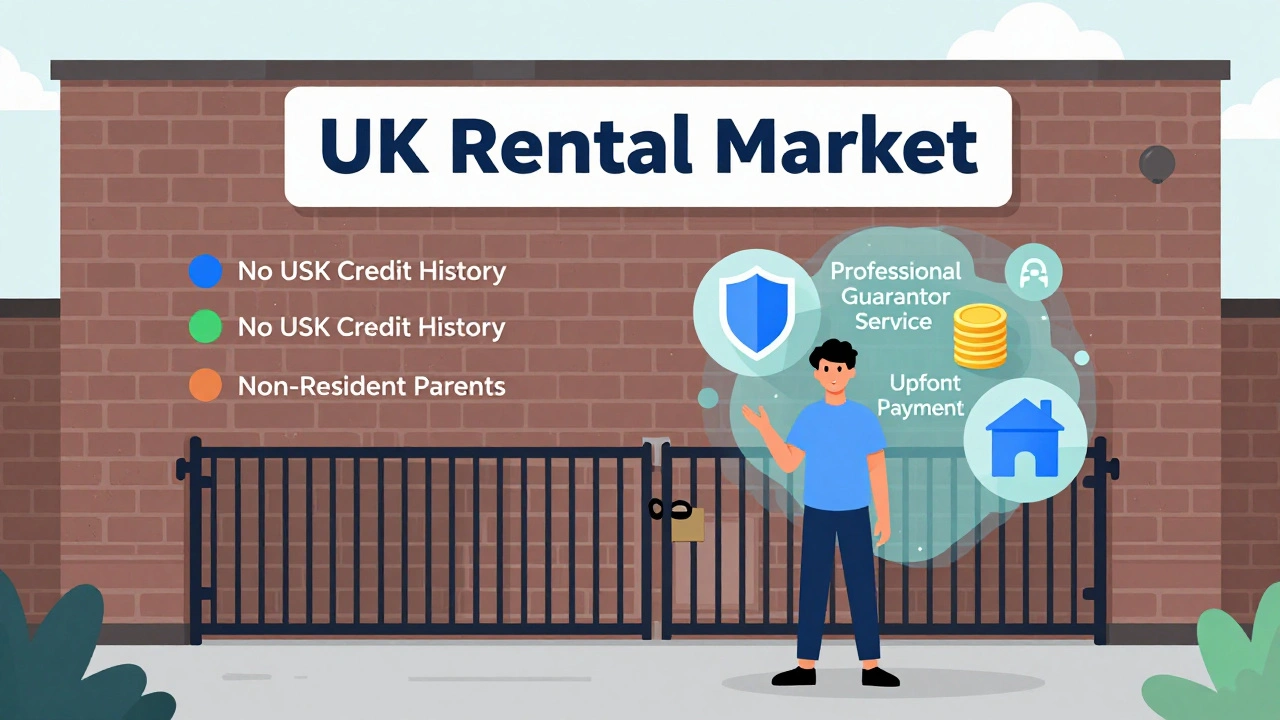
This is the most common workaround today. Companies like HousingAnywhere, InsureMyLet, or Guarantors Direct act as your guarantor. Instead of a person signing a deed, an insurance company provides a policy.
How it works: You pay a fee, usually around 25-30% of the annual rent. In return, the company guarantees the rent to the landlord. If you default, they cover the cost up to the limit of the policy. For the landlord, this looks just like a traditional guarantor-there’s a third party liable for the debt.
Pros: Widely accepted by professional letting agents. Fast processing (often within 48 hours). No need for family involvement.
Cons: Expensive. Paying 25% of your rent upfront is a heavy hit on your budget. Not all private landlords accept these policies; they prefer individual names.
2. Upfront Rent Payments
Some landlords will waive the guarantor requirement if you pay the entire year’s rent in advance. This removes their risk entirely. Why worry about missed payments when the money is already in their account?
Pros: Simple and direct. Gives you negotiating power since the landlord gets guaranteed cash flow.
Cons: Huge liquidity requirement. You need £10,000-£15,000+ available immediately. Also risky for you-if the landlord is dishonest or the property has issues, getting refunds can be difficult. Always ensure you have a signed tenancy agreement before transferring large sums.
3. Student Accommodation Blocks
Private student housing companies (like University Living or IQ Student Accommodation) operate differently than private landlords. They cater specifically to students, including internationals. Because their business model relies on volume, they rarely ask for traditional guarantors.
Instead, they run their own internal checks. They might ask for proof of tuition fees paid, acceptance letters, or larger deposits. These blocks often include bills and internet in the rent, simplifying your life further.
Pros: Built-in community, no guarantor needed, flexible contracts.
Cons: Often more expensive per square foot than private rentals. Can be noisy. Quality varies wildly between providers.
4. Joint Tenancies
If you’re moving in with friends, consider signing a joint tenancy. In this setup, everyone is jointly and severally liable. If one person misses rent, the others are responsible. Sometimes, having multiple tenants with different backgrounds satisfies the landlord’s risk assessment without needing a separate guarantor.
Pros: Splits the financial burden. Builds shared responsibility.
Cons: Risky if your roommate disappears or stops paying. You become their de facto guarantor.
Comparison Table: Options for Students Without a UK Guarantor
| Option | Cost Estimate | Landlord Acceptance | Best For |
|---|---|---|---|
| Professional Guarantor Service | 25-30% of annual rent | High (Agencies) | International students with limited cash |
| Paying Rent Upfront | 100% of annual rent | Medium (Private Landlords) | Students with savings/family support |
| Private Student Halls | Standard rent + deposit | N/A (Built-in) | First-year students wanting convenience |
| Joint Tenancy | Standard rent + deposit | Medium-High | Groups of trusted friends |
Tips for Negotiating with Landlords
When you approach a landlord without a guarantor, confidence and preparation are key. Don’t just say "I don’t have one." Present a solution.
Show Proof of Funds: Provide bank statements showing you have enough money for rent and living expenses for the first few months. This proves stability.
Offer a Larger Deposit: While the Tenant Fees Act limits deposits to five weeks' rent in England and Wales, some landlords may still accept additional security if structured correctly (though this is legally tricky, so consult advice first). Alternatively, emphasize your ability to pay rent early each month.
Use References: Offer references from previous landlords, professors, or employers. A letter from your university confirming your enrollment adds credibility.
Be Transparent: Explain your situation clearly. "I am an international student from [Country]. My parents are supporting me financially, but they reside abroad. I am prepared to pay via a professional guarantor service or provide upfront payment for the first term."

Common Pitfalls to Avoid
Desperation makes students vulnerable. Watch out for these red flags:
- Unregulated Guarantor Scams: Only use reputable companies. Check reviews on Trustpilot or Student Room forums. Never pay a "guarantor" via Western Union or cryptocurrency.
- Verbal Agreements: Never move in based on a promise over WhatsApp. Everything must be in writing, especially regarding deposits and repairs.
- Ignoring the Deposit Protection Scheme: Ensure your landlord protects your deposit in a government-approved scheme. If they don’t, you lose crucial legal protection.
- Overlooking Contract Terms: Read the fine print. Some contracts include clauses that make breaking the lease extremely expensive. As a student, your plans might change.
Final Thoughts on Securing Your Home
Finding a place to live in the UK as a student without a local guarantor is challenging, but it’s not impossible. The key is shifting the conversation from "who will guarantee me" to "how can I minimize your risk." By using professional services, opting for purpose-built student accommodation, or offering upfront payments, you can secure a safe and comfortable home. Start your search early, prepare your financial documents, and stay assertive but polite. Your education is important, but your living situation sets the foundation for success. Get it right from day one.
Can my parents outside the UK be my rent guarantor?
Generally, no. Most UK landlords require guarantors to be UK residents with a local credit history because they need to be able to pursue legal action if debts aren't paid. However, you can use a professional guarantor service where your parents pay the fee instead.
How much does a professional guarantor service cost?
Typically, professional guarantor services charge between 25% and 30% of the annual rent as a one-time fee. For example, if your annual rent is £9,000, you would pay approximately £2,250 to £2,700 for the guarantee.
Do I need a guarantor if I pay rent upfront?
Many private landlords will waive the guarantor requirement if you pay the full year's rent in advance. This eliminates their risk of non-payment. However, always ensure you have a signed tenancy agreement before making such a large transfer.
What is the difference between a guarantor and a co-signer?
In the UK context, these terms are often used interchangeably. Both refer to someone who takes legal responsibility for the tenant's obligations under the lease. A guarantor specifically guarantees payment, while a co-signer might also be considered a joint tenant depending on the contract structure.
Are student halls cheaper than private rentals?
Not necessarily. Private student halls often cost more per week than sharing a house with friends. However, they usually include bills, internet, and sometimes cleaning services, which can simplify budgeting. Prices vary significantly by city and provider quality.