
Imagine it’s 2 a.m. on a Tuesday in your second year at university. The library is empty, your laptop is open to a half-finished essay, and the familiar tightness in your chest starts creeping back. For many UK students managing an ongoing mental or physical condition such as depression, anxiety, or chronic fatigue, this moment isn’t just stress-it’s a warning sign of potential relapse. Yet most don’t have a clear plan for what to do next. They rely on willpower, hope, or waiting until things get worse before seeking help.
The good news? You don’t need to figure it out alone. A well-structured relapse prevention plan can turn that 2 a.m. panic into a manageable step-by-step response. It’s not about never having a bad day; it’s about knowing exactly who to call, what to do, and how to get back on track before a setback becomes a crisis. This guide breaks down how to build one that actually works within the realities of student life in the UK-tight budgets, academic pressure, and limited access to specialist care.
What Is a Relapse Prevention Plan?
A relapse prevention plan is a personalized document that outlines early warning signs, coping strategies, and support contacts specific to your condition. Unlike a general emergency plan, it focuses on the subtle shifts that precede a full-blown episode. For example, if you manage generalized anxiety disorder, your early signs might include skipping meals, withdrawing from friends, or staying up past midnight without realizing it. Your plan would then specify concrete actions: “If I skip two meals in a row, I will eat a protein-rich snack and text my peer mentor.”
This approach draws from cognitive-behavioral therapy (CBT) principles, which emphasize identifying triggers and building behavioral responses. Research from the National Institute for Health and Care Excellence (NICE) supports this method, noting that structured relapse prevention reduces recurrence rates by up to 30% in chronic mental health conditions. The key is specificity. Vague plans like “try to relax” rarely work under pressure. Specific plans like “take a 10-minute walk outside when heart rate feels elevated” give your brain a clear script to follow.
Identifying Your Personal Early Warning Signs
You can’t prevent what you don’t recognize. Start by listing the top five indicators that something is slipping. These vary wildly between individuals, so avoid copying someone else’s list. Common categories include:
- Sleep changes: Sleeping more than 9 hours or less than 6 hours regularly.
- Social withdrawal: Cancelling plans with friends three times in a week.
- Academic decline: Missing deadlines or feeling unable to concentrate for more than 20 minutes.
- Physical symptoms: Headaches, stomach issues, or muscle tension that persist beyond a day.
- Mood shifts: Irritability, numbness, or sudden bursts of sadness without obvious cause.
Track these for two weeks using a simple app or notebook. Note the date, time, and context each time they appear. Patterns will emerge. Maybe you always feel irritable after missing breakfast. Or perhaps sleep drops sharply during exam weeks. Once you see the pattern, you can assign a specific action to each sign. This turns abstract worry into actionable data.
Building Your Support Network: Who Do You Call?
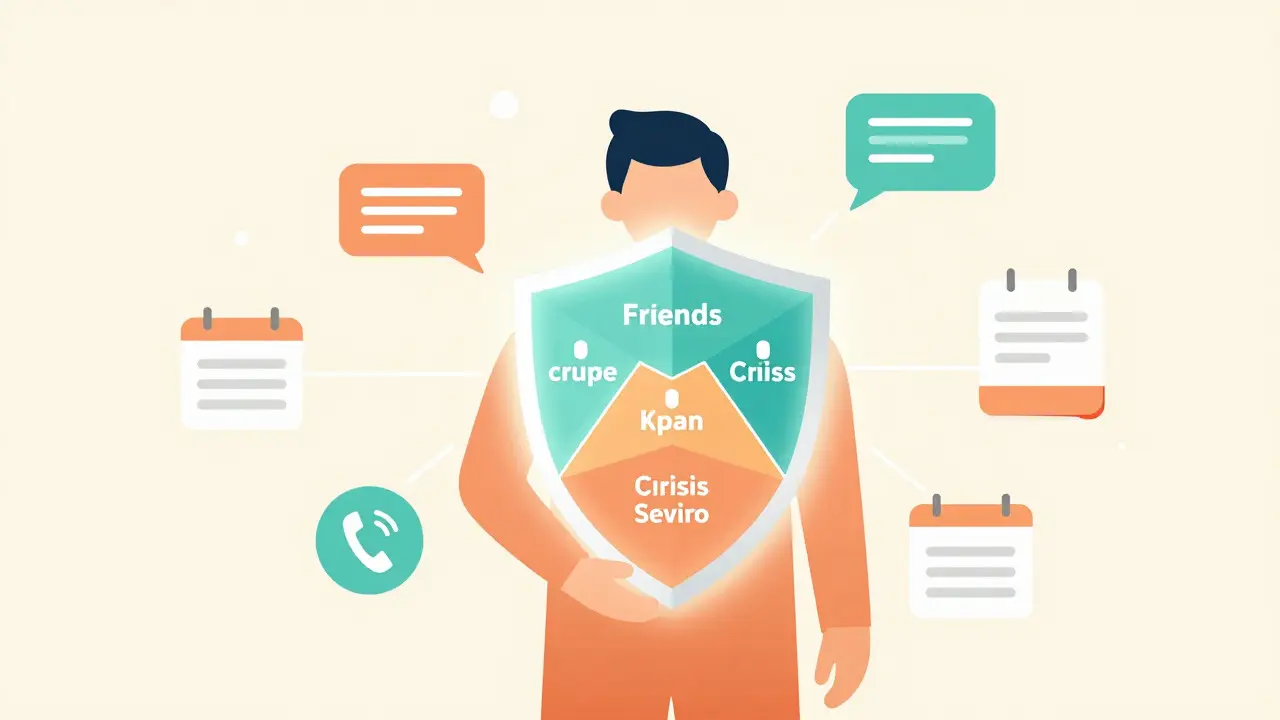
Support doesn’t have to mean a therapist. In fact, for many students, the most accessible support comes from people already in their lives. Build a tiered contact list:
- Tier 1 - Immediate Access: One person you trust completely-a friend, family member, or partner. They should know your plan and agree to check in weekly. No appointment needed. Just a text or call.
- Tier 2 - Professional Guidance: Your university counselor or GP. Most UK universities offer free counseling services through their student welfare teams. If you’re registered with a GP, they can refer you to community mental health teams (CMHTs) if needed.
- Tier 3 - Crisis Support: Samaritans (116 123), Mindline (for students), or the NHS 111 service. Save these numbers in your phone now, not when you’re in distress.
Many students hesitate to reach out because they fear being a burden. But remember: Tier 1 contacts are there because they want to help, not because they expect perfection. Set a recurring reminder to check in with them every Sunday evening. Keep it brief: “How are you? I’m okay, but here’s what I noticed this week.” This normalizes the conversation and makes future outreach easier.
Practical Coping Strategies That Fit Student Life
Your plan needs strategies that fit into a busy schedule. Forget hour-long meditation sessions if you have lectures at 9 a.m. and 4 p.m. Instead, focus on micro-actions:
- The 5-4-3-2-1 Grounding Technique: When anxiety spikes, name 5 things you see, 4 you can touch, 3 you hear, 2 you smell, and 1 you taste. Takes under 2 minutes. Works anywhere.
- Body Doubling: Study alongside a friend (in person or via video call). The presence of another person increases focus and reduces avoidance behaviors. Many UK universities have study buddy schemes or online platforms for this.
- Structured Breaks: Use the Pomodoro Technique: 25 minutes of work, 5 minutes of rest. During breaks, stand up, stretch, or look out a window. Avoid scrolling social media, which often worsens anxiety.
- Medication Reminders: If you take medication, link it to an existing habit. Example: Take pills with morning coffee. Use a pill organizer labeled by day of the week to reduce confusion.
These aren’t magic fixes, but they create small wins that build momentum. Over time, these micro-actions become automatic, reducing the cognitive load when you’re struggling.
Navigating University and NHS Resources
Knowing where to go matters as much as knowing what to do. Here’s a quick reference for UK-based resources:
| Service | Access Method | Cost | Best For |
|---|---|---|---|
| University Counseling | Book via student portal or walk-in | Free for enrolled students | Short-term therapy, academic stress |
| NHS GP | Register with local practice | Free (with valid status) | Medication, referrals, long-term care |
| Mindline | Online booking | Free for students | Crisis support, peer-led advice |
| Samaritans | Call 116 123 | Free | Immediate emotional support, 24/7 |
| Community Mental Health Teams (CMHT) | GP referral | Free | Severe conditions, multi-disciplinary care |
Don’t wait for a crisis to use these services. Book a baseline appointment with your university counselor at the start of each term. It’s easier to maintain regular contact when things are stable. Also, keep a digital folder with your diagnosis letters, medication lists, and previous therapy notes. Sharing this with new providers saves time and ensures continuity of care.

When to Escalate: Red Flags That Need Immediate Action
Some signs mean your current plan isn’t enough. If you experience any of the following, escalate to professional care immediately:
- Inability to perform basic daily tasks (showering, eating, attending lectures) for more than 3 days.
- Thoughts of self-harm or suicide, even if fleeting.
- Medication side effects that make functioning difficult.
- Sudden change in behavior that concerns others (e.g., giving away possessions).
Escalation doesn’t mean failure. It means your plan is working-it caught the problem before it became unmanageable. Contact your GP or university counselor first thing in the morning. If it’s urgent, call 111 or go to A&E. Bring your relapse prevention plan with you. It gives clinicians instant context and speeds up treatment decisions.
Keeping Your Plan Alive: Regular Reviews
A static plan becomes useless quickly. Review yours every four weeks. Ask yourself:
- Did I notice my early warning signs in time?
- Were my coping strategies effective, or did I skip them?
- Did my support network respond as expected?
- Has my condition changed (e.g., new symptoms, medication adjustments)?
Update your plan based on answers. Maybe you need a different grounding technique. Maybe your Tier 1 contact has moved abroad and you need a new person. Flexibility is key. Store your plan in a cloud document accessible from any device. Share read-only access with your Tier 1 contact so they’re always up to date.
Is a relapse prevention plan only for mental health conditions?
No. While most common in mental health, relapse prevention plans work for chronic physical conditions too, such as asthma, diabetes, or migraines. The structure is the same: identify triggers, set early warning signs, define actions, and establish support. For physical conditions, coordinate closely with your GP or specialist to align medical advice with your personal plan.
How often should I review my relapse prevention plan?
Every four weeks is ideal, especially during high-stress periods like exams. However, review immediately after any significant setback or change in circumstances (e.g., moving house, changing courses, starting new medication). A quick 10-minute check-in is better than no review at all.
What if my university counseling service has long waiting times?
Use interim supports while waiting. Connect with Mindline or other student-led charities for immediate peer support. Check if your course has a dedicated wellbeing officer. Also, ask your GP for a referral to private therapy if NHS wait times exceed 6 weeks. Some employers or insurance plans cover part of the cost, though this is rare for students.
Can I share my relapse prevention plan with classmates or friends?
Yes, but selectively. Share the full plan with your Tier 1 contact and healthcare providers. With casual friends, share only what’s relevant to their role-for example, “I need quiet space during exams” rather than your entire diagnostic history. Respect boundaries, and update them if your plan changes significantly.
Does having a relapse prevention plan guarantee I won’t have setbacks?
No, but it drastically reduces their severity and duration. Think of it like a fire extinguisher: you hope you never need it, but when you do, it prevents a small spark from becoming a blaze. The goal isn’t perfection-it’s faster recovery and fewer disruptions to your studies and life.