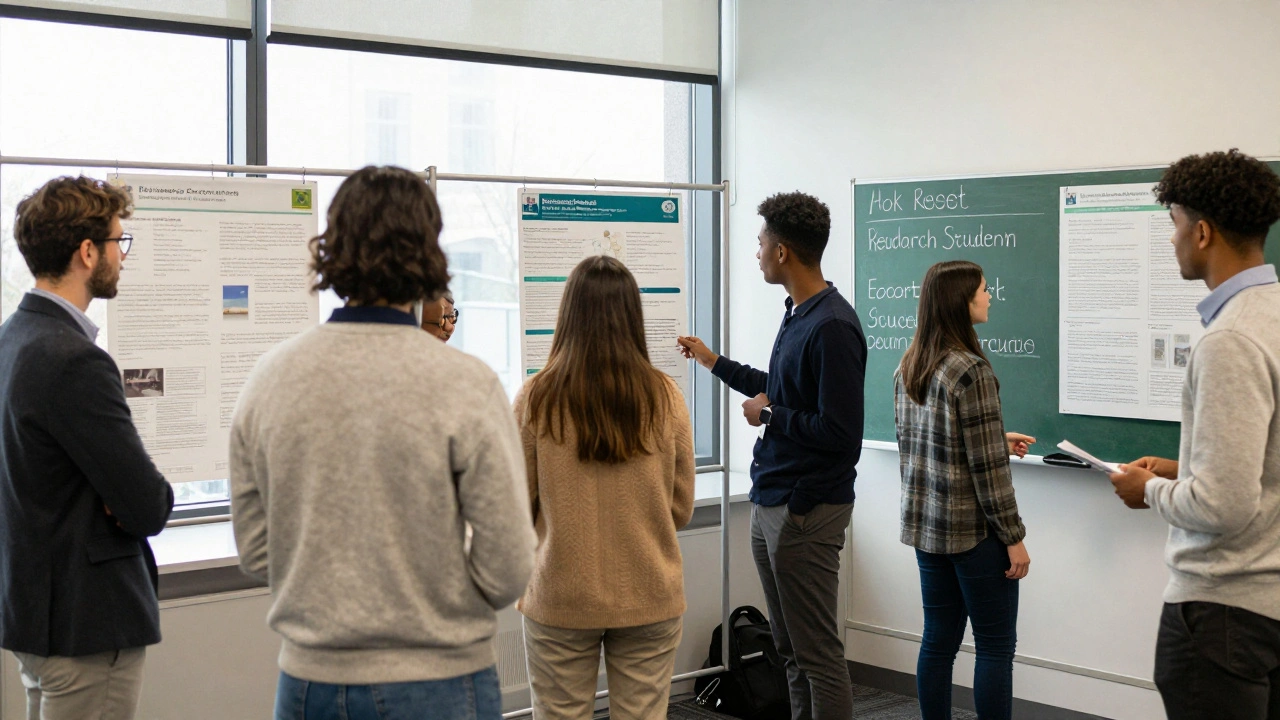
If you're a postgraduate student in the UK, your degree isn’t just about essays and exams. It’s about building connections that last long after graduation. The right professional network can open doors to jobs, collaborations, funding, and even mentorship. But where do you start? Conferences and associations aren’t optional extras-they’re essential tools for turning your research into a career.
Why Networking Matters More Than You Think
Most postgraduates assume their thesis is the only thing that matters. It’s not. Employers, funding bodies, and academic supervisors care about who you know, not just what you’ve written. A 2024 survey by the Higher Education Policy Institute found that 68% of UK postgraduates who landed research roles within six months of graduation had attended at least three academic conferences during their studies. That’s not coincidence. It’s strategy.
Networking isn’t about handing out business cards at a reception. It’s about finding people who share your interests and staying in touch. A simple follow-up email after a talk, asking a thoughtful question, or connecting on LinkedIn after a panel discussion can lead to a collaboration, a co-authorship, or an invitation to speak at next year’s event.
Top UK Conferences for Postgraduates
Not all conferences are created equal. Some are massive and overwhelming. Others are small, focused, and perfect for beginners. Here are a few that consistently deliver value for postgraduates across disciplines.
- The British Conference of Undergraduate Research (BCUR) - Even though it’s named for undergraduates, many postgraduates present here too. It’s low-pressure, supportive, and great for first-time presenters. Held annually in spring across different UK universities.
- UK Research Student Conference (UKRSC) - Organized by the Council for Doctoral Education, this is one of the few national events dedicated specifically to postgraduate researchers. It covers all disciplines and includes workshops on publishing, grant writing, and career paths.
- Association for Higher Education (AHE) Annual Conference - If you’re studying education, social sciences, or policy, this is a key event. It draws academics, policymakers, and PhD students who are shaping the future of higher education.
- British Psychological Society (BPS) Annual Conference - For psychology and neuroscience students, this is a major draw. Hundreds of poster sessions, keynote speakers from top universities, and industry reps from NHS and private research firms.
- UK National Cancer Research Institute (NCRI) Conference - A powerhouse for life sciences and medical researchers. Even master’s students in biomedical fields find opportunities here for internships and PhD placements.
Pro tip: Don’t wait until your final year. Start attending as early as your first semester. Many conferences offer discounted or free registration for students. Some even cover travel costs if you present your work.
Key Professional Associations for UK Postgraduates
Conferences are events. Associations are communities. Joining one gives you ongoing access to resources, job boards, mentorship, and peer support.
- UK Council for Graduate Education (UKCGE) - This isn’t a membership group you pay to join. It’s a national body that represents postgraduate students across universities. They publish guides on funding, mental health, and career development. Check their website for local university representatives-you can often get direct advice from them.
- Royal Society of Chemistry (RSC) - For chemists, biochemists, and materials scientists. Offers free student membership, access to journals, webinars on research ethics, and an annual careers fair with companies like AstraZeneca and GlaxoSmithKline.
- Institute of Physics (IOP) - Similar to RSC but for physics and engineering. Their postgraduate network includes regional meetups, a mentorship program, and funding for conference travel. Many members land industry roles through these connections.
- British Educational Research Association (BERA) - Essential for education researchers. They run a mentoring scheme linking PhD students with experienced academics. Their journal, British Educational Research Journal, is a top target for early-career publications.
- Chartered Institute of Personnel and Development (CIPD) - Surprisingly useful for postgraduates in social sciences, psychology, or organizational behavior. Even if you’re not studying HR, CIPD’s research reports and networking events are gold for anyone looking at workplace dynamics.
Membership is often free or under £20 a year for students. That’s less than a coffee a month for access to job listings, training, and a community of people who’ve been where you are.

How to Make the Most of Conferences
Going to a conference without a plan is like showing up to a party with no conversation starters. Here’s how to turn attendance into opportunity.
- Research the speakers and attendees - Before you go, check the program. Identify 3-5 people whose work you admire. Look them up on LinkedIn or their university profile. Write down one specific question about their research.
- Present something - Even if it’s just a poster. Presenting forces you to clarify your ideas and makes you memorable. Most conferences have slots for postgraduates. Don’t assume you’re not ready-you are.
- Use the app - Nearly all major conferences now have apps. Use them to schedule meetings, send messages to other attendees, and get real-time updates. It’s easier to connect digitally than to chase someone down in a crowded hall.
- Follow up within 48 hours - Send a short, personalized email. “Hi Dr. Patel, I really enjoyed your talk on AI in education. I’m working on a similar project at Manchester. Would you be open to a 10-minute chat next week?” Most people say yes.
- Don’t skip the social events - Coffee breaks and receptions are where real connections happen. Bring a notebook. Ask people what they’re working on next. People love talking about their own projects.
Building Long-Term Relationships, Not Just Contacts
A LinkedIn connection isn’t a network. A network is someone who remembers your name, knows your research, and thinks of you when an opportunity comes up. That takes time.
Try this: Pick one person you met at a conference. Every three months, send them a short update. “Hi Sam, I just published my paper on student mental health-thought you might find it useful. Also, your advice on grant writing helped me land the ESRC funding. Thanks again.” That’s it. No asking for favors. Just showing you’re still active and grateful.
Over time, those small gestures turn into invitations to join working groups, co-author papers, or be recommended for a postdoc position. Your network becomes your reputation.
What Not to Do
There are common mistakes that sabotage networking efforts.
- Don’t only talk about yourself - People remember how you made them feel, not what you said. Ask questions. Listen more than you speak.
- Don’t wait until you’re stuck - Waiting until you need a job to start networking is like buying an umbrella when it’s already raining.
- Don’t ignore virtual events - Many associations now host monthly webinars. They’re easier to attend than flying to London. Don’t dismiss them.
- Don’t treat it as a chore - If you go in thinking “I have to network,” you’ll come out exhausted. Go in thinking “I get to meet people who care about the same things I do.”
Where to Find Opportunities
You don’t need to search endlessly. Start here:
- Your university’s postgraduate research office - They usually have a list of upcoming conferences and funding for attendance.
- Department newsletters - Many departments send out weekly updates with calls for papers and event notices.
- ResearchGate and Academia.edu - Follow scholars in your field. They often post about upcoming events.
- Twitter (X) and Mastodon - Use hashtags like #PhDchat, #PostgradLife, or #AcademicTwitter. Many conference announcements happen here first.
Set up a Google Alert for “UK postgraduate conference [your field]” and check it once a week. In six months, you’ll have a calendar full of opportunities.
Final Thought: Your Network Is Your Net Worth
At the end of your postgraduate journey, your thesis will be archived. Your publications will be cited. But the people you’ve connected with-the mentors, collaborators, friends, and peers-will be the ones who help you build your career. Don’t wait for someone to invite you in. Go to the next conference. Join one association. Send that first email. Start now.
Are academic conferences worth attending as a master’s student?
Yes, especially if you’re planning to do a PhD or work in research. Even master’s students benefit from seeing how research is presented, meeting potential supervisors, and learning about funding opportunities. Many conferences offer special rates or free entry for master’s students who present posters.
How do I find conferences in my specific field?
Start with your department or supervisor-they often know the key events. Then check professional associations related to your subject, like the Royal Society of Chemistry or the British Educational Research Association. Google searches like “UK [your field] conference 2026” also work. Look for events hosted by universities with strong programs in your area.
Can I join professional associations if I’m not a UK citizen?
Absolutely. Most UK-based associations welcome international postgraduates. Some even offer reduced membership fees for non-UK students. Membership often includes access to journals, webinars, and job boards that are useful regardless of your nationality.
What if I’m shy or introverted?
You don’t need to be the loudest person in the room. Many academics are introverts too. Try attending smaller sessions or poster presentations-they’re less intimidating than large lectures. Bring a friend or classmate. Prepare one or two questions ahead of time. Even saying “I liked your point about X” can start a conversation. It’s okay to be quiet and still make meaningful connections.
Is LinkedIn really useful for academic networking?
Yes, more than ever. Many academics use LinkedIn to share publications, announce conference appearances, and post job openings. Keep your profile updated with your research interests, current program, and publications. Follow key researchers and organizations. A simple comment on someone’s post can lead to a connection you didn’t expect.