
Quick Summary: Saving on Meds
- NHS England: Most students pay a flat fee per item unless they qualify for a specific exemption.
- Devolved Nations: Prescriptions are generally free in Scotland, Wales, and Northern Ireland.
- Low Income: Students with very low incomes or those on specific benefits can get a full waiver.
- Prepayment Certificates: If you need multiple meds, a PPC is almost always cheaper than paying individually.
- Generic vs Brand: Always ask for the generic version of a drug to keep costs down.
How the NHS Prescription System Works
First, let's get the basics straight. In the UK, NHS is the National Health Service, the publicly funded healthcare system that provides medical services to UK residents including prescriptions. However, "free healthcare" doesn't always mean "free medicine." In England, there is a standard prescription charge. For 2026, this cost is a set fee per item. If your doctor prescribes three different medications, you pay that fee three times, regardless of how expensive the actual drug is to produce.
It's a bit of a quirk: the cost isn't based on the drug's market value, but on a flat administrative fee. This means a cheap generic antibiotic costs the same as a complex brand-name medication. If you're studying in Scotland, Wales, or Northern Ireland, you're in luck-prescriptions are free for everyone regardless of student status. If you're based in London, Manchester, or Birmingham, you'll need to navigate the English system.
Who Actually Gets Free Prescriptions?
Being a student isn't an automatic "get out of paying" card. Unlike the 16-18 age bracket, university students aren't automatically exempt. However, there are several ways to qualify for a waiver. If you are under 16 or over 60, it's free. But since most of you fall in the middle, you need to look at your financial situation.
The biggest win for students is the NHS Low Income Scheme is a program that provides full or partial help with prescription costs for people on low incomes (LIS). This isn't just for people with zero balance in their bank account; it's based on your total household income and savings. If you qualify, you can get a full exemption, meaning you pay 0p at the counter. To apply, you'll need to fill out an HC1 form. Be honest about your student loans, as some parts of your funding count toward your income while others don't.
You might also be exempt if you have a specific medical condition. For example, if you have a condition that qualifies you for a Medical Exemption Certificate, you won't pay a penny. This is common for chronic issues like epilepsy or diabetes. If you've been diagnosed with a long-term condition, ask your GP if you're eligible for a certificate. It saves you from having to prove your income every single time you visit the pharmacy.
The Magic of Prepayment Certificates (PPCs)
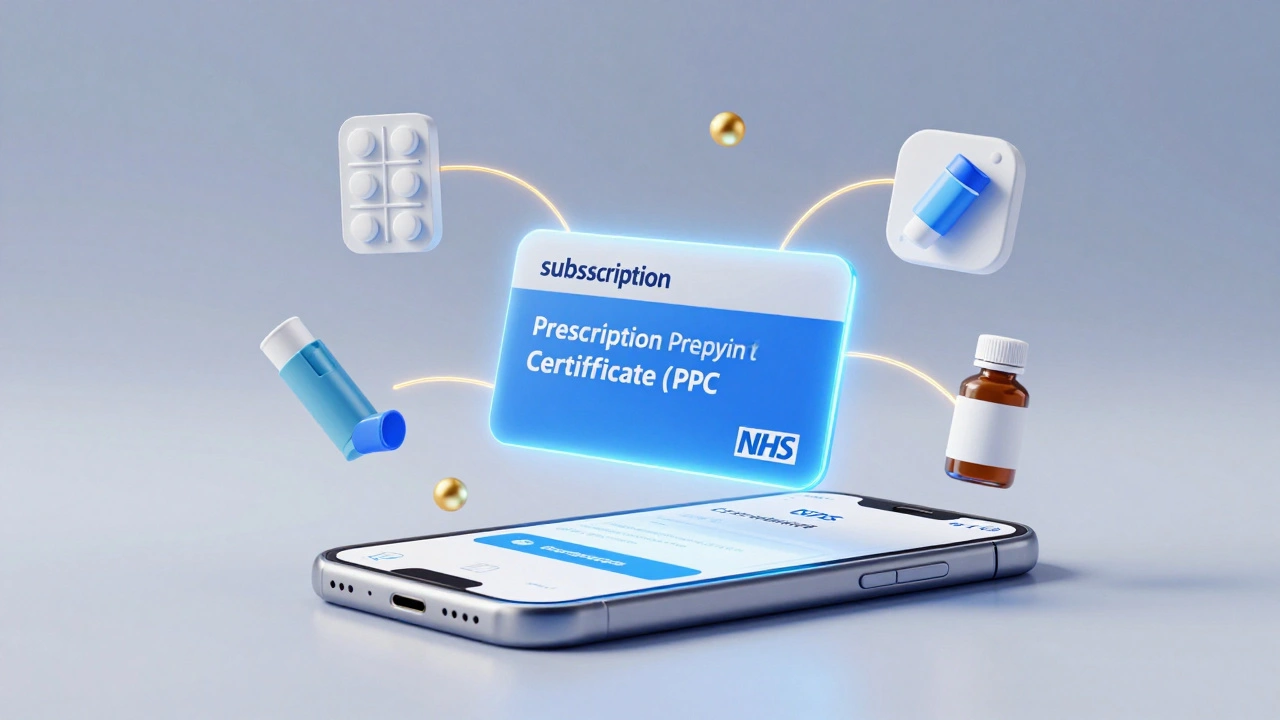
What happens if you don't qualify for a full exemption but you need medication every month? Paying the standard fee three or four times a month is a waste of money. This is where the Prescription Prepayment Certificate is a prepaid voucher that allows the holder to receive any number of NHS prescriptions for a fixed cost over a set period (PPC) comes in. Think of it like a subscription for your meds.
| Option | Best For... | Typical Benefit | Payment Method |
|---|---|---|---|
| 3-Month PPC | Short-term illness/recovery | Cover all meds for 90 days | One-off payment |
| 12-Month PPC | Chronic conditions/Daily meds | Massive annual savings | One-off or Direct Debit |
If you need more than three items in a three-month window, a PPC is mathematically the better choice. You can set up a 12-month certificate via Direct Debit, which spreads the cost and ensures you never accidentally pay the full retail price at the pharmacy. If you're juggling a tight budget, the monthly Direct Debit option is much easier on the wallet than a large lump sum.
How to Slash Costs Without an Exemption
Not everyone can get a PPC or a waiver. If you're stuck paying the standard fee, you can still lower your overall healthcare spend. The first step is talking to your pharmacist about Generic Medications. A generic drug has the exact same active ingredient as a brand-name drug but without the fancy marketing. While the NHS charge is the same for the prescription itself, some over-the-counter alternatives (which don't require a script) are significantly cheaper when you buy the generic version.
Speaking of over-the-counter (OTC), check if you actually need a prescription. For minor issues like hay fever, mild acne, or a common cold, buying the OTC version at a supermarket like Tesco or Boots can sometimes be cheaper than the cost of a GP appointment plus the prescription fee. However, never swap a prescribed medication for an OTC one without asking your doctor first-especially with things like blood pressure meds or antidepressants.
Another pro tip: utilize your university's health services. Most campuses have a student wellness center. While they can't usually give you free medication, they can often provide the initial consultation for free, saving you from paying for private GP services if you're struggling to get an appointment with your local surgery.

Avoiding Common Pitfalls
One of the biggest mistakes students make is forgetting to check their exemption status before arriving at the pharmacy. If you've applied for an HC1 form, make sure you have your certificate number ready. If you just say "I'm a student," the pharmacist will charge you the full amount because students aren't a protected category by default.
Also, be careful with "private prescriptions." If you see a private doctor instead of an NHS GP, you'll get a private prescription. These are not covered by PPCs or the Low Income Scheme. You'll pay the full market price of the drug plus a dispensing fee from the pharmacist. Always ensure your doctor is prescribing through the NHS if you want to use your exemptions.
Lastly, don't ignore the expiration date on your PPC. If it expires on a Tuesday and you pick up your meds on Wednesday, you'll be charged the full price again. Set a calendar reminder a week before it ends so you can renew it via the NHS app.
Are prescriptions free for all UK students?
No, they are not automatically free for all students. In England, students generally pay the standard prescription charge unless they qualify for a low-income exemption or have a medical condition. However, prescriptions are free for everyone in Scotland, Wales, and Northern Ireland.
How do I apply for the NHS Low Income Scheme?
You need to fill out an HC1 form. You can do this online via the NHS website or pick up a paper form at your local pharmacy. You'll need to provide details about your income, savings, and any benefits you receive. Once processed, you'll receive an HC2 certificate if you're eligible for full or partial help.
What is the difference between a generic drug and a brand-name drug?
A generic drug contains the same active ingredient in the same strength and dosage as the brand-name version. They are biologically identical and perform the same function, but they lack the brand name and expensive packaging, making them cheaper for the healthcare system to provide.
Can I use a PPC for a private prescription?
No. Prescription Prepayment Certificates only apply to NHS prescriptions. If you have a prescription from a private clinic or doctor, you must pay the full cost of the medication and the pharmacist's dispensing fee.
Do student loans count as income for the Low Income Scheme?
Generally, maintenance loans are treated differently than a salary. While they provide funds for living, the NHS has specific rules on how these are calculated for the HC1 form. It is best to list your loan details accurately on the form and let the NHS assessments team determine your eligibility.
Next Steps for Saving Money
If you're currently paying for meds, your first move should be to check your eligibility for the Low Income Scheme. Grab an HC1 form today. If you don't qualify but you're picking up more than two items a month, go to the NHS app and set up a 12-month PPC via Direct Debit. It's the most efficient way to cap your healthcare spending for the year.
For those in the devolved nations, simply ensure your GP is registered with the local health board so your prescriptions remain free. If you're moving between cities for a placement or internship, remember to update your GP registration immediately to avoid delays in getting your scripts filled.