
When you move into a student house, you'll usually find one of two setups: Prepayment Energy Meters is a payment system where you pay for electricity or gas in advance, essentially "topping up" a balance before you can use the energy. Commonly known as pay-as-you-go (PAYG) meters, these are designed to prevent debt by cutting off the supply once the credit runs out.
On the flip side, most traditional homes use Credit Energy Meters is a system where you use energy first and pay for it later, usually via a monthly direct debit based on actual readings or estimates. This is the standard "bill" experience most people are used to.
Quick Summary: Which One Wins?
- Prepayment: Best for those on a razor-thin budget who need a hard stop on spending to avoid debt.
- Credit: Best for groups who prefer convenience, predictable monthly payments, and the security of not having the power cut off instantly.
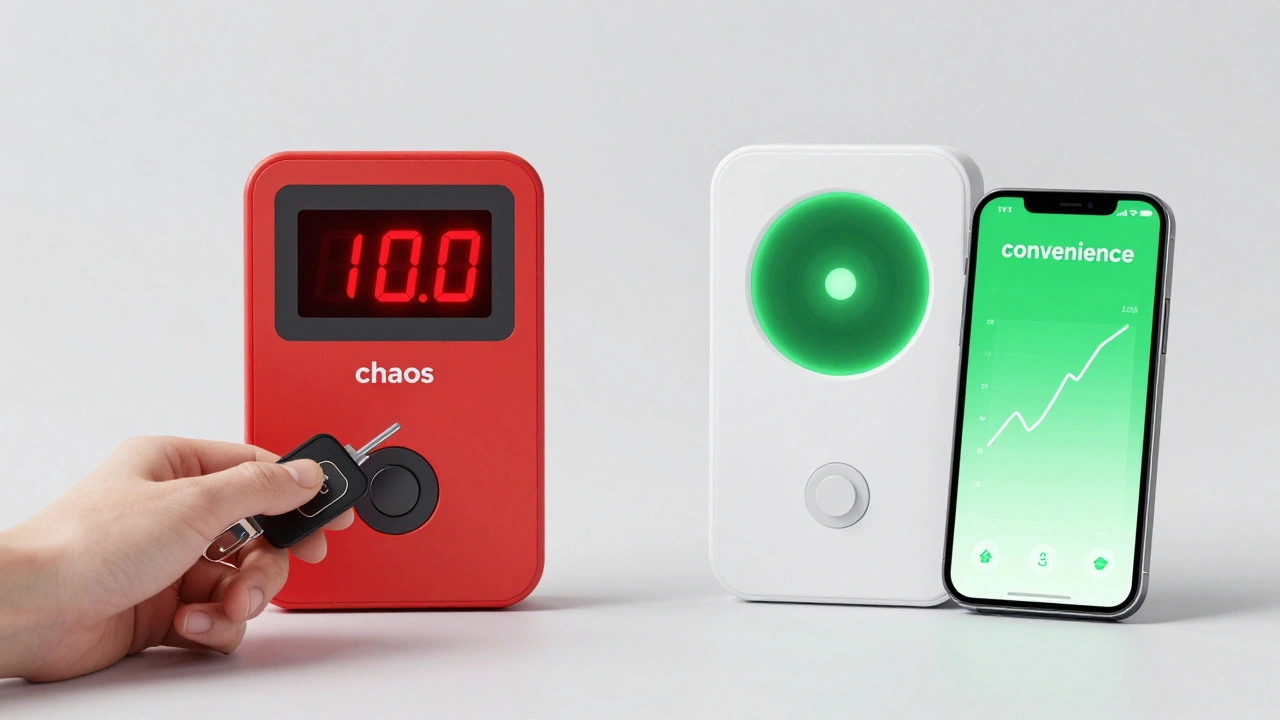
The Prepayment Experience: Control vs. Chaos
Prepayment meters are often installed in student rentals to protect landlords from inheriting massive unpaid bills. If you're the kind of person who accidentally spends their entire monthly budget on takeaways in week one, this system is actually a safety net. You can't spend money you don't have.
The main draw is the transparency. You can see exactly how much Kilowatt-hours (kWh) you're burning through. When you see your balance drop from £20 to £5 in three days because you left the space heater on, it forces a behavioral change that a monthly bill simply doesn't.
However, the "chaos" part kicks in when the credit runs out at 3 AM. While most modern meters have "emergency credit" (usually around £5 to £20), once that's gone, you're in the dark. If you're sharing a house, the "who topped up last?" argument becomes a weekly ritual. Without a clear agreement, one housemate often ends up subsidizing the others, leading to inevitable tension.
The Credit Meter Experience: Convenience and the "Bill Shock"
Credit meters are the gold standard for convenience. You set up a Direct Debit with a provider like Octopus Energy or British Gas, and the money leaves your account automatically. No one is fighting over a plastic key or a digital code.
The danger here is "bill shock." Because you aren't paying as you go, it's easy to ignore how much energy you're using. You might blast the heating all winter, only to receive a "catch-up bill" in the spring that demands £400 because your initial monthly payments were based on low estimates. This is where many students get trapped in debt.
To avoid this, you need a Smart Meter. These devices provide real-time data, allowing you to track usage via an app. If you have a credit meter but no smart tech, you're essentially flying blind until the bill arrives.
| Feature | Prepayment (PAYG) | Credit Meter |
|---|---|---|
| Payment Timing | Upfront (Pay first) | Deferred (Pay later) |
| Risk of Debt | Very Low | Moderate to High |
| Convenience | Low (Manual top-ups) | High (Automatic) |
| Budget Visibility | Instant and Exact | Delayed (Monthly/Quarterly) |
| Supply Stability | Can cut off instantly | Continuous service |
Managing Shared Bills in a Student House
Whether you have a prepay or credit meter, the biggest hurdle is the energy budget coordination. In a house of four students, the cost of electricity and gas can vary wildly based on who has the oldest, least efficient laptop or who likes 24/7 heating.
For prepayment houses, the most effective system is a "House Pot." Everyone contributes a set amount (e.g., £15 per week) into a shared digital wallet or a physical jar. One designated "Energy Officer" is responsible for topping up the meter. This prevents the "I thought you did it" excuse.
For credit meters, the best approach is to use a bill-splitting service. Instead of one person paying the whole bill and chasing the others for money-which is a nightmare for any friendship-these services split the bill and collect payments individually. It ensures the Energy Supplier gets paid on time and no one is left out of pocket.
Hidden Pitfalls and Pro Tips
One thing students often miss is the standing charge. Even if you turn off every single light and appliance in your house, you still pay a daily fee just to be connected to the grid. On a prepayment meter, this charge is deducted from your credit every single day. If you top up £10 and leave for a weekend, you might return to find your balance has dropped simply because of the standing charge.
Another trap is the "estimated bill." If you have a credit meter, always take a photo of your meter reading on the day you move in and the day you move out. If you don't, you might end up paying for the energy the previous tenants used, or the new tenants might benefit from your unpaid usage.
If you're struggling to keep the lights on, look into the Priority Services Register. Many energy companies provide extra support for vulnerable customers, which can sometimes include students in extreme financial hardship or those with health conditions that require constant heating.

Making the Final Call
If you have the choice, consider your personality. Are you a meticulous planner who tracks every penny in a spreadsheet? Prepayment will feel like a game of optimization. Do you prefer a "set it and forget it" lifestyle? Credit is your best bet.
Keep in mind that your landlord usually decides the meter type. If you're moving into a place with a prepayment meter and you hate it, you can sometimes request a switch to a credit account, but this usually requires a credit check and the landlord's permission. In most student HMOs (Houses in Multiple Occupation), the landlord sticks to prepayment to avoid the headache of chasing students for money after they've graduated and left the country.
Can I change my prepayment meter to a credit meter?
Yes, but it depends on your landlord and the energy supplier. You will likely need to provide proof of identity and potentially pass a credit check. If you are renting, the landlord must agree because it changes the financial risk associated with the property.
What happens if my prepayment meter runs out at night?
Most meters have an 'emergency credit' feature that gives you a small amount of power (usually enough for a few hours) to get you through to the morning. You can usually activate this by pressing a button on the meter. However, this amount is deducted from your next top-up.
Are smart meters better for students?
Absolutely. Smart meters work with both prepayment and credit systems. They allow you to top up via an app instead of walking to a shop with a key, and they provide a breakdown of exactly where your money is going, which is essential for splitting bills fairly.
Who is responsible for paying the standing charge?
The tenants are responsible for the standing charge. It is a fixed daily cost that covers the maintenance of the energy network. It is applied regardless of how much energy you actually use.
How do I avoid a huge bill at the end of the year with a credit meter?
The best way is to provide regular meter readings to your supplier (monthly is best). This ensures your Direct Debit is based on actual usage rather than an estimate, preventing a massive "catch-up" bill in the spring.
Next Steps for New Tenants
If you've just signed a lease, start by identifying which meter you have. If it's prepayment, agree on a "top-up schedule" with your housemates before the first cold snap hits. If it's credit, set up a joint account or use a bill-splitting app immediately.
For those in a prepayment house, find the nearest top-up point or download the supplier's app to see if you can pay online. For credit users, take a photo of the meter on day one. This simple act saves hours of arguing with energy companies later on.