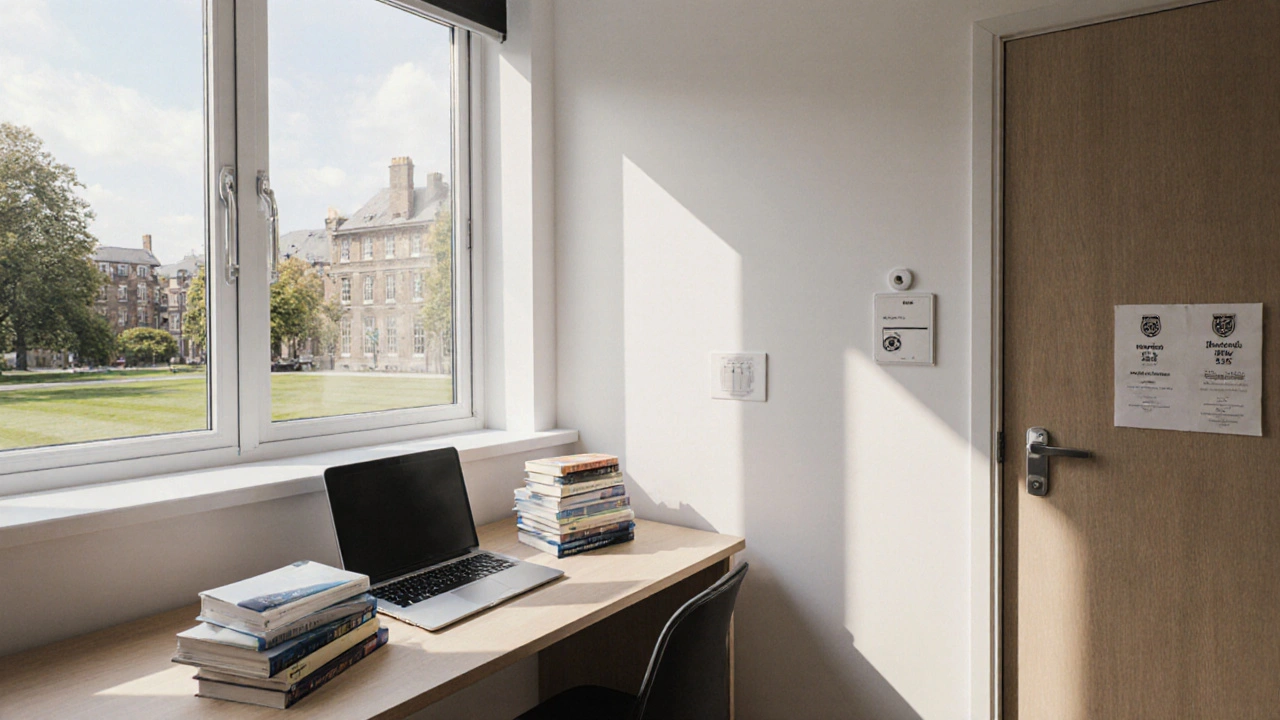
Moving to the UK for a postgraduate degree is exciting-but finding a place to live can feel overwhelming. You’re not just looking for a bed; you need a safe, affordable, and practical home that fits your study schedule, budget, and lifestyle. Whether you’re choosing between university halls, private rentals, or shared houses, the decision impacts your stress levels, finances, and even your grades. Let’s cut through the noise and break down exactly what’s available, what it costs, and what actually works for postgrads in 2025.
University Halls: The Easy Start
Most universities offer postgraduate accommodation in dedicated halls or blocks. These aren’t the noisy, first-year dorms you might picture. Postgrad halls are quieter, often with en-suite rooms, shared kitchens, and sometimes even study lounges. At universities like Manchester, Bristol, or Edinburgh, you’ll find modern buildings with 24/7 security, laundry rooms, and on-site maintenance.
Why choose halls? Simplicity. Rent usually includes bills, internet, and sometimes even cleaning. Contracts are typically 40-50 weeks, matching the academic year. You don’t need a guarantor, credit check, or deposit protection scheme-just sign, pay, and move in.
But there’s a catch: availability. Demand is high, and spots fill fast. If you wait until June to apply, you might only get a room in a less desirable building or far from campus. Top universities like UCL and Imperial usually open applications in January for September intake. Apply early, even if you haven’t accepted your offer yet.
Costs vary. In London, expect £800-£1,300 per month. Outside the capital, you’re looking at £500-£800. That’s more than some private rentals-but you’re paying for convenience and security.
Private Rentals: More Freedom, More Work
If you want control-over your location, your housemates, your decor-private renting is the way to go. You’ll find listings on Rightmove, Zoopla, or student-focused sites like Unilodgers and Student.com. Many landlords specialize in student lets, offering fully furnished one-bed flats or shared houses.
Postgrads often prefer one-bed flats or studio apartments, especially if they’re working part-time, researching, or have a partner. But these aren’t cheap. In cities like Oxford or Cambridge, a one-bedroom flat starts at £900/month. In Leeds or Sheffield, you might find one for £600-£750.
Here’s what you’re signing up for: a 12-month contract (usually), a deposit (up to 5 weeks’ rent), a credit check, and a guarantor (often a parent or close relative). You’ll also pay for utilities, council tax (unless you’re exempt), and internet. Council tax exemption? Yes, if you’re enrolled full-time in a postgraduate course, you’re automatically exempt. But you must apply for it-don’t assume it’s automatic.
Sharing a house with other students is cheaper but comes with trade-offs. You might end up with roommates who party late, don’t clean, or leave the kitchen a mess. One postgrad in Glasgow told me she moved out after three months because her housemates had a different schedule-she was up at 6 a.m. writing her thesis, and they were coming home at 3 a.m. after clubbing.
Cost Breakdown: What You’re Really Paying
Let’s compare real numbers for a typical 12-month stay in three cities:
| Location | University Hall (En-suite) | Private One-Bed Flat | Shared House (Room) |
|---|---|---|---|
| London | £1,100 | £1,400 | £800 |
| Manchester | £750 | £850 | £550 |
| Brighton | £800 | £950 | £600 |
These figures don’t include utilities. In halls, they’re included. In private rentals, add £100-£150 for gas, electricity, water, and internet. Council tax is free for full-time students, but you must apply for exemption through your local council.
Some postgrads forget about hidden costs: deposits (refundable but tied up for months), removal vans, furniture if you’re moving from abroad, or even a new cooker if your flat doesn’t come with one. One student from Nigeria spent £400 on secondhand furniture because her London flat was bare.

Which Option Is Best for You?
There’s no one-size-fits-all. It depends on your priorities.
- Choose halls if: You want low stress, no paperwork, and are new to the UK. Ideal if you’re doing a taught master’s and want to be close to campus and other students.
- Choose a private flat if: You need quiet, privacy, or plan to work remotely. Good for research students who need a dedicated space for writing or lab work.
- Choose a shared house if: Budget is tight, you’re comfortable with house rules, and you don’t mind socializing. Best for those who want to build a social life quickly.
Some postgrads start in halls and move to private housing after a term. That’s smart. You get time to learn the city, meet people, and figure out what you really need before signing a long-term lease.
What No One Tells You
Most guides focus on rent. But here’s what actually matters:
- Location vs commute: A cheaper flat 30 minutes from campus might cost you more in time and transport. A monthly bus pass in London is £150. In Cardiff, it’s £50. Factor that in.
- Heating and insulation: UK winters are damp. Older buildings can be freezing. Ask if the property has double glazing and modern heating. One student in Newcastle had to buy a space heater because the central heating broke every winter.
- Lease terms: Avoid 6-month leases unless you’re sure you’ll stay. Most landlords want 12 months. If you leave early, you’re still liable for rent unless you find a replacement.
- Roommate vetting: If you’re sharing, ask to meet potential housemates before signing. A quick Zoom call can save you months of conflict.
Also, check if your university offers a housing advisory service. Many do-free, confidential, and staffed by people who’ve helped hundreds of postgrads. Use them. Don’t wait until you’re stuck in a terrible flat.

What About Short-Term or Summer Stays?
If you’re doing a one-year master’s and plan to leave after graduation, you might not need 12 months. Some halls offer 40-week contracts (ending in June). Private landlords might allow 6-month leases, but they’re rarer and often more expensive per month.
Summer sublets? They exist. Students leaving early sometimes rent out their rooms for July-August. Check Facebook groups like "UK Student Housing Swap" or your university’s notice boards. It’s a great way to save if you’re staying for a summer internship or research.
Final Tips
- Apply for halls before your offer is even confirmed. Many universities let you reserve a room with a small deposit.
- Never pay a deposit without a signed contract and proof the landlord is registered with a Tenancy Deposit Scheme (TDS, DPS, or MyDeposits).
- Take photos of the property when you move in. Document any damage. You’ll need it when you move out.
- Use a student bank account if you have one. Some landlords prefer them because they’re linked to your student status.
- If you’re from outside the EU, check if your visa allows private renting. Most do-but confirm with your university’s international office.
Postgraduate life is demanding enough. Don’t add housing stress to the pile. Do the research early, know your budget, and pick the option that gives you space to focus on your degree-not on leaking pipes or noisy neighbors.
Are postgraduate students exempt from council tax in the UK?
Yes. If you’re enrolled full-time in a postgraduate course (taught or research), you’re automatically exempt from council tax. You don’t pay it, but you must apply for an exemption through your local council. Your university can provide a certificate confirming your enrollment. Don’t assume it’s automatic-many students get bills by mistake and end up paying unnecessarily.
Can international students rent privately in the UK?
Yes, but it’s harder. Many landlords require a UK-based guarantor-someone who’ll pay your rent if you can’t. If you don’t have one, some agencies offer guarantor services for a fee (around £300-£500). Others accept larger deposits or proof of funds. Always check visa rules: most student visas allow private renting, but you must be enrolled full-time.
How far in advance should I book postgraduate accommodation?
For university halls, apply by January for a September start. Some top schools fill up by March. For private rentals, start looking in April or May. The best deals go fast, especially in cities like Edinburgh or Bristol. Waiting until July means you’re left with the last rooms-often far from campus or in poor condition.
Is it cheaper to live in halls or private rent as a postgrad?
It depends. In London, halls are often cheaper than one-bed flats but more expensive than sharing a house. Outside London, private shared rooms can be £200-£300 cheaper than halls. But halls include bills and security. A private room might be cheaper on paper, but add £120 for utilities and transport, and the gap narrows. Calculate the full cost, not just rent.
What should I do if my accommodation falls through?
Don’t panic. Most universities have emergency housing lists or temporary accommodation options. Contact your student union or international office immediately. Some offer short-term stays in guest rooms or partner hotels. Also check SpareRoom, Gumtree, or Facebook groups for last-minute sublets. Even a week in a hotel while you search is better than sleeping on a friend’s couch.
Next Steps
Start by listing your priorities: budget, location, quiet, or social life. Then check your university’s accommodation portal. Apply for halls first. Simultaneously, browse private rentals in your target areas. Set up alerts on Rightmove and Student.com. Talk to current postgrads-ask them where they live and what they’d do differently. Most will tell you the same thing: start early, don’t rush, and don’t ignore the small details. Your future self will thank you.