
If you just finished your degree in the UK and are wondering if you can stay and work, the good news is: yes, you can. The UK offers a clear path for international graduates to stay and build their careers after graduation. This isn’t a temporary loophole-it’s a structured visa designed for exactly this purpose. But knowing how it works, what the rules are, and how to avoid common mistakes can make the difference between landing a job and having to leave.
What is the UK Graduate Visa?
The UK Graduate Visa, also called the Graduate Route, lets international students who’ve completed a degree at a UK institution stay for up to two years (three years if you completed a PhD) to work or look for work. You don’t need a job offer before applying. You don’t need to meet a minimum salary requirement. And you don’t need to be sponsored by your employer. That’s a big shift from older visa rules that made it nearly impossible for graduates to stay without a sponsored role.
This visa is open to anyone who has successfully completed a bachelor’s, master’s, or PhD at a UK university that’s approved by the Home Office. You must have been studying on a Student Visa (formerly Tier 4) and have completed your course in the UK. Online-only study during the pandemic doesn’t count-you need to have been physically present in the UK for the final term of your course.
Eligibility: What You Need to Qualify
To get the Graduate Visa, you must meet three simple but strict requirements:
- You’ve completed a qualifying course at a UK institution with a track record of compliance (most universities qualify).
- You’ve held a valid Student Visa for the full duration of your course.
- You’re in the UK when you apply.
You can’t apply from outside the UK. If you leave before applying, you lose your chance. That means don’t book a flight home right after your final exam. Wait until your visa application is submitted and confirmed.
Your course must be at least 12 months long. If you did a shorter course-like a one-year master’s-you still qualify as long as you’ve been in the UK for the full length of your studies. But if you started your course in 2020 and studied remotely from abroad for most of it, you’re not eligible. The Home Office tracks your entry and exit dates through immigration records.
How to Apply: Step-by-Step
Applying for the Graduate Visa is straightforward, but timing matters. Here’s how to do it:
- Wait until you’ve been officially awarded your degree. Your university will notify the Home Office that you’ve completed your course. This usually happens within 4 to 6 weeks after your final results.
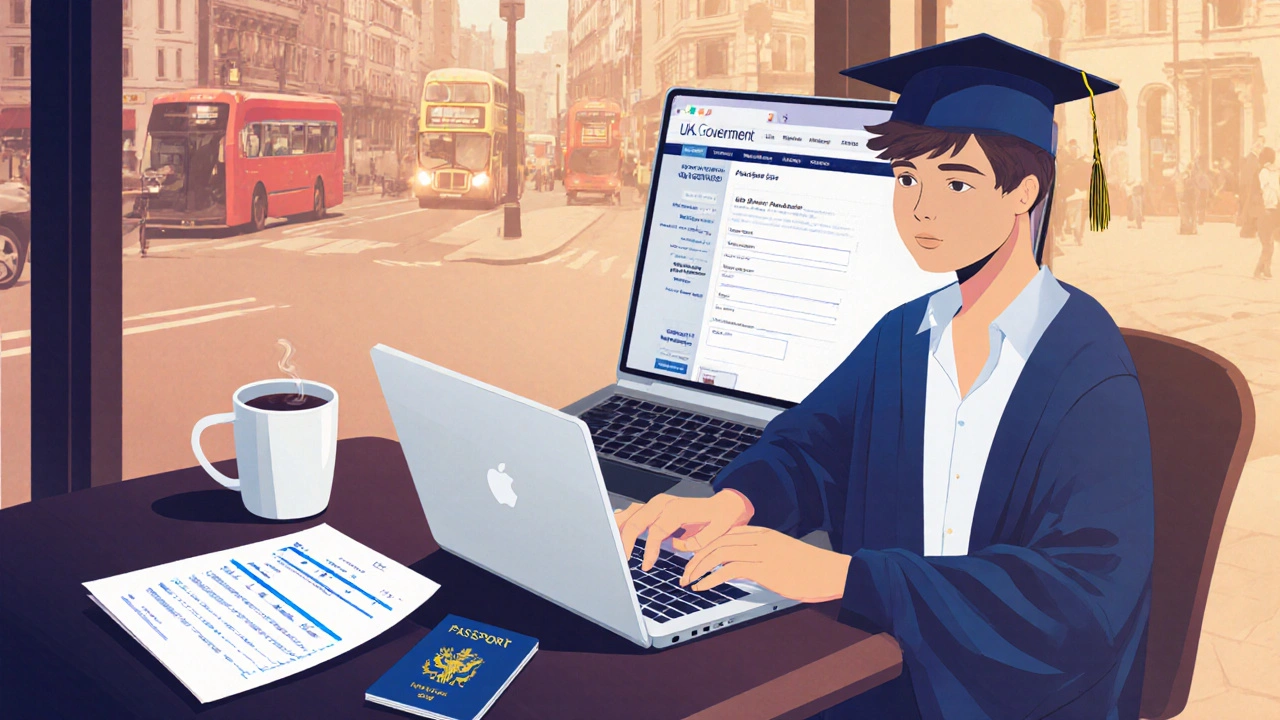
- Apply online through the UK government website. You’ll need your passport, your Confirmation of Acceptance for Studies (CAS) number, and proof of your identity.
- Pay the application fee: £822 for most applicants. If you’ve been in the UK for more than 6 months, you’ll also pay the Immigration Health Surcharge: £776 per year. For a two-year visa, that’s £1,552 total.
- Upload a photo of yourself and your passport.
- Book and attend a biometrics appointment at a UK Visa and Citizenship Application Services (UKVCAS) center. This takes about 15 minutes.
You’ll usually get a decision within 8 weeks. You can start working as soon as you submit your application-even before you get a decision. Many students begin jobs right after graduation, confident they’ve applied on time.
What Jobs Can You Do?
There are no restrictions on the type of job you can take. You can work full-time, part-time, freelance, or even start your own business. You can switch jobs as many times as you want. You can work in retail, tech, healthcare, hospitality, or even as a barista while you look for your ideal role.
Some students use the Graduate Visa to gain experience in their field before applying for a Skilled Worker Visa. Others use it to explore different industries. One graduate from Manchester spent six months working in a café, then landed a data analyst role at a fintech startup. Another, from Birmingham, used the time to build a side hustle selling handmade crafts online-later turning it into a registered business.
The key is to use the visa as a bridge. It’s not meant to be a permanent solution, but it gives you time to build a career in the UK without the pressure of needing sponsorship from day one.
How Long Can You Stay?
The length of your visa depends on your degree:
- Bachelor’s or Master’s: 2 years
- PhD or other doctoral degree: 3 years
You can’t extend the Graduate Visa. Once it expires, you must leave or switch to another visa category. The most common next step is the Skilled Worker Visa, which requires a job offer from a licensed employer and a salary that meets the UK’s minimum threshold (usually £38,700 or the going rate for the job, whichever is higher).
Some graduates choose to study further-enrolling in a new course to get another Student Visa. Others move to other countries like Canada or Australia, where post-study work options are still available. But for many, the two-year window is enough to find a sponsored role and transition smoothly.
What Happens When Your Visa Expires?
If you don’t switch to another visa before your Graduate Visa ends, you’ll have to leave the UK. There’s no grace period. Overstaying can affect future visa applications-not just to the UK, but to other countries too.
Start planning at least 4 months before your visa runs out. If you’ve found a job, your employer can sponsor you for a Skilled Worker Visa. That process takes time: the employer needs to get a sponsorship license (if they don’t have one), issue a Certificate of Sponsorship, and you need to apply from within the UK. You can apply up to 60 days before your Graduate Visa ends.
If you haven’t found a job yet, consider using the remaining time to network, upskill, or apply for roles abroad. Many international graduates from the UK end up working in the US, Germany, or the Netherlands after their visa expires.
Common Mistakes to Avoid
Even smart students make these errors:
- Waiting too long to apply. You have 6 months from your course end date to apply. Don’t wait until the last week. Delays happen.
- Leaving the UK before applying. Once you’re outside the UK, you can’t apply. No exceptions.
- Thinking you need a job offer. You don’t. But having one can help you transition faster to a Skilled Worker Visa later.
- Ignoring the health surcharge. It’s mandatory. Don’t skip it thinking you can save money. You’ll be refused.
- Assuming you can switch to a spouse visa easily. You can only do this if you’re married to a UK citizen or settled person. Don’t enter a relationship just for visa purposes-it’s illegal.

Can You Bring Family?
No. The Graduate Visa does not allow dependents. If you had a partner or child with you on your Student Visa, they must leave when your Graduate Visa ends unless they qualify for a different visa on their own.
This is a major change from the old Tier 4 rules. Many students are surprised by this. If you plan to stay long-term with your family, you’ll need to switch to a Skilled Worker Visa or another route that permits dependents.
Real Stories: What Works
Sarah, from Nigeria, graduated with a Master’s in Engineering from Imperial College London in 2024. She applied for her Graduate Visa the day she received her final results. Within 3 weeks, she started working as a junior engineer at a renewable energy firm. She didn’t have a job offer when she applied, but she used the 2 years to build her portfolio, attend industry events, and network. By month 14, she had a sponsored role and switched to a Skilled Worker Visa.
James, from India, studied Computer Science at the University of Edinburgh. He used his two years to freelance on Upwork, then launched a small app development company. He hired two other international graduates on freelance contracts. He didn’t get a sponsor right away, but he built a business that now qualifies him for an Innovator Visa.
These aren’t rare cases. They’re typical. The Graduate Visa works if you use it actively.
Where to Get Help
Your university’s international student office is your best resource. They’ve helped thousands of students apply. They can check your documents, explain fees, and warn you about deadlines.
Also, check the official UK government site: www.gov.uk/graduate-visa. Avoid third-party agencies that promise guaranteed approval. Many charge hundreds of pounds for services you can do yourself for free.
If you’re unsure about your eligibility, email your university’s visa team. Most respond within 48 hours. Don’t guess. Get it right.
Can I apply for the Graduate Visa if I studied online during the pandemic?
No. If you completed your entire course remotely from outside the UK, you’re not eligible. The Home Office requires you to have been physically present in the UK for the final term of your course. This rule was introduced in 2021 and still applies in 2025. Even if you started in person but finished online, you must have been in the UK for at least the last 6 months of your course.
Do I need to have a job offer before applying?
No. The Graduate Visa doesn’t require a job offer. You can apply even if you’re unemployed. The purpose of the visa is to give you time to find work. Many people use this period to explore different industries, do internships, or build freelance portfolios before landing a full-time role.
Can I switch from the Graduate Visa to a Skilled Worker Visa while in the UK?
Yes. You can apply to switch from the Graduate Visa to a Skilled Worker Visa while you’re still in the UK. You’ll need a job offer from a Home Office-approved sponsor, and the role must meet the minimum salary requirement (usually £38,700 or the going rate for the job). You can apply up to 60 days before your Graduate Visa expires.
Can I study while on the Graduate Visa?
Yes, but only if it’s a short course that doesn’t lead to a new qualification. You can’t enroll in a full-time degree program while on the Graduate Visa. If you want to study again, you’ll need to apply for a new Student Visa. You can’t switch directly from Graduate Visa to Student Visa-you must leave the UK and reapply from abroad.
What if I don’t find a job before my visa expires?
You must leave the UK. There’s no extension or grace period. Some graduates use the time to build skills, network, or apply for roles in other countries. Others return home and reapply later with stronger experience. The Graduate Visa is a temporary bridge-not a guarantee of permanent residency. Plan ahead and use your time wisely.
Can I start a business on the Graduate Visa?
Yes. You can register a company, work as a freelancer, or run a side business. You don’t need special permission. But you can’t use the Graduate Visa to claim settlement or permanent residency through business ownership. If you want to stay long-term, you’ll need to switch to a visa like the Innovator Visa, which requires investment and a business plan approved by an endorsed body.
Next Steps: What to Do Now
If you’re still studying, start preparing now. Talk to your university’s international office. Save your CAS number. Keep your passport valid. Make sure you know your exact course end date and when your results will be released.
If you’ve already graduated and haven’t applied yet, act fast. You have up to 6 months from your course end date to apply. Don’t wait. The system is reliable, but processing times can vary. Apply early, even if you’re still waiting for your final certificate.
If you’re unsure about your next move, use this time to explore. Attend career fairs. Join LinkedIn groups for international graduates in your field. Talk to alumni. The Graduate Visa isn’t just a work permit-it’s a launchpad. Use it wisely.