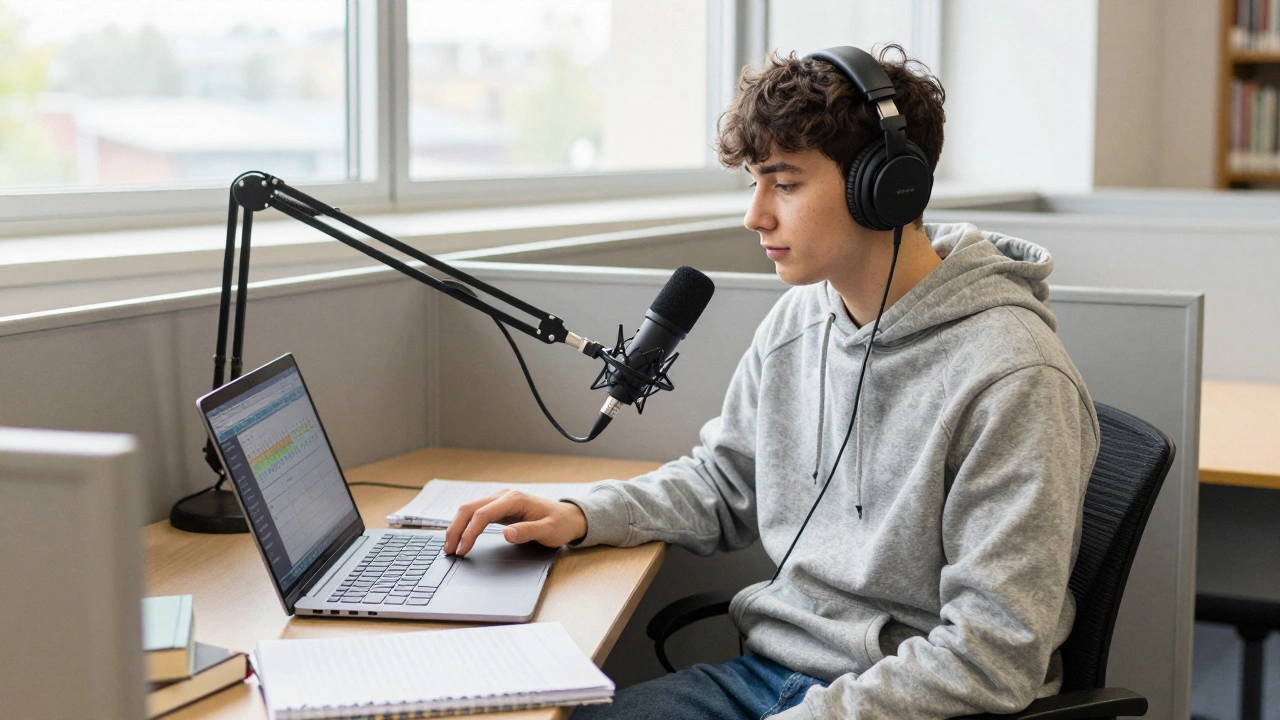
UK students are turning to podcasting not just to share ideas, but to build skills that classrooms don’t teach. It’s not about becoming the next Joe Rogan. It’s about learning how to think on your feet, organize your thoughts, and communicate clearly-all while fitting it around lectures, essays, and part-time jobs. And yes, you can do it with a £30 microphone and your laptop. No studio needed.
Why Podcasting Fits Student Life
Think about it: you’re already talking. You’re debating in seminars, explaining concepts to flatmates, or ranting about deadlines over coffee. Podcasting just gives that voice a structure. It turns casual chats into practice for interviews, presentations, and even job applications. A 2024 study from the University of Edinburgh found that students who ran weekly podcasts improved their verbal fluency by 40% in just eight weeks. That’s not magic. It’s repetition with purpose.
Plus, it’s flexible. You don’t need to be live. You can record between lectures. Edit while waiting for the bus. Upload before bed. No one’s watching. No one’s grading. Just you, your mic, and your thoughts.
Step-by-Step: Launching Your First Episode
Here’s the real path-no fluff, no theory, just what works for students:
- Choose one topic. Not "everything about uni." Pick something you actually care about: "Why I switched from Psychology to Data Science," "How I passed Organic Chemistry without memorizing," or "The 3 apps that saved my essay deadlines." Specificity keeps listeners coming back.
- Plan a 10-minute script. No need for a full script. Just bullet points. Start with: "What problem am I solving?" Then: "What’s the story?" Then: "What should they do after listening?" That’s it.
- Record in a quiet spot. Library carrels, empty lecture halls after class, or even your closet (yes, clothes absorb sound). Use headphones to check for background noise. If your laptop fan is loud, pause and wait.
- Use free editing tools. Audacity (Windows/Mac) or GarageBand (Mac/iOS) are free and powerful. Cut out "ums," pause awkward silences, and add a 3-second intro/outro with simple music. YouTube has free copyright-safe tracks.
- Upload to Anchor. It’s owned by Spotify, free, and auto-distributes to Apple, Google, and Amazon. You don’t need a website. Just press "Publish."
First episode? Keep it under 12 minutes. That’s the sweet spot for students who listen during commutes or while cooking. You’ll get better fast.
Gear That Costs Less Than a Textbook
You don’t need a $500 mic. Here’s what actually works for students on a budget:
| Item | Best Under £50 | Why It Works | Where to Buy |
|---|---|---|---|
| Microphone | Samson Q2U | USB + XLR, built-in headphone jack, plugs straight into laptop | Amazon UK, Maplin |
| Headphones | Audio-Technica ATH-M20X | Good sound isolation, durable, under £60 | Wex Photo Video, Argos |
| Pop Filter | Generic foam filter (£5) | Blocks plosives ("p," "b" sounds). No need for fancy ones. | Amazon, eBay |
| Stand | Desktop boom arm (£15) | Keeps mic off desk, cuts vibrations from typing or movement | Amazon UK |
| Software | Audacity (free) | Full editing, noise reduction, effects. No subscription. | audacity.sourceforge.net |
That’s £100 total if you buy everything. Most students start with just the mic and free software. Skip the ring lights, the studio panels, the $200 mixer. You’re not making a Netflix show. You’re practicing speaking.
Formats That Actually Work for Students
Not every podcast needs interviews or long monologues. Here are three formats that fit student schedules:
- The 5-Minute Study Hack: One tip per episode. "How I took notes in lectures using Notion." "Why I stopped highlighting and started summarizing." Short. Actionable. Repeatable. These get shared between friends.
- The Peer Review: Record yourself explaining a concept you struggled with-like quantum physics or Kantian ethics-then play it back. Notice where you got stuck? That’s your next episode. It’s self-teaching in disguise.
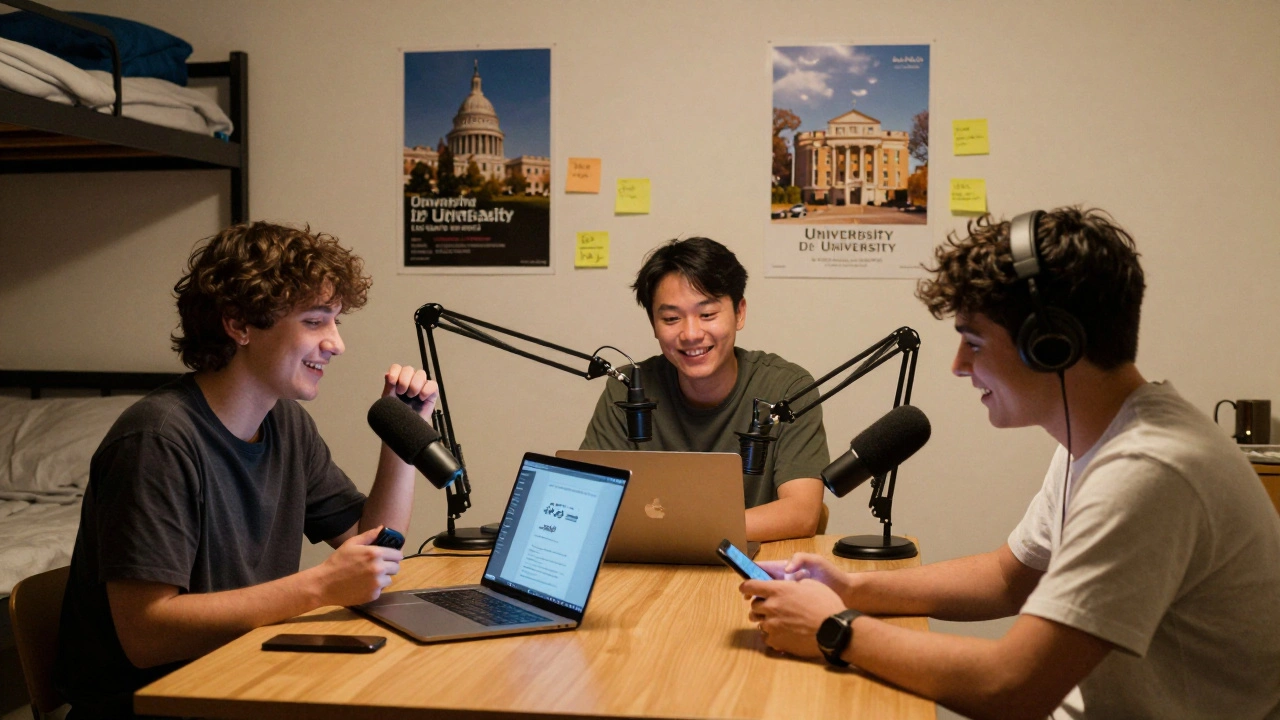
- The Campus Q&A: Ask your classmates: "What’s the one thing you wish you knew before your first year?" Record 3 answers. Edit them into a 7-minute episode. No prep. Just curiosity.
These formats don’t require guests, scripts, or fancy equipment. They just require consistency. One episode a week. That’s it.
How to Fit Podcasting Into a Busy Term
You’ve got deadlines. You’ve got group projects. You’ve got a part-time job at the campus café. How do you squeeze this in?
Here’s the trick: tie it to your studies.
Turn your essay research into a podcast script. Record your revision notes as audio summaries. Use podcasting as your study tool, not just your side hustle. One student at Manchester University recorded her revision for Human Anatomy as a 10-part series. She ended up teaching it to her classmates. They all passed. She got top marks.
Block out 30 minutes once a week. That’s all. Monday after dinner. Tuesday before class. Sunday night. Just 30 minutes. Record. Edit. Upload. Done.
What No One Tells You
Most students quit after three episodes because they think they need to be "good." But here’s the truth: your first 10 episodes are practice. They’re not for the world. They’re for you.
Listen back to your first episode. Cringe? Good. That means you’re learning. Your third episode? Better. Your sixth? You sound like someone who knows what they’re talking about. That’s the magic.
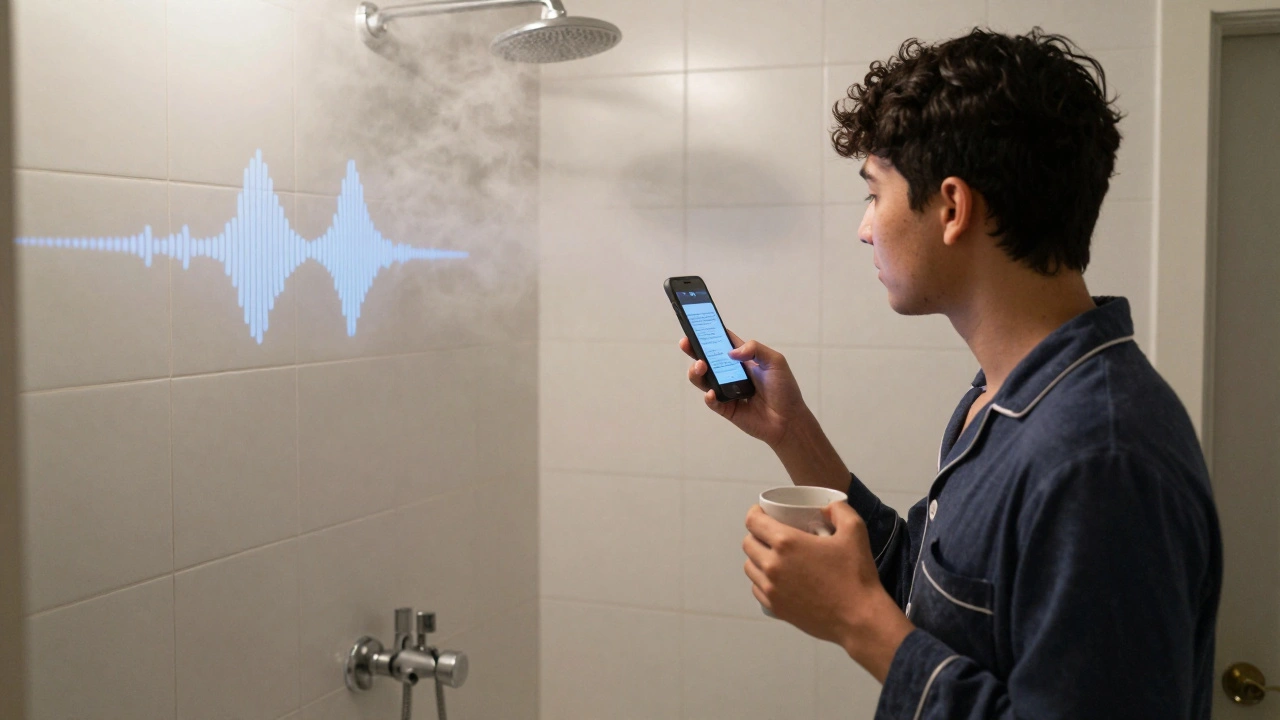
And don’t wait for perfect sound. A student at Glasgow recorded her first podcast in her bathroom. The tiles made it echo. She didn’t fix it. She just kept going. People loved it because she sounded real.
Podcasting isn’t about production. It’s about presence. Your voice, your pace, your mistakes-they’re your superpower.
Where This Leads
Students who podcast don’t just get better at speaking. They get noticed.
One student at Bristol turned her podcast on sustainable fashion into a university project. She got invited to speak at a campus summit. Another used his podcast on mental health to land an internship at a mental health charity. A third built a following so strong, she got asked to host a live Q&A for the student union.
It’s not about going viral. It’s about building proof of your skills. Employers don’t care that you got a 2:1. They care that you can explain complex ideas clearly, consistently, and with confidence. That’s what podcasting gives you.
Do I need to be a great speaker to start a student podcast?
No. You just need to be willing to try. Most people sound awkward at first. That’s normal. The more you record, the more natural you become. Your first five episodes are for practice, not perfection.
Can I use my phone to record a podcast?
Yes. Your phone’s mic is better than you think. Use the Voice Memos app (iPhone) or RecForge II (Android). Record in a quiet room, hold the phone close to your mouth, and avoid background noise. You can edit it later on a laptop using free software.
How often should I release new episodes?
Once a week is ideal. It’s manageable and keeps your audience engaged. If that’s too much, try every two weeks. Consistency matters more than frequency. Missing a week? Just say so on air. Students understand deadlines.
What if no one listens?
That’s fine. Most student podcasts have 50-200 listeners. That’s not failure-it’s feedback. Focus on improving your content, not your numbers. The real win is the skill you’re building. By the time you hit 10 episodes, you’ll be a better communicator, no matter who’s listening.
Can podcasting help with my grades?
Indirectly, yes. Explaining a topic out loud forces you to understand it deeply. Many students report better essay scores after starting a podcast because they’ve practiced organizing their thoughts clearly. It’s active learning, not passive studying.
Next Steps
Ready to start? Here’s your 24-hour challenge:
- Write down one topic you’re passionate about (even if it’s small).
- Record a 5-minute voice note on your phone explaining it.
- Listen back. What felt awkward? What felt clear?
- Upload it to Anchor. Hit "Publish."
You just made your first podcast. No permission needed. No approval required. Just you, your voice, and your next step.