
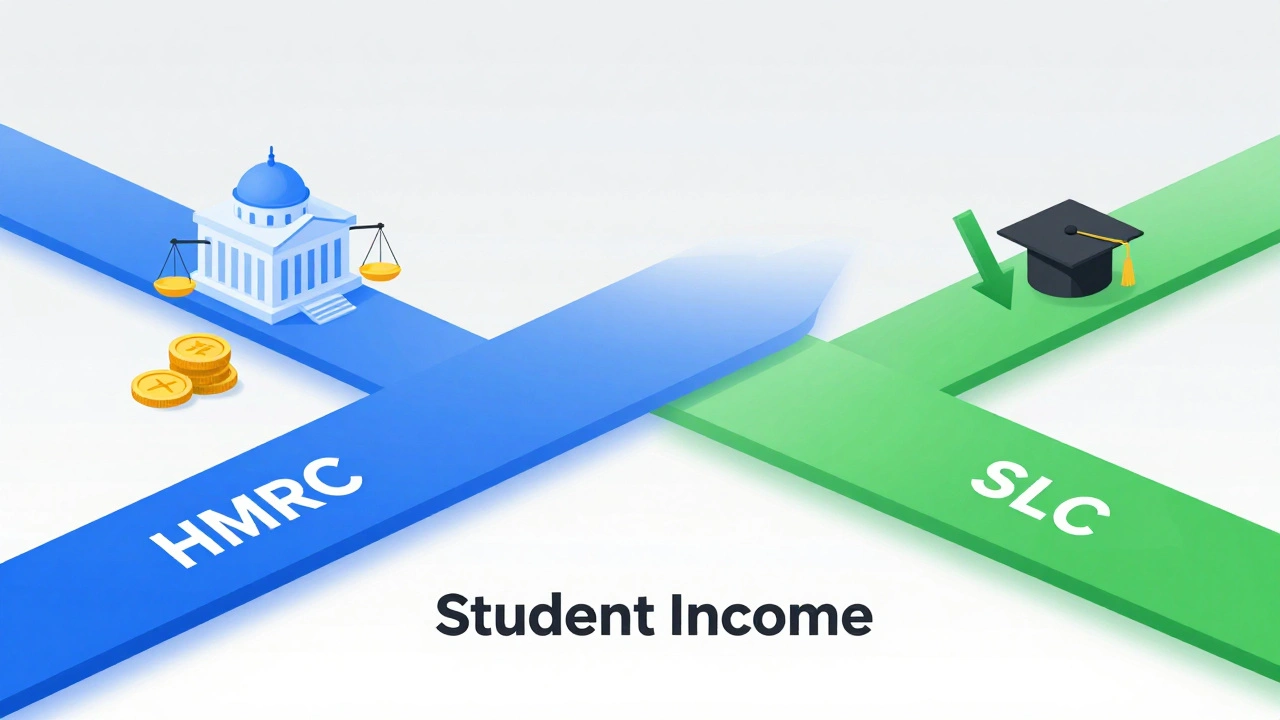
Working while studying in the UK is a common way to cover living costs, but it introduces a complex web of financial rules. You have to balance earning money with repaying your debt without triggering unexpected tax bills or repayment penalties. The confusion usually stems from two different bodies watching your finances: HM Revenue and Customs (HMRC) is the government department responsible for collecting taxes and paying out some state benefits, which handles your income tax and National Insurance, and the Student Loan Company (SLC) is the executive agency that manages student loans on behalf of the UK government, which collects your loan repayments based on your earnings.
If you get these two systems mixed up, you might find yourself overpaying, underpaying, or facing queries later. This guide breaks down exactly how part-time work interacts with your student loans, what thresholds matter, and how to stay compliant with both entities.
Understanding the Two Separate Systems
The biggest mistake students make is thinking their student loan repayment and their tax obligations are linked directly through their employer. They are not. In the UK, these are two parallel processes that run independently until they intersect at your total annual income.
HMRC is the authority that determines if you owe income tax based on your gross earnings before deductions. Your employer deducts this using Pay As You Earn (PAYE). On the other hand, the Student Loan Company is the body that calculates your loan repayment based on your net earnings after tax. For most Plan 2, Plan 5, and postgraduate loan borrowers, this deduction happens automatically through your payroll. For Plan 1 and older plans, you often pay manually via Direct Debit once a year after filing your Self Assessment tax return.
This separation means you need to track your gross income for tax purposes and your net income for loan purposes. If you work part-time, your gross income might be low enough to avoid income tax entirely, but high enough to trigger a small student loan repayment. Conversely, you might pay significant tax but owe nothing toward your loan if your income stays below the specific threshold.
Income Thresholds That Trigger Repayments
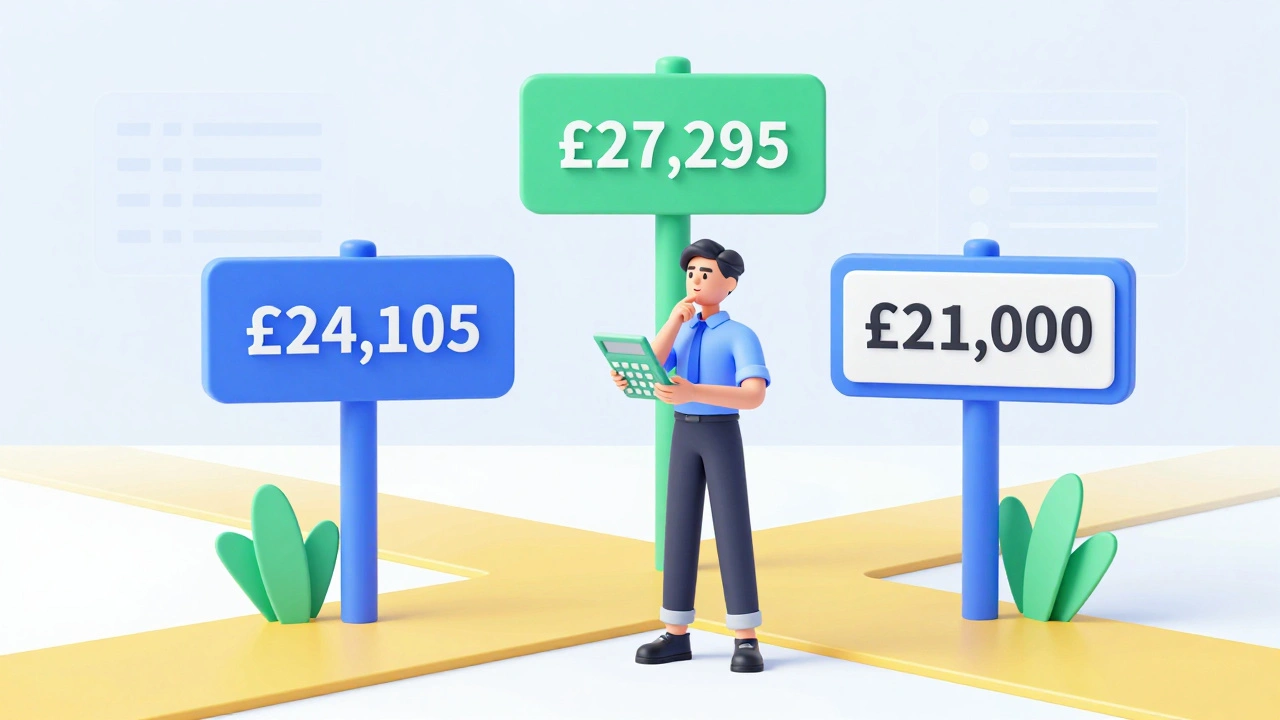
Your obligation to repay depends heavily on which repayment plan you are on. The thresholds change annually, usually in September, so checking the current figures is crucial. As of the 2025-2026 academic year, here are the key benchmarks:
| Loan Plan | Annual Gross Income Threshold | Repayment Rate | Collection Method |
|---|---|---|---|
| Plan 1 | £24,105 | 9% of income above threshold | Self Assessment / Manual |
| Plan 2 | £27,295 | 9% of income above threshold | PAYE (Automatic) |
| Plan 5 | £24,105 | 9% of income above threshold | PAYE (Automatic) |
| Postgraduate | £21,000 | 6% of income above threshold | PAYE (Automatic) |
If you work part-time and earn less than £20,000 a year, you will likely pay no income tax and no student loan repayments, regardless of your plan. However, if you pick up extra shifts during summer holidays or combine multiple part-time jobs, your total income could spike above these thresholds. Remember, the threshold is based on your total income from all sources, not just one job.
How HMRC Handles Part-Time Student Earnings
When you start a part-time job, your employer will ask for your National Insurance number and set up a tax code. Most students will receive a tax code like '1257L', which gives you the standard personal allowance of £12,570. This means you can earn up to £12,570 per year before paying any income tax.
If you have more than one part-time job, things get trickier. You should only apply the full personal allowance to your main job. For secondary jobs, your employer might use an emergency tax code like 'NT' (No Tax) or 'BR' (Basic Rate), meaning tax is deducted from the first pound earned. This isn't necessarily wrong; it's just how the system works to prevent underpayment. At the end of the tax year (April 5th), HMRC is responsible for reconciling your total tax paid against your actual liability. If you overpaid, you'll get a refund. If you underpaid, you'll owe money.
For students working seasonally-say, only during December or summer-you might exceed the personal allowance in a single month but stay well below it for the year. Your employer might still deduct tax because they don't know your future earnings. Keep your payslips safe. If you're sure you won't exceed the annual limit, you can contact HMRC to adjust your tax code, though this takes time and effort.
National Insurance Contributions
Alongside income tax, you'll also pay National Insurance (NI) contributions if your weekly earnings exceed £138 (for employees) or your annual earnings exceed £12,570. NI is separate from income tax and funds state benefits like the NHS and pension.
As a student, NI contributions are generally beneficial. They count toward your qualifying years for the State Pension. Even if you're young and don't think about retirement yet, every week you pay NI builds your record. There's no penalty for paying NI as a student, and it doesn't affect your student loan repayment calculations directly. It simply reduces your take-home pay slightly.
However, if you're self-employed (e.g., freelancing, tutoring, or running a small side hustle), you must register with HMRC as self-employed. You'll pay Class 2 and Class 4 National Insurance instead of Class 1. This adds administrative complexity, including filing Self Assessment tax returns, which also triggers the manual student loan repayment process for Plan 1 borrowers.
Managing Multiple Jobs and Income Spikes
Many students juggle a casual job, internships, and freelance work. The challenge is that Student Loan Company is unable to see your real-time income across all employers unless they report it via PAYE. If you have multiple PAYE jobs, each employer reports your earnings separately to HMRC. The SLC aggregates this data to calculate your total repayment.
Here’s where it gets tricky: if you earn £15,000 from Job A and £15,000 from Job B, your total income is £30,000. Both jobs might treat you as a low earner individually, applying the personal allowance twice. This results in underpaid income tax. Meanwhile, the SLC sees the combined £30,000 and starts deducting loan repayments from both paychecks. You could end up paying tax refunds later while having already paid substantial loan installments.
To avoid this, inform your second employer that you already have a primary job. Ask them to use an emergency tax code or notify HMRC directly. This ensures tax is deducted correctly from the start, smoothing out your cash flow.
Tax-Free Allowances and Benefits
While working part-time, you might still qualify for certain benefits. Universal Credit, for example, has taper rates that reduce your benefit as your earnings increase. However, student loan repayments are not considered income for Universal Credit purposes. This is a crucial distinction: paying back your loan doesn't reduce your benefit entitlement.
Additionally, childcare vouchers or tax-free childcare accounts can help offset costs if you have children. These schemes allow you to save pre-tax money for childcare, effectively giving you a discount on care costs. Eligibility depends on your partner's income and your own earnings, so check the latest rules on GOV.UK.
Common Pitfalls to Avoid
- Ignoring Self-Employment: If you earn over £1,000 from self-employment, you must register with HMRC. Failure to do so can lead to penalties and missed loan repayments.
- Mixing Up Gross and Net: Always base your budget on net pay (after tax and NI), not gross salary. Loan repayments come out of net pay for automatic collections.
- Assuming One Job Covers Everything: If you switch jobs mid-year, your new employer won't know about your previous earnings. Update HMRC immediately to prevent over-deduction of tax.
- Overlooking Interest Accrual: While you're studying and shortly after, interest accrues on your loan. Working part-time helps cover living costs, but remember that unpaid balances grow. Prioritize clearing high-interest portions if possible.
Practical Steps for Students
- Register with HMRC Early: Get your National Insurance number and set up a Government Gateway account. This lets you view your tax records online.
- Track All Income Sources: Use a simple spreadsheet to log earnings from each job, including freelance gigs. Total them quarterly to estimate tax and loan liabilities.
- Communicate with Employers: Tell each employer about your other jobs. Provide correct tax codes to avoid over-withholding.
- Monitor SLC Statements: Log in to your SLC account regularly. Check if repayments match your expected amounts based on recent paychecks.
- File Self Assessment on Time: If you have untaxed income or are self-employed, file by January 31st. Late filings incur fines and disrupt loan repayment schedules.
FAQ
Does working part-time affect my student loan interest?
No, working part-time does not change the interest rate applied to your loan. Interest accrues based on your inflation-linked rate plus a margin, regardless of your employment status. However, making voluntary repayments can reduce the principal amount, thereby lowering future interest charges.
What happens if I earn below the threshold one month and above the next?
For PAYE-collected loans (Plan 2, 5, Postgraduate), repayments are calculated monthly. If your monthly earnings exceed the threshold divided by 12, you'll make a repayment that month. If you fall below, you pay nothing. There's no annual averaging for automatic collections, unlike Self Assessment plans.
Can I claim tax relief for expenses related to my part-time job?
Yes, you can claim tax relief for allowable business expenses, such as travel costs, equipment, or professional subscriptions. This reduces your taxable income, potentially lowering your tax bill and increasing your take-home pay. Keep receipts and records to support your claims.
Do student loan repayments count towards my pension?
No, student loan repayments are not pension contributions. They go toward reducing your debt balance. However, the National Insurance contributions you pay alongside your earnings do contribute to your State Pension record.
What if my employer stops deducting student loan payments?
If your employer stops deductions, it may be due to incorrect tax codes or changes in your employment status. Contact the Student Loan Company immediately to update your details. Alternatively, you can arrange direct payments manually to ensure compliance and avoid arrears.