
If you’re planning to study in the UK, finding a place to live off-campus isn’t just a chore-it’s a make-or-break part of your experience. Too many students wait until the last minute, only to end up paying way too much for a tiny room in a dodgy flat, or worse, losing their deposit to a scammer. The truth is, the best housing gets snapped up fast, and scams are everywhere. But if you start early and know what to look for, you can land a safe, affordable, and decent place without stress.
Why Starting Early Matters More Than You Think
Most students think they have until June or July to find housing. That’s a mistake. By April, the best off-campus options in cities like Manchester, Birmingham, or Edinburgh are already taken. Landlords and letting agencies list properties as early as January for the next academic year. If you wait, you’re left with whatever’s left: rooms above noisy pubs, flats with broken heating, or places an hour from campus with no bus service.
Universities don’t always have enough on-campus rooms, especially for international students. That means off-campus is your only realistic option. But here’s the catch: the earlier you start, the more choices you have. You can pick a place with good transport links, a kitchen that actually works, and flatmates who aren’t partying every night. You can even negotiate rent if you sign a 12-month lease early.
Start looking at least six months before your course begins. That means if you’re starting in September, begin your search in March. Set up alerts on trusted sites like Rightmove, Zoopla, and Student.com. Don’t wait for your university to send you a list-those are often outdated or limited to a few options.
Where to Look (and Where to Avoid)
Not all housing platforms are created equal. Stick to the big, reputable ones:
- Rightmove and Zoopla - the UK’s largest property portals. They list both private landlords and agencies.
- Student.com - focused on student housing, with verified listings and 24/7 support.
- Unilodgers - offers managed student accommodations with contracts backed by the university.
- Facebook Groups - search for “[Your City] Student Housing” or “[Your University] Accommodation”. Many landlords post here directly.
Avoid random websites with weird URLs like “uk-student-homes-fast.com” or listings that only accept payment via PayPal or cryptocurrency. If the site looks like it was made in 2008 and has no phone number or physical address, walk away.
Also avoid agents who pressure you to pay a deposit before you’ve seen the property in person or via a live video call. If they say, “It’s only £200 to hold it,” that’s a red flag. Legitimate landlords don’t ask for money without a contract or viewing.
Spotting Scams Before You Pay a Penny
Scammers target international students because they’re often far from home, unfamiliar with local rules, and desperate to secure a place. Here’s how they work:
- Too-good-to-be-true prices - A £400/month room in central London? That’s not a deal. That’s a trap. Average rent for a single room in London is £800-£1,200. If it’s way below market rate, it’s fake.
- No viewing possible - If the landlord says, “I’m abroad right now, but here are 50 photos,” that’s a lie. Demand a live video tour. Use Zoom or WhatsApp. If they refuse, it’s a scam.
- Requests for upfront payment - Never pay a deposit, admin fee, or “holding fee” without a signed tenancy agreement. In the UK, it’s illegal for letting agents to charge tenants fees before signing (except for a refundable holding deposit, capped at one week’s rent).
- Copycat websites - Scammers clone real sites like Rightmove. Check the URL carefully. Real Rightmove is www.rightmove.co.uk. If it’s rightmove.net or rightmove.uk.com, it’s fake.
- Photos reused across listings - Do a reverse image search on Google. If the same photos appear on three different listings in three different cities, it’s a scam.
One student from Nigeria lost £1,200 after paying a deposit for a flat in Glasgow that didn’t exist. The photos were from a real property in Leeds, but the address was made up. He only realized after the move-in date passed and the landlord vanished.
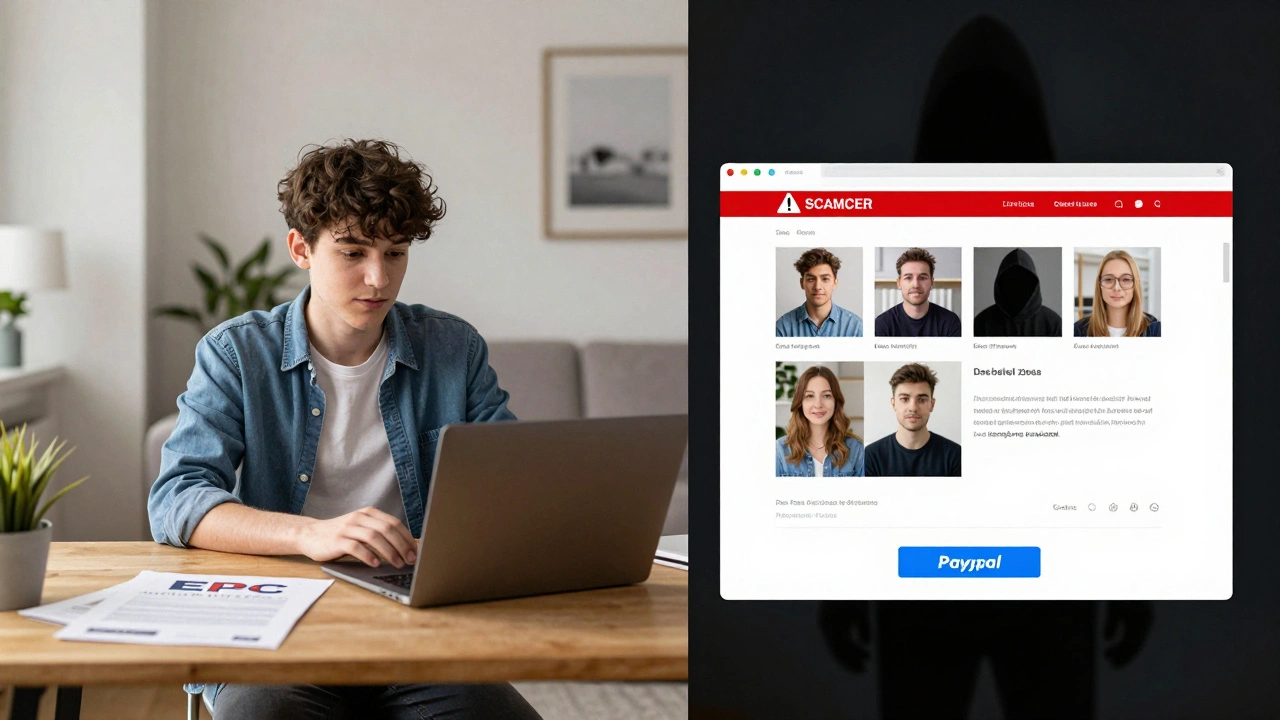
What to Check Before Signing Anything
Even if the listing looks legit, you still need to verify everything:
- Proof of ownership - Ask for the landlord’s ID and proof they own the property (like a recent council tax bill or mortgage statement). You don’t need to see the original, but a clear photo with their name matching the listing is enough.
- Energy Performance Certificate (EPC) - Landlords must provide this. It shows the property’s energy rating (A to G). Anything below a D is a warning sign. Poor insulation means high bills.
- Gas Safety Certificate - Required yearly. Ask for the current one. No certificate? No deal.
- Deposit protection - By law, your deposit must be placed in a government-approved scheme like the Deposit Protection Service (DPS), MyDeposits, or TDS. Ask for the scheme’s reference number and verify it online.
- Contract terms - Make sure it’s an Assured Shorthold Tenancy (AST). Avoid “licence agreements”-they give you fewer rights. Check the notice period, who pays bills, and what happens if you break the lease.
Also, check if the property is licensed as a House in Multiple Occupation (HMO). If there are five or more unrelated people living there, the landlord must have an HMO license. Ask the local council for confirmation. Unlicensed HMOs are unsafe and often overcrowded.
Know Your Rights as a Tenant
The UK gives tenants strong protections, but you have to know them. If your landlord refuses to fix a broken boiler, you can report them to your local council’s environmental health team. If they try to evict you without notice, you can challenge it in court.
Here’s what you’re legally entitled to:
- Repairs within a reasonable time (24-48 hours for emergencies like no heating or water)
- Receipts for all payments
- A copy of the government’s “How to Rent” guide
- Protection from retaliation if you complain about unsafe conditions
If you’re unsure, contact your university’s student union or housing office. Most have free legal advice services for students. You can also call Shelter’s free housing helpline at 0808 800 4444.

How to Find Good Flatmates
Your flatmates can make or break your experience. Don’t just pick the first person who says “I’m chill.”
- Ask about habits: Do they smoke? Study late? Have guests over often?
- Use university Facebook groups or apps like Flatmates.com to connect with others before moving in.
- Arrange a meet-up or video call. Pay attention to how they talk-do they respect boundaries? Are they honest?
- Write a simple house agreement: who cleans what, how bills are split, rules on noise and guests. It sounds boring, but it prevents fights later.
One student in Bristol ended up living with three people who never cleaned, smoked inside, and threw parties every weekend. She moved out after two months and lost her deposit because she broke the lease. A simple conversation upfront could’ve saved her.
Final Checklist Before You Move In
Before you hand over any money or keys, run through this:
- Verified landlord identity and property ownership
- Live video tour of the property
- Signed tenancy agreement with your name and address
- Deposit protected in a government scheme (with reference number)
- Gas Safety Certificate and EPC provided
- Inventory checklist signed by both you and the landlord
- Proof of utilities setup (gas, electricity, water, internet)
- Emergency contact details for landlord or managing agent
If even one item is missing, don’t sign. Walk away. It’s better to wait another week than to lose hundreds or thousands.
What If You’ve Already Been Scammed?
If you’ve paid money and the property doesn’t exist, act fast:
- Report it to Action Fraud at actionfraud.police.uk (UK’s national fraud reporting center).
- Alert your bank immediately. If you paid by bank transfer, they might be able to stop or reverse it.
- Share your story on student forums and social media. Other students might be targeted too.
- Contact your university’s international office-they often have resources to help.
Recovering money is hard, but reporting helps stop the scammer from targeting others.
When should I start looking for off-campus housing in the UK?
Start looking at least six months before your course begins. For a September start, begin your search in March. The best properties are taken by May or June, especially in popular cities like London, Manchester, or Edinburgh.
Is it legal for a landlord to ask for a deposit before I sign a contract?
No. In the UK, landlords can only collect a refundable holding deposit (capped at one week’s rent) before signing a contract. Any other payment-like a “booking fee” or “admin fee”-is illegal under the Tenant Fees Act 2019. Always get a written receipt and ensure the deposit is protected in a government scheme after signing.
How can I verify if a rental listing is real?
Do a reverse image search on Google to check if photos are reused. Ask for a live video tour. Verify the landlord’s identity and property ownership with official documents. Check the website’s URL-it should match the official domain (e.g., rightmove.co.uk, not rightmove.net). Look for a physical office address and a landline number.
What’s the difference between a tenancy agreement and a licence agreement?
A tenancy agreement (Assured Shorthold Tenancy or AST) gives you legal tenant rights, including protection from eviction without notice. A licence agreement is less secure-it’s often used for student halls or shared rooms and gives you fewer rights. Always insist on an AST if renting privately.
Can I rent off-campus if I’m an international student?
Yes. International students can rent off-campus in the UK. Landlords cannot legally refuse you based on nationality. However, you may need a UK bank account, a guarantor (often a parent or family member), or proof of income. Some agencies specialize in helping international students with this process.
Finding off-campus housing in the UK isn’t about luck-it’s about preparation. The students who succeed are the ones who start early, ask the right questions, and refuse to rush. Don’t let fear or pressure make you ignore the red flags. Your safety and peace of mind are worth the extra time.