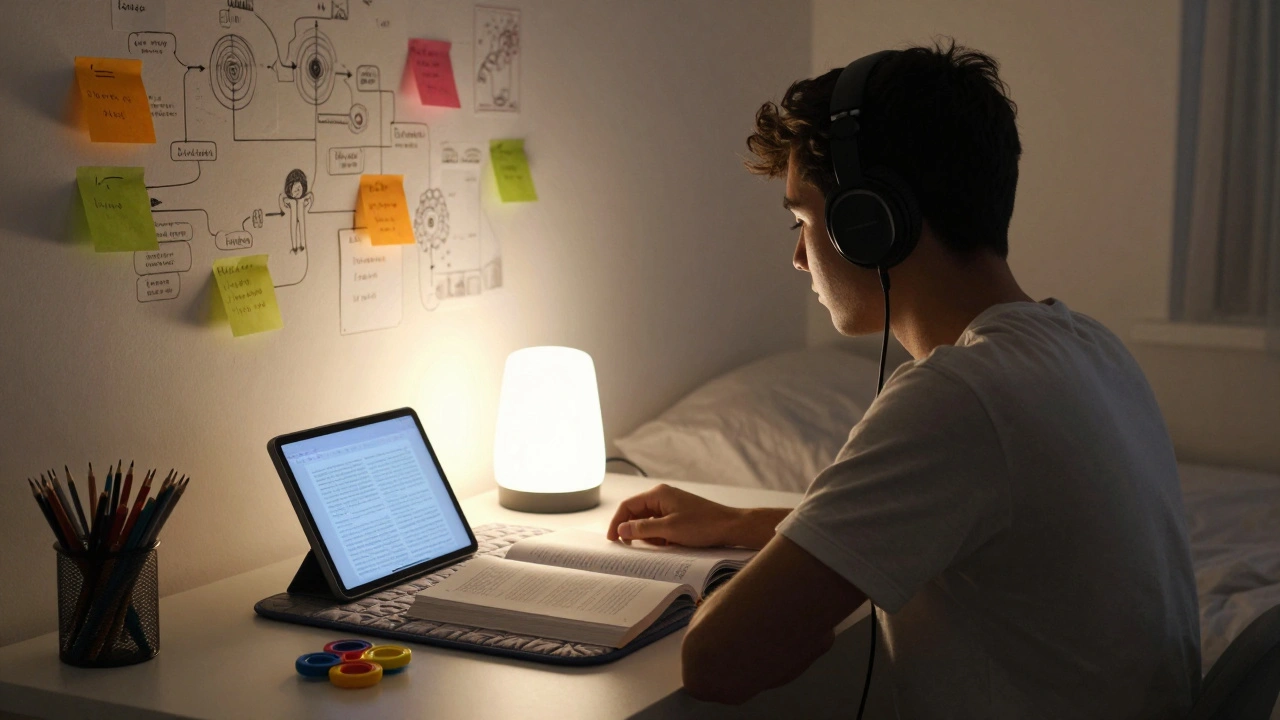
Studying in the UK can feel overwhelming for neurodivergent students. Whether you’re autistic, have ADHD, dyslexia, dyspraxia, or another neurological difference, traditional study methods often don’t work for you. That’s not your fault. It’s the system that’s out of sync with how your brain learns best. The good news? You don’t need to change who you are. You just need the right tools.
Understand Your Brain’s Wiring
Before you try any study technique, start by understanding your own neurotype. There’s no one-size-fits-all approach because every neurodivergent brain works differently. An autistic student might need silence and structure. Someone with ADHD might thrive with movement and short bursts of focus. A dyslexic learner might absorb information better through audio than text.Take a moment to ask yourself: When do I focus best? What drains my energy? What helps me remember things? You might already know the answers. If not, keep a simple log for a week. Note when you felt alert, distracted, or confused during study time. Patterns will show up. That’s your starting point.
Break Tasks into Tiny Steps
Big assignments feel like walls. An essay due in two weeks? A 10-page reading list? For many neurodivergent students, the size alone triggers shutdown. The fix isn’t working harder. It’s breaking things down.Instead of “write essay,” try:
- Day 1: Open document. Write one sentence.
- Day 2: Find one source. Highlight one quote.
- Day 3: Write a bullet list of three ideas.
This isn’t slow-it’s smart. Small wins build momentum. Each tiny step releases dopamine, which helps your brain say, “Okay, I can do this.”
Use a visual planner. Stick notes on your wall. Use colour-coded blocks for each task. Apps like Notion or Google Calendar work, but paper often beats screens for sensory overload. If typing feels chaotic, write by hand. If handwriting is hard, use voice notes. Your brain doesn’t care how you record it-only that you do.
Use Sensory-Friendly Environments
Your study space isn’t just a place. It’s a sensory experience. For many neurodivergent learners, noise, light, or texture can derail focus faster than a textbook.Try these real-world adjustments:
- Noise-canceling headphones with white noise or instrumental music (no lyrics).
- Soft, warm lighting instead of harsh fluorescents.
- Weighted lap pads or fidget tools to help with restlessness.
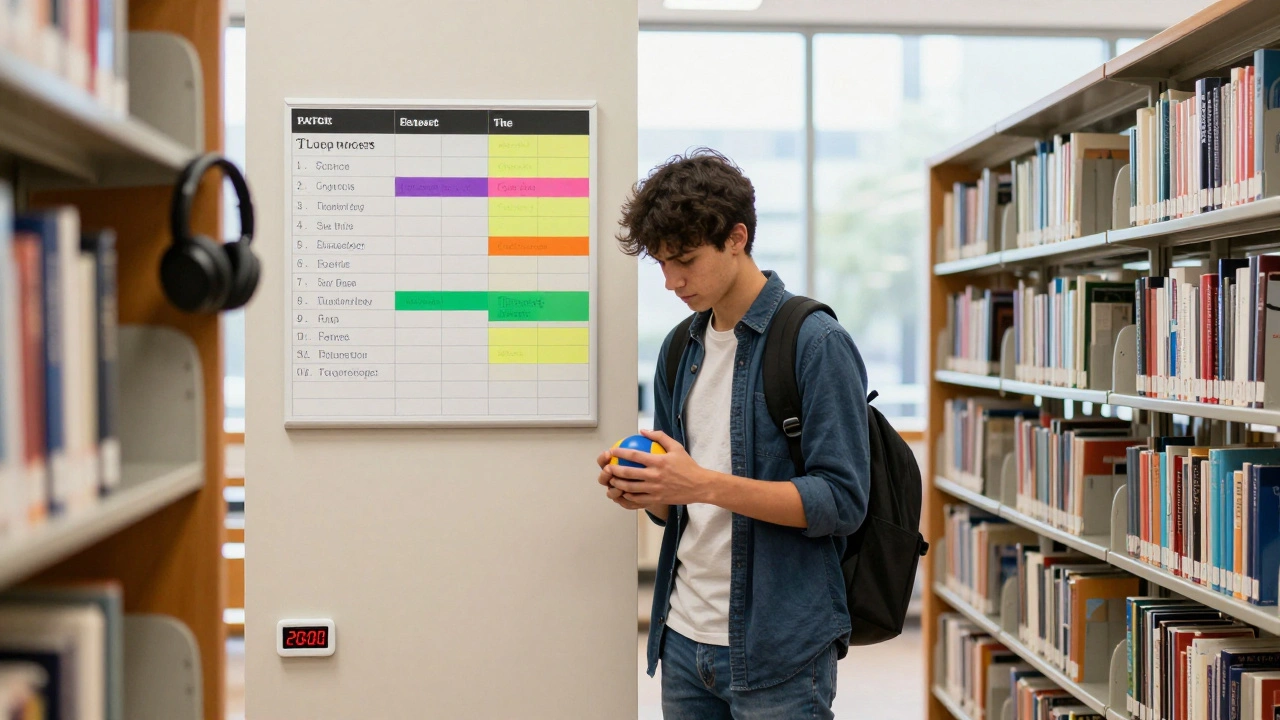
- Study in short blocks-25 minutes max-then move for 5 minutes. Walk, stretch, jump in place.
Some students do best in libraries. Others need their bedroom with the door closed. Some need background TV noise to feel safe. There’s no right way. Only what works for you.
UK universities offer disability support services. Contact them. You’re not asking for special treatment-you’re asking for equal access. They’re legally required to help.
Learn Through Multiple Senses
Textbooks aren’t the only way to learn. In fact, for many neurodivergent students, they’re the worst way.Try these alternatives:
- Audio summaries: Use Audible, YouTube summaries, or record your own notes and listen while walking.
- Visual mind maps: Draw connections with colours and images. Use apps like Miro or just pen and paper.
- Teach it out loud: Explain a concept to your pet, a mirror, or a friend. Teaching forces your brain to organize information.
- Build models: Use Lego, clay, or even sticky notes to represent ideas. Physical objects help abstract concepts stick.
Dyslexic students often remember stories better than lists. ADHD learners benefit from movement tied to learning-pace while memorizing, tap your foot to a rhythm. Autistic students might prefer clear, step-by-step visuals. All of these are valid. All of these work.
Build in Movement and Rest
Sitting still for hours doesn’t help your brain. It exhausts it.Research from the University of Cambridge shows that students who take regular movement breaks retain 40% more information than those who don’t. That’s not a suggestion. It’s science.
Try this:
- Set a timer for 20 minutes of focused work.
- When it goes off, move for 3 minutes-dance, walk stairs, stretch, shake out your arms.
- Repeat. No guilt. No shame.
Some students find that chewing gum, using a stress ball, or rocking in a chair helps them focus. Others need complete stillness. Again-know yourself. Your body isn’t the enemy. It’s your partner.
Use Assistive Tech Without Shame
Text-to-speech? Speech-to-text? Screen readers? Colour contrast tools? These aren’t crutches. They’re equalizers.UK students with diagnosed neurodivergence can access free assistive tech through the Disabled Students’ Allowance (DSA). It covers:
- Speech recognition software (like Dragon)
- Screen readers (like NVDA or JAWS)
- Colour filters for dyslexia (like Read&Write)
- Specialist keyboards or ergonomic chairs
Apply early. It takes weeks to process. Don’t wait until you’re overwhelmed. The DSA doesn’t judge. It just helps you learn.
Even if you’re not officially diagnosed, try free tools. Google’s Read Aloud extension. Microsoft’s Immersive Reader. Otter.ai for recording lectures. These aren’t luxury tools. They’re learning tools.
Find Your People
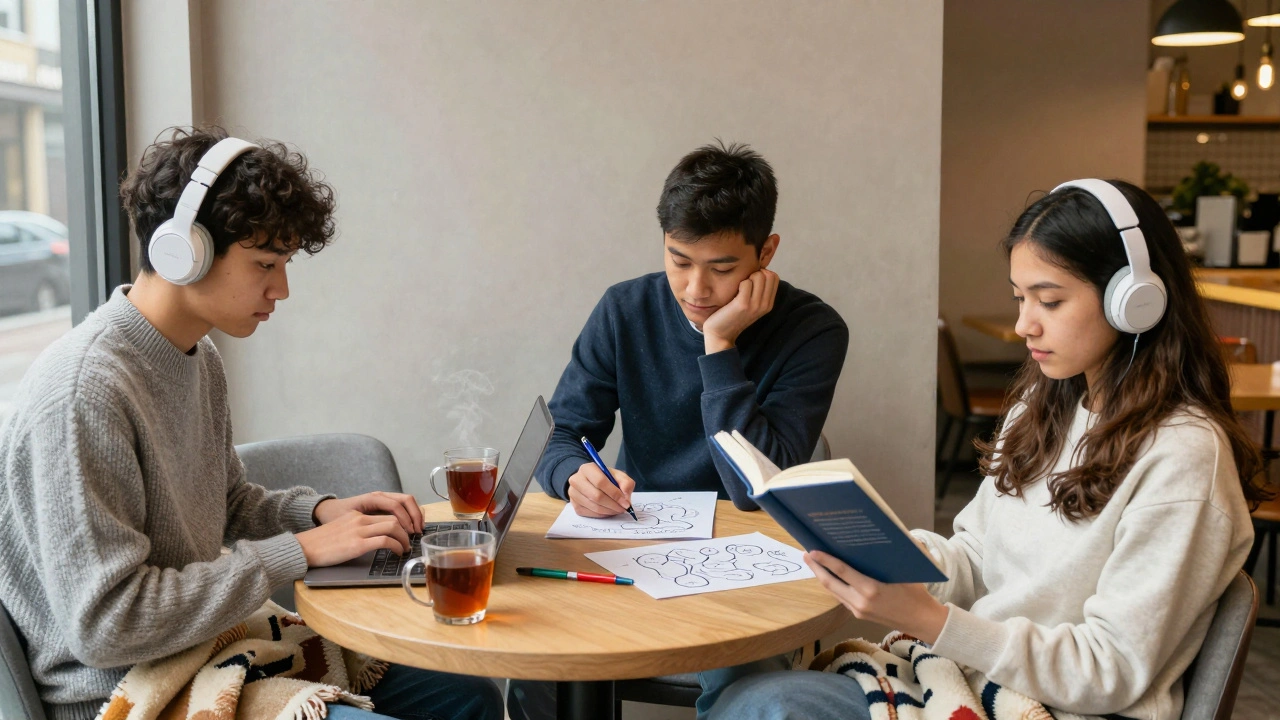
You’re not alone. UK universities have neurodiversity student groups. Facebook communities. Discord servers. Reddit threads. These spaces aren’t just for venting-they’re for swapping hacks.One student with ADHD shared how she used a “body double”-someone sitting quietly nearby while she studied. Just their presence kept her on task. Another autistic student found that studying in a quiet corner of the campus café, with noise-canceling headphones and a blanket, was better than the library.
Ask for help. Say: “I’m struggling with this. Do you have any tips?” You’d be surprised how many others feel the same.
Track What Works
Not every technique will click. That’s okay. Keep a simple journal. After each study session, write:- What did I do?
- How did I feel?
- What helped? What hurt?
After a few weeks, look back. Patterns emerge. You’ll see: “I focus best in the morning with music.” Or: “I remember more when I draw diagrams.” That’s your personal playbook.
There’s no perfect system. Only your system.
Remember: You’re Not Broken
The biggest barrier to learning isn’t your brain. It’s the idea that your brain needs fixing.Neurodiversity isn’t a disorder. It’s a difference. Your way of thinking, moving, remembering, and focusing isn’t wrong. It’s just different. And different doesn’t mean worse. It means you have unique strengths.
You might notice details others miss. You might think creatively under pressure. You might hyperfocus for hours on something you love. Those aren’t side effects. They’re superpowers.
Stop trying to be a “normal” student. Start becoming the best version of you as a student. That’s the goal. Not perfection. Not conformity. Just progress-on your terms.
Can I get financial help for study tools in the UK?
Yes. UK students with diagnosed neurodivergence can apply for the Disabled Students’ Allowance (DSA). It covers free assistive technology like speech-to-text software, screen readers, noise-canceling headphones, ergonomic chairs, and more. You don’t need to be wealthy. You don’t need to be severely disabled. If your neurotype affects your studies, you qualify. Apply through your university’s disability service as early as possible-processing can take 6-8 weeks.
What if I’m not officially diagnosed?
You still have options. Many free tools work without a diagnosis: Google Read&Write, Microsoft Immersive Reader, Otter.ai for lecture recording, and apps like Forest for focus. Talk to your university’s disability team-they often help students who are in the process of getting assessed. You don’t need a label to deserve support. You just need to ask.
How can I study better with ADHD?
Structure your time in 20-25 minute bursts with movement breaks. Use a timer. Pair study with physical motion-pace, bounce a ball, stand while reading. Use apps that block distractions (like Freedom or Cold Turkey). Reward yourself after each session. Don’t rely on motivation-rely on routine. Your brain responds better to habit than willpower.
What’s the best way to read textbooks if I have dyslexia?
Don’t read them like everyone else. Use text-to-speech tools to listen while following along. Adjust font size and spacing with apps like Immersive Reader. Try audiobooks or summary videos. If you must read text, break it into tiny chunks-just one paragraph at a time. Highlight with coloured pens. Use a ruler to track lines. Your brain learns through sound and image as much as text.
Is it okay to study in my bedroom with the lights off?
Absolutely. If dim lighting, soft textures, or quiet help you focus, that’s your optimal learning environment. There’s no rule that says studying must happen in a library or under bright lights. Your brain knows what it needs. Trust it. Universities are required to accommodate sensory needs-even if they seem unusual to others.