
Most UK students send LinkedIn messages that get ignored. Not because they’re rude, or lazy, or unqualified-but because they sound like every other message on the platform. You’ve probably sent one yourself: "Hi, I’m a student at [University] looking for advice. Can we connect?" It’s polite. It’s safe. And it’s dead on arrival.
Here’s the truth: people don’t reply to requests. They reply to value. Not vague offers of "advice," not generic compliments, not "I admire your work." They reply when they feel seen, when they sense you’ve done your homework, and when they know exactly what you want-without having to guess.
Why Your Messages Don’t Get Replies
Let’s break down the five most common mistakes students make:
- Using copy-paste templates that sound like chatbots
- Asking for help without offering anything in return
- Not mentioning anything specific about the person’s work
- Being too vague-"I want to learn more" means nothing
- Ignoring the person’s recent posts or achievements
A 2025 survey of 1,200 UK professionals found that 78% ignored LinkedIn messages from students that didn’t reference something they’d recently posted, published, or shared. That’s not harsh-it’s human. People are flooded with requests. If you don’t stand out, you disappear.
What Actually Works: The 3-Part Message Formula
The messages that get replies follow a simple, repeatable structure:
- Reference something specific-a post, article, project, or job move.
- State why it matters to you-briefly, honestly, and with context.
- Ask for one tiny thing-not a 30-minute call, not a job, not a resume review.
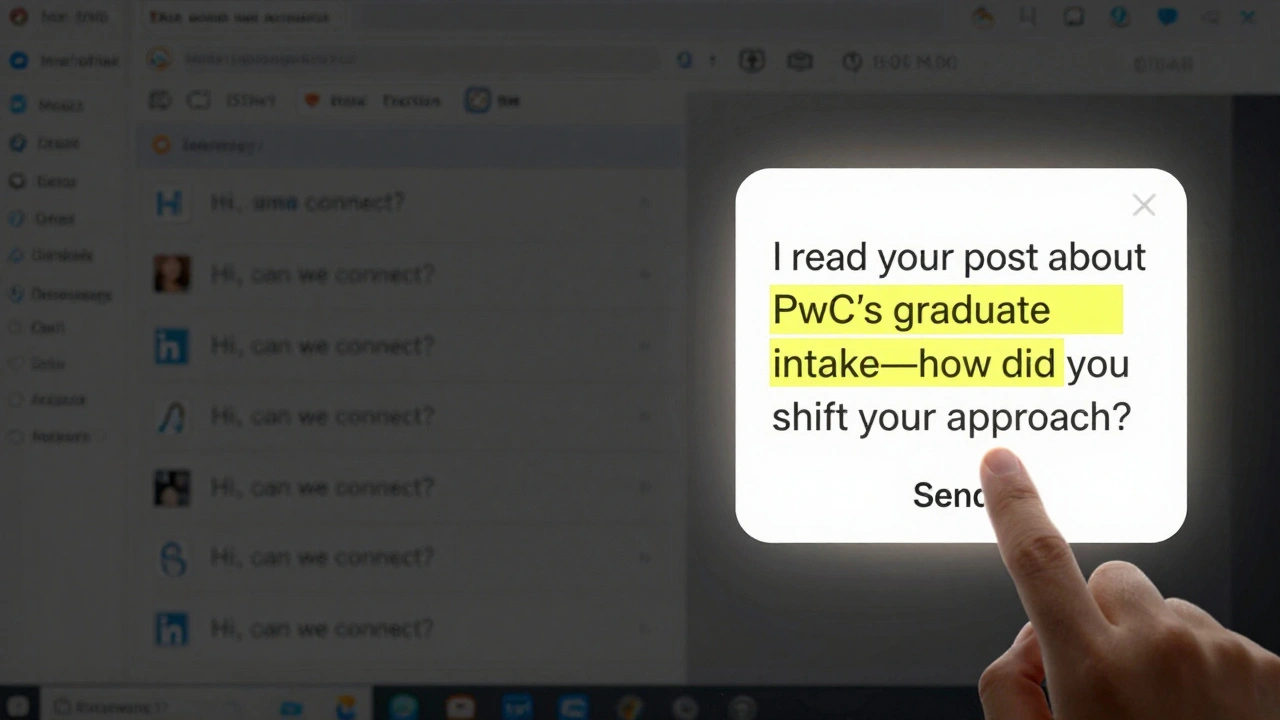
Here’s a real example that got a reply from a senior recruiter at PwC:
Hi Sarah, I read your post about how PwC’s graduate intake this year had 40% more applicants from non-target universities. That stood out because I’m studying Economics at Sheffield Hallam-and I’ve been told by careers services that firms like yours rarely look beyond Russell Group schools. I’d love to understand what changed. Could you spare 5 minutes to share one thing that helped shift your approach? No pressure at all-just genuinely curious.
That message worked because:
- It named a specific post (not "your content").
- It showed personal connection (Sheffield Hallam, not "I’m a student").
- It asked for one tiny thing (5 minutes, not "a chat").
- It gave an out ("No pressure").
She replied within 2 hours.
Where to Find the Right People to Message
You don’t need to message CEOs or hiring directors. Start smaller. Look for people who:
- Joined LinkedIn in the last 2 years (they’re still active and building networks)
- Work at companies you’re interested in (even if they’re not in HR)
- Posted about internships, grad schemes, or career transitions
- Are alumni from your university (LinkedIn lets you filter by school)
Use LinkedIn’s search filters:
- "People" tab
- Filter by "Current company" (e.g., Deloitte, NHS, Unilever)
- Filter by "School" (your university)
- Sort by "Recent activity"
One student at the University of Manchester messaged 15 people who had posted about switching from engineering to tech in the past month. Six replied. Two offered mock interviews. One sent her a template for her CV.
What to Say When You’re Nervous
If you’re scared of sounding awkward, use this script:
Hi [Name], I saw your post about [specific thing] and thought, "That’s exactly what I’m trying to understand." I’m currently studying [your course] at [university], and I’ve been curious about how [topic] works in practice-especially at [company/industry]. Would you be open to sharing one thing you wish you’d known when you were starting out? I’d really appreciate it. No worries if you’re too busy-just wanted to say thanks for sharing your experience.
That’s it. No fluff. No begging. No "I’d love to learn from you." Just curiosity, context, and a tiny ask.
What Not to Do
Stop doing these things:
- Don’t say "I’m a student" as your opening line. Everyone knows that.
- Don’t attach your CV. No one opens attachments from strangers.
- Don’t message 50 people at once. It looks like spam.
- Don’t follow up after 24 hours. Wait 7-10 days if you don’t hear back.
- Don’t ask for a job. Ask for insight.
One student at King’s College London sent 30 messages in one day. Zero replies. Then she sent five tailored messages over two weeks. Four replies. Two led to coffee chats. One turned into a summer internship.
How to Follow Up Without Being Annoying
If someone doesn’t reply, don’t ghost them. Don’t pester them. Do this:
- Wait 10 days.
- Like one of their recent posts.
- Leave a thoughtful comment (not "Great post!").
- Then, if they respond to your comment, say: "Thanks for the reply! I’d still love to hear your take on [topic] if you ever have 5 minutes. No pressure."
People respond to consistency, not pressure.
Real Results from Real Students
Here’s what happened to three students who used this approach:
- Emma, 20, studying Psychology at Glasgow-messaged a mental health campaigner at Mind. Asked how they balanced research and public outreach. Got a 12-minute call. Later, they invited her to volunteer remotely. Now she’s helping design student mental health resources.
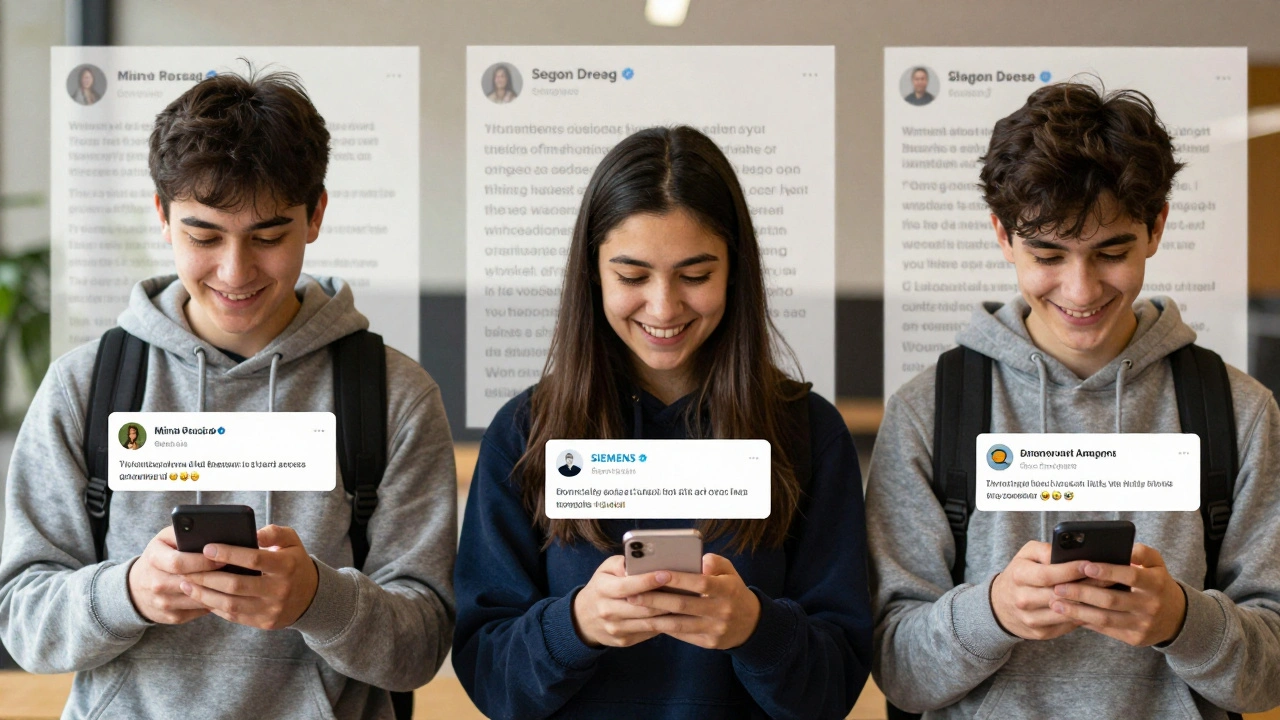
- James, 21, Engineering at Newcastle-commented on a post by a graduate engineer at Siemens. Asked what surprised them most about transitioning from uni to work. Got a reply. Followed up with a question about tools they use daily. Six weeks later, he got an internship offer.
- Aisha, 19, Business at Leeds-messaged a former Leeds student now working at Amazon. Asked what she wished she’d done differently as a first-year. Got a 10-minute video call. Sent a thank-you note with a link to her LinkedIn profile. Aisha was invited to apply for Amazon’s early access program. She got in.
None of them had connections. None of them had perfect grades. All of them asked better questions.
Final Tip: Make It About Them, Not You
The secret isn’t in your CV. It’s in your curiosity.
People love talking about their own journey-especially if they feel you genuinely care about it. You don’t need to be impressive. You just need to be thoughtful.
Start small. Pick one person this week. Find one thing they posted. Say something real. Ask for one tiny thing. Then wait.
That’s how networks are built-not by begging for help, but by offering respect.
What’s the best time to send a LinkedIn message as a student?
The best time is Tuesday or Wednesday between 10 a.m. and 1 p.m. UK time. That’s when professionals are most likely to check their feeds-after morning meetings but before lunch. Avoid Mondays (too busy) and Fridays (people are checking out). Weekends are hit-or-miss. Don’t send messages late at night-it looks like you’re spamming.
Should I message someone I don’t know?
Yes, absolutely. Most people on LinkedIn are open to connecting with students, especially if you’ve done your homework. Cold messages work if they’re specific, respectful, and low-pressure. The biggest mistake is assuming they’ll say no. In reality, most professionals remember what it was like to be a student-and they’re often happy to help.
How many messages should I send per week?
Start with 3-5 well-researched messages per week. Quality beats quantity every time. Sending 20 generic messages won’t get you 20 replies-it’ll get you 0. Focus on personalisation. One thoughtful message a day, spread over the week, is far more effective than a batch of copy-paste requests.
What if I don’t get any replies?
Don’t take it personally. Try adjusting your message. Did you mention something specific? Did you ask for one small thing? Did you show you read their profile? If not, rewrite it. Also, try messaging people who’ve posted within the last 7 days-they’re more active. And remember: sometimes replies come after 10-14 days. Don’t give up after one try.
Can I message alumni even if they’re not in my field?
Yes. Alumni networks are powerful because they’re built on shared identity, not shared job titles. A former student from your university who works in marketing might still have advice on how to stand out in interviews, how to build confidence, or how to find internships. You’re not asking them to hire you-you’re asking for perspective. That’s always valuable.