
Moving house is one of the most stressful parts of university life. You are juggling exams, social events, and a tight budget, all while trying to fit your entire life into boxes. For UK students, this process comes with specific challenges. The housing market is competitive, space is often limited, and you need to navigate complex tenancy agreements. Whether you are moving from your parents' home to a shared flat in London or swapping halls for a private rental in Manchester, getting this right saves money and sanity.
This guide breaks down the three critical phases: packing efficiently, choosing the right transport, and settling in without breaking the bank. We will look at practical steps that work for real student budgets.
Smart Packing Strategies for Small Spaces
Most student accommodation in the UK has limited storage. You do not have a garage or a large attic. This means every item must earn its place. Start by decluttering early. If you haven't used it in the last six months, sell it on Vinted or donate it to a local charity shop. The less you pack, the cheaper your move will be.
When you start packing, use what you already own. Avoid buying expensive branded boxes unless necessary. Old duvet covers make excellent protective bags for lamps and vases. T-shirts protect glasses and plates. Use sturdy plastic bins for books-they are heavy and cardboard boxes will collapse under the weight.
- Label everything clearly: Write the room name AND the contents on multiple sides of the box. "Kitchen - Plates" is better than just "Kitchen."
- Create an 'Open First' box: Pack essentials like toilet paper, phone chargers, a change of clothes, and basic toiletries. You will want these immediately upon arrival.
- Disassemble furniture carefully: Keep screws and bolts in zip-lock bags taped to the corresponding piece of furniture. Label them clearly.
- Pack cables together: Use old egg cartons or small boxes to keep charger cords organized. This prevents tangles and lost plugs.
For fragile items, use bubble wrap if you have it, but crumpled newspaper works well too. Wrap each item individually. Do not stack them loosely. If you are moving kitchenware, pack them vertically like records, not horizontally. This reduces pressure on the bottom items.
Choosing the Right Transport Method
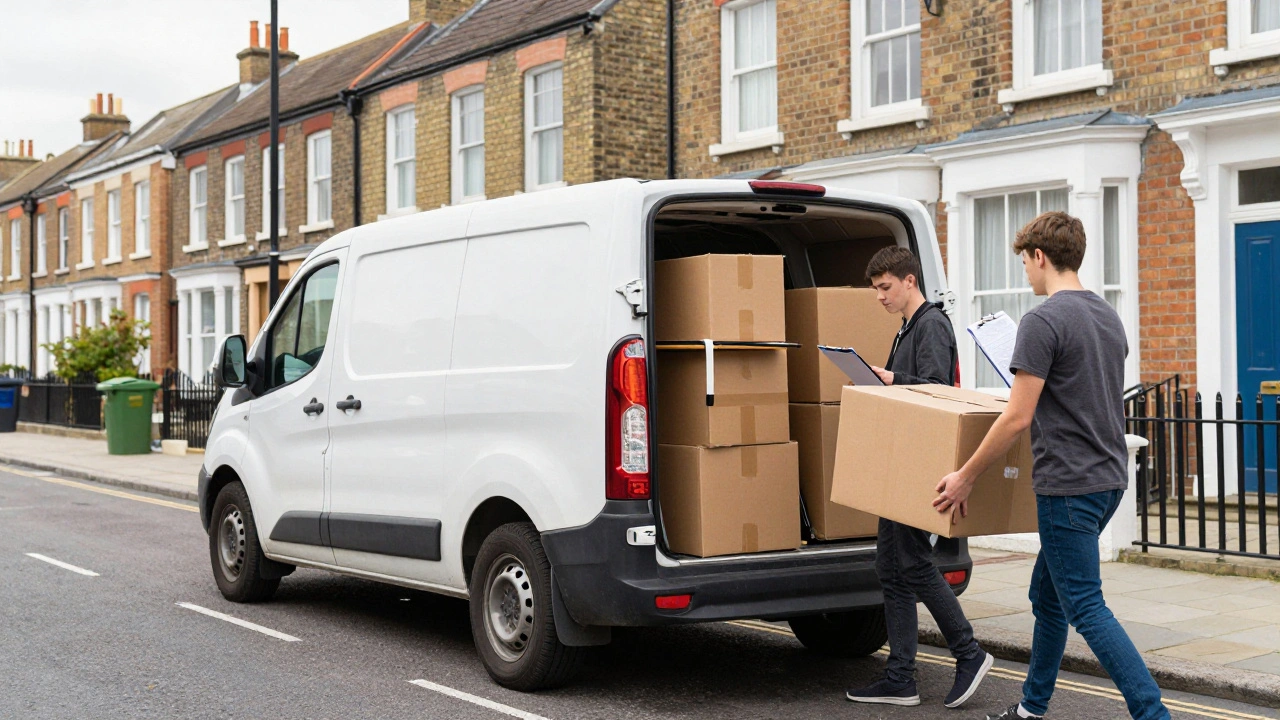
How you move your stuff depends on distance, volume, and budget. In the UK, students typically choose between self-move vans, professional removal companies, or courier services for smaller loads.
| Option | Best For | Cost Range (Approx.) | Pros | Cons |
|---|---|---|---|---|
| Self-Move Van | Local moves, full household goods | £50 - £150 per day | Flexible timing, control over handling | Physically demanding, driving stress |
| Man and Van | Small flats, help needed lifting | £60 - £120 per hour | Faster, less physical effort | Can be pricey if delayed |
| Professional Removals | Long-distance, high-value items | £300 - £800+ | Insured, handled professionally | Expensive, rigid schedules |
| Courier Service | Books, documents, small parcels | £10 - £50 per box | Door-to-door, no lifting | Not suitable for furniture |
If you rent a van, check the fuel policy. Most companies require you to return the vehicle with a full tank. Also, verify the mileage allowance. Some deals include unlimited miles, while others charge extra after a certain limit. Book early, especially during peak moving weeks in August and September.
For long-distance moves, consider splitting your belongings. Send non-essentials via a budget courier service like Evri or Royal Mail's larger parcel options. Take only your immediate needs with you. This reduces the load size and potentially allows you to use a smaller, cheaper vehicle.
Always get quotes in writing. Ask about hidden fees such as insurance excess, waiting time charges, and access issues (like living on the fourth floor without a lift). A reputable company will provide a clear breakdown.
Navigating Tenancy Agreements and Deposits
Before you move in, understand your legal rights. In the UK, student rentals are governed by Assured Shorthold Tenancies (ASTs) in most cases. This gives you specific protections.
Your deposit is protected by law. It must be placed in a government-approved Deposit Protection Scheme within 30 days of receiving it. You should receive prescribed information detailing which scheme holds your money. Common schemes include Tenancy Deposit Scheme (TDS), MyDeposits, and Deposit Protection Service (DPS).
Conduct a thorough inventory check before signing the contract. Take dated photos of every room, focusing on existing damage like scratches on floors, marks on walls, or stains on carpets. Email these photos to your landlord or agent as a record. This protects you when you leave.
- Check appliances: Test the washing machine, oven, and fridge. Note any faults.
- Record meter readings: Get gas, electricity, and water readings on day one. Register with the suppliers immediately to avoid being charged for previous tenants' usage.
- Understand bills: Clarify who pays for council tax, utilities, and internet. Students in full-time education are usually exempt from council tax, but you need proof of enrollment.
Settling In: Making Space Home
Arriving at a new property can feel overwhelming. Prioritize functionality first. Set up your bed, then your workspace. As a student, your desk is where you spend significant time. Ensure it has adequate lighting and power outlets.
Decorate on a budget. You don't need expensive furniture. Second-hand shops, Facebook Marketplace, and Freecycle groups are goldmines for student housing. Look for modular furniture that can adapt as your needs change. A simple rug can define a living area in a studio flat.
Establish routines quickly. Find the nearest grocery store, pharmacy, and library. Identify waste collection days and recycling rules. Each local council has different guidelines for bin collections. Ignoring these can lead to fines or missed collections.
Connect with neighbors. Introduce yourself to those next door. It builds a support network. If you hear unusual noises or notice suspicious activity, you have people to alert. Plus, they might share useful tips about local services or repairs.

Budgeting for the Move
Moving costs add up fast. Create a spreadsheet to track expenses. Include van hire, fuel, packing materials, deposits, and initial groceries. Many students underestimate the cost of setting up utilities.
Look for student discounts. Some removal companies offer reduced rates for students. Check with your university's student union; they often partner with local movers or provide free advice sessions. Additionally, some broadband providers offer student tariffs with lower setup fees.
Avoid impulse buys. Wait a few days before purchasing large items like sofas or TVs. Measure your space first. What looks good in a showroom might block your hallway at home.
Common Pitfalls to Avoid
One major mistake is moving too close to the start of term. Prices spike, and availability drops. Aim to move at least two weeks before classes begin. This gives you buffer time for unexpected delays.
Another error is neglecting insurance. Standard building insurance covers the structure, not your belongings. Consider contents insurance specifically for students. It covers theft, fire, and accidental damage. Premiums are low, often under £10 per month, but the peace of mind is worth it.
Finally, don't ignore the emotional aspect. Moving is a transition. It's normal to feel anxious. Allow yourself time to adjust. Explore your new neighborhood. Visit local cafes and parks. Familiarity breeds comfort.
What is the cheapest way to move house as a student in the UK?
The cheapest method is usually a self-move using a rented van from companies like Hire2U or Snapbox. You pay for the vehicle and fuel, but save on labor costs. For very small loads, courier services for individual boxes can also be cost-effective compared to hiring a whole van.
Do I need to pay council tax as a student?
Generally, no. Full-time students are exempt from council tax. However, you must register with your local council and obtain a certificate of exemption. If you live with non-student adults, the situation may differ, so check with your local authority.
How far in advance should I book a removal company?
Ideally, book 4-6 weeks in advance, especially if moving during peak season (August-September). Popular dates fill up quickly. Booking early also secures better rates and ensures availability of reliable providers.
What should I do if my deposit is not returned?
First, communicate with your landlord or agent to resolve disputes amicably. If that fails, contact the Deposit Protection Scheme where your deposit is held. They offer free adjudication services to settle disagreements based on evidence provided by both parties.
Is it worth getting contents insurance for student accommodation?
Yes, highly recommended. It covers personal belongings against theft, fire, flood, and accidental damage. Student policies are affordable and often include coverage for laptops and other electronics, which are essential for study.