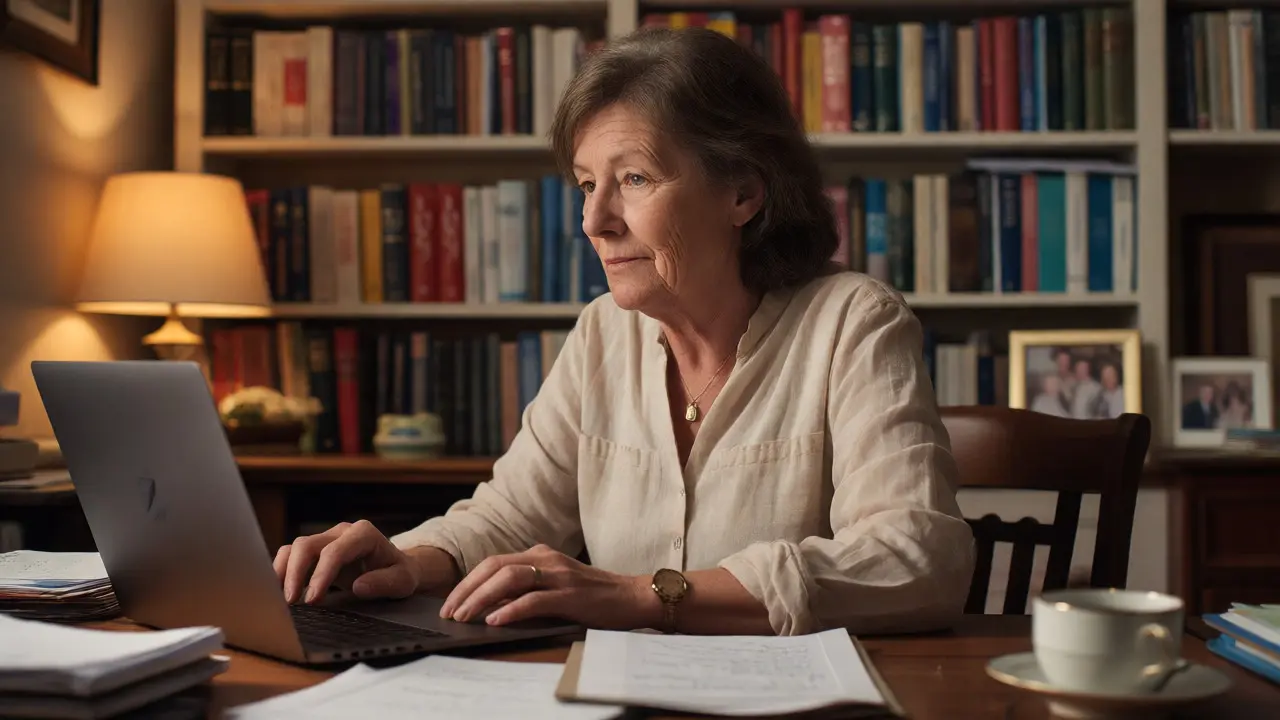
So you’re thinking about going back to university. Maybe you’ve been working for a decade, maybe you raised kids, or maybe you just realized your current career path isn’t where you want it to be. That’s great. But then you hit the UCAS application the centralized system used by universities in the UK to process undergraduate admissions, and suddenly you feel like an imposter. You don’t have recent A-levels. Your GCSEs are from the last century. And that 4,000-character personal statement box looks terrifying when you haven’t written an essay since high school.
Here is the good news: universities love mature students. They bring life experience, focus, and clarity that 18-year-olds often lack. The trick isn’t hiding your age; it’s framing your history as an asset. This guide breaks down exactly how to handle the two biggest hurdles for adult learners: writing a personal statement that sounds like you, not a teenager, and getting a reference that actually helps rather than hurts.
Why Mature Students Are Different (And Why It Matters)
Standard advice for 17-year-olds revolves around potential. They write about what they *might* do. As a mature student, your game is different. You write about what you *have done* and how it proves you can handle the work. Universities use specific criteria to assess applicants, but for those over 21, they look for evidence of resilience, time management, and genuine motivation.
Think of it this way: an 18-year-old says, "I am interested in history because I liked my class." A mature student says, "I managed a team of ten while completing a part-time degree in business, which taught me how to prioritize conflicting deadlines-a skill I’ll apply to analyzing historical archives." See the difference? One is abstract; the other is concrete proof of capability.
You need to shift your mindset from "proving I’m smart" to "proving I’m ready." Admissions tutors know that dropping out is rare among mature students. You’re there because you chose to be, not because your parents told you to go. Highlight that agency.
Crafting a Personal Statement That Stands Out
The personal statement a required section of the UCAS form where applicants explain their motivation and suitability for the course is your one chance to speak directly to the admissions tutor without a filter. For mature students, the structure should differ slightly from the traditional model.
Don’t start with a childhood anecdote unless it’s wildly relevant. Start with your current reality. Why now? What triggered this decision? Was it a promotion that made you realize you needed more technical skills? Was it redundancy that gave you time to rethink? Be honest. Authenticity beats polished fluff every time.
Next, connect your past experiences to the course requirements. If you’re applying for Nursing, talk about caring for an elderly relative. If you’re applying for Law, discuss negotiating a contract at work or dealing with a legal dispute. You aren’t trying to fake academic rigor; you’re showing transferable skills. Critical thinking, research ability, and communication are all developed in the workplace.
A common mistake is listing jobs like a CV. Don’t do that. Pick two or three key roles and dig deep into what you learned from them. How did managing a budget help you understand economics? How did leading a project teach you about teamwork? Connect the dots for the reader. They might not see the link between being a barista and studying Psychology, but if you explain how reading customer behavior sparked your interest in human motivation, they will.
Finally, address any gaps in education briefly. Did you take five years off? Explain why. Did you study something unrelated before? Explain how that previous knowledge complements your new direction. Uncertainty worries tutors; clarity reassures them.

Navigating the Reference Dilemma
This is often the scariest part for adults. Who writes your UCAS reference an assessment of the applicant's abilities and achievements provided by a third party, usually a teacher or employer? Schools expect a teacher. You might not have spoken to a teacher in fifteen years. Do you ask your boss? Your colleague? Or someone else entirely?
The rule of thumb: choose someone who can speak to your academic potential or professional competence in a way that relates to the course. An employer is often better than a former teacher if you’ve been out of education for more than five years. Why? Because a teacher from 1998 might say, "He was quiet in class," which doesn’t help much. A manager from last year can say, "She consistently met tight deadlines and analyzed complex data sets," which is gold dust for a university application.
If you must use an academic referee, ensure they remember you well enough to write specifics. A generic "he was a good student" reference is worse than no reference. Ask them explicitly: "Can you mention my final project on X? Can you confirm my grade in Y?" If they hesitate, find someone else.
What if you’re unemployed? No problem. Use a volunteer coordinator, a mentor, or even a community leader. The key is that the person knows you well enough to vouch for your character and work ethic. Avoid using family members. It looks unprofessional and lacks objectivity.
| Referee Type | Best For | Key Strength | Potential Pitfall |
|---|---|---|---|
| Current Employer | Professional courses (Business, Law, Health) | Demonstrates real-world skills and reliability | May not know academic writing standards |
| Former Teacher | Recent graduates (<5 years out) | Understands grading systems and academic rigor | Memory may be vague; references can be generic |
| Volunteer Lead | Community-focused or change-of-career applicants | Highlights passion and soft skills | Must clearly define the scope of responsibility |
| Professional Mentor | Freelancers or self-employed individuals | Provides objective industry perspective | Ensure they are credible in the field |
Addressing Academic Gaps and Alternative Qualifications
Let’s talk about grades. If your A-levels were poor, or non-existent, don’t panic. Many universities offer Access to Higher Education Diplomas or accept prior learning assessments. In your personal statement, acknowledge your academic background honestly. If you didn’t do well in math at 16, explain how you’ve improved numeracy through work. Maybe you handled invoicing, calculated stock levels, or managed spreadsheets.
Highlight any short courses or certifications you’ve completed recently. Even a weekend workshop on digital marketing shows initiative. It proves you are capable of learning new things outside of a formal degree structure. This addresses the "can they cope?" question head-on.
Also, consider mentioning English language proficiency if applicable. If you’ve worked in environments requiring precise communication-writing reports, presenting to clients-mention it. It subtly assures the tutor that you can handle the reading load.
Common Pitfalls to Avoid
First, don’t apologize for your age. Never write, "Sorry, I’m older than the rest of you." Own it. Second, don’t try to sound like a textbook. Write in your natural voice. If you’re a plumber, it’s okay to use practical metaphors. Third, don’t ignore the logistics. Mention your living situation if it impacts your studies. Will you commute? Do you have childcare sorted? Tutors want to know you have a support system so you won’t drop out in week three.
Another trap is focusing too much on the past. Spend 20% of your word count on history and 80% on future potential. Show them what you will bring to the seminar room, not just what you left behind in the office.
Final Checklist Before Submitting
- Tone Check: Does it sound like an adult speaking to another adult? Remove slang and overly casual phrases.
- Relevance: Is every paragraph linked to the course you’re applying for? Cut anything that doesn’t serve that purpose.
- Reference Prep: Have you given your referee plenty of time? Send them your personal statement draft so they can align their comments with yours.
- Proofread: Typos scream carelessness. Use tools like Grammarly, but also read it aloud. If you stumble over a sentence, rewrite it.
- Specifics: Have you named specific modules or professors at the target university? Showing you’ve researched the course adds credibility.
Applying as a mature student isn’t about competing with teenagers; it’s about offering a different value proposition. You bring stability, perspective, and hunger. Make sure your application reflects that. The door is open-walk through it with confidence.
Do I need A-levels to apply as a mature student?
Not necessarily. While many universities still list A-levels as standard entry requirements, most have flexible policies for applicants over 21. They often accept alternative qualifications like Access to HE Diplomas, professional certifications, or significant relevant work experience. Always check the specific 'Entry Requirements' page for your chosen course, looking for phrases like 'equivalent qualifications' or 'relevant experience considered.'
Who should write my UCAS reference if I haven't studied in 10 years?
Your current employer is usually the best choice. They can attest to your work ethic, reliability, and transferable skills like communication and problem-solving. If you are not currently employed, consider a volunteer supervisor, a professional mentor, or a leader in a community organization you are involved with. Avoid using family friends or relatives, as their references may lack objectivity.
How long should my personal statement be?
The UCAS personal statement has a strict limit of 4,000 characters (including spaces) or 47 lines. This is roughly 500-600 words. It applies whether you are 18 or 48. Use every character wisely. Focus on quality over quantity, ensuring each sentence adds value to your case for admission.
Will my age negatively affect my chances of acceptance?
Generally, no. Many universities actively recruit mature students because they tend to have higher retention rates and bring diverse perspectives to classroom discussions. However, some highly competitive courses with limited places might favor younger applicants with recent grades. In these cases, a strong personal statement highlighting your unique life experience and clear career goals can offset the lack of recent academic records.
Can I mention financial concerns in my personal statement?
It is generally better to keep the personal statement focused on academic and professional suitability. Financial circumstances are typically assessed separately during the interview stage or via supplementary forms. Instead of saying 'I can afford this,' demonstrate that you have planned for the commitment by mentioning how you will balance studies with work or family responsibilities, showing logistical readiness.