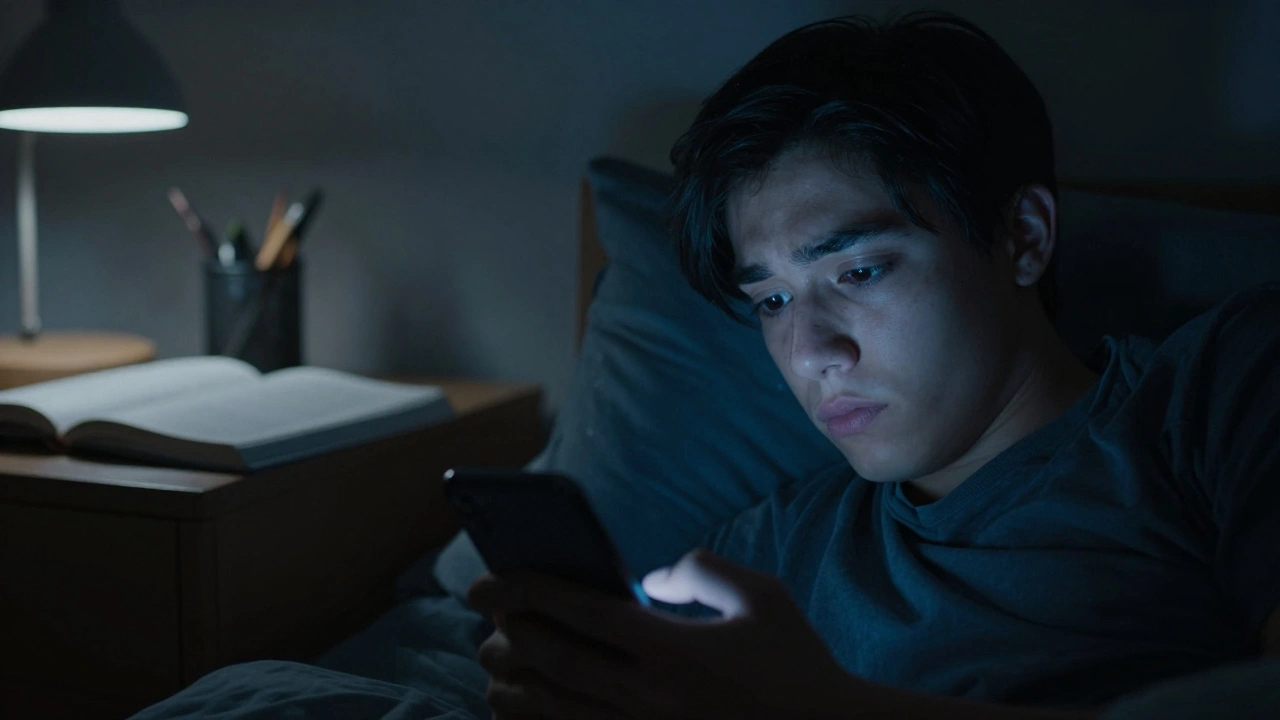
Key Takeaways
- Doomscrolling is a compulsive habit of consuming negative news that triggers a stress response in the brain.
- UK students are particularly vulnerable due to a combination of academic stress and high social media penetration.
- Breaking the cycle requires "digital friction"-making it harder to access triggers.
- Mindfulness and curated feeds can shift your experience from passive consumption to intentional use.
What Exactly is Doomscrolling?
To fix a problem, we first need to name it. Doomscrolling is the act of continuously scrolling through bad news on social media, even though it makes you feel anxious or sad. It is not the same as staying informed. When you're staying informed, you seek a specific piece of information and then stop. When you're doomscrolling, you're chasing a feeling of certainty that never arrives. Your brain is essentially trying to "solve" a global crisis by reading more about it, but because the news is an infinite stream, the loop never closes.
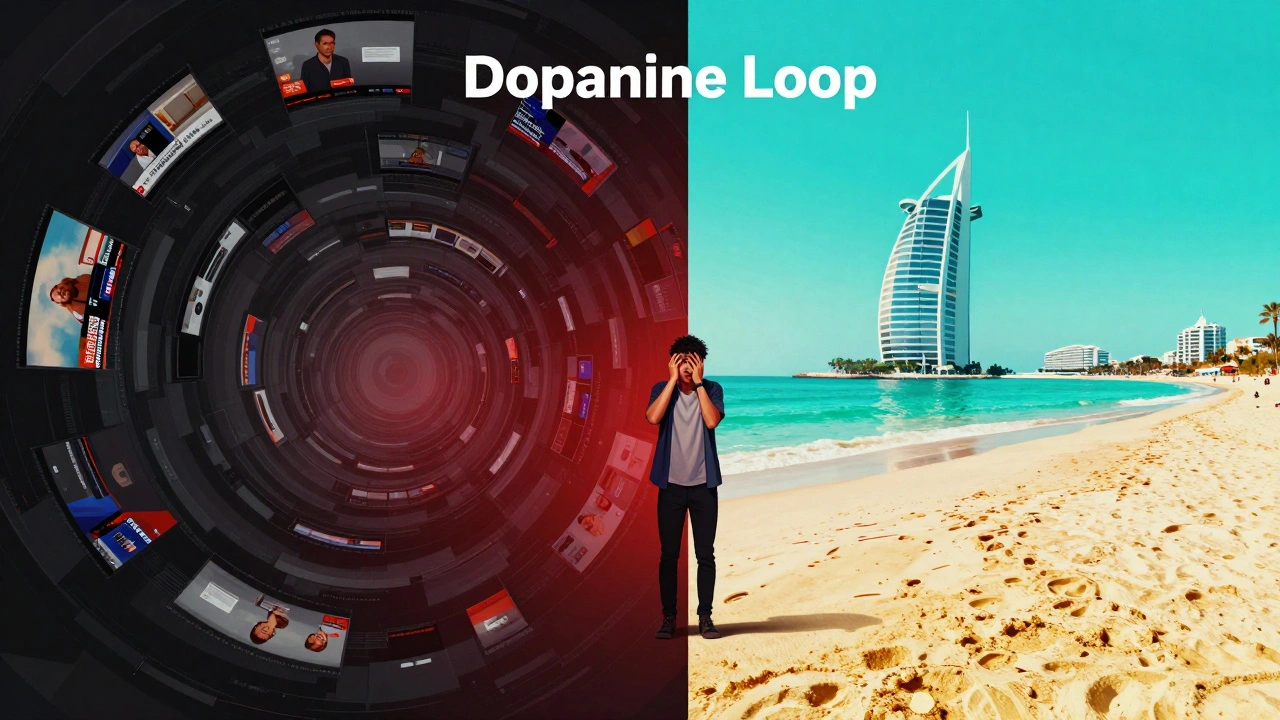
This habit is powered by the Dopamine Loop, a neurological reward system where the brain seeks new information. Even though the news is depressing, the act of finding a "new" update provides a tiny hit of dopamine, keeping you glued to the screen for hours. In the UK, where 97% of 16-24 year olds use at least one social media platform, this loop is amplified by algorithms designed to keep you engaged by showing you content that triggers strong emotional reactions-usually fear or anger.
The Impact on UK Student Mental Health
Being a student in 2026 is fundamentally different from being one twenty years ago. You are juggling UCAS applications, skyrocketing living costs, and the pressure to maintain a perfect digital persona. When you add doomscrolling to the mix, it often leads to Generalised Anxiety Disorder, which is characterized by persistent and excessive worry about a variety of different things. For many UK students, this manifests as a constant state of "high alert" or hypervigilance.
The psychological toll is compounded by social comparison. While you're reading about a global recession, you're also seeing a peer's Instagram post from a luxury holiday in Ibiza. This creates a cognitive dissonance: the world feels like it's ending, yet everyone else seems to be thriving. This gap between your internal feeling of dread and the external image of success leads to profound feelings of isolation and inadequacy. Many students report that their sleep quality plummets, not just because of the light from the screen, but because their brains are too stimulated by negative stimuli to enter a deep REM cycle.
| Feature | Mindful Browsing | Doomscrolling |
|---|---|---|
| Intent | Specific goal (e.g., check weather, message a friend) | Vague, compulsive desire to "know everything" |
| Time Limit | Set duration or task-based end | Indefinite; lasts until physical or mental exhaustion |
| Emotional State | Neutral or positive | Anxious, overwhelmed, or numb |
| Outcome | Informed and capable of action | Paralyzed by a sense of hopelessness |
Practical Strategies to Break the Cycle
Willpower is a finite resource. If you rely solely on "trying harder" to stop scrolling, you will eventually fail when you're tired or stressed. Instead, you need to implement digital friction. This means creating physical or technical barriers between you and the habit. Start by moving your most addictive apps off your home screen and into a folder. The extra two seconds it takes to find the app gives your conscious mind a chance to ask, "Do I actually want to do this right now?"
Another powerful tool is the "Grey Scale" mode. Go into your phone's accessibility settings and turn off all colors. Social media apps are designed using color psychology to keep you engaged-bright reds for notifications and vibrant imagery to trigger desire. When your feed is in dull grey, the dopamine reward is significantly diminished, making the experience much less addictive. You'll find that you naturally spend less time on TikTok or X (Twitter) because they simply aren't as visually stimulating.
Set a "Hard Stop" for your digital day. Many students find that a 9 PM digital curfew works best. Put your phone in a different room-not just on the nightstand, but actually in another room. This prevents the "just one last check" habit that often turns into a two-hour descent into negative news cycles. If you need an alarm clock, buy a cheap analog one so your phone isn't the first thing you touch upon waking up.
Curating Your Digital Environment
You don't have to delete every app to save your sanity. Instead, treat your social media feed like a garden: you need to weed out the toxins and plant things that help you grow. Start by aggressively unfollowing or muting accounts that consistently make you feel inadequate or anxious. This includes "rage-bait" accounts that exist solely to provoke anger or influencers whose lives are clearly filtered to an unrealistic degree.
Switch from a passive consumption model to an active creation model. Instead of scrolling through a feed, use the platforms to engage in specific communities that support your interests. If you're a medical student, follow professionals who share evidence-based tips. If you're into art, follow creators who share their process, including their failures. When you shift your focus to learning and connection, the algorithm begins to serve you content that is constructive rather than destructive.
Utilize Digital Wellbeing tools. Both iOS and Android have built-in timers that can lock you out of an app after a certain amount of usage. Set a 30-minute limit for news apps. Once that timer hits, it's a signal to step away and engage with the physical world. Go for a walk in a local park, talk to a flatmate, or simply stare at a wall for five minutes. The goal is to break the hypnotic state that occurs during long scrolling sessions.
Building Long-Term Emotional Resilience
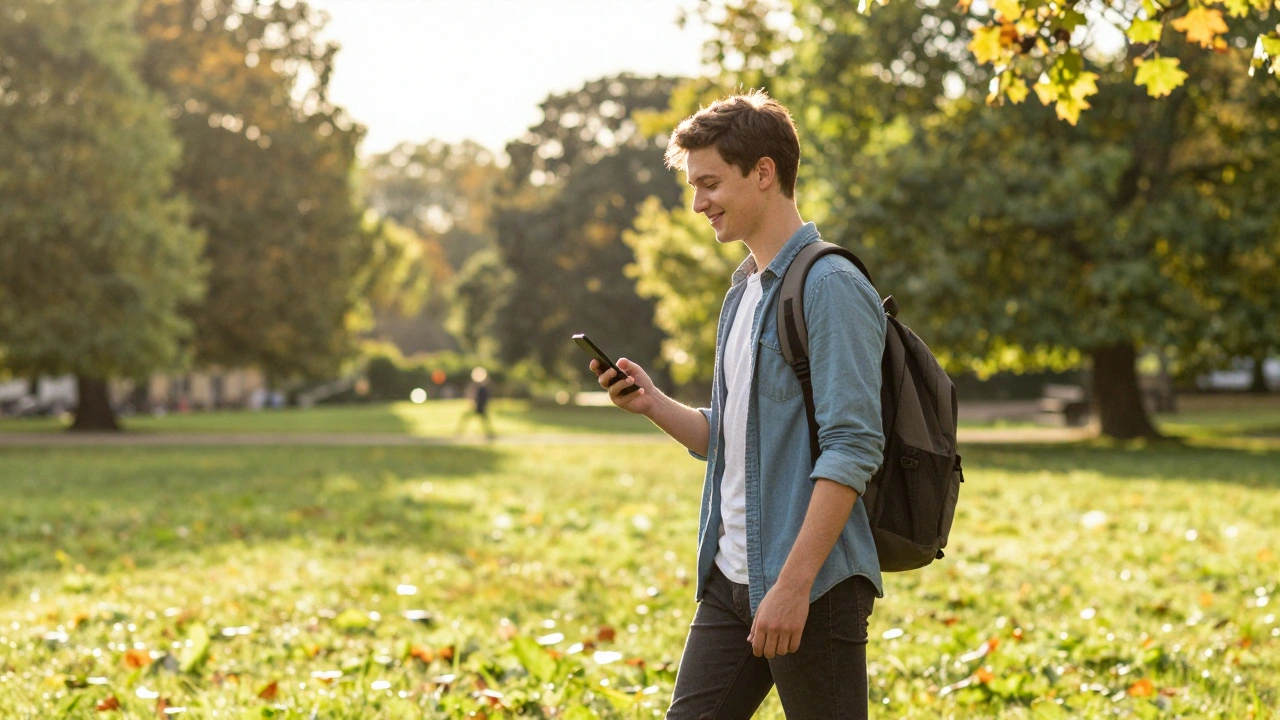
Managing your digital life is only half the battle; you also need to build your internal capacity to handle stress. Mindfulness is a proven technique to help you detach from the spiral of negative thoughts. When you feel the urge to doomscroll, try the 5-4-3-2-1 grounding technique: identify five things you can see, four things you can touch, three things you can hear, two things you can smell, and one thing you can taste. This pulls you out of the digital void and back into your physical body.
Understand the concept of "Locus of Control." Much of the news that triggers doomscrolling is outside of your immediate control. Reading a hundred articles about a global crisis doesn't give you more power over it; it only makes you feel more powerless. Shift your energy toward things you *can* influence. This could be as simple as organizing your study space or volunteering for a local charity in your UK city. Action is the greatest antidote to anxiety.
Finally, don't be afraid to seek professional help. Most UK universities offer free counseling services and mental health support. If you find that your anxiety is preventing you from attending lectures or sleeping, talking to a therapist can provide you with personalized coping mechanisms that a blog post cannot. There is no shame in needing a guide to navigate the complexities of modern mental health.
How do I know if I'm doomscrolling or just staying informed?
The key difference is your emotional state and your intent. Staying informed has a goal: "I want to know the result of the election" or "I need to check the weather for tomorrow." Once you have the answer, you stop. Doomscrolling is aimless. You find yourself reading article after article, feeling increasingly drained, anxious, or hopeless, yet you can't seem to stop. If you feel a sense of dread but continue to scroll, you're doomscrolling.
Does deleting social media completely solve the problem?
For some, a total "digital detox" works, but for most students, it's impractical. You need these tools for group projects, networking, and staying in touch with family. The goal isn't total abstinence, but "digital hygiene." Learning to use these tools intentionally-setting boundaries and curating your feed-is a more sustainable long-term skill than simply deleting the app and then reinstalling it a week later during a moment of weakness.
Why does the news feel so much worse on social media than on TV?
Social media algorithms are designed to maximize engagement, and fear is one of the most powerful drivers of engagement. While a TV news broadcast has a structured start and end, a social media feed is an infinite scroll of the most shocking content from around the world, stripped of context. This creates a "availability heuristic," where your brain assumes that because you see so much bad news, the world is more dangerous than it actually is statistically.
What are some healthy alternatives to scrolling when I'm stressed?
The best alternatives are activities that engage your tactile senses or provide a sense of completion. Try reading a physical book, journaling your thoughts on paper, sketching, or doing a quick 10-minute workout. The important part is to do something that has a clear beginning and end, which provides the "closure" your brain is craving when it's stuck in a doomscrolling loop.
Can doomscrolling actually cause clinical depression?
While doomscrolling itself might not be the sole cause of clinical depression, it can be a significant contributing factor or a symptom. Constant exposure to negative stimuli and the social comparison trap can deplete your serotonin and dopamine levels, leading to a persistent low mood and a sense of hopelessness. If you notice a loss of interest in hobbies or persistent fatigue, it's important to consult a GP or university health center.
Next Steps for Different Students
If you are a first-year student struggling with the transition to university life, focus on building offline social connections. Join a society or a sports club where the interaction is face-to-face. Reducing your reliance on digital validation early on will protect your mental health as you progress through your degree.
For final-year students facing dissertation stress, your brain is already in a state of high cortisol. This makes you more susceptible to doomscrolling as a form of "stress relief" (which actually increases stress). Use the Pomodoro technique: 25 minutes of deep work, followed by a 5-minute break *away* from your phone. Walk around the block or stretch instead of checking your feed.
If you are an international student in the UK, the distance from home can make you lean more heavily on social media to stay connected. Be mindful of the time zones; scrolling through news from your home country in the middle of the UK night can disrupt your circadian rhythm and exacerbate feelings of homesickness and anxiety.