
If you're a student in the UK and you're thinking about landing a graduate job or internship, your LinkedIn profile isn't just a nice-to-have-it's your first impression. Employers in the UK are actively searching LinkedIn for candidates, and if your profile looks like a placeholder, you're already behind. You don’t need years of experience. You don’t need a fancy degree from Oxford. You just need a profile that shows you’re serious, capable, and ready to contribute.
Start with a professional photo and headline
Your photo is the first thing people notice. Use a clear, well-lit headshot where you’re dressed like you’re going to a job interview-no selfies, no group photos, no filters. Smile naturally. Background should be plain or blurred. A photo like this tells employers you understand professional norms. Your headline isn’t just "Student at University of Manchester." That’s what LinkedIn auto-fills. You need to say what you’re aiming for. Try: "Computer Science Student | Seeking Software Engineering Internship | Python & Web Development". This tells employers you know what you want and what skills you bring. Add keywords employers search for: intern, graduate, data analysis, marketing, finance, UX design. These aren’t buzzwords-they’re filters recruiters use.Fill out your experience section like a pro
You might think you don’t have enough experience. But you do. Did you volunteer at a local charity? That’s experience. Ran a campus society? That’s leadership. Helped a friend build a website? That’s project work. List every role-even small ones-with real details. Don’t write: "Helped with events." Write: "Organized 12+ campus events for 300+ students, managed budgets under £500, increased attendance by 40% year-over-year." Numbers stick. Action verbs matter. Use words like: coordinated, led, developed, improved, analyzed, designed. If you’ve done any freelance work-even unpaid-add it. Designed posters for a student club? Put it under "Projects" or "Experience." Built a simple app for a local business? Describe it. Employers care more about what you’ve done than where you’ve done it.Use the "About" section to tell your story
This isn’t your personal bio. It’s your professional pitch. Start with who you are and what you’re looking for. Then explain why you’re a good fit. End with what you want next. Example: "I’m a second-year Business Analytics student at the University of Leeds with a passion for turning data into decisions. I’ve analyzed survey data for a local nonprofit, built dashboards in Excel and Power BI, and completed an online course in SQL. I’m currently seeking a summer internship in data analysis to gain hands-on experience in a corporate environment. Open to remote or on-site roles across the UK." Keep it under 200 words. No fluff. No clichés like "team player" or "hard worker." Show, don’t tell.Skills and endorsements matter more than you think
LinkedIn lets you add up to 50 skills. Add at least 10 relevant ones: Excel, Python, Microsoft Teams, Market Research, Financial Modeling, Social Media Marketing, Public Speaking, Data Visualization, Project Management, PowerPoint. Don’t just add them-ask classmates, professors, or supervisors to endorse you for them. Endorsements act like social proof. If 5 people say you’re good at Excel, it carries weight. You can also endorse them back. It’s a simple way to build connections and increase visibility. Skip skills you don’t actually have. If you’ve never used Tableau, don’t list it. Employers check profiles closely. A mismatch in skills can raise red flags.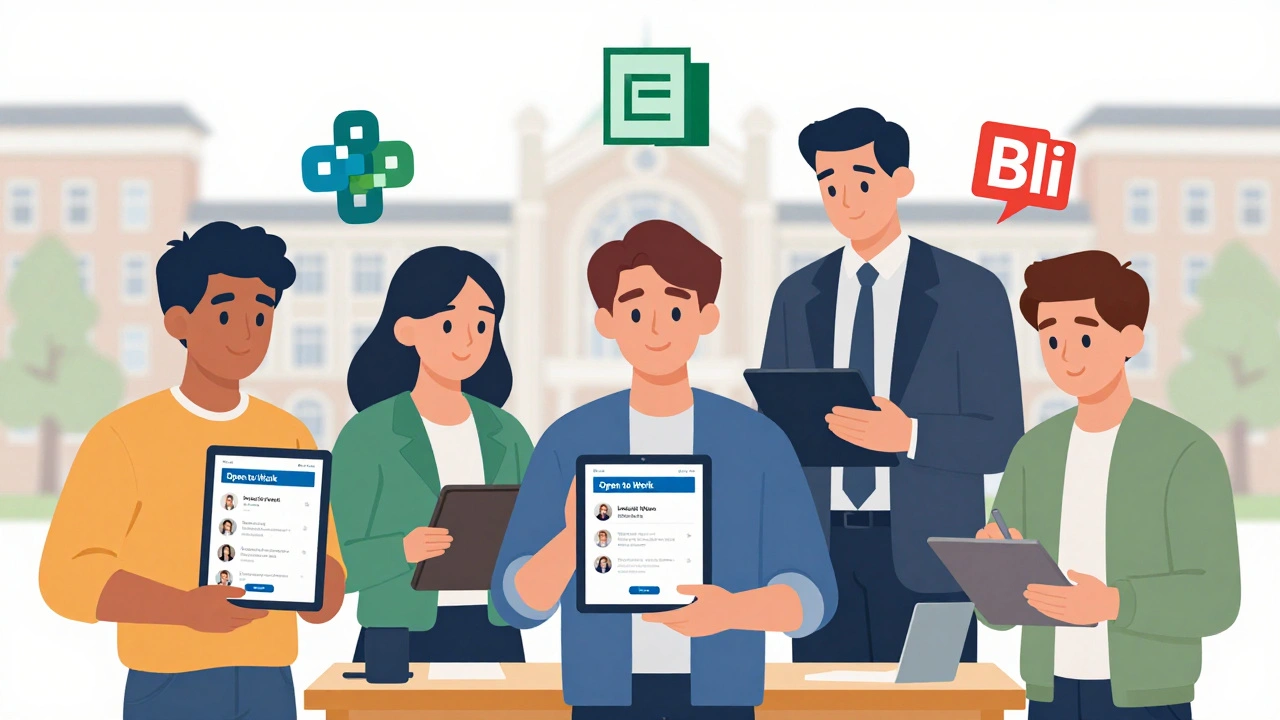
Get involved: Join groups and post content
Join LinkedIn groups for students in your field. Look for: "UK Graduate Jobs 2025," "Student Engineers Network UK," "Marketing Students UK." Don’t just lurk. Ask questions. Share articles. Comment thoughtfully. Even better-post something. You don’t need to be an expert. Write a short post about: "What I learned from my first internship," "3 tools that helped me study for my exams," or "Why I chose this degree." Keep it under 300 words. Add a photo or screenshot if you can. Posts like these get seen by recruiters who follow student content. A post from a student in Birmingham last year got 800+ views and led to 3 internship offers. You don’t need viral content. You just need to show you’re engaged and thinking critically.Connect strategically-not randomly
Don’t send 500 connection requests to strangers. That looks spammy. Instead, connect with:- Professors and teaching assistants
- Alumni from your university working in your target industry
- People who work at companies you want to join
- Other students in your course or internship program
Use the "Open to Work" feature
LinkedIn has a setting called "Open to Work." Turn it on. You can choose to show it only to recruiters (private) or to everyone (public). If you’re looking for internships or graduate roles, go public. It signals to recruiters that you’re actively seeking opportunities. You can also add a green banner to your profile photo that says: "Open to internships" or "Graduate roles 2026." It’s a visual cue that makes you stand out in search results.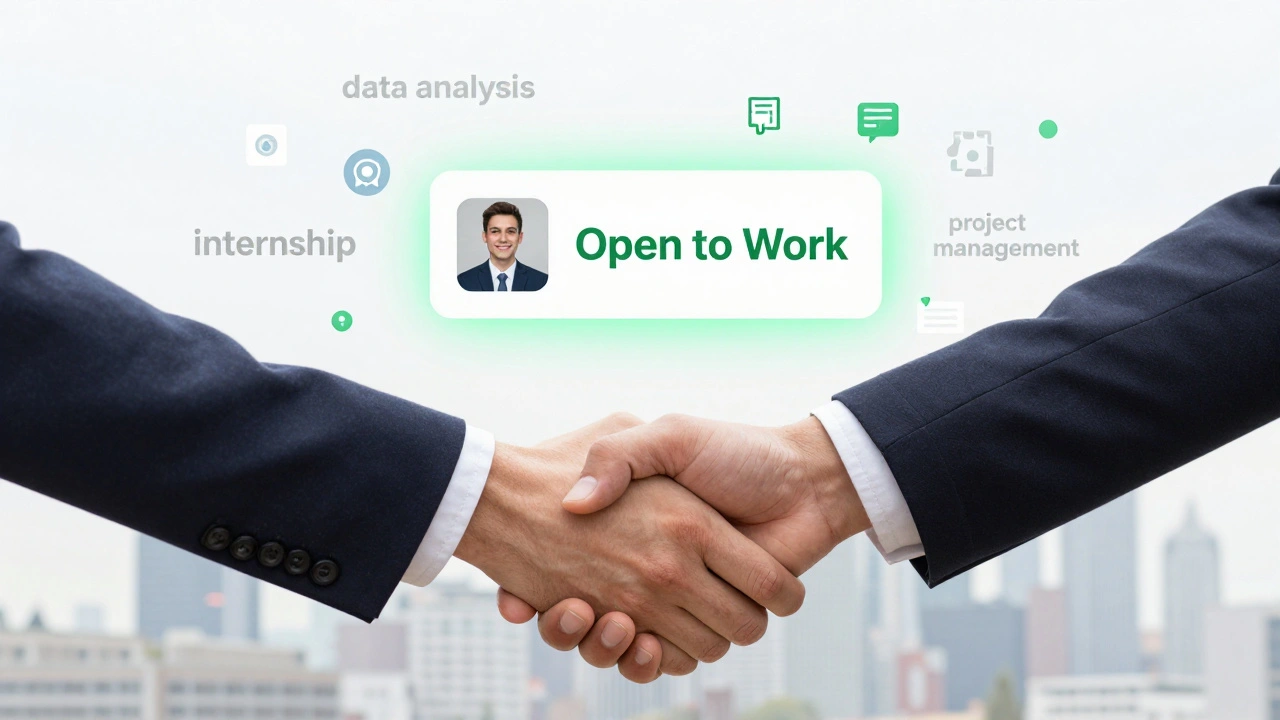
Check your privacy and visibility settings
Make sure your profile is public. Go to Settings > Visibility > Edit your public profile. Turn on "Show your profile to everyone." If it’s set to "Only connections," recruiters can’t find you unless they already know you. Also, check your email settings. Allow recruiters to contact you. Go to Settings > Communications > Email preferences. Make sure "Recruiters can contact me" is turned on.Update your profile every 2 months
Your profile isn’t a one-time task. It’s a living document. Every time you finish a course, get an internship, join a club, or complete a project-update it. Even small wins matter. Students who update their profiles every 60 days get 3x more profile views than those who don’t. Recruiters check for freshness. A profile that hasn’t changed since 2023 looks inactive.What employers in the UK are really looking for
A 2025 survey by the UK’s Graduate Recruitment Bureau found that 78% of recruiters prioritize LinkedIn profiles over CVs when screening students. Why? Because LinkedIn shows behavior, not just bullet points. They want to see:- Proof you can communicate professionally
- Evidence you’re proactive and curious
- Skills that match their job description
- Connections to their industry or university
- Consistency between your profile and your application
Do I need a LinkedIn profile if I’m still in my first year?
Yes. The earlier you start, the more time you have to build credibility. First-year students who begin on LinkedIn get more internship offers by their third year. Even a basic profile with your photo, course, and a short bio gives you a head start.
Can I use LinkedIn if I’m not studying in the UK?
Absolutely. Many UK employers hire international students. Make sure your profile mentions your visa status (e.g., "International student on Tier 4 visa eligible for Graduate Visa"). Highlight any UK work experience, even if it’s remote. Employers care more about your skills than your location.
Should I include my grades on LinkedIn?
Only if they’re strong (2:1 or above). If your GPA is below 3.0, leave it out. Instead, focus on projects, skills, and experience. Employers care more about what you can do than what you scored on a test.
How many connections should I aim for?
Quality over quantity. Aim for 150-300 meaningful connections-professors, classmates, alumni, professionals you’ve met at career fairs. Having 1,000 random connections doesn’t help. Recruiters look at the quality of your network, not the size.
Is it okay to copy someone else’s LinkedIn profile?
No. Templates are useful for structure, but your profile must sound like you. Recruiters can tell when a profile is generic. Use examples from others for inspiration, but write your own story. Authenticity beats perfection every time.